
Call now
977 01 4518759
Send Message
collegereaders123@gmail.com
Our Location
Putalisadak, Kathmandu
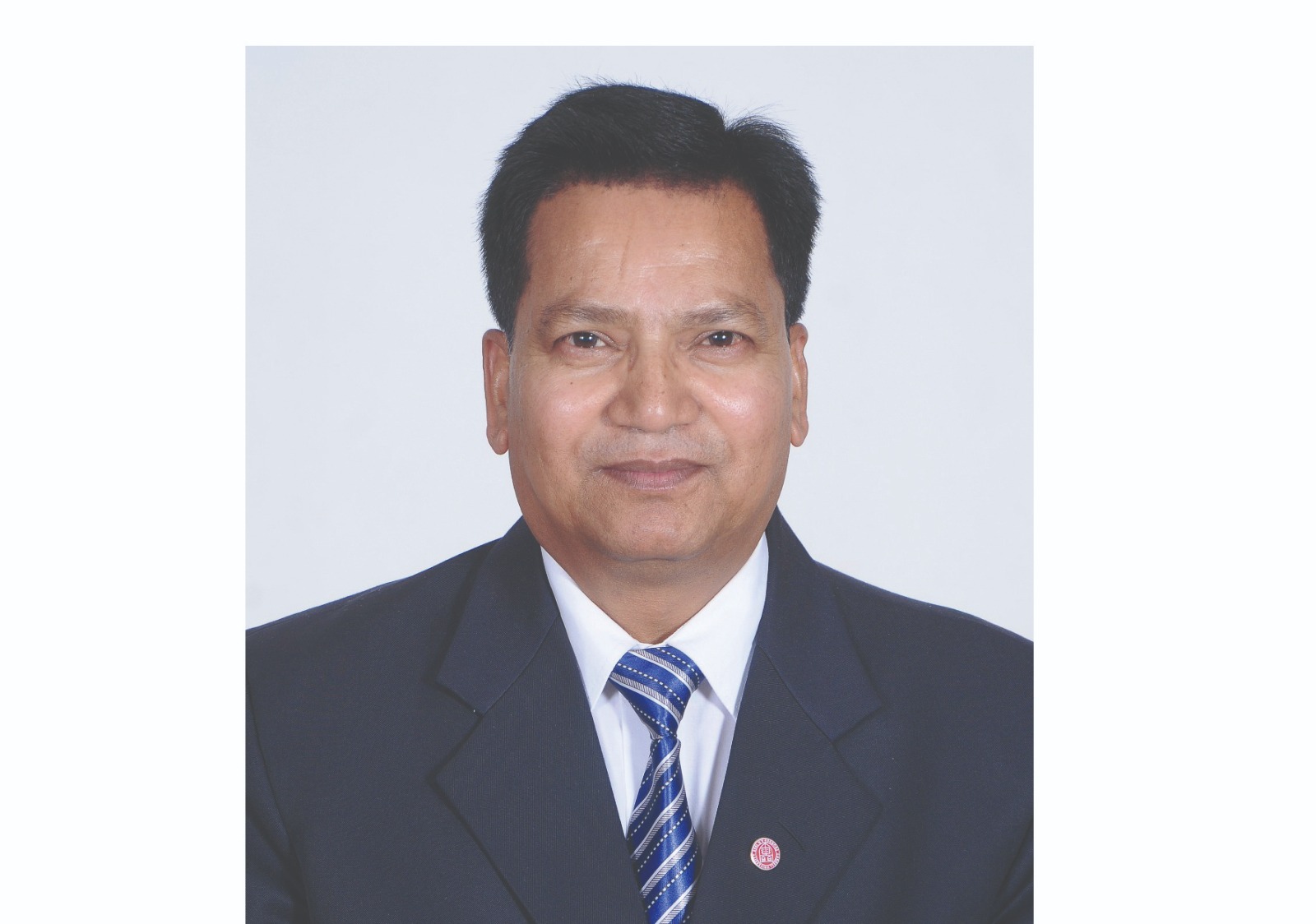
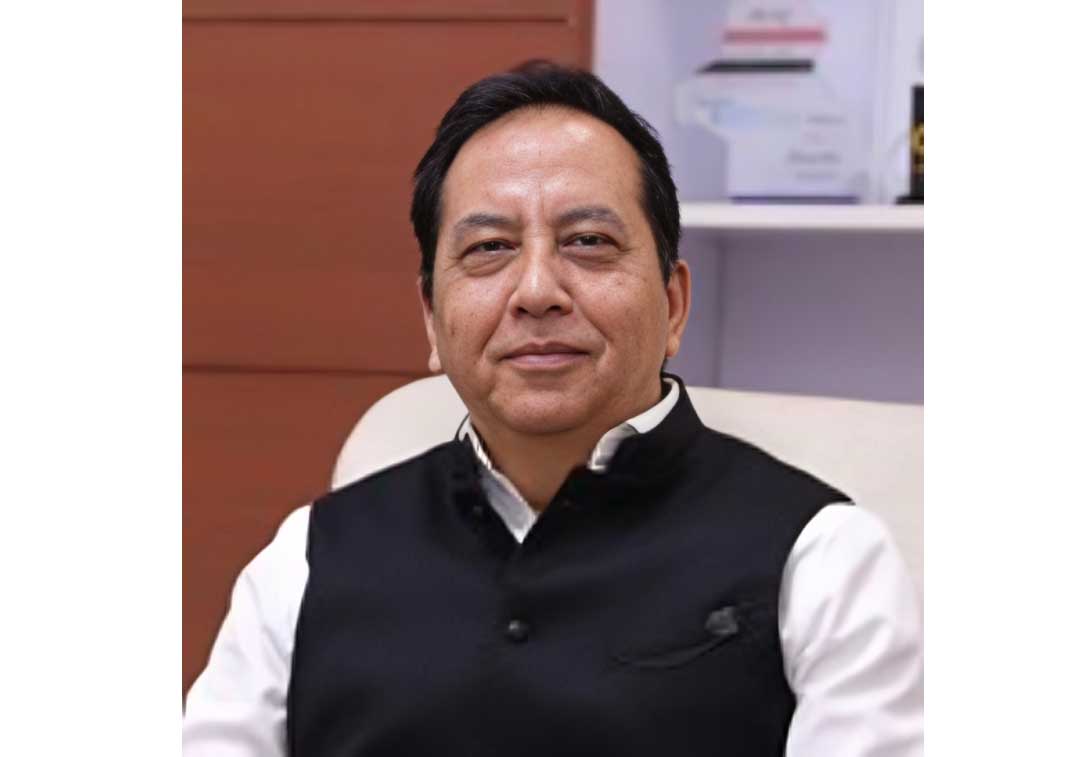
Dr. Baidyanath Mahato
Vice-Chancellor
Madhesh Agricultural University
Youth Urged to Cultivate Sustainable Prosperity Through Agriculture in Nepal
- College Readers
- 18 Feb 2026
- Views
- Interviews
In the fertile plains of the Terai, a new educational institution is taking root with the ambitious goal of transforming Nepal's agricultural future. At its helm is Dr. Baidyanath Mahato, a man whose life story is intertwined with the soil and science of this nation. From a gold-medalist student to a Fulbright scholar who worked alongside Nobel laureates, and from the Executive Director of NARC to the founding Vice-Chancellor of Madhesh Agricultural University (MAU), Dr. Mahato's journey is a testament to the power of dedication.
Now, he is channeling a lifetime of experience into building MAU from the ground up. In this exclusive interview, he shares his compelling vision for making agriculture a dynamic, attractive, and prosperous field for the next generation, arguing that Nepal's food security and economic independence depend on the seeds being sown today in its agricultural universities.
Dr. Mahato, your personal journey in agriculture is incredibly distinguished. Could you briefly share your background and what led you to this role as the founding Vice-Chancellor of Madhesh Agricultural University?
My journey began in the classrooms of Janakpur. After completing my high school, I pursued Intermediate Science and then went on to earn my Bachelor’s and Master’s degrees in India, where I had the privilege of topping my university and being awarded gold medals. My passion for agriculture brought me back to Nepal, where I taught at Rampur Campus before joining the Government of Nepal as an officer.
My career took me from field postings in Dipayal to over 14 years in agricultural research in Bhairahawa. I was fortunate to receive training at the prestigious Indian Agricultural Research Institute (IARI) and later work at CIMMYT in Mexico, where I met the father of the Green Revolution, Dr. Norman Borlaug. That experience was transformative. I then climbed the ranks at the Nepal Agricultural Research Council (NARC), eventually serving as its Executive Director. After retirement, I served on the Provincial Planning Commission of Madhesh Province. When the government envisioned an agricultural university as a matter of regional pride, I was appointed its first Vice-Chancellor. It feels like my entire career has been preparation for this role.
In just three years, MAU has made remarkable progress. What have been your key achievements in establishing this new university?
The pace has been rapid, indeed. The university was officially inaugurated in Mangsir 2078 BS. Within a year, we had designed the curriculum and launched our flagship four-year B.Sc. Ag. (Honors) program. We now have three batches of about 50 students each, with a wonderful gender balance, and we are preparing to admit the fourth. These students come from across Madhesh Province and beyond, which is very encouraging.
Infrastructure development has been a parallel priority. We have secured 82 bighas of land and have 12 major buildings—including an academic block, library, and hostels—under construction through a contract worth NPR 1.77 billion. The provincial government has ensured funding for the next five years, which has been crucial for this momentum. Furthermore, we are acquiring agricultural land in six locations across Saptari, Siraha, and Rautahat for research farms and expansion. We are building not just a university, but an entire ecosystem for agricultural education.
Nationally, there seems to be a decline in students choosing agriculture. Why is MAU succeeding in attracting students, and why should a young person consider this field?
It is true that agriculture has been perceived as a less attractive field, but this is a misconception we are actively dispelling. Madhesh Province is the breadbasket of Nepal; its potential in food production is immense. Students here see that connection more directly.
The future for agricultural graduates is exceptionally bright. Firstly, it is a technical subject that is far more accessible and affordable than medicine or engineering. More importantly, it offers diverse career paths. Graduates are in high demand, both in Nepal and abroad. But beyond formal jobs, agriculture is the foundation of entrepreneurship. A graduate can start a high-value vegetable farm, a processed food business, or a floriculture enterprise. With proper techniques like off-season production and grafting, a small investment in 30 bighas of land can yield significant annual returns. We are teaching students to be job creators, not just job seekers.
You have a strong international background. How are you bringing that global perspective to MAU?
International collaboration is in our DNA. We are the only institution in Nepal that is a member of UNILEVER, a global university network with China as a key partner. We have strong ties with Dr. Rajendra Prasad Central Agricultural University and other institutions in India. These partnerships are not just on paper; they facilitate faculty and student exchange, shared research, and access to global best practices.
I saw abroad what is possible when you provide a scientist with the right equipment, funding, and environment. My goal is to replicate that here at MAU. Our labs are being equipped with sophisticated machinery, and we are building a research-centric culture. The success of Nepali agricultural scientists abroad proves our inherent capability; we simply need to create the right environment at home.
What is your ultimate vision for the role of MAU in Nepal's future?
My vision is for MAU to be the engine that drives Nepal toward agricultural self-sufficiency and prosperity. Right now, we import milk and vegetables. This is a paradox because we have the land, water, water resources, and biodiversity to not only feed ourselves but to become an exporter. Look at India's transformation from a food-deficient nation to a net exporter.
MAU’s role is threefold: First, to produce highly skilled, passionate graduates who are innovators and entrepreneurs. Second, to conduct cutting-edge research that develops new crop varieties and farming technologies suited to our specific conditions. Third, to directly support farmers and agri-businesses in Madhesh and beyond.
If academia, research institutions, and policymakers work together with focus, we can create a future where Nepal’s agricultural products are branded, packaged, and valued globally. We can stop the drain of youth going abroad for menial jobs and instead have them building prosperous businesses here at home.
Finally, what is your message to the young students of Nepal who are considering their future?
My message is one of opportunity and patriotism. Do not underestimate the power and potential of agriculture. It is the backbone of our nation and your most viable path to a successful and impactful career. Be disciplined, be dedicated, and be practical. The knowledge you gain is meant to be applied.
I studied abroad, but I always knew my purpose was to return and contribute to Nepal. The world is open to you for learning, but remember your roots. This country has given us immense natural wealth. It is our turn to give back by harnessing that wealth intelligently. Come, join us at MAU. Let’s work together to sow the seeds of prosperity for Madhesh and for Nepal. The future is green, and it is ours to cultivate.
Popular Categories
Trending This Month








 Established in 2065 BS, COLLEGE READERS is a premier national-level educational magazine dedicated to serving the academic and informational needs of school and university students, teachers, educators, and concerned ones in Nepal. The magazine provides current and comprehensive information on various educational opportunities worldwide, aiming to guide school and college-level students in their academic and career journeys. It also highlights essential support services and service providers that play a crucial role in shaping students' career paths in today's competitive world.

- Our Location Putalisadak, Kathmandu
- Send Us Email collegereaders123@gmail.com
- Call Us Now 977 01 4518759
