
Call now
977 01 4518759
Send Message
collegereaders123@gmail.com
Our Location
Putalisadak, Kathmandu
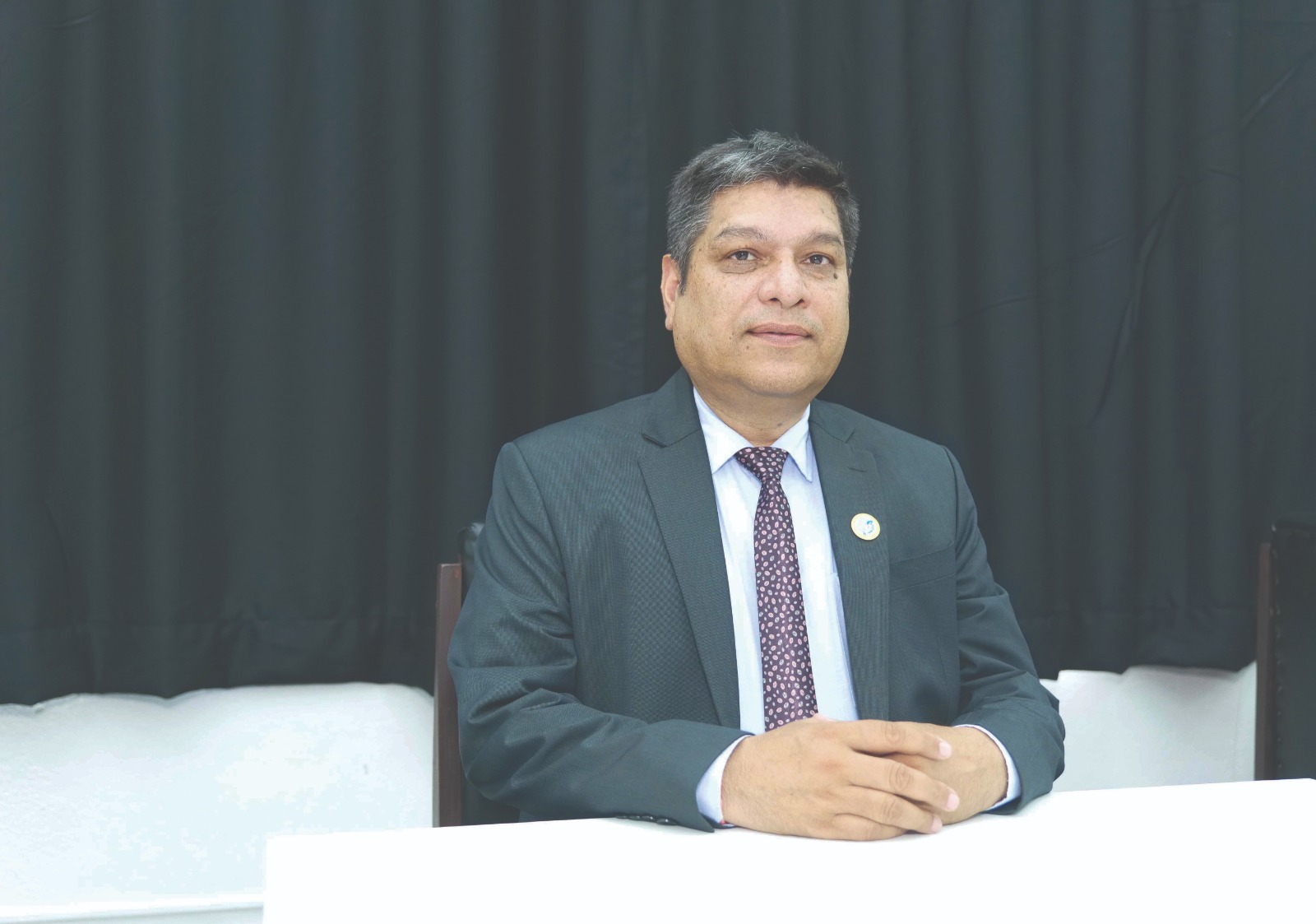
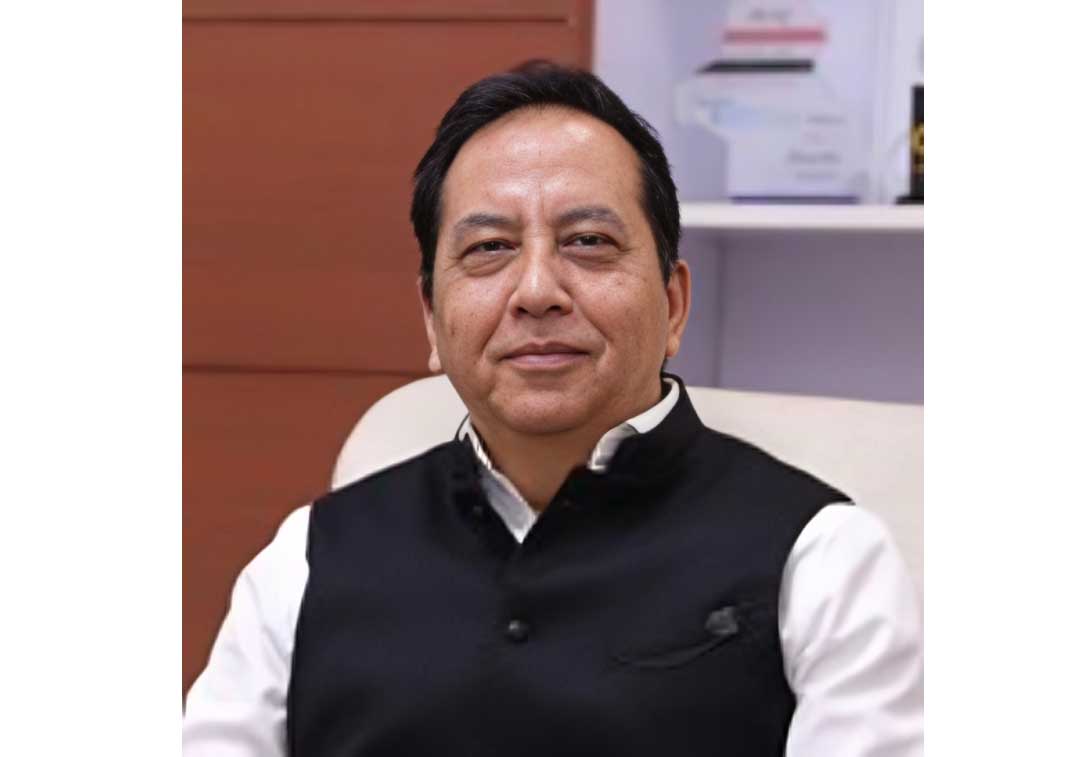
Prof. Dr. Hemraj Pant
Vice Chancellor
Far Wester University
Curricular Revitalization and Capital Infusion: Imperatives for Elevating Education to Global Parity
- College Readers
- 18 Mar 2026
- Views
- Interviews
Nepal’s higher education landscape possesses considerable latent potential to evolve into a globally competitive system, contingent upon strategic investment, coherent policy formulation, and resilient infrastructure. Far-Western University endeavors to spearhead this academic metamorphosis by synthesizing pedagogy, empirical research, and civic engagement. Its overarching mission is to cultivate graduates who are not only scholastically adept but also capable of catalyzing innovation and socio-economic development, particularly within the Far-Western region.
Prof. Dr. Hem Raj Pant, the Vice Chancellor of Far-Western University, has delineated a visionary blueprint to elevate the institution into a preeminent nexus for research and higher education. He underscores the exigency of augmented governmental investment, positing that such fiscal commitment is imperative to stimulate innovation and attract a diverse cohort of students, both domestic and international. With a distinguished academic trajectory and substantial administrative acumen, Prof. Pant is resolutely dedicated to constructing a research-intensive academic paradigm that is attuned to regional exigencies.
Addressing salient impediments such as political encroachment, administrative inertia, and dwindling enrollment in technical disciplines, Prof. Pant advocates for policy interventions that bolster academia-industry synergies, augment experiential learning opportunities, and retain intellectual capital through robust research ecosystems. He further stresses curricular modernization to encompass nascent fields like artificial intelligence, ensuring alignment with global academic standards.
Prof. Pant envisages Far-Western University as an instrumental agent of regional revitalization, particularly through research endeavors in indigenous medicinal flora and sustainable development. While he endorses academic mobility, he accentuates the importance of returnee scholars applying their expertise to national imperatives.
Recently, there has been a noticeable increase in students going abroad for higher studies. How is Far-Western University addressing this challenge and promoting the “Study in Nepal” campaign?
To retain students in Nepal, we must make education more market-oriented and aligned with global demands. Many students go abroad because they want to study technical subjects such as Artificial Intelligence (AI), computer applications, engineering, forestry, and agriculture, but limited quotas prevent them from pursuing their interests here.
At Far-Western University, we have expanded our technical programs and increased student quotas to provide more opportunities locally. For instance, we now offer BIT programs, master’s-level AI programs, and other technical courses designed to meet market needs. By introducing these programs and ensuring sufficient enrollment opportunities, we are gradually providing students a strong reason to pursue their education in Nepal rather than seeking opportunities abroad.
Why should students consider pursuing bachelor’s studies in Nepal instead of going abroad immediately after plus-two?
Many students are motivated by the “learn and earn” approach—they want to earn while studying. While Nepal has started some learn-and-earn programs in government policies, actual implementation is limited. Students going abroad often prioritize earning over learning, which can lead to higher dropout rates.
Pursuing undergraduate studies in Nepal offers a solid foundation. Students can then move abroad for master’s or PhD programs if they wish, which ensures continuity in their education while reducing the risk of dropping out. Moreover, parents feel more confident sending their children to institutions in Nepal where the system is structured, transparent, and internationally recognized.
How feasible is the learn-and-earn model within Nepal’s universities?
This model is feasible only if the private sector is strong and industries are operating locally. Students need opportunities to gain work experience while studying, which requires companies, factories, and international organizations to have a presence here. For example, AI and technology companies could create internships and project-based employment opportunities for students. Without such an ecosystem, learn-and-earn programs cannot succeed.
Many strategic plans in universities often fail to materialize due to limited implementation. How do you view this issue?
Implementation challenges often stem from insufficient investment. Even with clear visions and strategies, without proper funding, it is impossible to fully realize university plans. Coordination with stakeholders—including civil society, political parties, student organizations, and academic partners—is also crucial. Currently, limited resources restrict our ability to launch new programs, hire international faculty, and expand facilities. Strategic vision without investment remains incomplete.
Regarding your strategic plan, how much have you been able to implement, and how do you envision taking Far-Western University to the next level?
A university’s core function is knowledge creation. To achieve this, we actively pursue international collaborations, faculty and student exchanges, and quality management systems aligned with global standards. These initiatives improve the academic experience and expand research opportunities.
We have strengthened both affiliated and constituent campuses, ensuring consistent quality across all institutions. My focus is not only on increasing enrollment but also on enhancing the quality of education, research outputs, and employability of our graduates.
What role should colleges, universities, and the government play to make the “Study in Nepal” campaign successful?
Collaboration is the key. Curricula must include internships and practical training so that studying in Nepal provides experiences equivalent to those abroad. Parents and students must understand that pursuing education in Nepal ensures high-quality learning at lower costs while reducing dropout risks. Government-affiliated universities already offer programs that meet international standards at accessible costs, but policy support and proper funding are essential to strengthen these efforts.
Is it possible to provide international-standard education in Nepal?
Absolutely. By introducing modern subjects, updating curricula regularly, and providing sufficient student quotas, Nepalese universities can deliver high-quality education comparable to international standards. The main requirement is sufficient investment and infrastructure development.
Compared to other universities in Nepal, where does Far-Western University stand in terms of achievements, and what are your future goals?
Among government universities, after Tribhuvan University, Far-Western University is the next largest in terms of student numbers and infrastructure, with around 20,000 students. By expanding technical programs, increasing faculty numbers, and upgrading facilities, we can retain more students in Nepal. Our goal is to make the university a model institution for quality education and research, serving as a catalyst for regional development.
What sets Far-Western University apart from other universities?
We continuously revise courses to reflect modern developments. AI, for example, has been integrated into nearly all programs, from science and engineering to arts and education. Our programs are designed to equip students with knowledge and practical skills relevant to the global job market. This proactive approach distinguishes us from other universities that are slower in updating curricula.
Based on your three decades of experience in Nepal’s education sector, how do you view the current state of higher education?
Higher education in Nepal has enormous potential. Our environment and cultural richness could attract international students if political stability and institutional support improve. However, progress is hindered by political instability and inadequate government support, especially in research and development. Teaching alone is not sufficient—research is equally important. Without proper investment, laboratories, and research infrastructure, we fall behind. For example, setting up a single lab cost me three crores, which required raising funds from multiple sources.
With more government investment, we can strengthen research programs, attract international students, and develop innovative solutions for local challenges.
What is your vision for Far-Western University during your tenure?
I envision a university that balances teaching, research, and community engagement. We have initiated a medical campus with limited funds, demonstrating that even without full government support, strategic planning and faculty dedication can create meaningful impact. Our focus is on research that directly addresses regional needs, while maintaining global standards.
How can the university contribute to the development of the Far-Western region?
Our region is rich in medicinal herbs, yet research on their potential is minimal. By scientifically studying these resources, we can enhance the local economy and promote health solutions. With financial and policy support from local, state, and federal governments, our R&D programs could significantly contribute to community development and regional prosperity.
What advice would you give to students who have just completed their plus-two education and are considering higher studies?
My advice to students who have just completed plus-two is to thoughtfully consider pursuing their undergraduate studies in Nepal before looking abroad. While studying overseas may seem attractive, it often comes with significant challenges—high tuition fees, limited scholarships, and the need to work long hours to support themselves financially. These factors can divert attention from actual learning and reduce the quality of their educational experience.
Nepal today offers a growing number of high-quality programs in fields such as engineering, computer science, agriculture, forestry, management, and emerging technologies like artificial intelligence. The universities are increasingly adopting global curricula, modern teaching methodologies, and research-oriented frameworks. By completing their undergraduate studies in Nepal, students benefit from a structured, cost-effective, and academically rigorous environment that prepares them for both higher studies and practical career opportunities.
Moreover, studying in Nepal reduces the risk of dropping out, which is a common concern for students abroad who may struggle with cultural adjustments, financial pressures, or lack of guidance. Once students establish a strong academic foundation here, they are in a much better position to pursue master’s or PhD programs abroad, if they wish. This approach allows them to gain international exposure later in their academic journey while retaining strong ties to their home country and contributing meaningfully to Nepal’s development.
In short, choosing to study in Nepal for undergraduate education is not a limitation—it is a strategic choice that combines quality education, affordability, and future opportunities. It equips students with the knowledge, skills, and confidence to compete on a global scale while also preparing them to contribute to the growth and innovation of our own nation.
Students should carefully consider studying in Nepal for their undergraduate programs. Studying abroad at this stage often comes with high costs, limited scholarships, and long working hours that can detract from learning. High-quality education is now available in Nepal, and students can pursue master’s and PhD programs abroad later. Studying in Nepal reduces the risk of dropping out and ensures education that meets international standards, preparing them for both global opportunities and national contributions.
Popular Categories
Trending This Month








 Established in 2065 BS, COLLEGE READERS is a premier national-level educational magazine dedicated to serving the academic and informational needs of school and university students, teachers, educators, and concerned ones in Nepal. The magazine provides current and comprehensive information on various educational opportunities worldwide, aiming to guide school and college-level students in their academic and career journeys. It also highlights essential support services and service providers that play a crucial role in shaping students' career paths in today's competitive world.

- Our Location Putalisadak, Kathmandu
- Send Us Email collegereaders123@gmail.com
- Call Us Now 977 01 4518759
