
Call now
977 01 4518759
Send Message
collegereaders123@gmail.com
Our Location
Putalisadak, Kathmandu
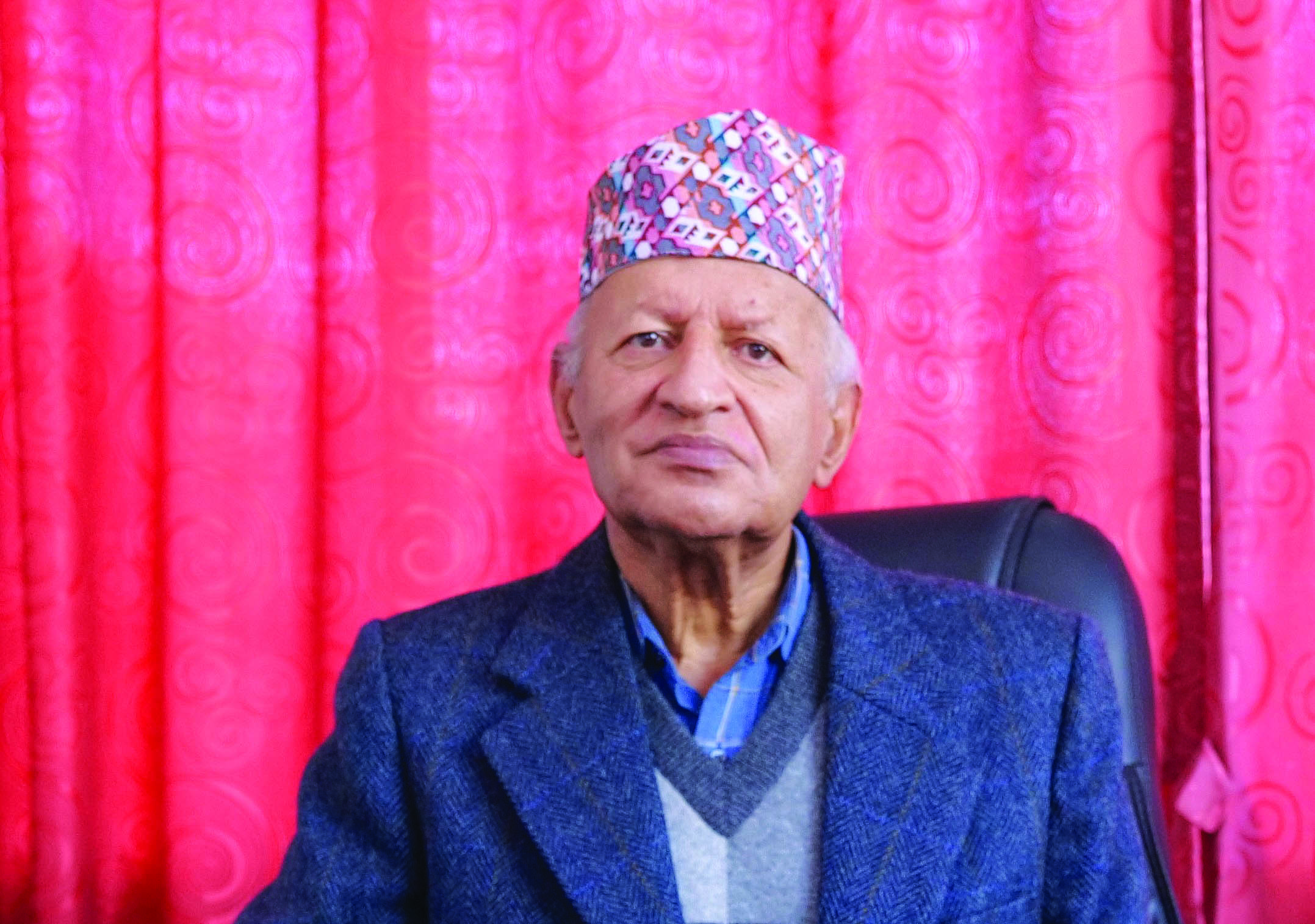
Er. Ashok Raj Pandey
SAIM College
Attaining a Bachelor’s Degree in Nepal is a Judicious Paradigm
- College Readers
- 09 Mar 2026
- Views
- Interviews
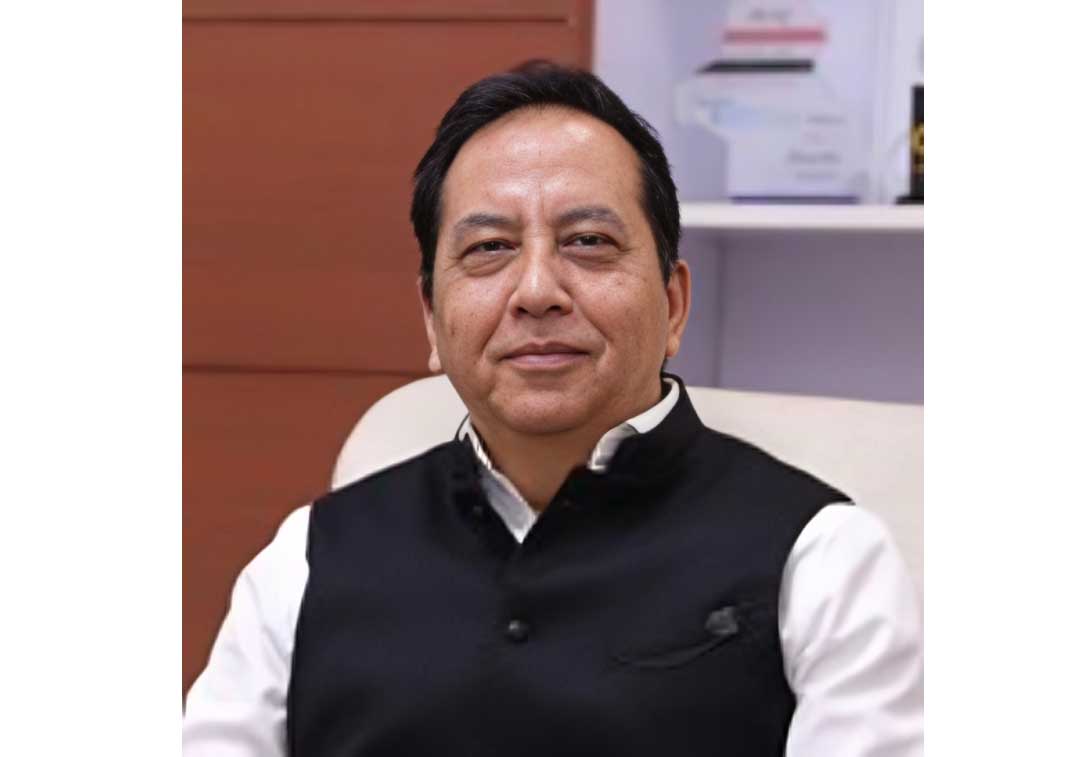
Er. Ashok Raj Pandey has steered SAIM College since its inception, championing a vision rooted in pragmatic, skills-based education. An engineer by training and an MBA graduate from Harvard University, he has garnered diverse professional experience in both Nepal and the USA before dedicating nearly 25 years to academia. Starting his teaching career at Kusum College, he now focuses entirely on SAIM College, nurturing its growth and prestige.
Despite the prevailing trend of Nepalese students departing immediately after +2 to study abroad, Pandey emphasizes the imperative of completing at least a bachelor’s degree domestically. Nepalese universities deliver rigorous, praxis-oriented curricula continually refined to anticipate future labor market exigencies. Strategic partnerships between academia and industry further bridge the gap between education and employability.
Dispelling the misconception that foreign degrees inherently surpass domestic ones, Pandey highlights that many foreign-affiliated institutions lack the stringent academic standards upheld by colleges like SAIM and universities such as Pokhara University. Nepal’s management education has transitioned from rote memorization to experiential learning—employing case studies, role plays, and simulations—to cultivate essential workplace competencies.
Considering the exorbitant costs and uncertain outcomes of overseas education, he advocates building a solid academic foundation in Nepal. SAIM College’s accomplished faculty and applied curriculum exemplify this ethos, consistently producing graduates who secure meaningful employment. Ultimately, completing a bachelor’s degree in Nepal fosters maturity, skill acquisition, and confidence—facilitating a smoother, more strategic transition for those who pursue further studies abroad.
Why Study at Least a Bachelor’s Degree in Nepal?
These days, many students leave Nepal immediately after completing +2 to pursue higher education abroad. Some people argue that this trend threatens our national education system. I strongly believe that students should complete at least their bachelor’s degree in Nepal.
If you look at our courses, they are quite strong. Our teaching methods are effective and practical. Yet, the prevailing trend is that many students leave not just to study, but to permanently migrate. To address this, I see two main solutions. First, we need to make our education system more practical, which requires active support from universities. Second, private companies should collaborate closely with colleges. This way, students can access employment opportunities immediately after graduation, while employers gain skilled professionals ready to contribute.
It is also essential to prepare students not just for today’s job market, but for the next 10–15 years. That is why we constantly update our courses and teaching methods. For management studies in particular, going abroad is not always necessary. Another critical factor is cost—studying abroad is extremely expensive. Many families take loans to support their children’s education, and if those students fail to find jobs abroad, it can create serious financial difficulties. I believe that students without strong qualifications should not rush abroad, and the government should also consider measures to regulate the outflow of foreign currency.
Choosing Domestic Universities over Foreign Affiliations
In Nepal, students can choose between domestic university-affiliated colleges and foreign university-affiliated colleges. Many assume that foreign degrees are automatically superior. From my experience, however, this is not always the case. I have seen programs abroad where less than half of the curriculum is covered compared to what we teach here.
The government should ensure that all colleges maintain consistent standards. No institution should hand out certificates without proper entrance exams and regular assessments. Today, students often prefer the “easy path.” Some foreign-affiliated colleges have fewer rules, which attracts students. In contrast, at SAIM College, and under Pokhara University, we are required to conduct exams on schedule and maintain high academic standards. This ensures the quality of education. In programs like MBBS, some students still go abroad because it appears easier, even though it is far more expensive and not necessarily better academically.
Advancements in Management Education
Having taught management education for over 25 years, I have seen remarkable changes. In the past, teaching was largely textbook-based, with one reference book forming the entire curriculum and exams designed around it. Today, we incorporate case studies, many adapted to Nepalese contexts, along with role plays and simulations. These methods help students move beyond theory and apply concepts in real-life scenarios.
For instance, role plays allow students to experience decision-making processes, while thesis discussions bridge classroom learning and practical application. We teach students how to prepare checklists, organize tasks, and manage real workplace situations—skills they cannot gain solely from lectures. While significant progress has been made, there is still much more to do. Education must be increasingly practical, and institutions like ours must work closely with universities to ensure hands-on, effective learning experiences.
The Strength of SAIM College and Pokhara University
Pokhara University is aware that courses need continuous updating. Recently, they introduced new BBA and MBA courses. But in my view, updates should not take 7, 8, or even 17 years. Course design must focus on both pedagogy and examination methods.
At SAIM College, we also focus on holistic student development. We organize events that teach program planning and management, guide students through thesis work, and provide additional reading materials and real-world insights. Yet, I firmly believe that learning is ultimately the responsibility of the student. No matter whether one studies at Harvard, Edge, or Stanford, effort and dedication are critical.
Why Choose SAIM College?
Our college has two major strengths. First, our faculty members are highly experienced professionals, not just teachers. For example, marketing and finance courses are led by experts like KB Manandhar and Pradeep Raj Pandey. Their professional experience allows students to connect theory with practice. Second, our students consistently secure employment after graduation, reflecting the real-world relevance of our programs.
We continually refine our teaching methods. While adhering to Pokhara University’s curriculum, we adjust subjects under our control to maximize learning effectiveness. The dedication of both faculty and students sets us apart.
International Exposure and Skill Development
Many students feel that opportunities are greater abroad. To address this, we emphasize simulations and role plays to enhance soft skills, especially communication. We have a dedicated communication course taught by professionals with corporate experience. Analytical and practical skills are also a focus.
Having lived in the USA for 13 years, I understand the cultural and social differences students will encounter abroad. I also notice a growing sense of pessimism among some students—they feel things cannot improve here and opt to leave. But education in Nepal is improving, and students can gain maturity, skills, and confidence without going abroad immediately.
Advice to Students Planning to Pursue Higher Education
I am not against studying abroad; students can go if they choose. But I strongly recommend completing at least a bachelor’s degree in Nepal first. Studying here helps students understand their capabilities, develop maturity, and adjust more smoothly to foreign education systems and lifestyles. It also saves costs and allows students to go abroad with clearer career goals and better preparation. In my view, this is the most practical path for most students.
Popular Categories
Trending This Month








 Established in 2065 BS, COLLEGE READERS is a premier national-level educational magazine dedicated to serving the academic and informational needs of school and university students, teachers, educators, and concerned ones in Nepal. The magazine provides current and comprehensive information on various educational opportunities worldwide, aiming to guide school and college-level students in their academic and career journeys. It also highlights essential support services and service providers that play a crucial role in shaping students' career paths in today's competitive world.

- Our Location Putalisadak, Kathmandu
- Send Us Email collegereaders123@gmail.com
- Call Us Now 977 01 4518759
