
Call now
977 01 4518759
Send Message
collegereaders123@gmail.com
Our Location
Putalisadak, Kathmandu

Your Parents Don't Choose. Your Friends Don't Choose. You Choose. And We Support
- College Readers
- 18 May 2026
- Views
- Interviews , Op-ed
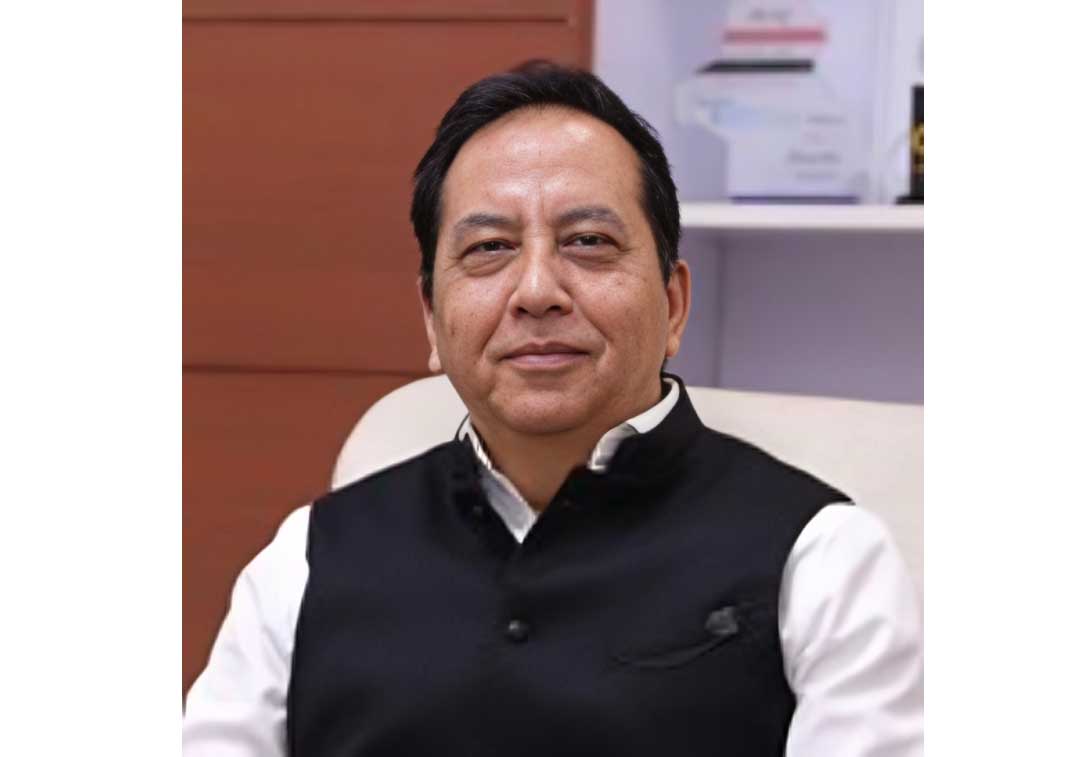
In this conversation, Krishna Prasad Paudel, Principal of Swarnim Sagarmatha College, argues that the long-established Plus Two migration to Kathmandu has lost its rationale in the smartphone era. Information that once justified the trip is now available in every student’s hand, and local institutions can match the capital on faculty, laboratories, and results, provided they choose to compete. Paudel cautions, however, that most SEE graduates still arrive without a clear sense of subject or stream, drifting toward whatever their friends choose. His remedy is plain: trust your own mind, verify each college carefully, and select an institution that has truly earned its standing rather than advertised it.
The trend of leaving for Kathmandu for Plus Two appears to be reversing. How do you read this shift?
That trend has indeed weakened, and I see it as overdue. A student who has just sat for the SEE has already spent months under examination stress; she deserves a clear two or three months free of pressure, with no bridge course she does not need and no migration she cannot afford. Today, every student carries a smartphone, and through it she can reach almost any teacher, any course, any reference in the world. If knowledge is no longer locked inside a particular postal code, the old reasons to travel collapse with it. The world of twenty years ago, when a student had to chase information across the country, no longer exists.
So technology has flattened the old hierarchy between centre and periphery?
Almost entirely. A student in Pokhara no longer needs Kathmandu, and a Butwal student no longer needs Pokhara, simply to read what is now visible on a screen in her own hand. The national curriculum itself permits her to choose her stream and her subjects locally. Many colleges, including ours, accept a short entrance test and offer scholarships for those who do well, so even cost ceases to be an iron barrier. What still has to be earned, however, is quality at the local level, and that is the institution’s burden, not the student’s. Quality is no longer a function of geography; it is a function of will.
How should a student then decide which college can really deliver that quality?
By looking at the things that cannot be hidden. Begin with the subjects on offer and the affiliation under which they run. Examine the laboratories needed for each subject. Speak to the faculty — are they qualified, experienced, and genuinely available to students? Then study the institution’s record: past results year on year, infrastructure, playground, coaches, the range of activities, and the achievements it has actually accumulated. Today every parent and student can verify these claims through a quick search; nothing stays hidden any more. An institution that only advertises itself well will be exposed within days. My advice to parents is to visit in person; a few hours on campus reveal more than a hundred phone calls or social-media posts.
You often say “fittest will survive” when describing today’s college landscape.
That is the simple truth of it. If I cannot provide the faculty, the facilities, and the environment a student deserves, my reputation alone will not save me — the market and the students themselves will move on. This is healthy. It pushes every college, in the capital or in the districts, to compete on real terms rather than legacy. The facilities a student would receive in Kathmandu must now be available locally, the environment must be student-friendly, and the institution must adapt to what the student needs, not the reverse. No college today, however old or well-known, can afford to coast on past reputation; what matters is what the next student walks into when she arrives.
What about subject selection? You have spoken of widespread confusion at this stage.
It is the single biggest problem I see. Ask a fresh SEE graduate what she intends to study and only three to five per cent will give a confident answer. The rest follow whichever stream their nearest friend has chosen, or whatever the market is currently celebrating, usually science by reflex. Yet of the seven subjects she has already studied, any one can become a lifelong calling. Nepali can take a student to a Master’s degree and well beyond. Mathematics can become the signature of a sharp mind. The point is to choose a stream that matches the brain, not the crowd. I have known students who entered with no plan and discovered, halfway through Grade Eleven, that their real strength lay in literature or numbers rather than in the science stream their friends had chosen.
How does Swarnim Sagarmatha guide students through that decision?
When a student arrives, the first thing I tell her is straightforward: do not look at your parents, do not look at your friends, look at yourself and follow what your own mind tells you. We then introduce her to every member of our faculty, encourage her to check what is said about them in the market, and let her form her own view. An institution and a student must trust each other from day one. We promise to identify the demands placed on her by today’s world and to work alongside her in meeting them. Trust, in our view, is not a slogan but a daily practice; we listen to what each student arrives with, examine what she needs, and adjust our support across the two years.
A closing message for SEE graduates and their guardians.
Results will be published shortly, and my first wish is for a bright future for every candidate. When the time comes to choose an institution, please choose with care: consult your own heart, research thoroughly, verify what each college claims, and only then commit. Visit the building, meet the faculty, ask about results and affiliations, and let no rumour decide for you. If, after that honest scrutiny, Swarnim Sagarmatha appears the right fit, we will be glad to welcome you, and equally glad if you choose elsewhere with the same care.
Popular Categories
Trending This Month






 Established in 2065 BS, COLLEGE READERS is a premier national-level educational magazine dedicated to serving the academic and informational needs of school and university students, teachers, educators, and concerned ones in Nepal. The magazine provides current and comprehensive information on various educational opportunities worldwide, aiming to guide school and college-level students in their academic and career journeys. It also highlights essential support services and service providers that play a crucial role in shaping students' career paths in today's competitive world.

- Our Location Putalisadak, Kathmandu
- Send Us Email collegereaders123@gmail.com
- Call Us Now 977 01 4518759
