
Call now
977 01 4518759
Send Message
collegereaders123@gmail.com
Our Location
Putalisadak, Kathmandu
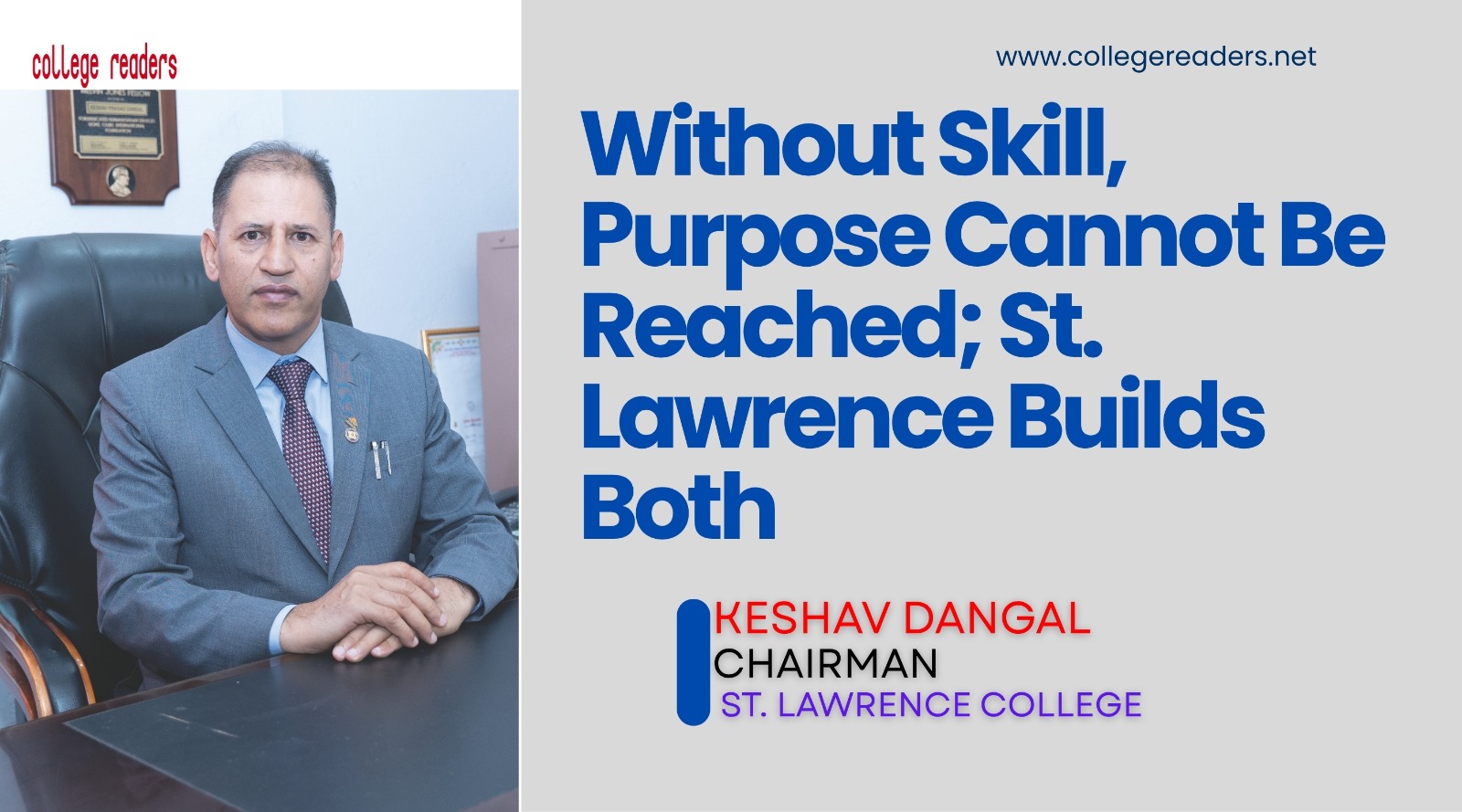
Without Skill, Purpose Cannot Be Reached; St. Lawrence Builds Both
- College Readers
- 18 May 2026
- Views
- Interviews , Op-ed
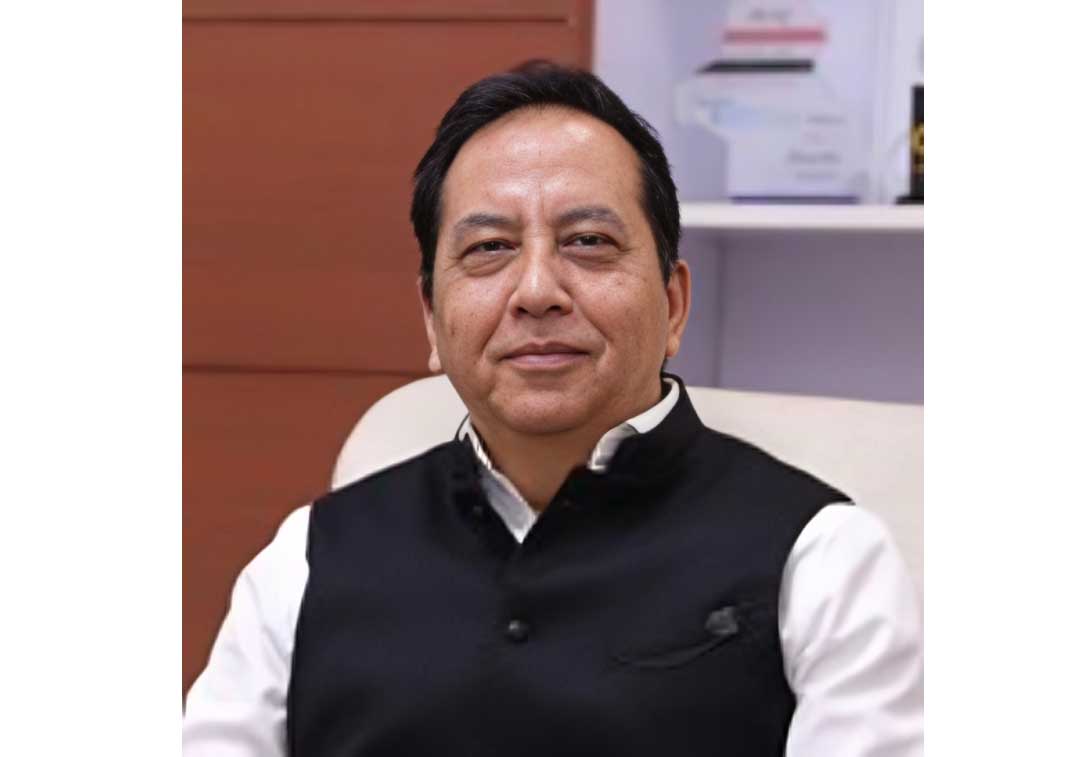
Keshav Prasad Dangal, the Chairman of St. Lawrence College, draws on the institution’s twenty-eight-year history to argue that Plus Two decisions must be made by purpose rather than by proximity to friends or to family addresses. A student aiming to become a banker should not enrol in science, he says, just as a future journalist should not enrol in management. Choosing a college, in his view, is a matter of weighing a full package, institutional history, taught subjects, technology, discipline, innovative pedagogy, fees, and distance from home. Practical exposure, structured counselling, and continuous support through to Bachelor’s level complete what he calls a purpose-driven education.
What changes for a student when she moves from school into a Plus Two campus?
A great deal — and the change is often underestimated. In school, the choice of institution was effectively local: the nearest government or private school, judged on what was good and convenient. Plus Two is the first stage at which a student is mature enough to travel a little further if a better academic fit lies elsewhere, and also the first stage at which she will experience a degree of personal freedom that needs to be handled with maturity. The fundamental rule is simple. If your existing school has Plus Two and offers the stream you want, by all means continue. If it does not, or if the stream you genuinely need is not available there, then it is time to look outward with care.
When a family begins that outward search, what criteria should they apply?
I would put it in five points. First, how long has the college actually run Plus Two? A long, unbroken history says something a brochure never can. Second, are the subjects you want taught well and seriously? Third, how meaningfully is technology integrated into daily teaching? Fourth, what is the discipline of the campus really like — observable, not advertised? And fifth, is there an innovative culture of practical education and skill generation alongside the textbook? Cost is the implicit sixth point: families must choose institutions whose fee structure honestly matches their household capacity, neither over-stretching nor under-investing.
You often warn students against the “friend’s address” trap. What is the trap, exactly?
It comes in two forms. The first is geographical. One friend lives in Jorpati, another in Kalanki, a third in Bhaktapur — yet they all decide to enrol at the same college because they enjoy each other’s company. There are good colleges in every one of those areas; choosing a single distant one for friendship’s sake imposes commute, traffic jams, and lost study time on at least two of those students, and parents are then left worrying every day about a reliable route home. The second form is academic. A student who is built for management can easily end up in science simply because a close friend chose science. The mathematics will not arrive, the science will not arrive, and the student’s own purpose quietly disappears.
How should subject selection then be approached?
By working backwards from the future, not forwards from the present. A student who wants to be a banker tomorrow should choose management today, not science. A future journalist should choose humanities, not science or management. A future lawyer should be preparing for law from the very first month of Grade Eleven. A future doctor must take science with biology. The honest questions are: What is my actual capacity? What profession do I intend to enter? Does the subject I am about to choose lead to that profession? If those answers do not align, no amount of friendly persuasion at a college gate can substitute for them.
How does St. Lawrence support a student once that choice is made?
We begin with formal counselling — sometimes two or three rounds — in which we ask the student which subject she enjoyed at school, which teacher made things clearest, and which concepts she actually retained. That conversation usually identifies the right stream. From there we add structured, practical exposure: morning and evening entrance-preparation classes for those aiming at medicine or engineering, supervised hospital visits for medical aspirants, accounting-package training and bank internships for future bankers, hotel-training courses for Hotel Management students, IT laboratory practice for computer-science students, and court visits and practitioner exposure for those preparing for law. Without practical education, classroom learning rarely converts into skill, and without skill, purpose cannot be reached.
What problems do you see most often once students have arrived?
Two clusters. The first is residual subject confusion: a student arrives in Grade Eleven still half-convinced that her friend’s stream was the right one for her. We use counselling and capacity-mapping to settle that, and in roughly one or two of every hundred students we do quietly arrange a stream transfer where capacity and interest have genuinely diverged. The second cluster is environmental — friendship circles that pull students in wrong directions, occasional bullying or harassment, and the mental and physical strain of the teenage years. These need pastoral counselling, not punishment. A student whose school record was strong but whose Plus Two performance drops needs to be heard before being graded.
Why should families consider St. Lawrence in particular?
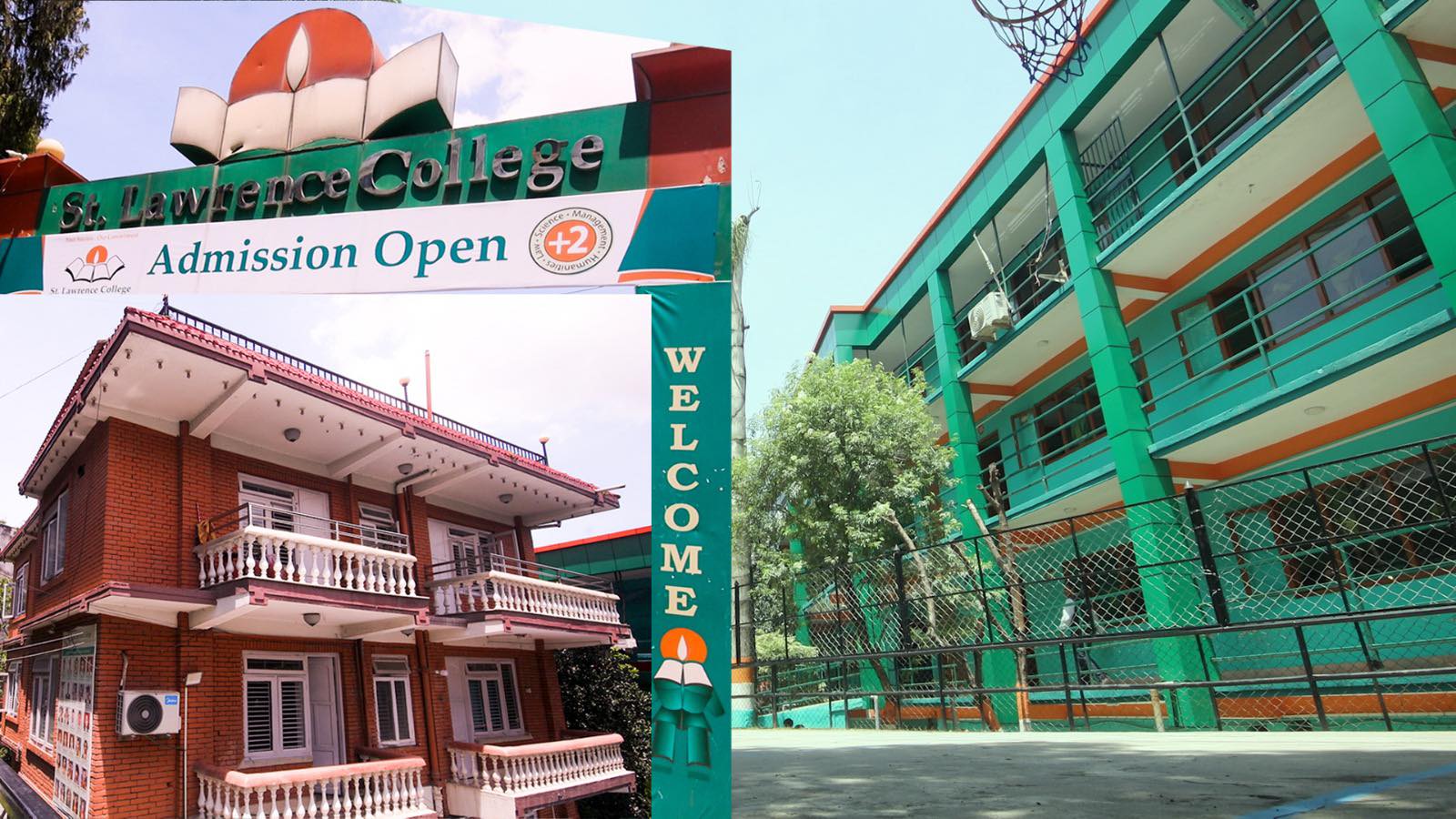
For four straightforward reasons. The first is a twenty-eight-year history that has already produced and placed many cohorts of students. The second is our central, well-connected location, which keeps daily fatigue low. The third is a teaching team that delivers genuine skill alongside results. And the fourth is our unusual offer of continuity, school, Plus Two, Bachelor’s, and Master’s under one institutional roof, with moderate, transparent fees, structured earn-while-you-learn opportunities at the Bachelor’s stage, and a near-complete placement record on graduation. Practical education here is a daily institutional practice, not a slogan. Choose with care, choose by purpose, and St. Lawrence will be honoured to be on your shortlist.


Popular Categories
Trending This Month








 Established in 2065 BS, COLLEGE READERS is a premier national-level educational magazine dedicated to serving the academic and informational needs of school and university students, teachers, educators, and concerned ones in Nepal. The magazine provides current and comprehensive information on various educational opportunities worldwide, aiming to guide school and college-level students in their academic and career journeys. It also highlights essential support services and service providers that play a crucial role in shaping students' career paths in today's competitive world.

- Our Location Putalisadak, Kathmandu
- Send Us Email collegereaders123@gmail.com
- Call Us Now 977 01 4518759
