
Call now
977 01 4518759
Send Message
collegereaders123@gmail.com
Our Location
Putalisadak, Kathmandu
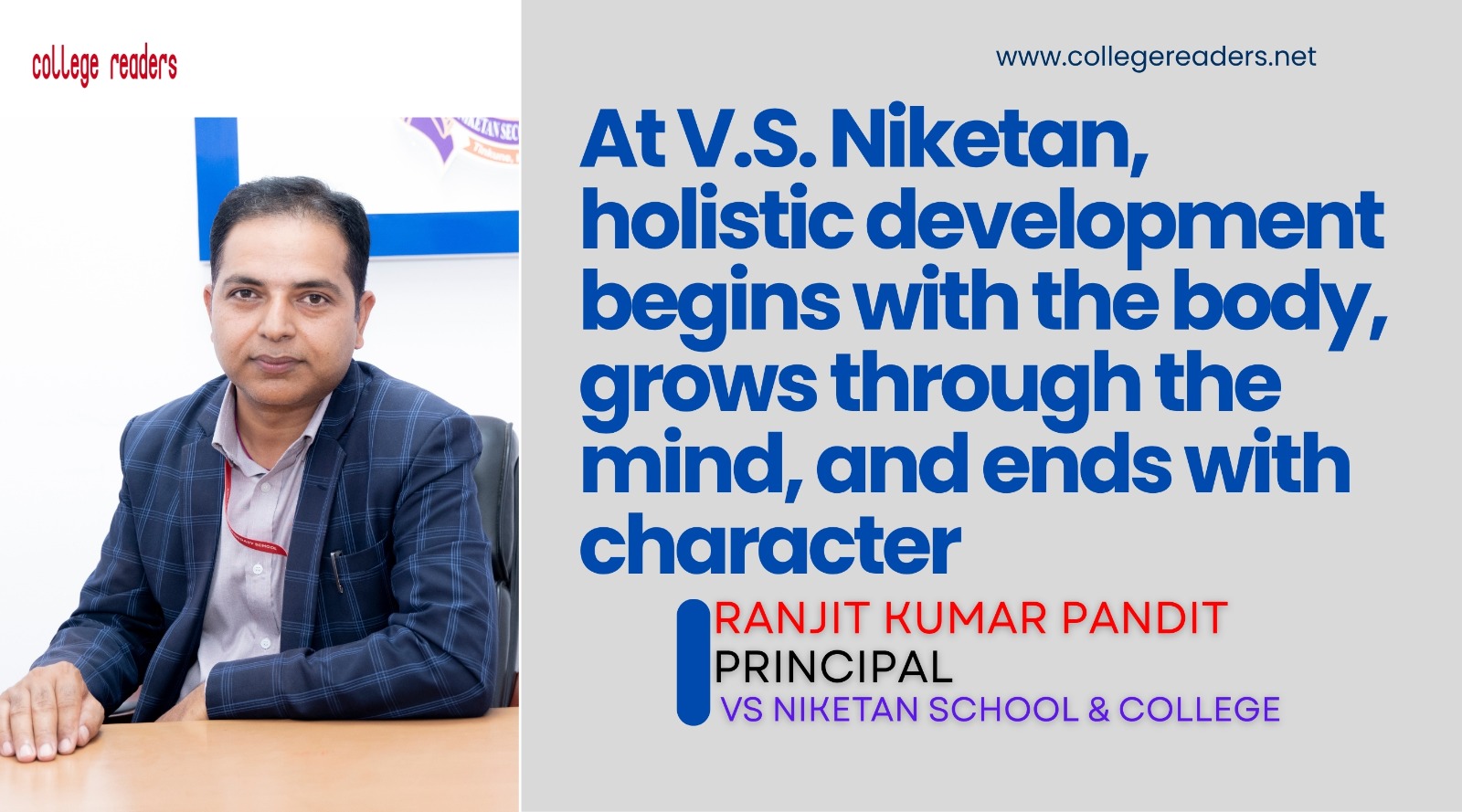
At V.S. Niketan, holistic development begins with the body, grows through the mind, and ends with character
- College Readers
- 18 May 2026
- Views
- Interviews , Op-ed
College, traces the trajectory of one of Nepal’s oldest private institutions — established in 2038 BS, recognised with the National Educational Shield in 2064 BS, and now hosting roughly 1,500 Plus Two students at its Tinkune campus. Drawing on more than four decades of institutional memory, he sets out a comprehensive framework for sustainable college growth covering student engagement, faculty development, parental collaboration, infrastructure, and financial discipline. He acknowledges the candid gap between what today’s students demand and what traditional Nepali curricula can deliver, and closes with a direct call to bridge that gap together.
Since the start of the Plus Two programme at your institution, how have you observed its development and progress over the years?
V.S. — Vinayak Sudha — Niketan was established in 2038 BS and has grown into one of Nepal’s most prestigious educational institutions. From the start the college has held an unwavering commitment to quality education, and the credit for its expansion belongs to a visionary founder, dynamic leadership, dedicated teachers, cooperative parents, and supportive well-wishers. In the Plus Two stream alone we have witnessed a rapid rise in enrolment, climbing from 150 students at inception to about 1,500 within a few years, a level sustained now for over two decades. That growth reflects academic excellence, consistent board results, and a well-structured environment. In 2064 BS we were awarded the National Educational Shield as the best institutional school in Nepal, and our central Tinkune campus offers spacious infrastructure, vibrant extracurricular life, and a disciplined academic environment.
In your experience, what key factors should a college focus on to ensure sustainable growth and progress?
Sustainable progress hinges on a balanced mix of internal excellence and external collaboration. Internally, student engagement matters first; active learning through project-based work, debates, internships, and research cultivates the critical thinking that ranks above marks. Visionary leadership must then set clear goals, communicate them across faculty and parents, and take data-driven decisions. Faculty themselves are the engine: regular training, performance evaluation, incentives, and a culture of teamwork keep them motivated and innovative. Externally, parental collaboration through structured meetings and advisory engagement creates transparency, while community partnerships, alumni networks, and outreach programmes build reputation and give students real-world exposure. The remaining pillars are infrastructure — smart classrooms, e-learning tools, modern laboratories, green campuses — and financial sustainability, expressed through a fair fee structure, efficient budgeting, and scholarships. A successful college, in short, operates as a learning community.
How do students perceive education today, and are we meeting the expectations of students, parents, and society?
Today’s students see education as a platform for self-discovery, skill development, and life preparation rather than a contest for grades. They demand practical capabilities such as communication, digital literacy, and critical thinking; flexible learning models combining online and offline methods; real-world relevance with clear career connections; mental-health support inside emotionally safe environments; and technology-friendly infrastructure aligned to global trends. We are responding through skill-based programmes, personalised teaching, modern facilities, and student-centred learning, though traditional curricula and patchy career guidance remain challenges. Parents, for their part, expect quality, discipline, transparency, and moral grounding, and they are more engaged than a decade ago. Bridging the remaining gap requires curriculum reform incorporating soft skills, financial literacy, environmental awareness, and coding, alongside expanded career services, guest lectures, mentorships, and regular feedback channels.
Beyond academics, what support systems and programmes does your college offer for holistic development?
Holistic development at V.S. Niketan begins with the body and ends with character. We run a full physical and recreational programme including outdoor and indoor sports, yoga, meditation, and gym facilities, all of which build fitness, teamwork, and discipline together. Counselling and mental wellness are taken seriously: individual and group counselling, mindfulness sessions, and peer-support groups help students manage stress before it becomes an academic crisis. Cultural and social engagement comes through music, dance, drama, photography, inter-college fests, and social campaigns that build creativity, empathy, and leadership in parallel. Skill enhancement is delivered through public speaking, soft-skills training, teamwork exercises, digital literacy, and programming. Finally, the campus is built for safety and inclusion through extra classes, gender-support provisions, an anti-ragging committee, and a year-round student helpline.
What kind of colleges and academic environments are students seeking today, and why?
Today’s students prioritise relevance, innovation, and inclusivity in clearly identifiable ways. They prefer skill-based, career-oriented colleges that arrange industry visits and offer certifications in current areas such as artificial intelligence and digital marketing. They want technology-enabled campuses with smart classrooms, e-learning tools, and accessible online resources. They look for flexibility in the form of elective choices, hands-on projects, and hybrid learning models, and for supportive environments that guarantee emotional safety alongside cultural diversity. Activity-based and experiential learning through laboratories, workshops, clubs, and festivals is no longer optional. Green, hygienic, and accessible spaces, complete with transport and recreational facilities, complete the picture. These preferences mark a real shift from traditional schooling toward future-ready learning.
What indicators show that students are selecting V.S. Niketan for their Plus Two Education?
Several converging signals point in the same direction. Our Tinkune location is easily accessible from across the Valley, and our academic reputation is reinforced by the lived testimony of seniors who have already passed through our gates. We offer full merit-based scholarships to GPA 4.0 holders, along with entrance-based awards across Science, Management, Humanities, and Law, and our affordable fee structure is deliberately calibrated to support middle-class families without compromising quality. Academically, we report consistent 99 per cent NEB pass rates, and our students regularly rank in the IOM and IOE entrance examinations, producing the success stories and alumni networks that sustain trust in future cohorts. Our smart classrooms, science and computer laboratories, hotel-management laboratory, library, sports facilities, hygienic canteen, and welcoming campus culture together explain why V.S. Niketan remains, in our considered view, a top Plus Two destination in Nepal.

Popular Categories
Trending This Month






 Established in 2065 BS, COLLEGE READERS is a premier national-level educational magazine dedicated to serving the academic and informational needs of school and university students, teachers, educators, and concerned ones in Nepal. The magazine provides current and comprehensive information on various educational opportunities worldwide, aiming to guide school and college-level students in their academic and career journeys. It also highlights essential support services and service providers that play a crucial role in shaping students' career paths in today's competitive world.

- Our Location Putalisadak, Kathmandu
- Send Us Email collegereaders123@gmail.com
- Call Us Now 977 01 4518759
