
Call now
977 01 4518759
Send Message
collegereaders123@gmail.com
Our Location
Putalisadak, Kathmandu
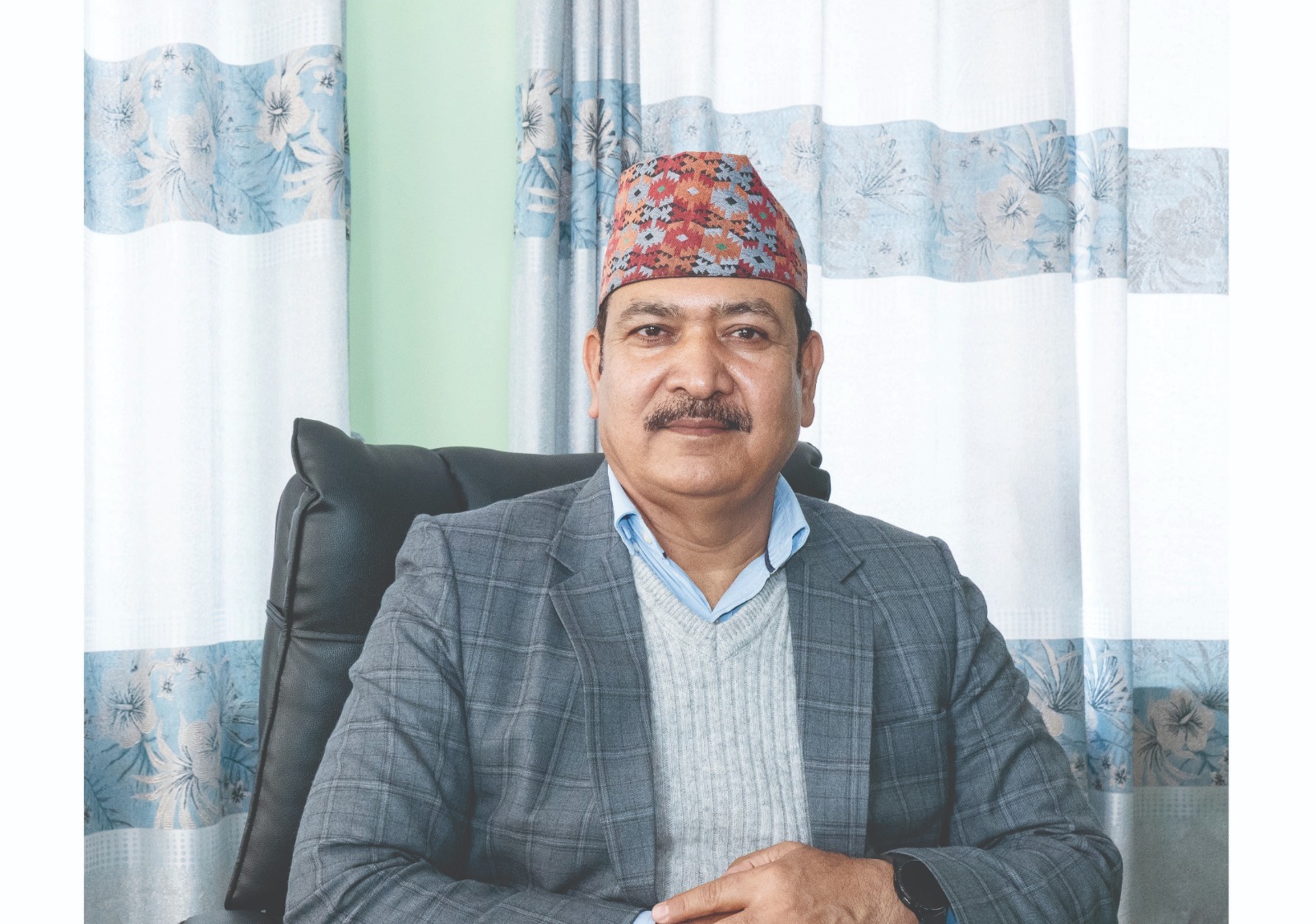
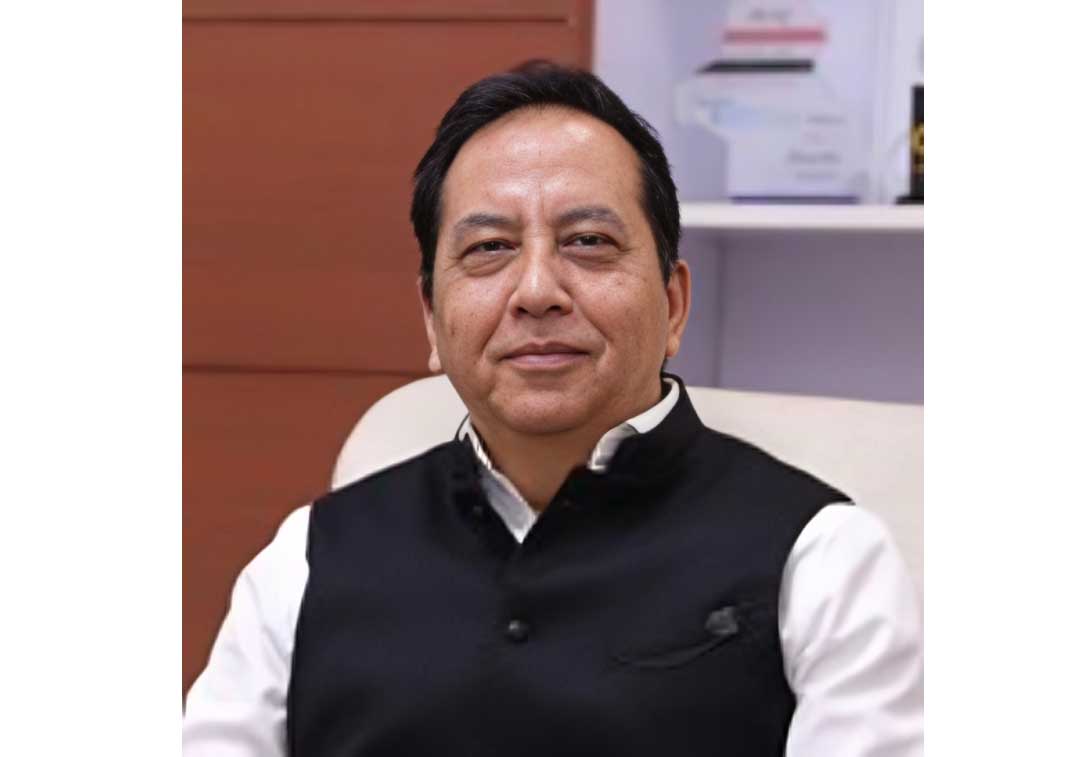
Prof. Dr. Bed Raj KC
Vice-Chancellor
Pokhara University
Why Are We Losing Our Best Minds Abroad?
- College Readers
- 18 Feb 2026
- Views
- Interviews
The appointment of Prof. Dr. Bed Raj KC as Vice-Chancellor of Pokhara University in December 2024 heralded a new era for this burgeoning institution. An eminent scholar in Physics, Dr. KC is renowned for his academic rigour and a demonstrable capacity for translating vision into tangible outcomes, attributes now steering one of Nepal's most rapidly expanding universities.
Dr. KC identifies the pervasive issue of student exodus for overseas education as a paramount challenge. He posits that this necessitates strategic interventions, including meticulous research to identify and subsequently enhance in-demand academic programs within Nepal to render them globally competitive. He further contends that the allure of part-time work abroad underscores an imperative for domestic policy reform to create analogous opportunities, thereby mitigating the incentive for migration.
Moreover, he critiques the deep-seated societal perception that conflates foreign qualifications with superior prestige, a fallacy often obscuring the reality of graduate underemployment. To counteract this, he advocates for comprehensive pre-departure counselling and the implementation of skill-oriented curricula designed to cultivate employable, entrepreneurial graduates.
Under his stewardship, the university is pursuing an ambitious agenda of modernising its academic offerings, instituting innovative programs aligned with international benchmarks, and securing global accreditation. This multifaceted strategy, coupled with infrastructural expansion, aims to fortify the national higher education ecosystem. Ultimately, Dr. KC envisions that by elevating academic quality and fostering concomitant economic prospects, Nepal can effectively stem the tide of student outmigration and bolster its developmental trajectory.
Students in Nepal increasingly aspire to go abroad for higher studies. Recently, however, there has been growing discussion that students should complete their bachelor’s degree within Nepal. From your perspective, how should universities support this?
This is not a simple issue but a subject that demands research. We need to identify which programs or disciplines attract the highest number of outbound students, and then ensure those opportunities are available here at home. Another reality is that many students don’t go abroad purely for education — they also go with the intention of working while studying.
That tells us something very important: if Nepal wants to retain its students, universities together with the state must create policies that allow part-time work opportunities here. If our students could engage in part-time work in government institutions or related sectors while studying, the incentive to leave would be reduced.
We must also address the mindset issue. From the time of SLC or Grade 10, families begin nurturing the dream of sending children abroad, believing it to be prestigious. Yet, the reality is sobering. I personally know engineering graduates working in hotels overseas. This raises serious questions about the actual benefits of going abroad. Unfortunately, good opportunities are not guaranteed.
This is a national challenge. To reverse the trend, our universities need to modernize, offer competitive programs, and work with the government to create part-time job opportunities. If we succeed, the outflow of students will decline significantly.
You pointed out that many students go abroad to study, but eventually end up working in low-paying hospitality jobs. From both an educational and financial perspective, this doesn’t help their career growth. Isn’t this something Nepali universities could address through better promotion of local opportunities?
Yes, and this is where counseling becomes critical. Students must be made aware of the reality before they make decisions. I once met a Nepali IT engineer in Belgium. When I asked about his work, he said he was working in a hotel. His reasoning was simple: local citizens get first preference in professional jobs, while international students are left with low-paying options. On top of that, the cost of living is so high that they have no choice but to work just to survive, let alone pay tuition fees.
For students who already struggle to manage fees in Nepal, life becomes even harder abroad. Their education suffers, and many graduate without employable skills or meaningful careers. That is why pre-departure counseling is essential. Students must understand the challenges and prepare accordingly.
Another problem is that many who go abroad immediately after SLC or +2 lack maturity and practical skills. If they were better trained here — through skill-based programs — they could compete more effectively overseas. Our education system, therefore, must pivot toward skill development. Universities should not merely produce graduates; we must produce employable and entrepreneurial talent. With the right policies, we can reduce the compulsion to migrate.
If we compare Nepali higher education with global standards, how competitive is the education offered by our universities?
In terms of curriculum, Nepal is not behind. In fact, many of our students who get admitted to prestigious foreign universities excel, often topping their classes. That itself proves that our academic foundation is strong.
However, the curriculum must be continuously updated to meet global demands. For example, I recently held discussions with the Engineering Council about achieving international accreditation. If we fulfill all criteria under international accords, our graduates will gain global recognition without having to repeat courses abroad. This is the direction we must move in.
The real problem is not the quality of education, but the financial and social circumstances students face when they go abroad. Unable to afford fees without working long hours, many talented students sacrifice their academic potential. It’s a systemic issue that requires state-level intervention.
As the debate grows stronger, why do you believe students should complete at least their bachelor’s degree in Nepal?
The reasons students leave — and the reasons they should stay — are actually two sides of the same coin. Peer pressure is one major factor. When a wave of students moves abroad, others follow. Another is the expectation of earning while studying.
If proper counseling is done, students will realize that studying abroad also brings hardships. From the academic side, our universities are fully capable of offering globally relevant programs. At Pokhara University, we have been upgrading curricula, introducing new courses, and aligning programs with international market needs.
By studying here, students can acquire strong skills, become globally competitive, and then — if they wish — go abroad later under better conditions with better pay. If, alongside this, the government allows part-time work opportunities for students domestically, we will significantly reduce the brain drain.
Pokhara University currently runs a diverse range of programs. How relevant are these to the job market?
Our programs are highly market-oriented. The success of our graduates, both within Nepal and abroad, is proof of their quality. At the same time, we never remain static. We have recently updated 15 curricula and introduced four entirely new courses not offered by other universities in Nepal. These programs were carefully designed after studying international demand.
At present, we have 68 active programs in fields like banking, health sciences, and technology. With 65 affiliated colleges and about 40,000 students, Pokhara University is growing steadily, even as other universities struggle with declining enrollment. This growth is itself evidence of how relevant and trusted our programs are.
You have been Vice-Chancellor for less than a year. What significant initiatives have you taken so far?
When I took office, one of my first major undertakings was the initiation of a seven-story academic building, with an investment of about NPR 430 million. Once completed, this will be a landmark facility for the university.
We also revitalized our hospital services. Previously underutilized, the hospital now operates 24 hours a day. We organized health camps in various areas, increased patient flow, and expanded human resources across disciplines.
Academically, we advanced the BDS curriculum, though limited infrastructure prevented us from launching it this year. Our goal is to expand to a 300-bed facility so that we can introduce both BDS and, eventually, MBBS. Discussions with partner hospitals are already underway.
Recognizing the need for a central presence in Kathmandu, where we have 36 affiliated colleges, we passed a policy to establish an academic campus there. This will host at least one program under each faculty. We have also introduced programs such as Applied Economics (the first of its kind in Nepal) and Mechanical Engineering.
Recently, you decided to resume the previously stalled affiliation process. Will this affect existing colleges?
No, our existing 65 affiliated colleges remain unaffected. To clarify: back in 2079 BS, we invited applications for new affiliations, and 175 institutions applied. About 50 later withdrew, and the university decided to grant affiliation to 20.
However, legal disputes stalled the process. Reopening a fresh call now would only add complications. Therefore, we chose to resume the existing process with transparent criteria. Institutions still have the option to withdraw, but those that remain will be evaluated under updated standards.
This ensures fairness without disturbing the stability of our already affiliated colleges.
What steps are you taking to strengthen existing affiliated colleges?
We are focusing on replacing outdated, low-demand programs with new, market-driven ones. Where student interest has declined, we are designing alternatives to ensure sustainability. We are also extending and upgrading existing programs where needed, so that students in remote areas don’t have to migrate to Pokhara or Kathmandu just for education.
The goal is clear: make all our affiliated colleges future-ready, while ensuring their continued stability and contribution to higher education.
Despite national enrollment decline, Pokhara University is growing. What challenges do you foresee ahead?
Our success rests on two pillars:
- Strict maintenance of our academic calendar — students complete their four-year degree in exactly four years, with timely results and transcripts.
- Continuous curriculum updates, aligned with market demand.
But challenges remain. The outflow of students abroad is the biggest. We must do more to promote our programs and their strengths. Funding is another issue. Unlike some universities where the government pays for staff salaries directly, Pokhara University gets a lump sum budget and must manage everything itself. This limits our ability to invest in research, innovation, and infrastructure.
Some faculties still operate in rented buildings. If we want to launch MBBS, for example, we need significant expansion. I have already raised this with the Education Minister and even the Prime Minister, since medical outmigration is a pressing national issue.
Let’s discuss credit transfer. Why is it easier between Nepali and foreign universities than between Nepali universities themselves?
The framework for credit transfer exists, but so far there haven’t been enough domestic cases to develop a robust mechanism. Previously, only 25% of credits were transferable. Now, we’ve allowed greater flexibility based on demand.
This means in the future, transfers between Nepali universities will become more practical. We are open to collaboration and expansion in this area.
Finally, what message would you like to give to students considering going abroad for higher education?
If we truly want to build Nepal, our students must recognize the importance of studying here — at least until their bachelor’s degree. Right now, villages are emptying and youth are leaving in large numbers, only to end up working in hotels or farms abroad.
But here in Nepal, opportunities abound. Agriculture alone holds vast potential. With proper skills and education, students can succeed not just here but globally. At Pokhara University, we are committed to running timely exams, publishing results without delay, and upgrading programs to global standards.
So my advice is this: before deciding to go abroad, visit our universities, see what we offer, and consider the long-term benefits of studying at home.
Popular Categories
Trending This Month








 Established in 2065 BS, COLLEGE READERS is a premier national-level educational magazine dedicated to serving the academic and informational needs of school and university students, teachers, educators, and concerned ones in Nepal. The magazine provides current and comprehensive information on various educational opportunities worldwide, aiming to guide school and college-level students in their academic and career journeys. It also highlights essential support services and service providers that play a crucial role in shaping students' career paths in today's competitive world.

- Our Location Putalisadak, Kathmandu
- Send Us Email collegereaders123@gmail.com
- Call Us Now 977 01 4518759
