
Call now
977 01 4518759
Send Message
collegereaders123@gmail.com
Our Location
Putalisadak, Kathmandu
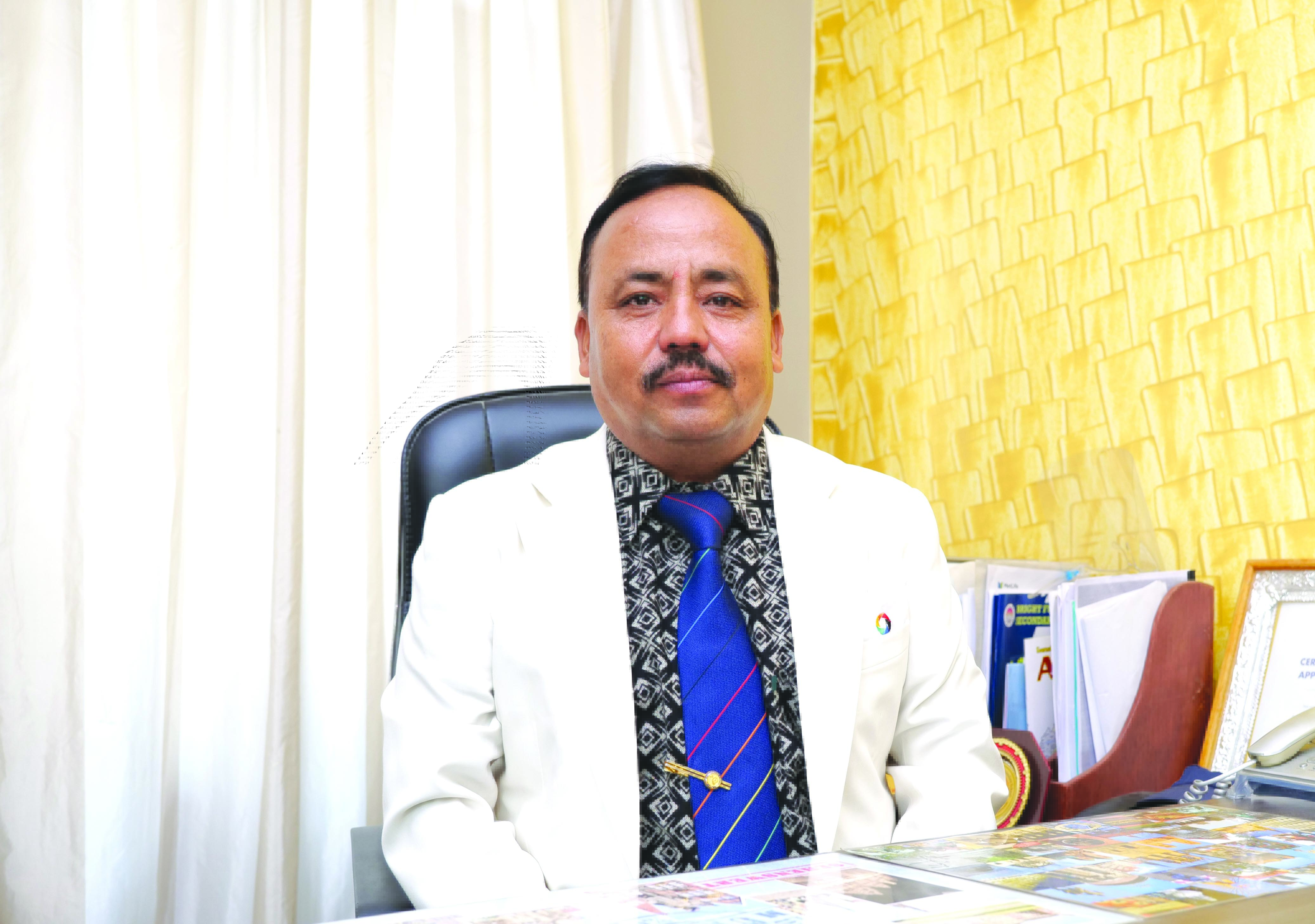
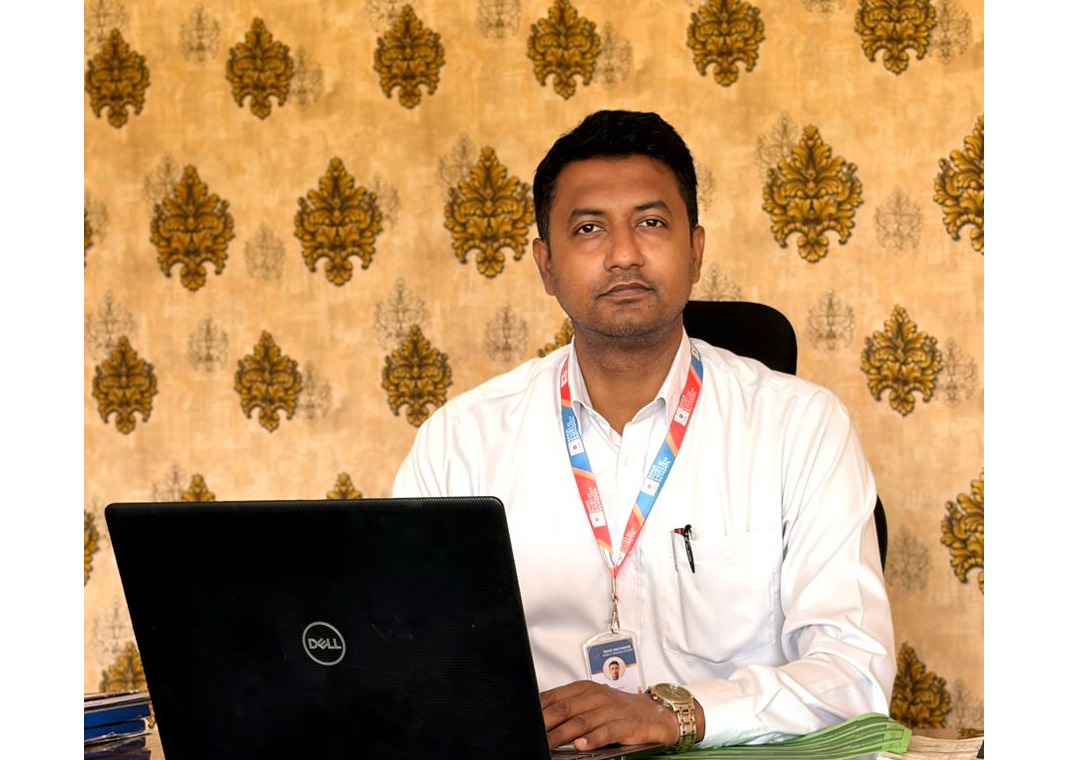
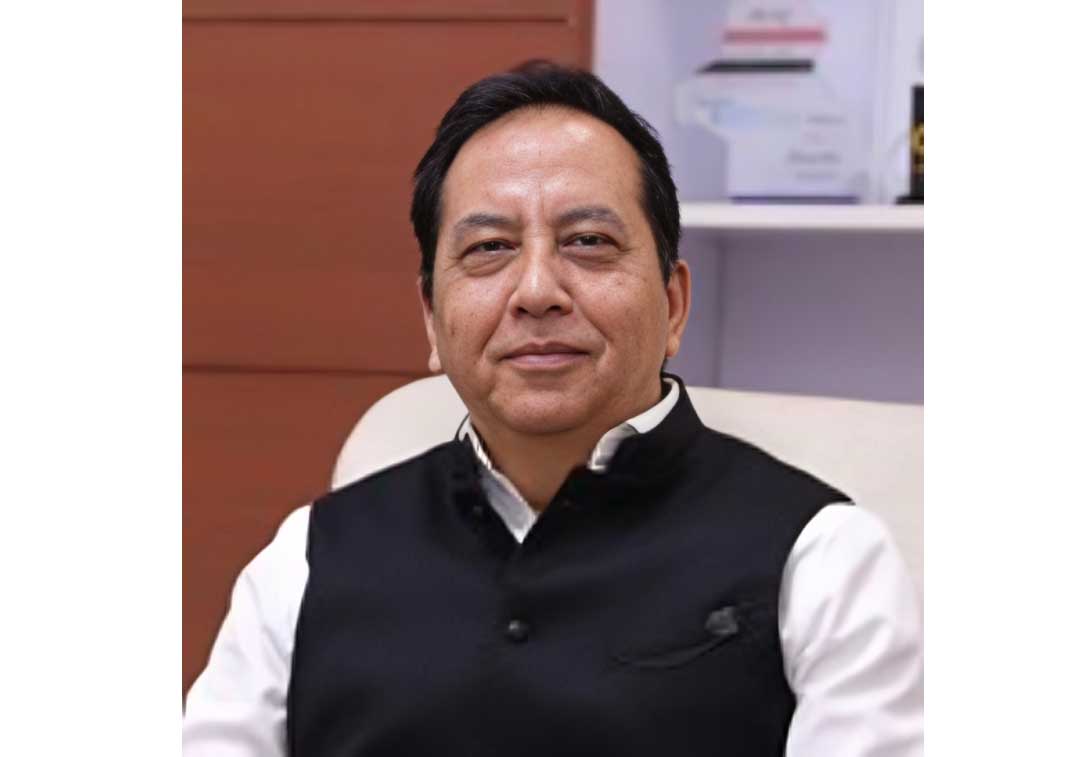
Dayaram Thapa
Founder Principal
Bright Future School, Kathmandu
We are Committed to Shaping Minds That Think, Act, and Live Meaningfully
- College Readers
- 31 Mar 2026
- Views
- Interviews
In the evolving landscape of education, few leaders embody resilience, vision, and transformation as powerfully as Dayaram Thapa, Founder Principal of Bright Future School, Kathmandu. With over four decades of experience in the education sector, his journey—from aspiring doctor to shaping hundreds of medical professionals and future leaders—reflects a deep commitment to meaningful education.
In this insightful conversation with College Readers, Thapa shares his perspectives on the challenges of modern schooling, the role of parents and society, and the urgent need to shift from marks-driven learning to skill-based, value-oriented education.
In today’s rapidly changing educational environment, what challenges and opportunities do you see in school education?
The challenges have increased significantly, especially in handling students. One of the biggest issues is that children today lack patience. Overexposure to comfort and excessive pampering have made them less resilient.
At the same time, our society has become heavily influenced by Western culture, often at the cost of our own educational traditions such as the Gurukul system. Digitalization has further impacted children’s focus and passion for learning.
However, this also presents an opportunity. We must adapt. At our school, we have introduced Social Emotional Learning (SEL) to better understand and address students’ emotional needs. Traditional teaching methods no longer work. Today’s learners demand practical, outcome-oriented education rather than rote learning.
If we cannot align education with students’ emotional and experiential needs, we risk losing their engagement.
There is concern that digital education is affecting creativity and reading culture. How is your school addressing this?
This is a valid concern. While digital tools are important, overdependence can reduce creativity and weaken reading habits.
To address this, we have adopted activity-based and project-based learning (PBL). Students are encouraged to engage in real-life projects—such as preserving cultural heritage, community cleanliness, and practical problem-solving.
We are also strengthening skill-based education. For example, we have introduced:
- Art and craft programs
- Clay modeling
- Vocational skills like wiring and plumbing
We are even developing labs where students can learn basic life skills—such as fixing electrical issues or handling household repairs.
“Education should not be confined within four classroom walls—it must prepare students for real life.”
By dedicating time each week to practical learning, we ensure students grow beyond textbooks.
How do you ensure quality in teaching and learning activities within the classroom?
Quality education requires continuous improvement. Recently, we partnered with Cambridge Education to integrate an internationally recognized curriculum at the primary level.
This helps students develop strong foundational skills and prepares them for global standards such as IELTS and TOEFL.
At the same time, we recognize that digitalization cannot be avoided. The key is to use it wisely.
“Technology is like a tool—it can heal or harm, depending on how we use it.”
We focus on:
- Responsible use of digital devices
- Activity-based learning approaches
- Emotional engagement through SEL
This balanced approach helps us deliver a more holistic education.
With your extensive experience, how do you see the roles of schools and parents in shaping children?
Both schools and parents play crucial roles. Schools can guide and educate, but they cannot do everything alone.
Students spend only part of the year in school—the rest of their time is with their families. Therefore, parents must be equally responsible.
We conduct parent orientation programs every year, focusing on:
- Effective parenting strategies
- Understanding children’s needs
- Building discipline through example
“Children learn more from what parents do than what they say.”
If parents themselves are not disciplined—whether in using digital devices or lifestyle habits—they cannot expect their children to be disciplined.
Despite the emphasis on value-based education, marks and GPA still dominate. What is your view on this?
This is one of the biggest challenges in our education system.
GPA is important, but it should not be the ultimate goal. A student who scores high marks but lacks practical skills cannot succeed in today’s world.
“A certificate alone cannot guarantee success—skills and competence do.”
Students must develop:
- Practical skills
- Creativity
- Communication abilities
- Diverse talents such as music, sports, or arts
The real goal of education should be to produce individuals who can sustain themselves and contribute to society—not just score high marks.
What are the key parameters of ideal learning, and how is your school implementing them?
Ideal learning is about balance.
At Bright Future School, we maintain strong academic performance while equally emphasizing extracurricular and co-curricular activities.
Our results have been consistently excellent, but we also focus on:
- Sports (we are affiliated with international school sports programs)
- Music, dance, and arts
- Leadership and teamwork activities
This balanced approach ensures that students grow academically as well as personally.
What message would you like to share with parents?
My humble request to parents is to be more conscious and responsible.
Do not over-pamper your children. Set boundaries. Be role models.
If parents themselves are constantly using mobile phones, they cannot expect children to avoid them.
“Before guiding children, parents must first guide themselves.”
Children imitate their parents. Therefore:
- Practise discipline
- Spend quality time with children
- Encourage healthy habits
Education begins at home, and parents are the first teachers.
Popular Categories
Trending This Month








 Established in 2065 BS, COLLEGE READERS is a premier national-level educational magazine dedicated to serving the academic and informational needs of school and university students, teachers, educators, and concerned ones in Nepal. The magazine provides current and comprehensive information on various educational opportunities worldwide, aiming to guide school and college-level students in their academic and career journeys. It also highlights essential support services and service providers that play a crucial role in shaping students' career paths in today's competitive world.

- Our Location Putalisadak, Kathmandu
- Send Us Email collegereaders123@gmail.com
- Call Us Now 977 01 4518759
