
Call now
977 01 4518759
Send Message
collegereaders123@gmail.com
Our Location
Putalisadak, Kathmandu
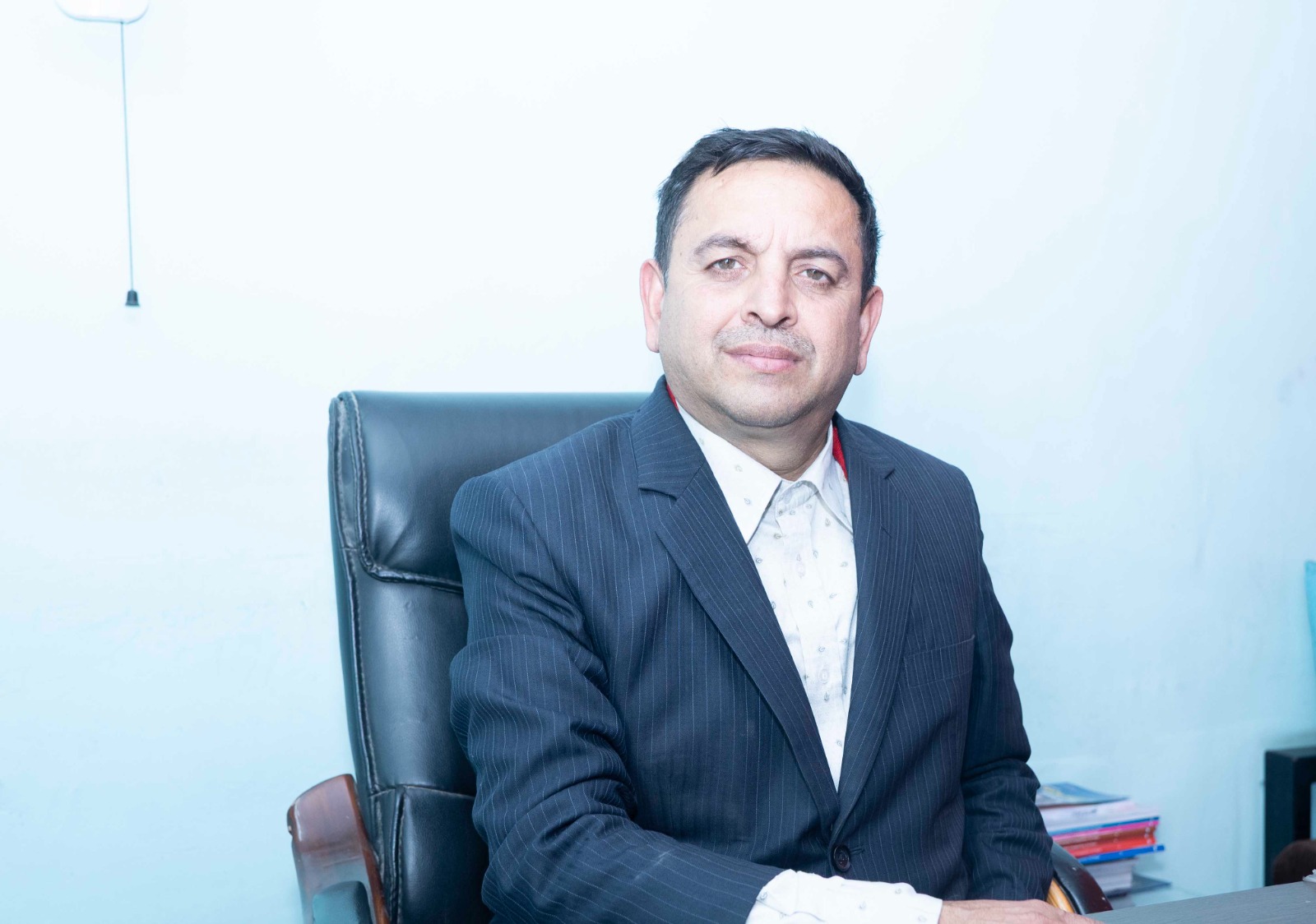
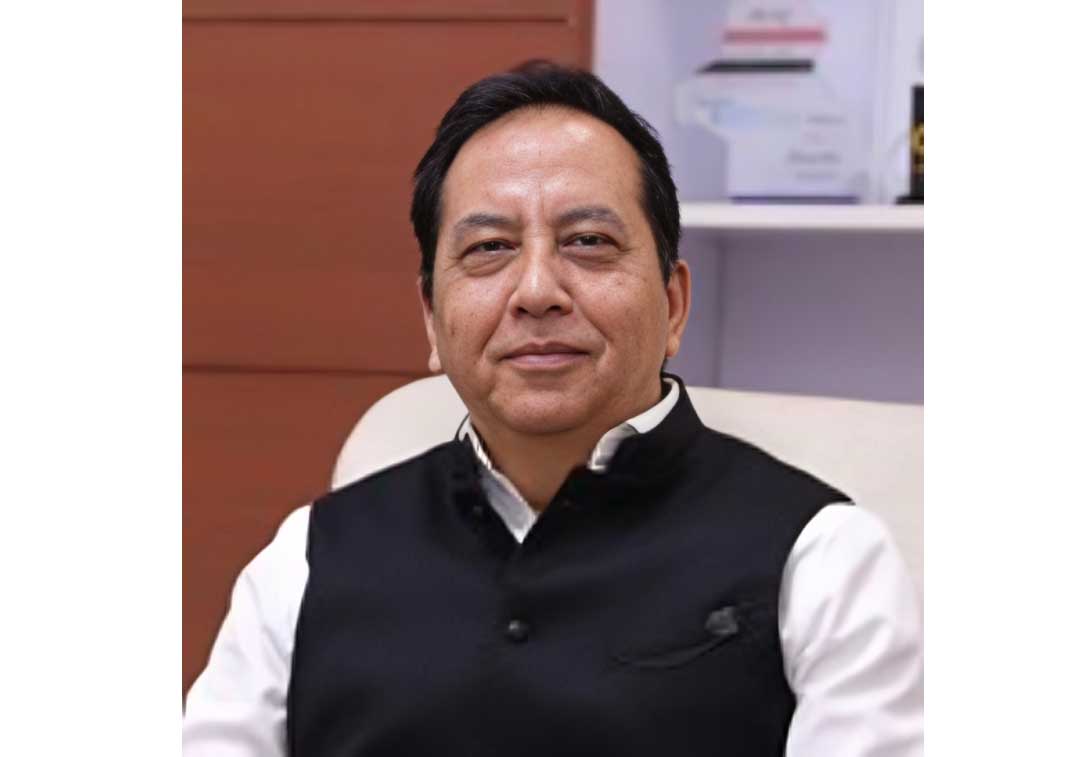
Chitra Kumar Dahal
Managing Director
Dikshyalaya School, Kathmandu | Lecturer, Mahendra Ratna Campus
Dikshyalaya is firm for Future-Ready Education: Preparing Minds for a Global, Tech-Driven World
- College Readers
- 31 Mar 2026
- Views
- Interviews
In an era where education is rapidly evolving under the influence of technology and global competition, Chitra Kumar Dahal stands out as a forward-thinking educator and academic leader. As the Managing Director of Dikshyalaya School, Kathmandu, and a lecturer at Mahendra Ratna Campus, Tahachal, Dahal blends practical school leadership with higher education insight.
With a strong belief in integrating technology, life skills, and student-centered learning, he has been actively transforming traditional classroom practices into dynamic learning environments. In this conversation with College Readers, Dahal shares his journey, educational philosophy, and innovative practices shaping the future of schooling in Nepal.
How do you see the role of education in today’s global and technological context?
Today, education must respond to global demands. The world requires skilled, competent, and adaptable human resources. Technology-based education and global competitiveness have become essential.
We must prepare students not only for local challenges but also for global opportunities. This means integrating technology-friendly approaches and modern teaching practices into our system.
At Dikshyalaya, we adopted innovative methods like the flipped classroom model, which was introduced globally around 2012. This model divides learning into three stages:
- Pre-class learning (students explore content independently)
- In-class activities (collaborative and interactive learning)
- Post-class reinforcement
This approach shifts learning from passive listening to active engagement. Students take ownership of their learning, while teachers act as facilitators rather than instructors.
How does your school integrate technology into teaching and learning?
Technology is a powerful tool when used wisely. At our school, we use gamification and digital tools to make learning more engaging.
Instead of rote memorization, we encourage students to explore concepts through interactive platforms. Around 70% of content is explored independently by students, while classroom time is used for collaboration, discussion, and application.
Teachers play the role of:
- Facilitators
- Resource persons
- Learning guides
We also focus on designing collaborative tasks—whether through group work, peer learning, or individual exploration.
“Learning becomes meaningful when students actively participate, not just passively receive.”
What is your educational philosophy in terms of student development?
Our philosophy is based on integrating four key elements:
- Knowledge
- Skills
- Attitude and behavior
- Technology
We aim to provide life skill-oriented education. Every lesson should connect to real-life application.
For example, beyond academic knowledge, we teach students:
- How to manage daily routines
- Basic life skills like self-care and responsibility
- Social behavior and communication
“Education should prepare students not just for exams, but for life.”
We also follow international frameworks such as the International Primary Curriculum (IPC) and Early Years Curriculum, which help us map learning outcomes effectively while aligning with Nepal’s national curriculum.
With increasing use of technology, how do you ensure creativity and reading culture among students?
Technology alone does not harm creativity—it depends on how we use it.
At our school, we focus on:
- Digital discipline through counseling
- Guiding students on appropriate content consumption
- Encouraging students to create presentations and digital projects
To strengthen reading culture, we have made book reading mandatory within the school routine. Reading is also included in formative assessments.
Students are required to:
- Read regularly
- Engage with both digital and physical texts
- Reflect on their reading
We also provide various co-curricular activities (CCA) such as debates, quizzes, and essay writing to enhance creativity.
“Creativity grows when students are given opportunities to think, express, and explore.”
How do you address the challenges of digital overuse among students?
This is a critical issue. We begin with awareness and counseling—teaching students which digital platforms are beneficial and which are not.
However, the role of parents is equally important. Schools can regulate digital exposure during school hours, but at home, parents must ensure balance.
We recommend:
- Limiting screen time
- Encouraging offline activities
- Promoting family interaction
“Technology should be controlled by us—it should not control us.”
What are the major challenges schools face today?
One major challenge is aligning Nepal’s traditional curriculum with global standards. While we are moving toward digital and skill-based education, the national system still emphasizes written examinations.
Another challenge comes from social and family dynamics. Issues such as family conflicts or lack of parental engagement directly affect students’ learning.
Additionally, schools must continuously adapt to changing global demands while maintaining local relevance.
How can schools better support students’ dreams and aspirations?
The first step is understanding each student’s interest. Every child has unique potential.
Schools must:
- Identify students’ strengths
- Guide them toward their goals
- Connect learning with real-life aspirations
We also expose students to role models and success stories to inspire them.
However, success ultimately depends on the student’s internal motivation.
“No system can succeed unless the learner has the desire to grow.”
What message would you like to give to parents?
First, I would like to thank all parents for their trust.
Education is a shared responsibility between schools and families. Parents must actively participate in their children’s development.
They should:
- Ensure a safe and supportive home environment
- Monitor digital usage
- Encourage social interaction and communication
Family discussions, gatherings, and community engagement help children develop essential life skills.
“A child learns not only from school, but from every interaction at home and in society.”
At Dikshyalaya, we are committed to supporting students academically, emotionally, and socially. We assure parents that their trust will always be valued and upheld.
Popular Categories
Trending This Month








 Established in 2065 BS, COLLEGE READERS is a premier national-level educational magazine dedicated to serving the academic and informational needs of school and university students, teachers, educators, and concerned ones in Nepal. The magazine provides current and comprehensive information on various educational opportunities worldwide, aiming to guide school and college-level students in their academic and career journeys. It also highlights essential support services and service providers that play a crucial role in shaping students' career paths in today's competitive world.

- Our Location Putalisadak, Kathmandu
- Send Us Email collegereaders123@gmail.com
- Call Us Now 977 01 4518759
