
Call now
977 01 4518759
Send Message
collegereaders123@gmail.com
Our Location
Putalisadak, Kathmandu
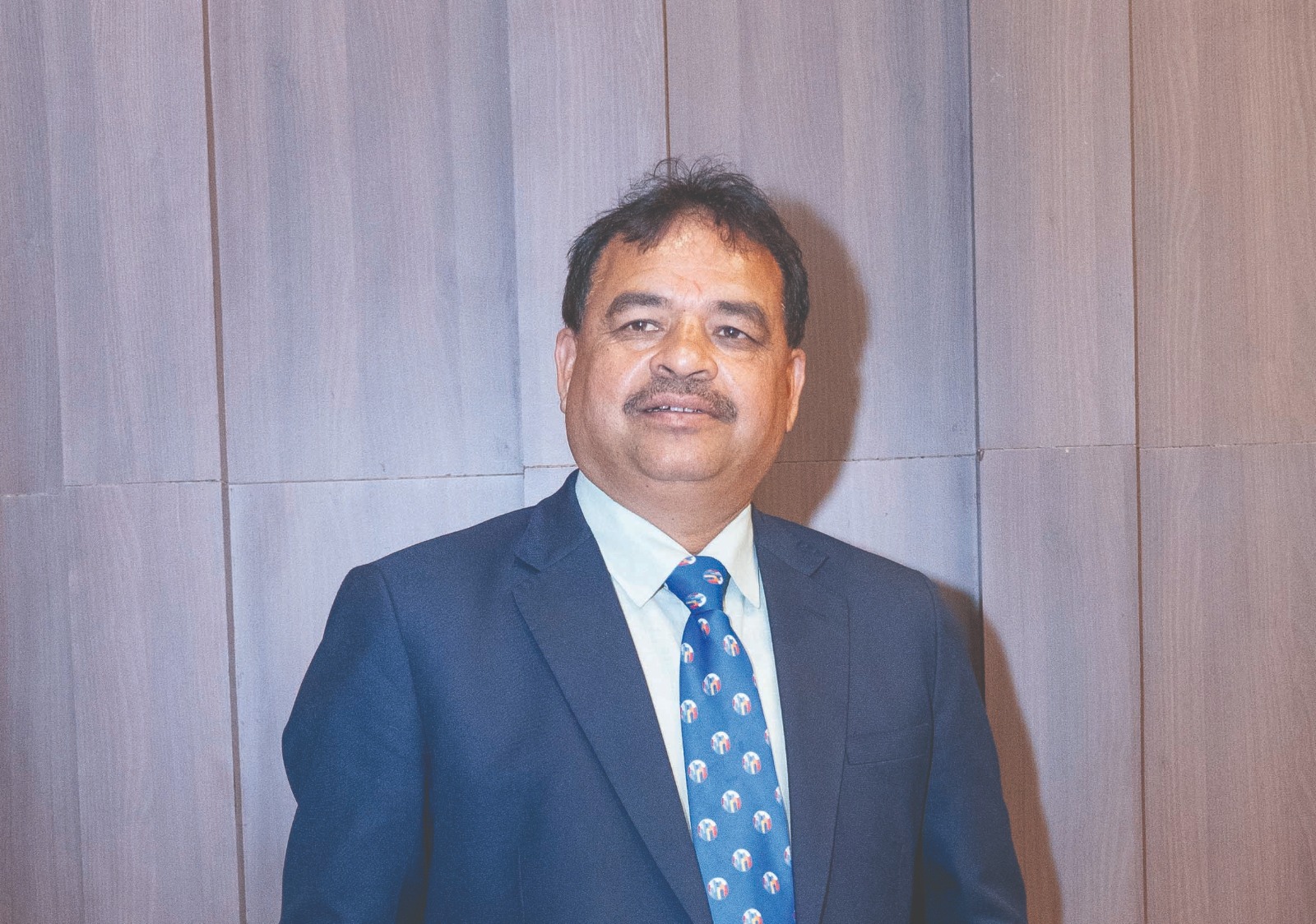
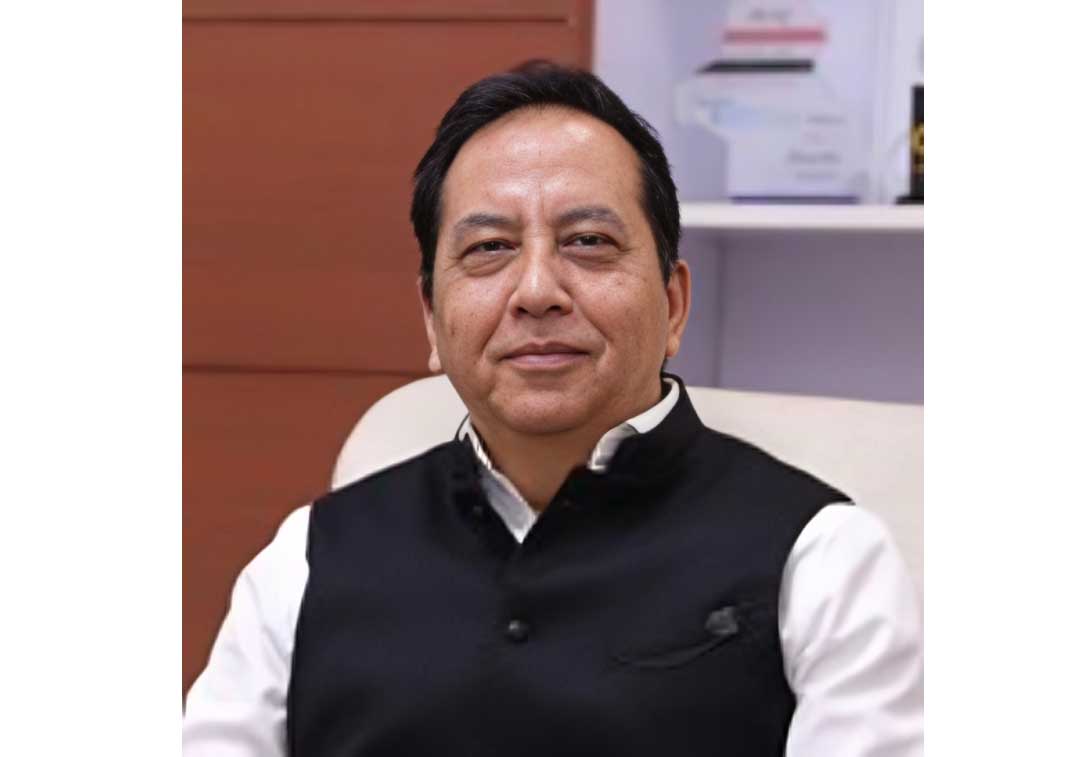
Krishna Adhikari
Founder Principal
Valley Public School | President, PABSON
Real Education Connects Knowledge, Technology, and Purpose
- College Readers
- 31 Mar 2026
- Views
- Interviews
In the evolving narrative of Nepal’s education sector, few names resonate with as much experience, dedication, and vision as Krishna Adhikari. As the Founder Principal of Valley Public School and the current President of Private and Boarding Schools’ Organization Nepal (PABSON), Adhikari represents a generation of educators who have not only witnessed the transformation of education but have actively shaped it.
With over three decades of experience in school leadership and exposure to global education systems across more than 50 countries, his perspective is deeply rooted in both local realities and international standards. His journey is not confined to classrooms alone—he has also contributed to social development, women’s empowerment, rural education, and technological inclusion in government schools.
In this comprehensive conversation with College Readers, Adhikari reflects on the challenges and opportunities in Nepal’s education system, the evolving expectations of parents and students, and the urgent need to align education with life skills, values, and technology. His vision goes beyond academic success—toward building responsible, capable, and globally competent citizens.
How did your journey begin in education?
My journey in education has been shaped by both national engagement and international exposure. I have had the opportunity to travel to nearly 50 countries and study their education systems closely—particularly in countries like Germany, Switzerland, France, and the United States. These experiences allowed me to understand how education can be structured in a way that is both practical and transformative.
Beyond education, I have also been involved in sectors such as cement and hydropower, as well as social initiatives in rural areas. In my home district of Syangja, I have contributed to drinking water projects, microfinance programs for women, and IT access in government schools. However, my core identity remains that of an educator.
For nearly 30 years, I have been actively involved with PABSON, working in various roles, and I am currently serving as its President. Through this platform, I aim to strengthen the entire private education sector across Nepal.
As an educational leader, what do you see as the biggest challenges and opportunities today?
The biggest challenge today is change itself. The world is changing rapidly, but our education system has not always kept pace.
Many schools in Nepal were established without proper infrastructure or long-term planning, especially in earlier decades. This has resulted in inconsistencies in quality. We must now move beyond simply opening schools—we must build true educational institutions.
However, every challenge brings opportunity. The recent shift in policy—such as reducing exam pressure in early grades—creates space for progressive education models. This allows us to focus on holistic development rather than just academic results.
This is a time for transformation. Schools must adapt, teachers must evolve, and leadership must become more visionary.
What is PABSON’s position on scholarships and the sustainability of private education?
Private schools in Nepal have been fulfilling their responsibilities regarding scholarships. We already provide around 10% scholarships in admissions, annual programs, and fee waivers.
However, increasing this burden further without support would ultimately impact parents. Education must remain accessible, but it must also remain sustainable.
Therefore, we advocate for a collaborative model between the government and private sector. If the government partners with private institutions, we can expand access to quality education without placing excessive financial pressure on families.
Regarding sustainability, policy decisions must be practical. Forcing schools into rigid structures—such as mandatory conversion into trusts—without considering ground realities can create instability.
Are private schools meeting the expectations of parents? Where do you see gaps?
Parents today are highly informed and deeply invested in their children’s education. They are not careless decision-makers—they carefully evaluate schools based on facilities, teacher quality, learning outcomes, and overall environment.
Many parents make significant sacrifices for their children’s education. In that sense, they are partners in the educational process.
The gap lies in continuous adaptation. Expectations are rising, and schools must keep evolving. This is not a problem—it is an opportunity to improve quality and innovation.
How are private institutions integrating knowledge, skills, attitude, and technology?
Modern education requires integration. Schools must move beyond academic content and focus on developing complete individuals.
We are now introducing:
- Counseling systems in schools
- Health services such as school nurses
- Smart classrooms with digital tools
However, simply installing technology is not enough. Many schools have computers that are not used effectively.
Through PABSON, we have supported thousands of schools in adopting smart technologies and training teachers to use them. Students are already technology-friendly; our responsibility is to guide them toward productive use.
There is concern about declining reading culture among students. How are you addressing this?
This is a real concern. Reading culture is essential for intellectual and moral development.
To address this, PABSON has collaborated with Oxford University Press to implement three key initiatives:
- Establishing a research and training center
- Providing affordable book sets to schools
- Introducing dedicated reading hours
We are promoting corner libraries in classrooms and encouraging daily reading habits among students and teachers.
We are also integrating reading with practical activities, ensuring that students do not become overly dependent on digital devices.
How can schools promote student-centered and effective learning?
Student-centered learning requires a cultural shift within schools.
We must:
- Encourage child clubs
- Implement zero-punishment policies
- Strengthen collaboration between school, parents, and students
Education should not be forced—it should be guided. Students must feel ownership of their learning.
What model should Nepal adopt for better collaboration between government and private schools?
We need a partnership-based model.
Currently, regulation often focuses on control rather than support. Instead, the government should:
- Ensure proper supervision and quality standards
- Provide financial incentives for infrastructure development
- Support schools with tax benefits and policy clarity
Private schools also need support in areas such as:
- Tax relief on educational equipment
- Affordable loans
- Infrastructure development
If both sectors work together, Nepal can build a model education system.
What final message would you like to give to parents and students?
Parents must choose schools thoughtfully. Education is not measured by short-term results—it reveals itself over time.
A truly educated person is someone who:
- Respects family and society
- Values relationships
- Contributes to the nation
- Lives with integrity
Parents should choose schools that integrate:
- Academic excellence
- Values and discipline
- Technology and innovation
- A caring and supportive environment
At the same time, we must all work together—schools, parents, and government—to build a better future.
Popular Categories
Trending This Month








 Established in 2065 BS, COLLEGE READERS is a premier national-level educational magazine dedicated to serving the academic and informational needs of school and university students, teachers, educators, and concerned ones in Nepal. The magazine provides current and comprehensive information on various educational opportunities worldwide, aiming to guide school and college-level students in their academic and career journeys. It also highlights essential support services and service providers that play a crucial role in shaping students' career paths in today's competitive world.

- Our Location Putalisadak, Kathmandu
- Send Us Email collegereaders123@gmail.com
- Call Us Now 977 01 4518759
