
Call now
977 01 4518759
Send Message
collegereaders123@gmail.com
Our Location
Putalisadak, Kathmandu
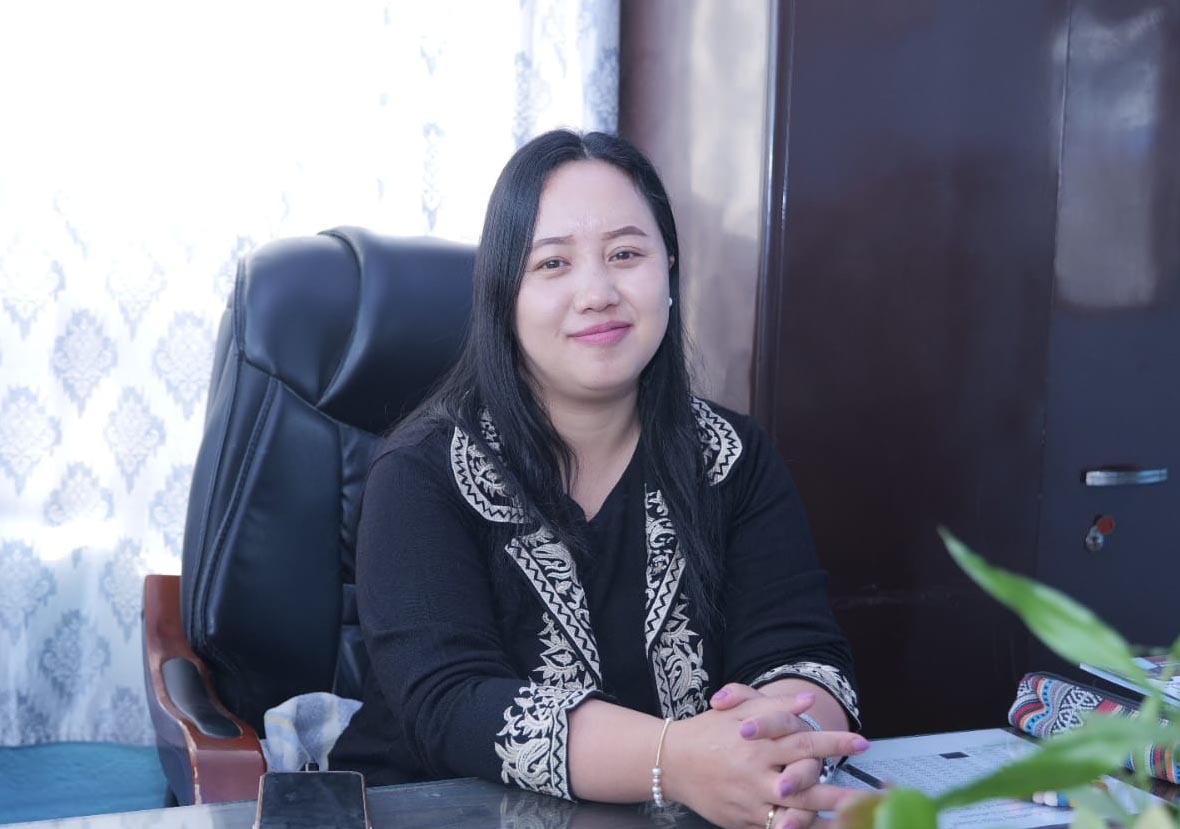
Laxmi Gurung
Founder Principal
Kantipur Academy High School
Kantipur Academy: Empowers Minds for a Creative, Future-Ready World
- College Readers
- 31 Mar 2026
- Views
- Interviews
In the thriving educational locality of Jorpati, Kathmandu, Kantipur Academy High School (KAHS) has established itself as a centre of progressive schooling. Founded in 2059 BS, the institution has spent more than two decades developing an approach that combines academic discipline with firmly grounded human values. Leading this direction is Laxmi Gurung, the Founder Principal—an energetic and pragmatic edupreneur whose leadership is shaped by initiative, emotional intelligence, and a sustained commitment to contemporary teaching practices.
Gurung is not merely an administrator; she is an education entrepreneur who views schooling as a space that cultivates both intellect and personal development. Under her supervision, KAHS has adopted a holistic and thematic framework, deliberately moving beyond rote-based instruction towards interactive and activity-oriented learning. Through the integration of STEAM education, coding, and community-oriented value systems, her central premise remains consistent: education should strengthen character alongside career prospects.
In this exclusive interview for College Readers, she outlines her approach to maintaining consistent quality, designing relevant curricula, and implementing the “tripartite agreement” that she considers fundamental to a student’s achievement.
As the Founder Principal of Kantipur Academy, how do you ensure that the high quality of teaching remains consistent across every classroom?
Consistency is the backbone of any reputable academic institution. At Kantipur Academy, we don't view quality as a static achievement but as a continuous process. I ensure this through a very hands-on approach. First, we conduct regular classroom observations. This isn't about policing our teachers; it’s about understanding the classroom pulse and identifying where students are most engaged.
This is followed by personalized teacher mentoring and standardized lesson planning. We ensure that every educator is aligned with our thematic learning goals. Furthermore, we invest heavily in continuous professional development. Education is evolving—from AI integration to new psychological approaches in child development—so our teachers receive ongoing training to stay updated. By combining this with a robust feedback mechanism involving both students and parents, we create a loop of constant improvement that keeps our standards uniform across all grades.
You are closely engaged in the core academic operations of the institution. What precise role do you undertake in curriculum design and its effective implementation and oversight?
I believe a Principal must be the "Chief Academic Architect." While we follow the national curriculum standards of Nepal, I actively participate in the design and enrichment of our internal syllabus. My role is to ensure that our curriculum is not just a list of subjects, but a roadmap for life. We align our teaching modules with international educational standards, integrating music, art, sports, and dance into the core learning experience.
Supervision, for me, means active implementation. I oversee the transition from theory to practice through rigorous monitoring and evaluation. I am constantly supporting our teachers in finding creative ways to deliver complex topics. If a student doesn't understand a concept through a lecture, we supervise the creation of a project or an experiment to make that concept "click." It’s about ensuring that the curriculum serves the child, not the other way around.
Conflict resolution can be a delicate task in school management. How do you approach disagreements between students, parents, or staff members?
My approach is rooted in fairness, transparency, and deep listening. In any educational community, diverse perspectives are inevitable. When a conflict arises, I act as a facilitator of constructive dialogue. My first step is always to identify the root cause—is it a misunderstanding, a lack of communication, or a difference in expectations?
I provide a safe space where all parties feel heard without judgment. By maintaining a transparent process, we build trust. Whether it’s a parent’s concern about their child’s progress or a staff member’s professional grievance, we work toward a mutually acceptable solution that always keeps the student’s best interest at the center. At Kantipur Academy, we view every conflict as an opportunity to strengthen our community bonds.
How do you define an "ideal learning environment" for a student in the 21st century?
An ideal environment today must be inclusive and student-centered. We are no longer in an era where a teacher is the sole source of information. The 21st-century classroom must be a technology-integrated hub where students are encouraged to be curious, ask "why," and think critically.
Beyond the digital tools, I believe an ideal environment is one where students participate in mass. Whether it’s a science exhibition, a dance competition, or a sports meet, we want every child on the stage or the field. We foster a "conductive co-education environment" that mirrors the real world—encouraging collaboration, respect between genders, and social responsibility. It should be a place where a child’s personality can bloom in its entirety.
There are many choices for parents today. What makes Kantipur Academy High School the "safe and best destination" for a child’s education?
Parents choose us because we bridge the gap between traditional values and modern skills. We have successfully implemented Activity-Based Learning (ABL) and Project-Based Learning (PBL). Our students don't just read about Science; they participate in Science Exhibitions. They don't just study social studies; they go on explorable excursions.
Our integration of co-curricular programs into the daily schedule ensures that engagement remains high. When a parent chooses KAHS, they aren't just choosing a school; they are choosing a partner who is as invested in their child’s character and happiness as they are.
Finally, what is your message to the students and parents across Nepal?
My message is simple: "Be Good, Do Good." This is the motto we live by at Kantipur Academy.
To the students: Always remember that your education is your greatest weapon. Use it not just to build a lucrative career, but to sharpen your character and integrity. Be the leaders who bring positive change to your society.
To the parents: I invite you to partner with us. Education is a tripartite agreement—a three-way partnership between the school, the student, and the home. When we all move in the same direction, we ensure that our children grow up to be more than just "successful." They become compassionate, resilient, and honest human beings who will lead Nepal into a brighter, more innovative future.
Popular Categories
Trending This Month








 Established in 2065 BS, COLLEGE READERS is a premier national-level educational magazine dedicated to serving the academic and informational needs of school and university students, teachers, educators, and concerned ones in Nepal. The magazine provides current and comprehensive information on various educational opportunities worldwide, aiming to guide school and college-level students in their academic and career journeys. It also highlights essential support services and service providers that play a crucial role in shaping students' career paths in today's competitive world.

- Our Location Putalisadak, Kathmandu
- Send Us Email collegereaders123@gmail.com
- Call Us Now 977 01 4518759
