
Call now
977 01 4518759
Send Message
collegereaders123@gmail.com
Our Location
Putalisadak, Kathmandu
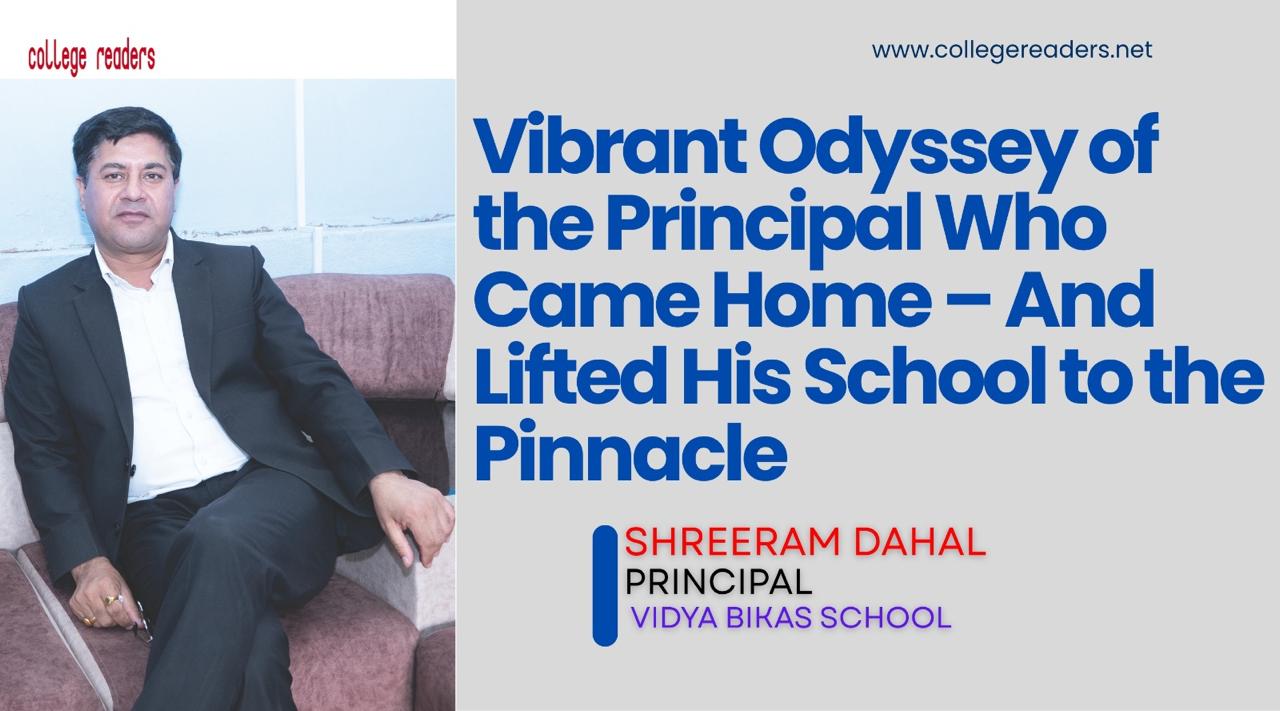
Vibrant Odyssey of the Principal Who Came Home – And Lifted His School to the Pinnacle
- College Readers
- 18 May 2026
- Views
- Op-ed , Interviews
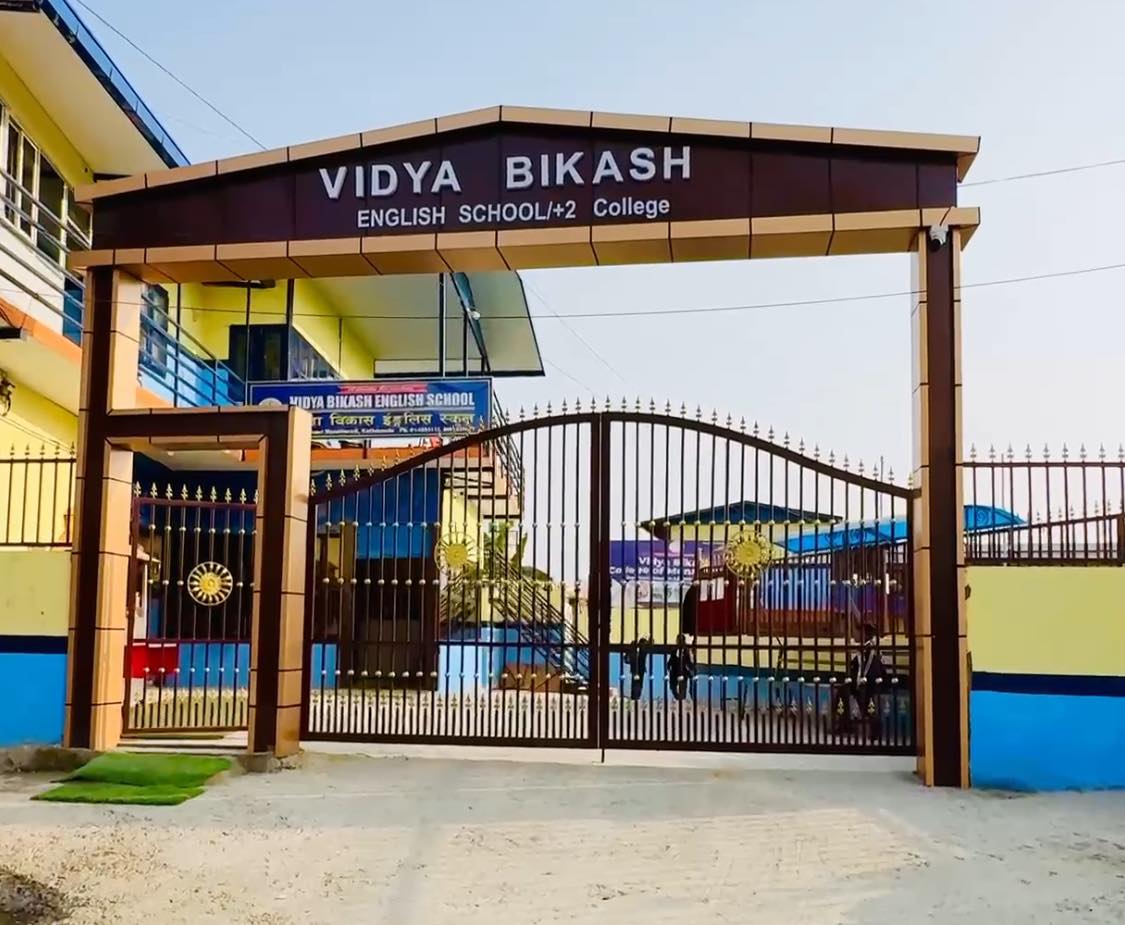
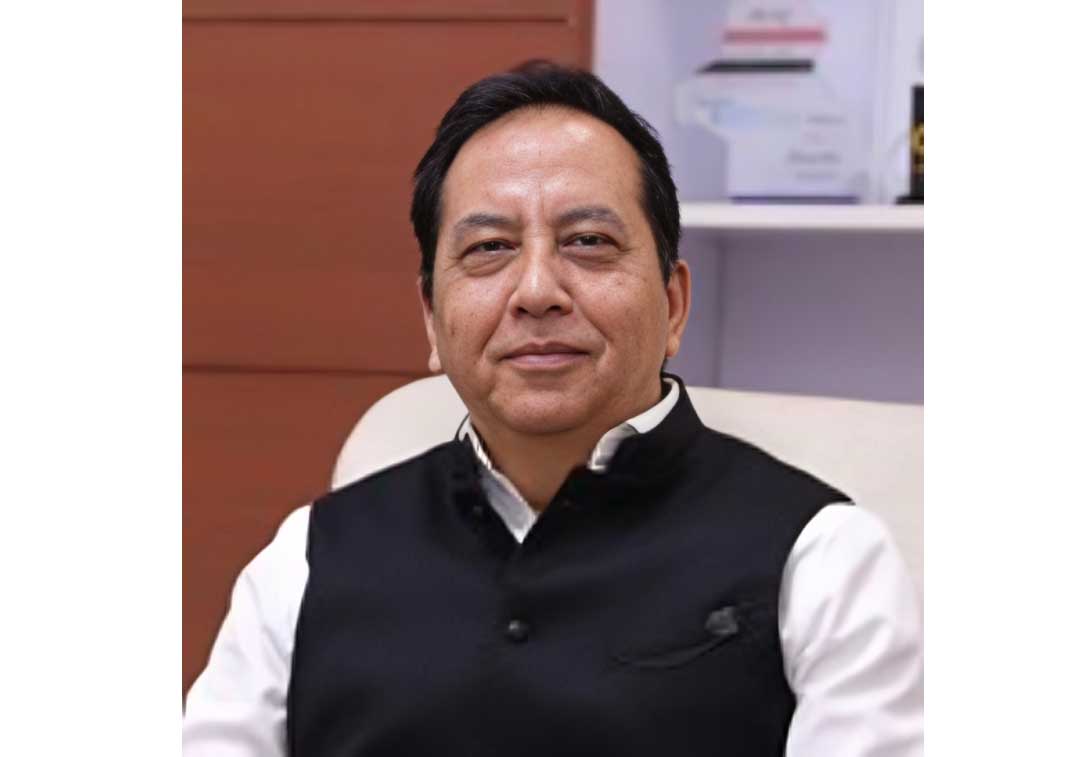
In a Nepali school sector measured by glossy banners and SEE grade tallies, Shreeram Dahal cuts a different figure. The Principal of Vidya Bikas School in Gokarneshwor speaks not of trophies but of “mental strength and skill in the hand,” and treats the institution he leads less as an examination factory than as a multi-dimensional society in miniature. Fifteen years into a deliberate, slow-burning reinvention, his school has grown from roughly 260 students to a community of more than 3,000, a transformation that says as much about Dahal’s worldview as it does about his administrative reach.
A Homecoming, Not a Career Move
Dahal’s path to the principal’s office was anything but conventional. His schooling began at Manakamana School in the same Dakshin Dhoka neighbourhood, now Gokarneshwor, where he later chose to invest his professional life. After completing Plus Two at VS Niketan, he spent many years at Tri-Chandra College and worked in the cooperative sector, running social service initiatives tied to his old school. His re-entry into education came almost incidentally; he arrived at Vidya Bikas as a guardian enrolling his own child, and stayed long enough to recognise both the institution’s potential and its struggle. He eventually assumed ownership and, with it, a personal mission. “It is my village, the place I grew up,” he reflects. The school’s infrastructure was modest and its prospects uncertain, but for Dahal the equation was simple. If a school had to be built well in his area, it would have to be built by someone who belonged there. That conviction, more than any plan, set the tone for what came next.
From 260 to 3,000-plus
Vidya Bikas School traces its roots back roughly 47 years, but its first decades were difficult; fees were hard to collect and expansion harder still. When Dahal took charge fifteen years ago, enrolment hovered around 260. He spent his first year, by his own admission, simply watching. From the second year onward the interventions began: curriculum tightening, teacher motivation, infrastructure upgrades, and a slow effort to associate quality with measurable monetary value rather than mere reputation. Growth came in stages. Three or four lean years gave way to a breakthrough into the hundreds, and finally a tipping point at which, as Dahal puts it, “everything matters.” Today, with more than 3,000 students on the rolls and a growing cluster of private institutions in the municipality, the school stands among the more prominent PABSON members in the area.
Redefining Education for the Present
Dahal is unusually candid about the limits of the conventional yardstick. “It is time to redefine education,” he argues, dismissing the reduction of quality to A+ grades and rote scores. His diagnosis is layered. Children above Grade Five, he says, are forming the habits and grammars of behaviour that will define the country’s long-term trajectory, yet schools obsess over examination results while neglecting time management, peer environment, reading culture, and the choice of who teaches whom. The retreat of book reading in favour of gadgets and games, the silent expansion of comfort zones, the thinning of counselling: these, in his reading, are not minor inconveniences but the slow architecture of a national skills deficit. The fewer the educated people invested in education itself, he warns, the wider the disaster a country quietly walks into.
The Double Model
Where many principals advocate a single fix, Dahal insists on holding two tracks together. On one side stand progressive schools experimenting with technology-led, internationally benchmarked learning. On the other are private schools that take the national curriculum as given but actively bridge it to society, pulling students into community participation, life skills, and real-life problem-solving. Both, he argues, can run in parallel inside the same institution, and indeed must, if Nepali education is to earn a name in the international market without losing its social ground. His years on the local Education Committee have only sharpened this conviction; he treats system-wide improvement as a shared responsibility rather than a competition between public and private.
A Diagnosis of the New Generation
Dahal’s reading of contemporary students is sympathetic but unsentimental. The new generation, he notes, is genuinely creative; case studies at his own school throw up children who manage their own clothes, help cook at home, and outperform on practical skills well before they shine academically. Others, by contrast, must almost be hand-fed, and their resistance to discipline often hardens into mistrust of teachers and guardians alike. The pattern, he believes, is not innate but environmental, a product of homes too busy to give time, societies that hand off responsibility to schools, and schools that in turn quietly outsource it back. “All three sides try to escape by pointing at the other two,” he observes, naming a triangle he refuses to let his own school inhabit.
The Principal’s Creed
What Dahal puts in place of the blame triangle is a deceptively plain formula: the mind must be strong, and the hand must hold a skill. Every student, every teacher, every functioning limb of society, he insists, has to be mentally robust before anything else; then a tangible competence, be it a hobby polished enough to advertise on Facebook, a craft, or a technical ability, gives that strength somewhere to land. Get those two right, he argues, and a young person can earn a livelihood anywhere, present themselves credibly in any room, and create their own value rather than wait to be valued by others.
The Ask, and the Promise
For a man who built his enrolment numbers in patient hundreds, Dahal’s closing pitch to guardians is striking for its scale of ambition. With parental support, he pledges, no student who passes through his classrooms will leave without becoming the kind of citizen that their family hoped for and their society needs. It is, in the end, a homecoming argument; the schools we want, he seems to say, are built quietly by the very people who refuse to leave.

Popular Categories
Trending This Month






 Established in 2065 BS, COLLEGE READERS is a premier national-level educational magazine dedicated to serving the academic and informational needs of school and university students, teachers, educators, and concerned ones in Nepal. The magazine provides current and comprehensive information on various educational opportunities worldwide, aiming to guide school and college-level students in their academic and career journeys. It also highlights essential support services and service providers that play a crucial role in shaping students' career paths in today's competitive world.

- Our Location Putalisadak, Kathmandu
- Send Us Email collegereaders123@gmail.com
- Call Us Now 977 01 4518759
