
Call now
977 01 4518759
Send Message
collegereaders123@gmail.com
Our Location
Putalisadak, Kathmandu
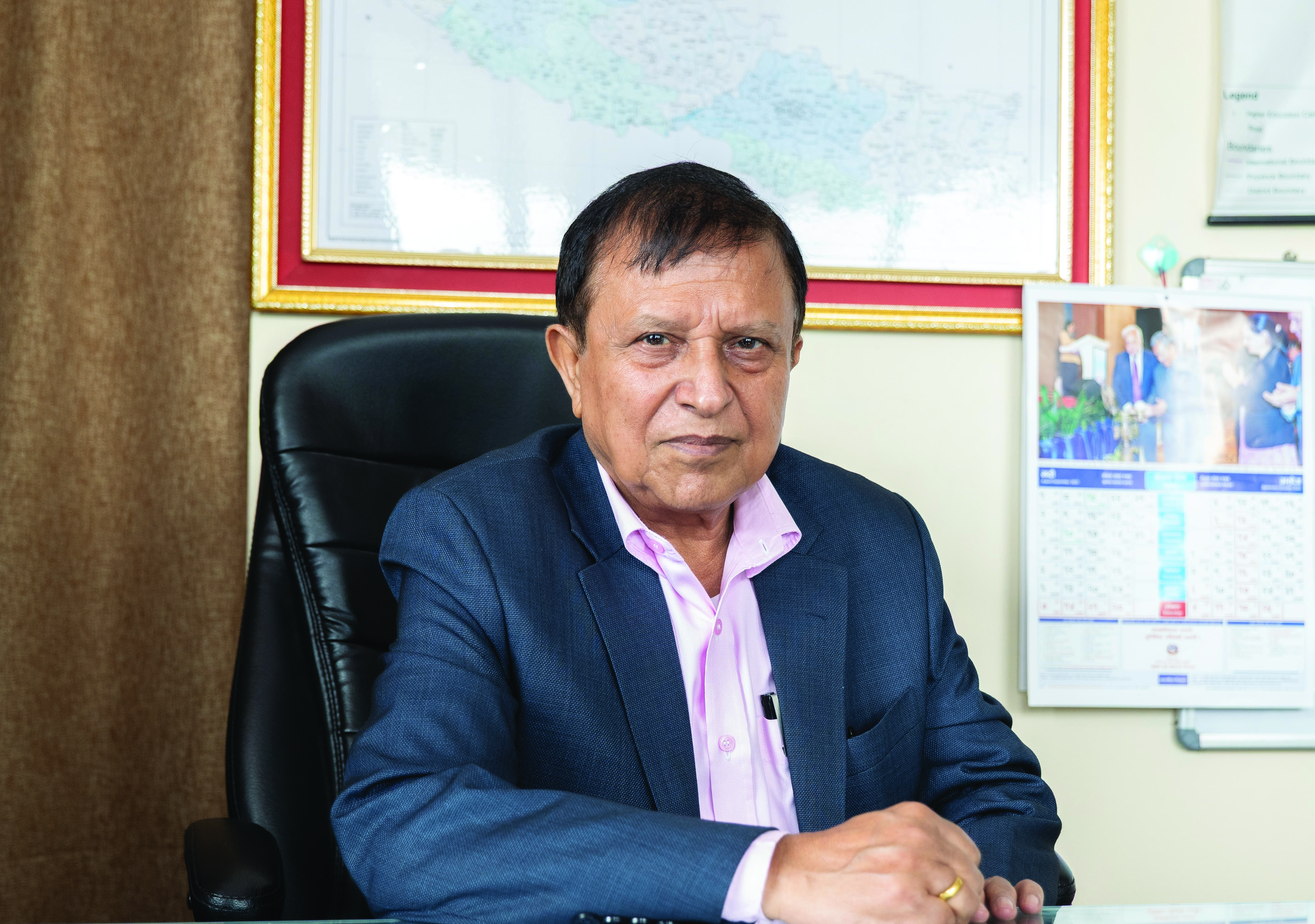
Prof. Dr. Dev Raj Adhikari
UGC is preparing to recalibrate the trajectory of Nepal’s higher education
- College Readers
- 18 Feb 2026
- Views
- Interviews
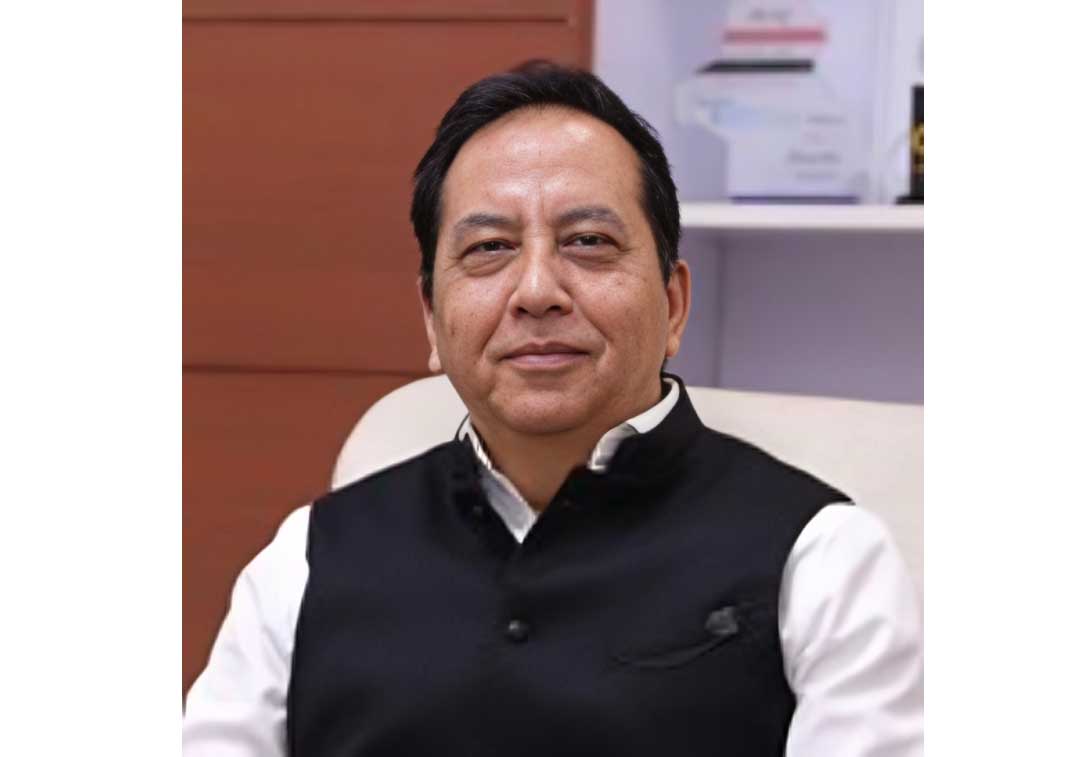
Prof. Dr. Dev Raj Adhikari, the incumbent Chairperson of University Grants Commission (UGC), occupies a pivotal locus in the ongoing metamorphosis of the nation's tertiary education architecture. A distinguished alumnus of the illustrious OeAD North–South Dialogue scholarship and a doctorate holder in Human Resource Management from the University of Innsbruck, he brings to the role an erudite pedigree and over three decades of pedagogical, administrative, and policy-shaping acumen.
Since assuming office in February 2023, Prof. Adhikari has catalyzed a suite of consequential reforms. Bolstered by legislative recalibrations to the UGC Act, he now oversees the Commission’s transition into Nepal’s preeminent statutory arbiter for academic accreditation, cross-border credit articulation, and foreign degree equivalency—jurisdictions erstwhile under the custodianship of Tribhuvan University. This paradigm shift, slated for implementation by mid-July 2026, is poised to engender procedural lucidity, institutional parity, and harmonized academic benchmarks.
His tenure has already borne tangible outcomes: the UGC, under his stewardship, has conferred accreditation upon four emerging institutions, including Mid-West University School of Management and Madan Bhandari Memorial College—signaling a robust endorsement of institutional resilience and scholastic integrity.
At the recent Vice-Chancellors’ Conference, Prof. Adhikari advocated for a syncretic curriculum that integrates emergent technologies, artificial intelligence, and moral philosophy—envisioning a pedagogical milieu that marries ethical consciousness with global competitiveness.
Resolutely forward-facing yet intellectually anchored, Prof. Adhikari aspires to cultivate a higher education ecosystem predicated on self-reliance, meritocratic ideals, and international parity. For him, the ultimate telos of education transcends mere vocational preparedness; it is to nurture sagacious trailblazers equipped to reimagine Nepal’s role in the global knowledge economy.
Could you please begin by outlining your extensive academic and administrative career?
My journey in academia has been a long and fulfilling one. I began my career as an assistant lecturer at the Central Department of Management, Kirtipur. Over the years, I progressed through various roles, including lecturer and reader. My pursuit of a Ph.D. took me abroad, and upon my return, I continued to climb the academic ladder, eventually becoming a professor in 2004.
My administrative responsibilities grew alongside my academic achievements. I have served as the Head of the Central Department of Management, the coordinator of the Management program, and have also had the honor of being the chairman of Nepal Bank Limited. Before my tenure as the Dean of the Faculty of Management, I briefly served as the registrar of the university for eight months. Following my deanship, I was appointed as the member secretary of the UGC in 2015, a role I held until my retirement from the university in 2019. After a brief period of retirement, I was appointed as the chairperson of the University Grants Commission on February 22, 2023 (Phagun 10, 2079 BS).
Having been deeply involved in the education sector for over four decades, what is your perspective on the current state of higher education in Nepal? Are you optimistic or pessimistic?
I remain fundamentally optimistic. I firmly believe that there is immense potential for improvement in Nepal's higher education system. We have made significant efforts to move forward, and I am hopeful about what we can achieve. While the challenges are real, they are not insurmountable. Improving our universities and campuses is a collective responsibility, and with concerted effort, we can bring about substantial positive change.
One of the most pressing issues we face is the trend of students going abroad for higher studies. There are multiple reasons for this, including the desire to "earn while you learn" and the pursuit of specialized subjects. While enrollment numbers in total have not decreased, we are seeing a decline in classroom attendance, particularly in the hilly regions. High dropout rates and low pass percentages also contribute to the perception of a shrinking student body.
A significant factor contributing to student frustration has been the inconsistency in the academic calendar. Delays in admissions, examinations, and the publication of results have understandably caused distress for students and their parents. A four-year course extending to five years is a valid concern. To address this, the UGC has strictly implemented a national academic calendar. Many universities are now adhering to this, and we are monitoring its implementation closely. We have mandated that universities publish their academic calendars on their websites, providing clear timelines for admissions, final exams, and result publications. This transparency and predictability are crucial for rebuilding student confidence.
There is a common perception that the UGC's role is primarily to disburse grants. Could you elaborate on the broader functions and responsibilities of the commission?
That is a significant misconception. While providing grants is one of our functions, our mandate is far broader. A crucial part of our work revolves around ensuring the quality of higher education. We are heavily involved in research, monitoring, and evaluation to maintain and enhance academic standards. This includes our Quality Assurance and Accreditation (QAA) program, which has been instrumental in improving the quality of community campuses.
We also provide faculty training and support universities in establishing laboratories. The significant improvements seen in community colleges across the country are a direct result of the UGC's comprehensive support, which extends beyond mere financial aid to include faculty development and quality enhancement initiatives. Our role is to foster an environment of academic excellence across all higher education institutions in Nepal.
Some argue that students are attracted to foreign-affiliated institutions in Nepal due to a perception of an easier path to graduation and a more predictable academic schedule. How is the UGC addressing the need for modernization and quality improvement within Nepali universities?
The issue of foreign-affiliated institutions falls under the purview of the Ministry of Education, so I cannot comment on their internal processes. However, within our university system, we are committed to upholding high academic standards. The quality of education in many of our constituent and community campuses is quite strong, and our graduates are performing well.
We are actively promoting the integration of modern technology in teaching and learning. Many campuses have started online classes, and we are encouraging the digitization of academic and administrative processes. We have also facilitated numerous Memorandums of Understanding (MOUs) between Nepali and foreign universities to promote faculty exchange and collaborative research. Our faculty members are engaged in international-level research, which we continue to support.
To further enhance the quality and relevance of our academic programs, we are focusing on several key initiatives. We have provided training to over 1,200 teachers from community and constituent campuses on the latest teaching technologies. We also support private colleges by providing grants for research and conferences.
A significant recent development is the introduction of program accreditation, in addition to institutional accreditation. This will allow for a more detailed quality assessment of specific academic programs. Furthermore, we have developed a framework to facilitate joint and dual degree programs between Nepali and foreign universities, which will be implemented soon. This will provide students with international exposure and learning opportunities right here in Nepal.
There has been a notable increase in the number of universities in Nepal. What is the UGC's stance on this, and what is being done to ensure that quantity does not compromise quality?
The UGC has established clear guidelines regarding the necessary infrastructure and provisions for opening new universities in different geographical regions. It is crucial that new institutions adhere to these standards. While several new universities have been established, including provincial universities, the UGC does not yet formally recognize the latter due to the current legal framework which places them under provincial government jurisdiction.
I personally believe that we should be cautious about indiscriminately opening new universities, especially given our limited resources. Spreading resources too thinly can hinder the ability of universities to develop robust programs and attract qualified faculty. New universities should focus on offering unique and in-demand courses that are not already widely available. Any new institution must have a sustainable funding model.
The Quality Assurance and Accreditation (QAA) system is a cornerstone of our efforts to maintain and enhance educational standards. It has been a landmark initiative for improving the quality of education in Nepal. The QAA process has led to significant improvements in governance, teaching methods, library management, and infrastructure in accredited institutions, turning them into model campuses. We are now moving towards making accreditation mandatory for a college to receive affiliation. The re-accreditation process ensures that institutions maintain these high standards over time.
Finally, what is your message to the students of Nepal, especially those considering going abroad for their studies?
The quality of education in Nepal is not inferior to that of other countries. We must instill in our students a sense of purpose that goes beyond simply securing a job after graduation; we need to cultivate a generation of entrepreneurs and innovators who will create jobs. The nation's development ultimately rests on the shoulders of its youth. If we all start to rely on foreign countries for education and employment, we will face significant challenges in the future.
Our universities are committed to providing a world-class education. We are working to ensure a predictable academic calendar, improve the quality of teaching and learning, and create a vibrant research culture. We need to build confidence in our own system and work together to overcome the challenges we face. I urge students to explore the opportunities available within Nepal. By studying here and contributing your talents, you can play a pivotal role in building a prosperous and self-reliant nation. The journey may require perseverance, much like our ancestors who endured hardships to build this country, but it is a necessary endeavor for a brighter future. Our higher education system must focus on empowering students to become job creators, not just job seekers, and for that, we need our brightest minds to remain in Nepal and lead the way.
Popular Categories
Trending This Month








 Established in 2065 BS, COLLEGE READERS is a premier national-level educational magazine dedicated to serving the academic and informational needs of school and university students, teachers, educators, and concerned ones in Nepal. The magazine provides current and comprehensive information on various educational opportunities worldwide, aiming to guide school and college-level students in their academic and career journeys. It also highlights essential support services and service providers that play a crucial role in shaping students' career paths in today's competitive world.

- Our Location Putalisadak, Kathmandu
- Send Us Email collegereaders123@gmail.com
- Call Us Now 977 01 4518759
