
Call now
977 01 4518759
Send Message
collegereaders123@gmail.com
Our Location
Putalisadak, Kathmandu
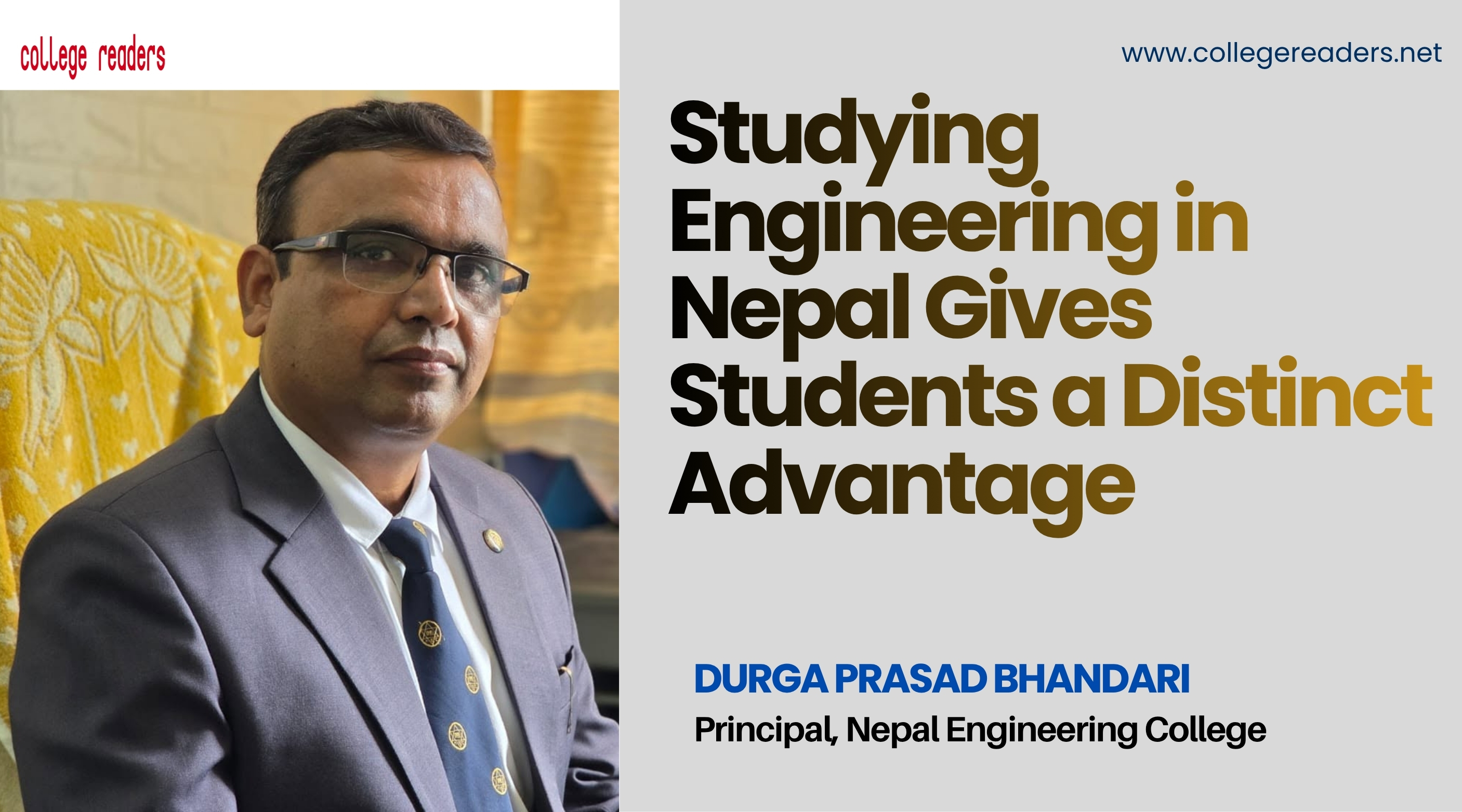
Studying Engineering in Nepal Gives Students a Distinct Advantage
- College Readers
- 06 Jul 2026
- Views
- Interviews
Highlights
• Nepal still needs skilled engineers for national development, especially in infrastructure, hydropower, IT and innovation.
• Students should choose institutions based on academic infrastructure, legality, vision and learning culture, not artificial decoration.
Where do you see the major challenge in engineering education today?
The major challenge is the gap between industry and academia. Industries need to evolve, and engineers must be able to contribute visibly through research and innovation. However, this understanding has not yet developed strongly between academic institutions and industries, particularly from the industrial side. When these two sectors connect meaningfully, engineers can create innovations, and industries can transform those innovations into sustainable enterprises. If this challenge is addressed, the manpower available in Nepal can work within the country and serve national growth.
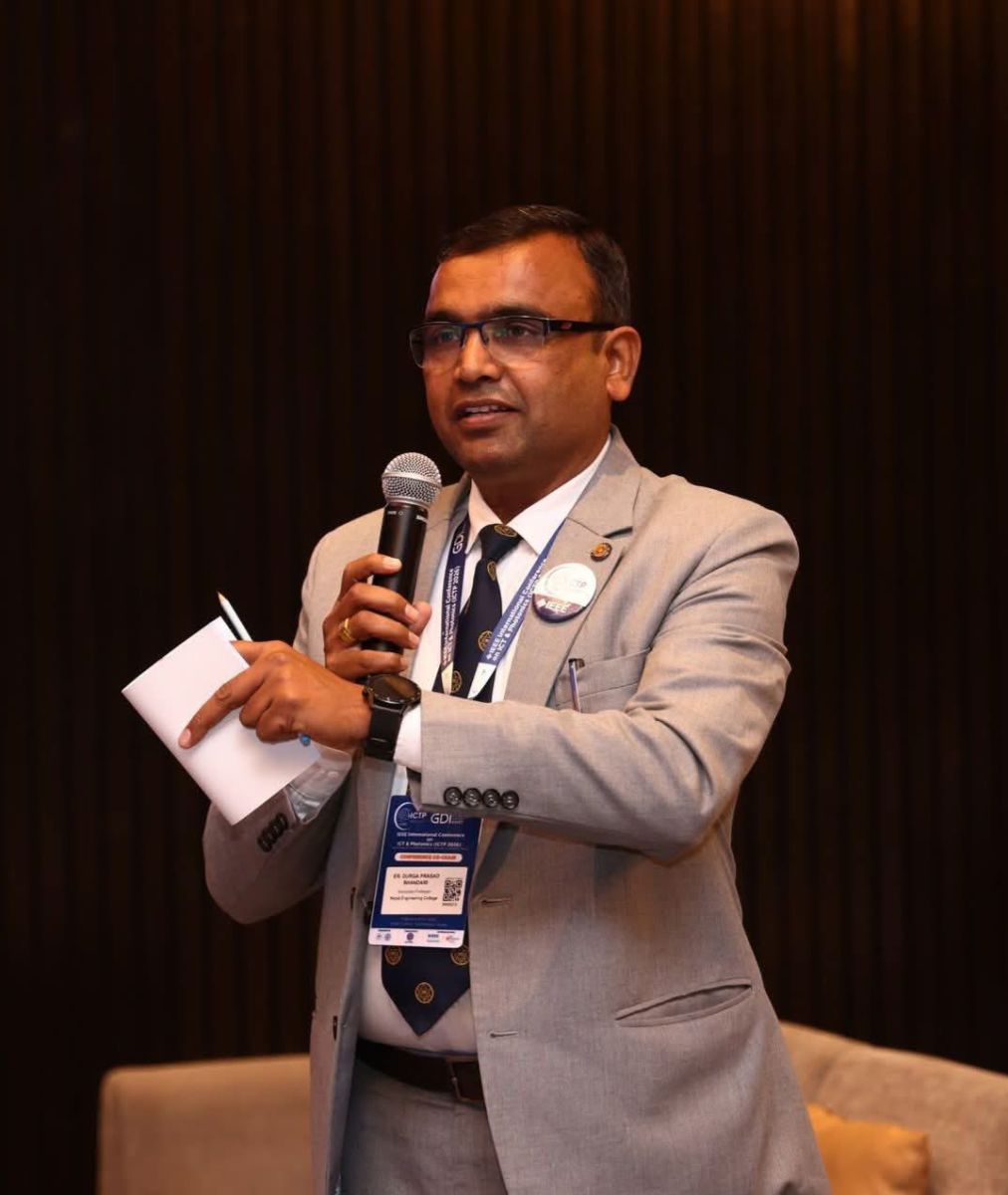
Is Nepal failing to communicate the importance of core engineering?
Yes, I believe we have not properly communicated how important engineers are for national development. Engineers solve real problems in society and provide practical solutions. Non-engineers may adopt and apply those solutions, but the first phase of any solution is usually engineering. Whether it is infrastructure, technology, energy or public service, engineering thinking comes first. Because we have not explained this clearly enough, students do not fully understand the value of core engineering in a developing country like Nepal.
How relevant is the current engineering curriculum to Nepal’s needs?
Universities have taken this matter seriously in the past ten years. Courses must be connected with modern developments. Students should not remain limited to traditional subjects; they must be connected with new fields of science and technology. Studying alone is not enough. Students must become skilled. For that, they cannot remain confined to classrooms. They must connect with society and industry so they can address real problems.
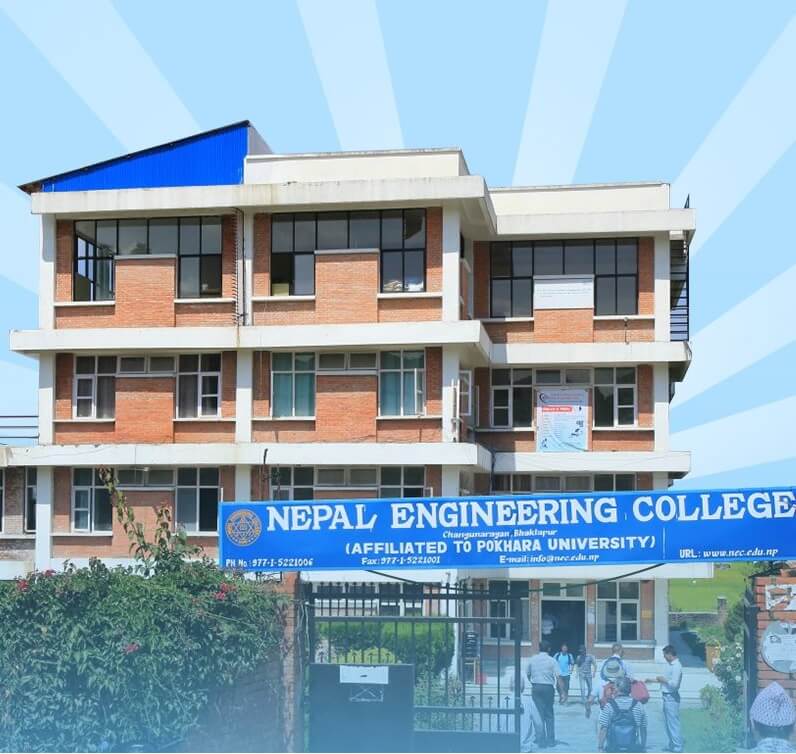
At Nepal Engineering College, we have understood, in collaboration with the university, that learning should not remain within a narrow learning center. It must be broadened. Even in civil engineering, we now see that the field cannot remain limited only to general infrastructure. Nepal has already entered areas such as tunneling, and tunneling engineering needs greater focus. We are actively working in that direction.
How is Nepal Engineering College responding to the growing demand for IT?
Nepal Engineering College has been running IT-related courses for more than ten years. Our computer engineering program began in 1998. However, IT has changed globally, and Nepal cannot remain isolated from that transformation. Understanding this, we decided last year to give greater focus to areas such as cybersecurity, artificial intelligence and machine learning.
Cybersecurity is still not well understood in the market, yet it has become a serious threat. To help minimize this threat, we are working with various companies through memoranda of understanding. We are also planning internal projects through which students can engage in innovation and exploration. Students should not only learn tools; they should use, test and develop them. In this way, the college, students and industries can work together.
We are planning to establish laboratories such as a cybersecurity lab and a machine learning lab. Once these labs are in place, students can work with government agencies and institutions to solve IT-related challenges in Nepal.
How can engineering students learn and earn together?
Learning and earning must be connected within the same field. If students of IT or computer engineering develop projects based on what they are studying, they can also become associated with organizations and create earning opportunities. For this reason, we have allocated time for internships. One period can be used for study, another to understand field problems and bring solutions.
If students develop a solution, the college can recognize it as innovation. We can also support them with small funding. If the college itself cannot provide funding, we are working to arrange support through MoUs with external sectors. However, learning in one field and earning in a completely different field may not help students academically. Therefore, our focus is to connect earning with learning. Many of our students are already earning while learning.
What are the advantages of studying engineering in Nepal?
If students study engineering in Nepal, they get the opportunity to work where many problems still need solutions. In developed countries, most systems are already established, so there may be fewer new challenges. But in Nepal, students can understand society, identify problems and develop meaningful engineering solutions. This can help them build strong careers.
Going abroad is not necessarily bad. If students go abroad, study and return to contribute to Nepal, that is positive. But if students are looking for opportunities, studying in Nepal can be easier because they already understand the society and development needs here. If we create better platforms for that, engineering study in Nepal will become more attractive and beneficial.
What is your message to Plus Two graduates preparing for bachelor’s study?
My advice is that students should first examine the institution they plan to join. Whether in Nepal or abroad, they should study its legality, establishment, vision, mission and infrastructure. By infrastructure, I mean both academic infrastructure and facilities.
Students should also be clear about what they want to study. They should not choose a subject only because guardians advised them. They must identify their own interest and pursue it with determination. If they are confused about their career path, Nepal Engineering College is always ready to provide guidance.
Students should not be influenced only by artificial decoration. Even if an institution looks simple, what matters most is its academic strength. If students choose an institution by examining academic infrastructure, vision and learning environment, their studies will become more meaningful and their future path will be stronger.
Popular Categories
Trending This Month









 Established in 2065 BS, COLLEGE READERS is a premier national-level educational magazine dedicated to serving the academic and informational needs of school and university students, teachers, educators, and concerned ones in Nepal. The magazine provides current and comprehensive information on various educational opportunities worldwide, aiming to guide school and college-level students in their academic and career journeys. It also highlights essential support services and service providers that play a crucial role in shaping students' career paths in today's competitive world.

- Our Location Putalisadak, Kathmandu
- Send Us Email collegereaders123@gmail.com
- Call Us Now 977 01 4518759
