
Call now
977 01 4518759
Send Message
collegereaders123@gmail.com
Our Location
Putalisadak, Kathmandu
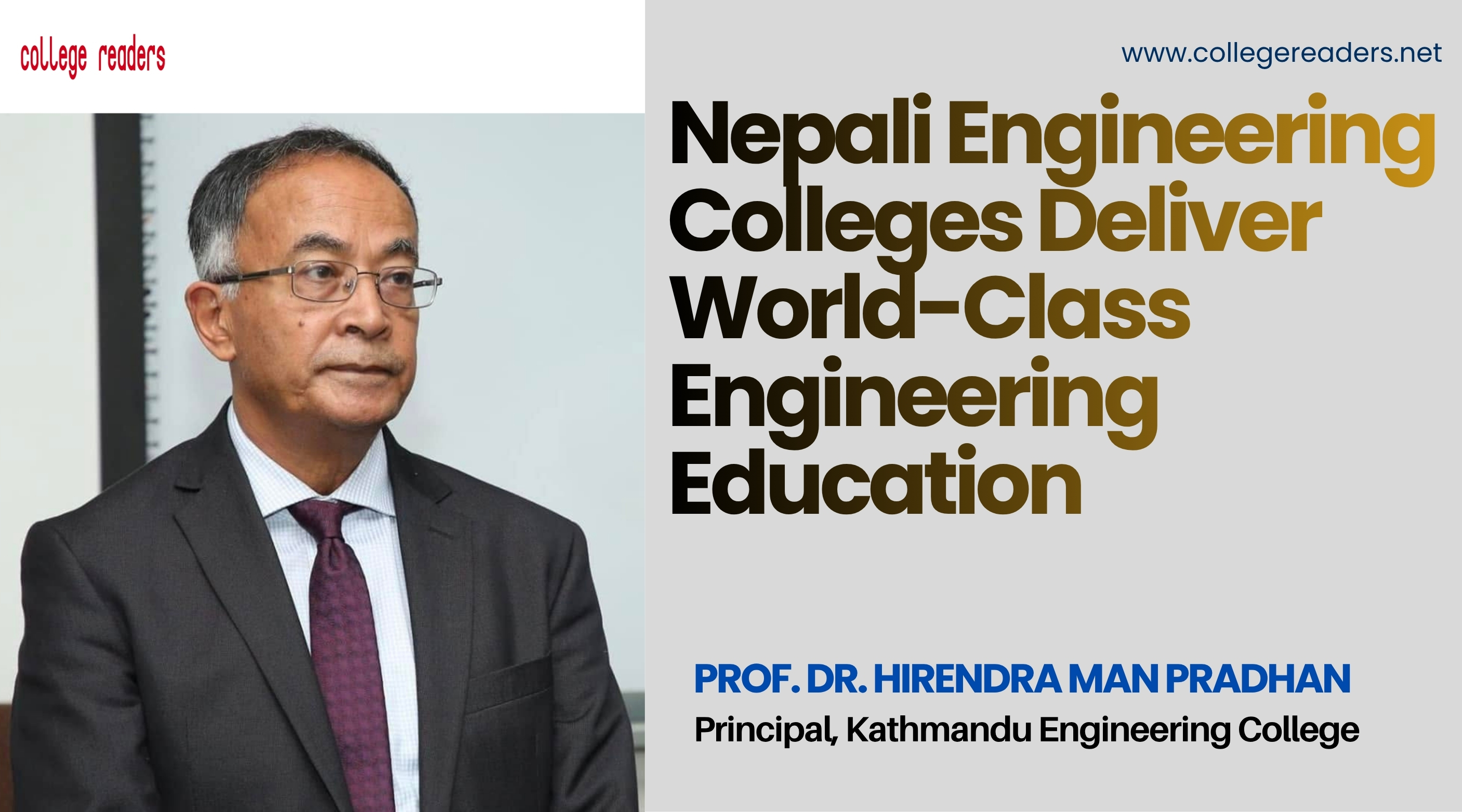
Nepali Engineering Colleges Deliver World-Class Engineering Education
- College Readers
- 06 Jul 2026
- Views
- Interviews
Q. How do you evaluate the present condition of engineering education in Nepal?
I believe the discussion should begin from the needs of students. Students must be allowed to study according to their interest, aptitude, and aspiration. I do not agree with the view that engineering should be avoided because jobs are limited. Education is also necessary to create work, generate opportunities, and develop capable human resources. If students are genuinely interested in engineering, we must offer subjects and programs that match their ambition. Engineering education should be viewed through the possibilities it can create tomorrow.
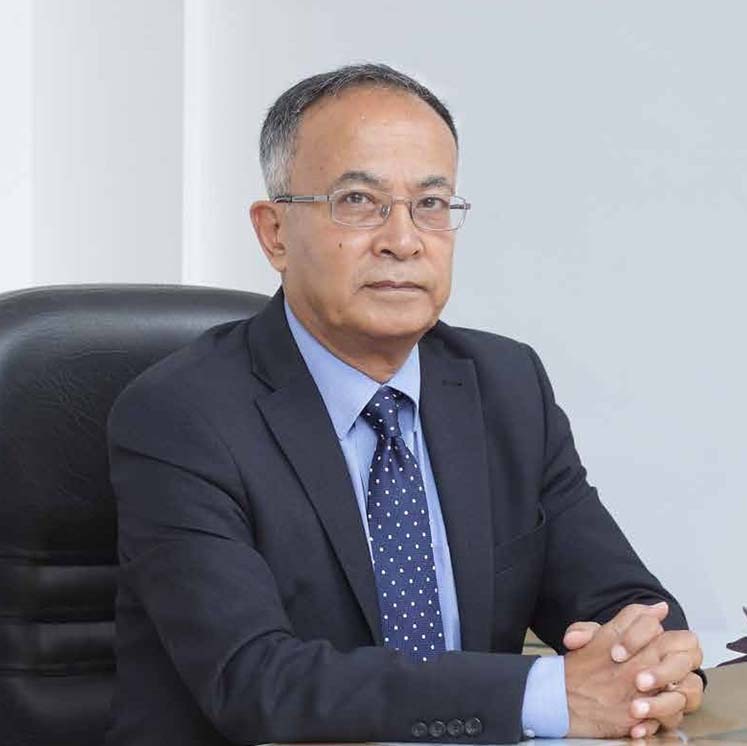
Q. Many students fail in engineering, and some say the curriculum is too difficult. What should be improved?
First, we must have the will to improve. We need to ask whether our system requires change. We must examine where the weakness lies. Is it in the curriculum, students’ study habits, teaching method, question-setting, or evaluation? Without proper diagnosis, reform becomes only a slogan.
In Nepal, when many students fail, people immediately say the examination was too strict. Yet they also say quality is weak. This contradiction needs serious review and standardization. Academicians, policymakers, bureaucrats, and stakeholders must sit together and discuss how education can be transformed. I believe reform is required at policy level.
Today, academic knowledge alone is not enough. Students need skills along with academic qualifications. If both go together, graduates can work immediately. At Kathmandu Engineering College, we have established a makerspace and an innovation-incubation section. Through this, students can practically develop their ideas. They can build and test while studying. This helps convert enthusiasm into real skills and prepares them professionally.
Nepal’s engineering education is strong because its graduates have reached leading global universities and companies.
Q. How can we confidently say that Nepal is providing quality engineering education?
We can say this from the performance of our graduates. Kathmandu Engineering College has produced nearly 6,000 graduates in Electrical, Electronics, Computer, Architecture, and Civil Engineering. Many have gone to reputed institutions such as Harvard, Stanford, MIT, IIT, and AIT, and performed well. Some work at high levels in Tesla and Microsoft.
If we had not provided a strong academic foundation at Bachelor’s level, they could not have reached such institutions and companies. Their success proves that engineering education in Nepal has quality. Improvement is always necessary, but the basic engineering foundation we provide is strong.
Q. Can Nepal introduce an earn-while-learn model in engineering education?
Definitely, it is possible. But for that, we need to change the curriculum and class timing. If students have to attend classes from 9 to 5 or 10 to 5 every day, when will they work? In many foreign universities, students attend classes according to credit hours. If they take 20 or 21 credits, they may need to attend university for around 20 or 21 hours a week. The remaining time can support work and self-study.
In many countries, a Bachelor’s degree requires around 120 or 125 credits. In Nepal, engineering programs often require 155 or 160 credits, which I feel is heavy. If unnecessary course load is reduced and essential subjects are prioritized, students will have time for work and practical exposure. Working while studying would build experience, skills, and academic progress. However, such a system requires discourse and policy-level reform.
Q. You have raised concerns about the IOE entrance examination. What is the issue?
Once students pass Plus Two, they meet the basic eligibility to study engineering. Entrance examinations should mainly help rank students and manage admission when there are many candidates. I believe all students who appear in the entrance examination should be graded rather than simply declared failed. Colleges can then admit students according to their own standards.
At present, IOE may declare students failed because of low marks, but they study engineering in other universities. Their basic criteria are similar. This creates inconsistency. We have raised this matter repeatedly. The University Grants Commission discussed a common entrance, but it was not implemented. Therefore, each academic council follows its own system.
Engineering education now needs policy reform, flexible credits, makerspaces, innovation, and an earn-while-learn model.
Q. Are engineering colleges in Nepal capable of providing quality education?
If they were not capable, how would the Engineering Council recognize them? How would universities grant affiliation? Colleges are recognized only after fulfilling minimum requirements. Monitoring is also conducted regularly. From that perspective, I believe engineering colleges in Nepal are capable.
Kathmandu Engineering College has been operating for around 27 years. Earlier, we had around 1,500 to 1,600 students; now the number is around 1,300. We have not received information that our graduates are unemployed. They are working in different sectors and performing well. Feedback is positive.
Q. What message do you want to give to Plus Two graduates aspiring to study engineering?
Students must identify what they want. If they truly want to study engineering, they should decide which branch suits them. After that, my advice is simple: study in Nepal. Engineering education here is affordable. Students can live with parents, study in a familiar environment, and learn from Nepali teachers who can explain concepts clearly.
From every angle, I appeal to students to complete at least undergraduate engineering education in Nepal. A strong Bachelor’s foundation here will prepare them for further study, professional practice, and global opportunities.
Popular Categories
Trending This Month








 Established in 2065 BS, COLLEGE READERS is a premier national-level educational magazine dedicated to serving the academic and informational needs of school and university students, teachers, educators, and concerned ones in Nepal. The magazine provides current and comprehensive information on various educational opportunities worldwide, aiming to guide school and college-level students in their academic and career journeys. It also highlights essential support services and service providers that play a crucial role in shaping students' career paths in today's competitive world.

- Our Location Putalisadak, Kathmandu
- Send Us Email collegereaders123@gmail.com
- Call Us Now 977 01 4518759
