
Call now
977 01 4518759
Send Message
collegereaders123@gmail.com
Our Location
Putalisadak, Kathmandu
Seven Universities Move to Guarantee 10% Full Scholarships from 2083/84
- College Readers
- 14 Jul 2026
- Views
- Scholarships
Coordinated initiative seeks to widen access for meritorious, economically disadvantaged and targeted students while strengthening transparency in university admissions
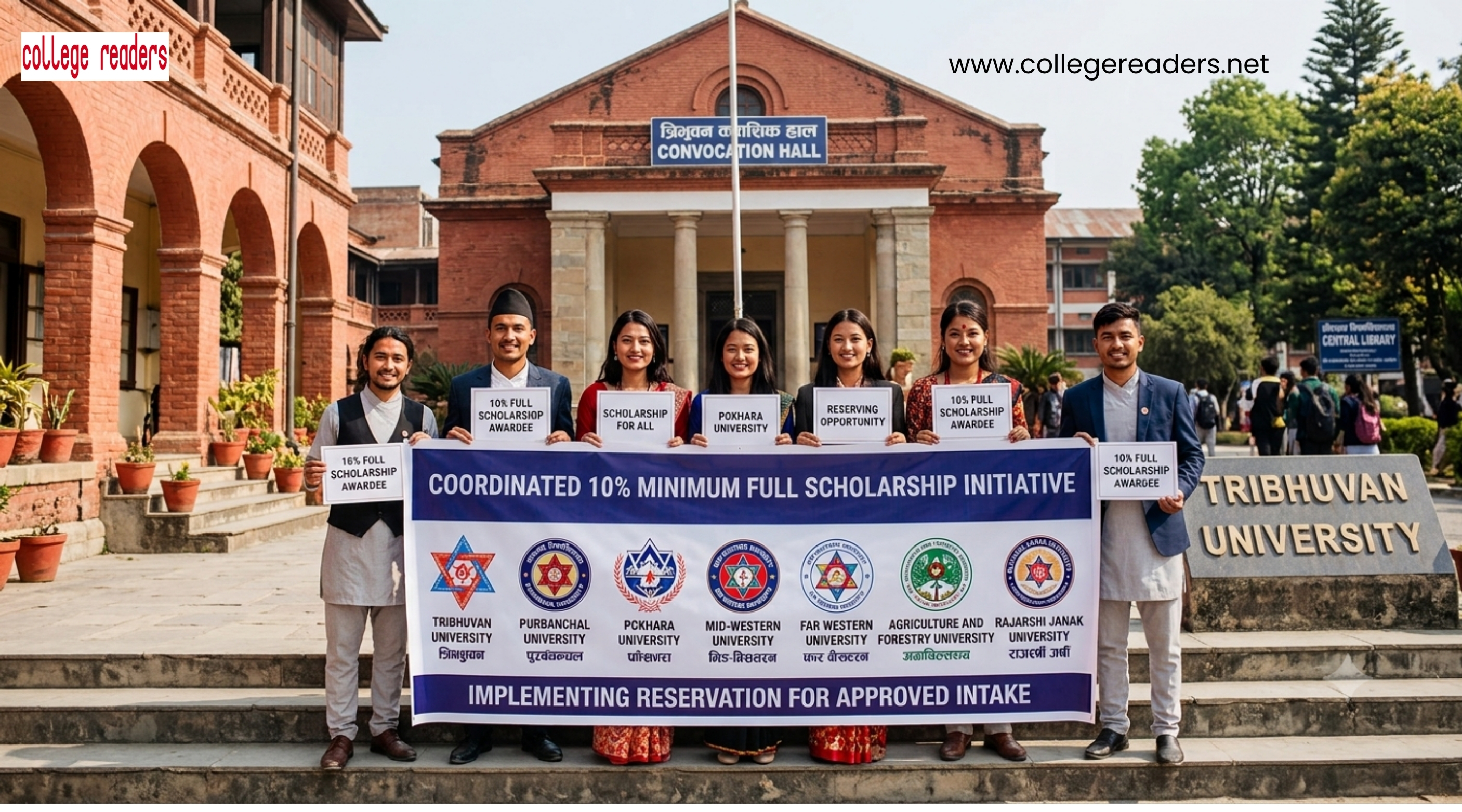
KATHMANDU, July 14, 2026 — Seven public universities in Nepal have begun implementing a coordinated requirement to reserve at least 10 percent of their approved student intake for full scholarships, marking a significant effort to expand equitable access to higher education.
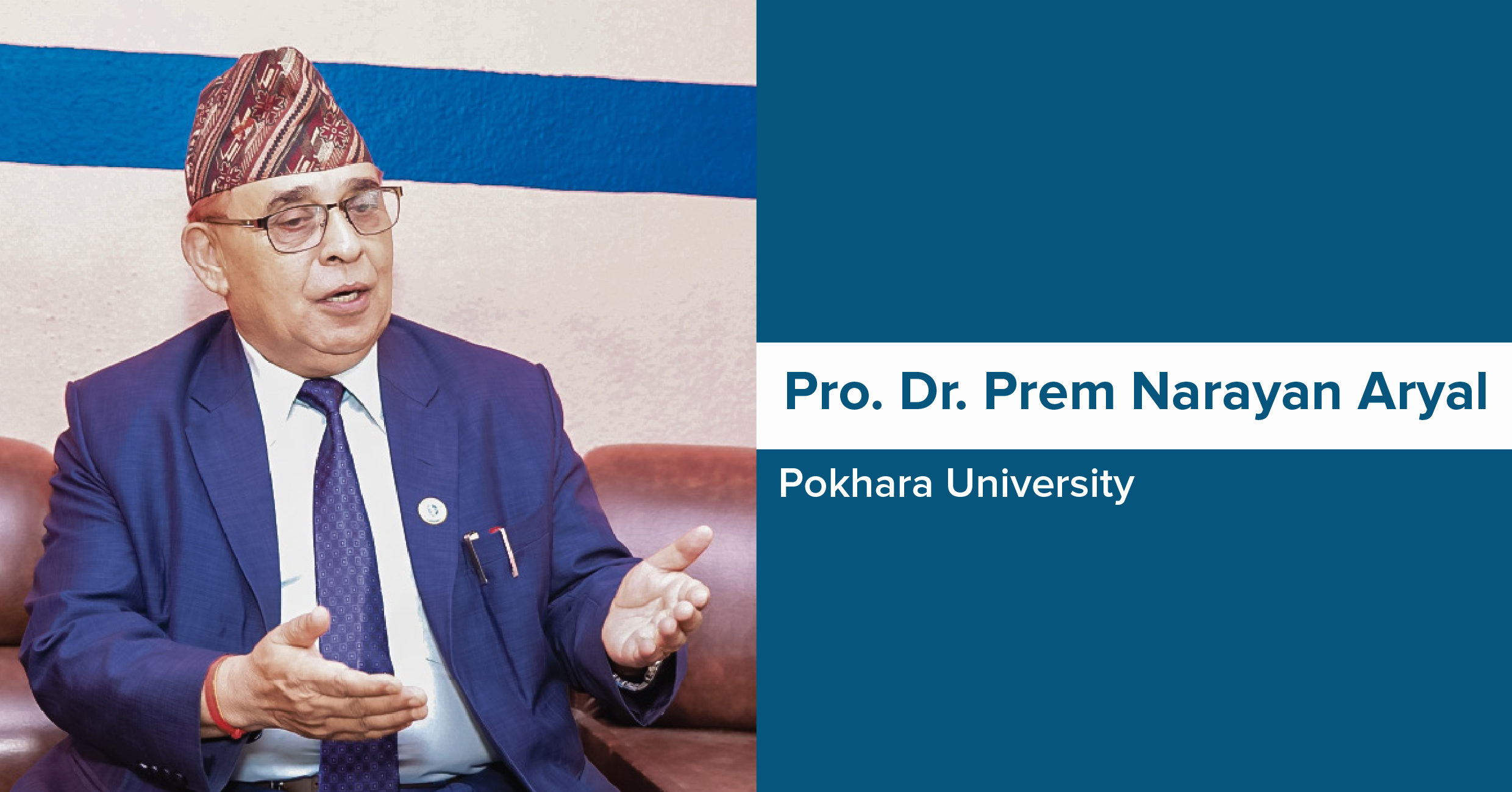
The initiative covers Tribhuvan University, Purbanchal University, Pokhara University, Mid-West University, Far Western University, Agriculture and Forestry University, and Rajarshi Janak University. Their recently appointed vice-chancellors were instructed to ensure that the scholarship provision is implemented transparently across the universities and their constituent campuses. Several universities have subsequently issued separate circulars to campuses and affiliated colleges.
Under the directives, campuses admitting students to university-approved programmes in the 2083/84 academic session must reserve at least 10 percent of their sanctioned seats for scholarship recipients. The reserved places are intended primarily for academically capable students, students from economically disadvantaged families and applicants belonging to groups identified under the respective universities’ inclusion policies.
Campuses will be required to set aside the scholarship quota before admitting students to the remaining seats. Candidates will then be selected according to the scholarship regulations and procedures adopted by the university concerned. Rajarshi Janak University has formally published a notice directing institutions to protect 10 percent of their approved admission quota before completing general enrolment.
Although universities have previously maintained scholarship provisions under their individual regulations, the latest initiative is designed to ensure more consistent and visible implementation. Purbanchal University’s scholarship regulations, for example, provide a combined 10 percent scholarship quota divided between merit-based and reserved categories. Tribhuvan University programmes have also required campuses to provide free scholarships, or “freeships,” to 10 percent of enrolled students.
The significance of the latest decision therefore lies not only in the allocation of seats but also in the coordinated enforcement of an existing obligation. Scholarship provisions have often differed in application among universities, faculties and individual campuses. The new approach seeks to establish the 10 percent requirement as a minimum standard rather than an optional concession offered at the discretion of an institution.
Tribhuvan University has asked its constituent and affiliated campuses to make scholarship information publicly accessible. According to its instructions, institutions should publish details of the scholarships they provide on their official websites and submit the information to the relevant dean’s office and the university’s Directorate of Student Welfare and Sports. This reporting requirement is intended to make the allocation process more transparent and easier to monitor.
Some universities have also instructed their campuses to implement the scholarship quota across both undergraduate and postgraduate programmes beginning in the 2083/84 academic session. Institutions failing to reserve the required seats or follow the applicable selection procedures may face action under university rules and prevailing laws.
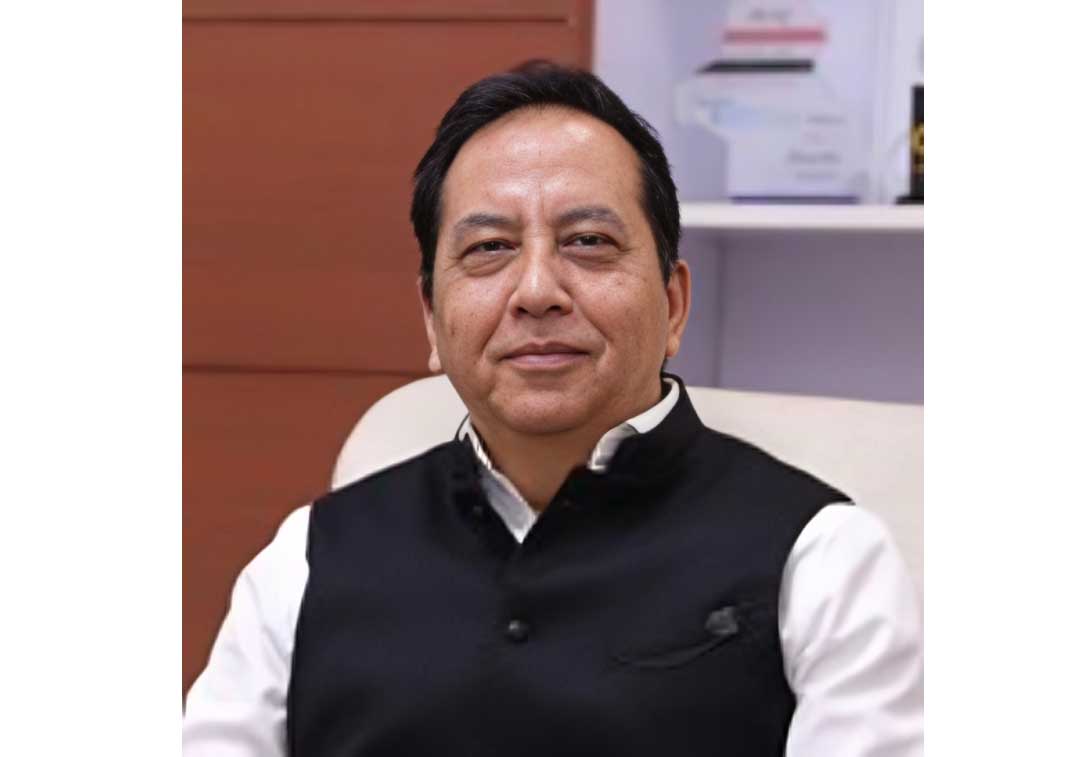
Minister for Education and Sports Sasmit Pokharel described the initiative as an important step towards improving access, ensuring equal educational opportunities and advancing social justice in higher education. The government’s official ministry website identifies Pokharel as the serving Minister for Education and Sports.
In a social media statement, Pokharel said the university-level initiative drew on the experience of the scholarship system implemented in schools under Kathmandu Metropolitan City. According to the minister, the government now intends to institutionalise a similarly transparent mechanism in higher education so that scholarships reach students for whom financial barriers might otherwise prevent university study.
The university initiative follows an earlier government effort to strengthen scholarship compliance at the school level. On Chaitra 30, 2082, the then Ministry of Education, Science and Technology wrote to the Ministry of Federal Affairs and General Administration, asking it to coordinate with local governments in monitoring whether private and public schools were providing the scholarships required under education laws and regulations.
Local authorities were also asked to verify whether schools had updated and publicly disclosed the names and details of scholarship recipients. Institutions found withholding the mandatory scholarships could face legal action. The school-level provision requires institutional schools to provide scholarships to at least 10 percent of their students, with priority given to economically disadvantaged students and applicants from specified groups.
For the university policy to produce meaningful results, however, implementation will be as important as the announcement. Universities and campuses will need to publish clear eligibility requirements, application schedules, selection criteria and final beneficiary lists. A credible grievance and review mechanism will also be necessary to address complaints regarding selection, exclusion or political influence.
If enforced uniformly, the 10 percent scholarship requirement could reduce financial barriers for thousands of students and make university admissions more inclusive. It could also establish a stronger culture of public accountability by requiring campuses to demonstrate that scholarship seats have been allocated fairly rather than treated merely as a formal provision in university regulations.
The initiative represents an important policy commitment, but its success will ultimately be measured by the number of deserving students who receive the scholarships, the transparency of the selection process and the consistency with which universities monitor their campuses.

Popular Categories
Trending This Month









 Established in 2065 BS, COLLEGE READERS is a premier national-level educational magazine dedicated to serving the academic and informational needs of school and university students, teachers, educators, and concerned ones in Nepal. The magazine provides current and comprehensive information on various educational opportunities worldwide, aiming to guide school and college-level students in their academic and career journeys. It also highlights essential support services and service providers that play a crucial role in shaping students' career paths in today's competitive world.

- Our Location Putalisadak, Kathmandu
- Send Us Email collegereaders123@gmail.com
- Call Us Now 977 01 4518759
