
Call now
977 01 4518759
Send Message
collegereaders123@gmail.com
Our Location
Putalisadak, Kathmandu
Makawanpur Multiple Campus: Advancing Community-Based Higher Education Through Quality, Innovation, and Employability
- College Readers
- 03 Aug 2026
- Views
- Op-ed
What distinguishes Makawanpur Multiple Campus from many other higher education institutions is its strong community foundation. Our campus was established through the collective efforts of local people, and its growth over the decades has been driven by the active participation of parents, educators, social leaders, and various stakeholders. This close relationship with the community has enabled us to remain responsive to changing educational needs while maintaining our commitment to quality and inclusiveness.
Since its establishment, more than 100,000 students have enrolled at Makawanpur Multiple Campus, making it one of Nepal's most influential community institutions in higher education.
The history of Makawanpur Multiple Campus is, in my view, a story of gradual but steady progress. Over the years, we have expanded our academic infrastructure, diversified our programs, and strengthened the capacity of our faculty members and administrative staff. Continuous institutional reforms and our long-standing commitment to quality enhancement have transformed the campus into a trusted educational destination for students from different parts of the country.
We have consistently demonstrated excellence in academic performance. Students from Makawanpur Multiple Campus frequently secure top positions in university examinations, reflecting our emphasis on academic rigor and quality teaching. Our impressive infrastructure, experienced faculty members, and student-centered learning environment have significantly contributed to these achievements.
Another major strength of our institution lies in the confidence that employers and society have placed in our graduates. Alumni of Makawanpur Multiple Campus are actively contributing to diverse sectors, including education, business, public administration, entrepreneurship, and social service. Their achievements have strengthened the reputation of our institution and reinforced public trust in community-based higher education.
Despite the nationwide decline in enrollment rates at the higher education level, Makawanpur Multiple Campus continues to attract students by adapting to changing educational demands. Since its inception, more than 100,000 students have enrolled at our campus, and thousands of graduates have successfully established themselves in professional careers both within Nepal and abroad.
Recent studies conducted by our campus reveal that more than sixty percent of graduates secure employment within six months of completing their studies. Within one or two years, most graduates either enter the workforce or pursue higher education. This trend demonstrates the relevance of our academic programs and our ability to prepare students for the realities of the modern labor market.
Recognizing the growing importance of entrepreneurship and self-employment, we have increasingly focused on nurturing an entrepreneurial mindset among our students. Many graduates are now establishing their own businesses immediately after completing their studies, contributing not only to their personal success but also to the local economy.
We have also strengthened our relationship with employers and industry leaders. Industrialists, business owners, and professionals regularly visit our campus to recruit students for internships and employment opportunities. Such collaborations have created valuable bridges between academia and the job market, enabling students to gain practical experience while pursuing their studies.
In today's competitive world, I strongly believe that academic knowledge alone is no longer sufficient. Students also require practical skills, professional attitudes, and workplace competencies. Understanding this reality, Makawanpur Multiple Campus has adopted a demand-driven approach to skill development.
Before introducing any training program, we conduct research and consult employers to identify the skills required in different sectors. Based on these findings, we design specialized training programs that complement the regular university curriculum.
One of our most successful initiatives is the sixty-hour teaching-skills training course developed in response to the demand from schools for competent teachers. Although the program is categorized as a non-credit course, it has significantly enhanced the employability of participating students.
We carefully select participants through a competitive screening process and provide intensive training in practical teaching methods. Upon completion, the profiles of trainees are shared with schools, educational organizations, and government agencies. Follow-up studies have shown remarkable results: all participants in one batch secured employment within three months of completing the training.
Through innovative non-credit training programs and industry partnerships, Makawanpur Multiple Campus has created an impressive record of connecting students with employment opportunities immediately after graduation.
Beyond teacher training, we offer a wide range of practical courses, including office accounting, office software packages, marketing, salesmanship, entrepreneurship, startup management, and computer applications. Students interested in business and entrepreneurship can participate in three-month and six-month startup development programs designed to help them transform their ideas into viable enterprises.
Our Information Technology (IT) program provides another inspiring example of our commitment to employability. Many IT students begin working before completing their degrees, and by the sixth semester, almost all students are employed. Some even work remotely for international companies while continuing their studies.
To accommodate working students, Makawanpur Multiple Campus has introduced flexible learning arrangements, including morning classes, evening sessions, online learning opportunities, and weekend classes. These initiatives ensure that students can balance academic responsibilities with professional commitments.
The concept of "learning while earning" has become an essential component of our educational philosophy. Our experience has shown that students who can simultaneously pursue education and generate income are more motivated, more responsible, and more likely to continue their studies within Nepal.
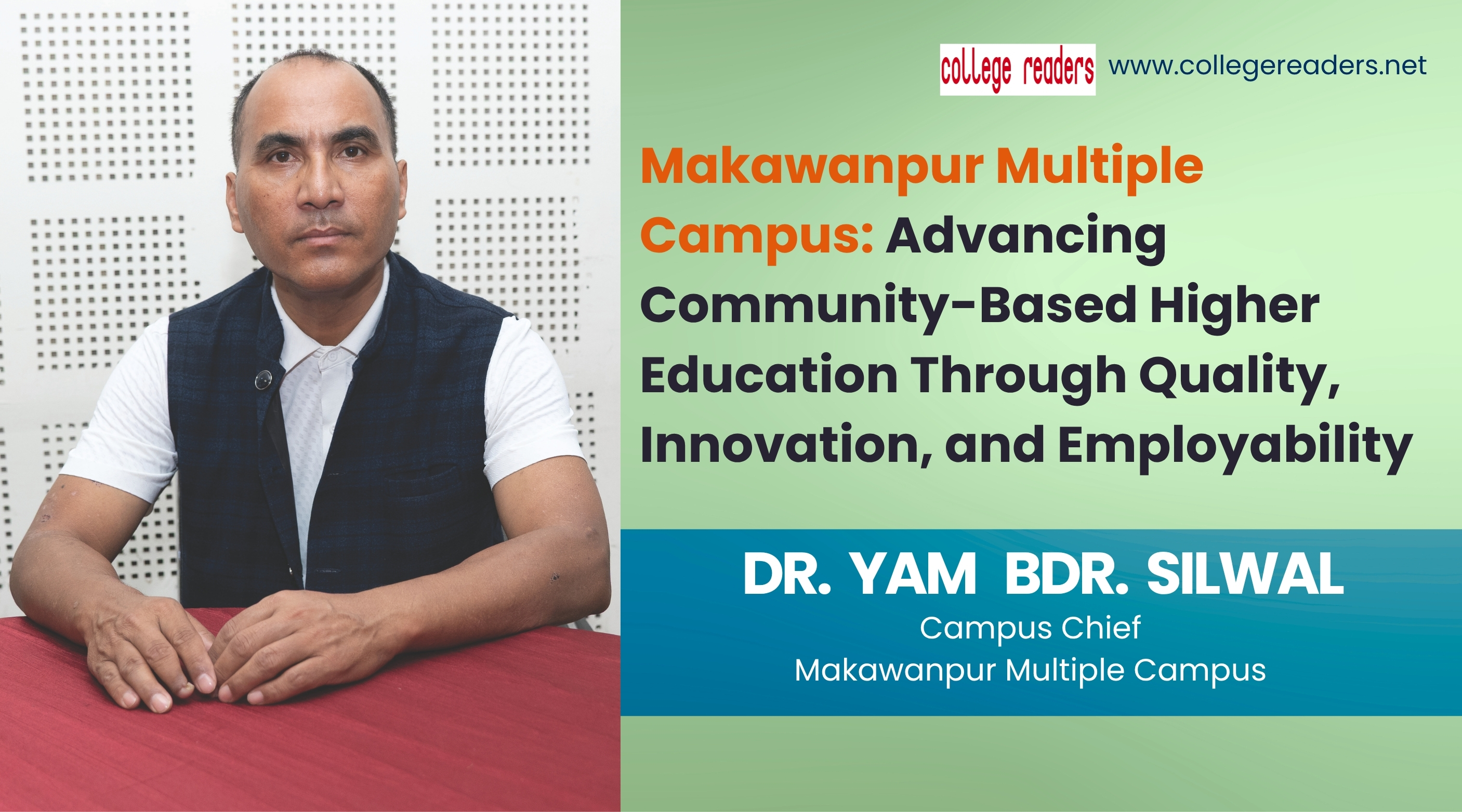
As Campus Chief, I believe that selecting the right institution is one of the most important decisions students and parents can make after completing Grade 12. Students should not be influenced solely by attractive advertisements or the popularity of a course title. Instead, they should carefully examine the quality assurance mechanisms, accreditation status, academic environment, faculty qualifications, and employment outcomes of the institutions they are considering.
Students should also evaluate whether a campus provides opportunities for practical learning, skill development, and professional growth in addition to academic knowledge. The reputation and credibility of an institution in academic, corporate, research, and international sectors are equally important considerations.
Makawanpur Multiple Campus has demonstrated how community-based higher education can play a transformative role in society when it combines academic excellence with practical skills, entrepreneurship, and social responsibility. Through our unwavering commitment to quality education, innovation, and employability, we continue to empower students and prepare them for the challenges and opportunities of the twenty-first century.
As Nepal's higher education landscape continues to evolve, I see Makawanpur Multiple Campus as a powerful example of how community participation, institutional vision, and continuous improvement can create lasting educational excellence.

Popular Categories
Trending This Month









 Established in 2065 BS, COLLEGE READERS is a premier national-level educational magazine dedicated to serving the academic and informational needs of school and university students, teachers, educators, and concerned ones in Nepal. The magazine provides current and comprehensive information on various educational opportunities worldwide, aiming to guide school and college-level students in their academic and career journeys. It also highlights essential support services and service providers that play a crucial role in shaping students' career paths in today's competitive world.

- Our Location Putalisadak, Kathmandu
- Send Us Email collegereaders123@gmail.com
- Call Us Now 977 01 4518759
