
Call now
977 01 4518759
Send Message
collegereaders123@gmail.com
Our Location
Putalisadak, Kathmandu
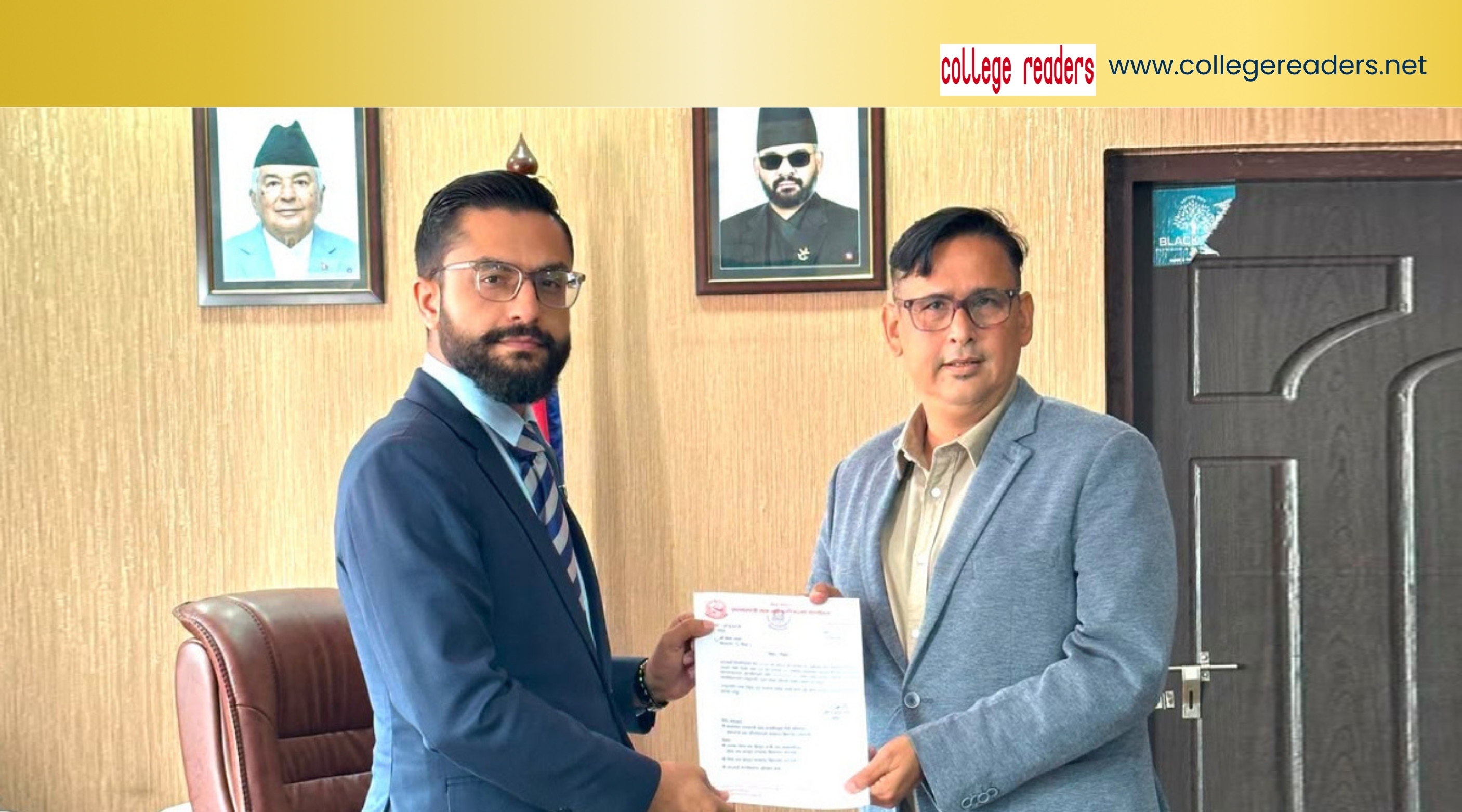
New KU Vice-Chancellor Bibek Baral Faces Test of Turning Academic Strength into Institutional Growth
- College Readers
- 16 Aug 2026
- Views
- News , Op-ed
Development agenda awaiting the new leadership
Baral takes office at a time when Kathmandu University must strengthen its position in an increasingly competitive higher education sector. Nepali students now have access to foreign-affiliated colleges at home, while many others continue to leave the country for further study. KU must offer them a clear reason to remain in Nepal.
That task begins with academic programmes. Courses must be reviewed regularly to reflect changes in technology, employment and professional practice. Artificial intelligence, renewable energy, climate-resilient infrastructure, public health, entrepreneurship and digital technology are areas in which KU can develop programmes suited to both Nepal's needs and the international market.
Curriculum reform alone will not be enough. Students increasingly judge a university by what happens after graduation. Stronger links with employers, structured internships, industry-supported laboratories and professional mentoring could help graduates move more confidently from university into employment.
Research is another test for the new administration. KU has research units and a growing network of international partners, but the university needs to produce more work that addresses practical problems in Nepal. Faculty research should lead to stronger publications, patents, products, public policy and commercial ventures. More competitive grants and support for young researchers would help build that culture.
Enrolment, affordability and student experience
Some KU programmes have previously struggled to fill their available seats. Programme relevance is one reason, but fees, accommodation costs, limited scholarships and uncertainty about employment also influence students' decisions.
The university will need a careful review of programmes with weak enrolment. Courses that no longer meet student or labour-market demand may require revision, consolidation or replacement. At the same time, promising programmes need better communication so that students understand their academic and professional value.
Scholarships will also require attention. Expanding financial support for capable students from rural, low-income and underrepresented communities would broaden access and improve the university's national reach.
Life outside the classroom matters as well. Better accommodation, transport, counselling, sports, student organisations and career services would make KU more attractive. These services affect how students experience the university and how strongly graduates remain connected to it.
Governance and institutional confidence
The new vice-chancellor must also maintain trust among the university's schools, faculty members, students, affiliated colleges and partner institutions.
The four-year disagreement between KU and Dhulikhel Hospital, which was settled in January 2025, showed the cost of unclear institutional arrangements. The relationship is especially important because the hospital supports KU's medical education, clinical training and health research. Clear responsibilities and regular dialogue will be necessary to prevent another dispute.
Quality assurance across constituent schools and affiliated institutions presents another challenge. Regular academic reviews, transparent appointments and clear performance standards would help protect the university's reputation.
An alumnus leading his own university
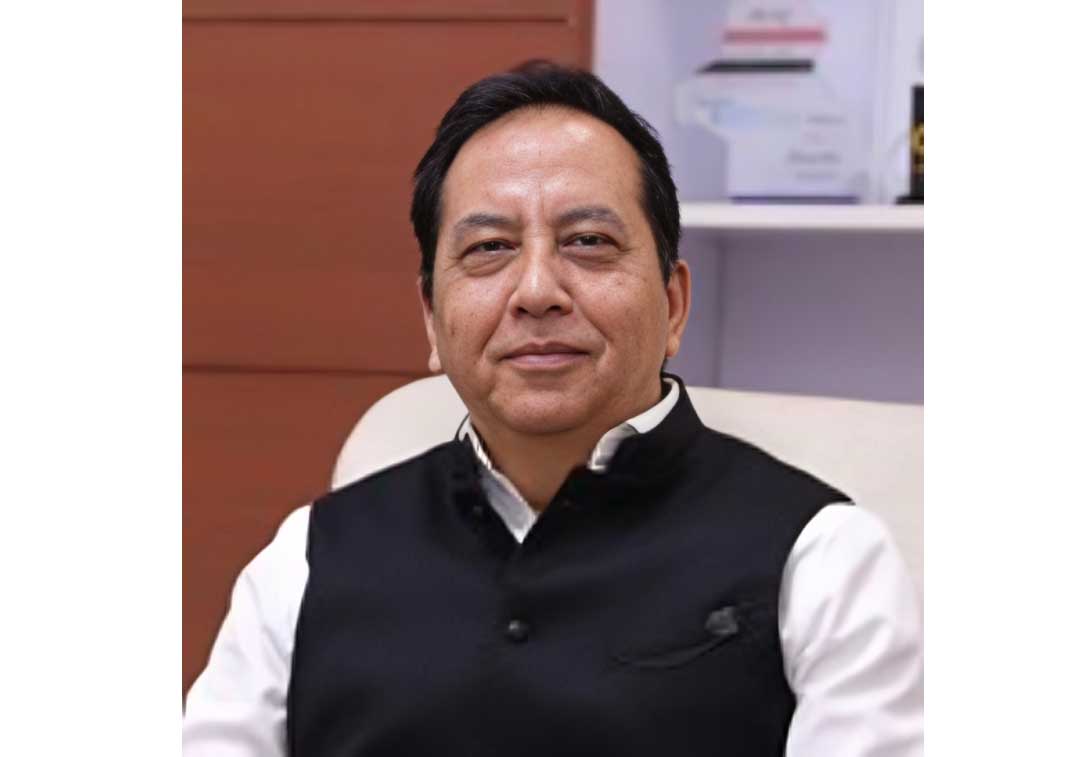
Baral's connection with KU gives him an advantage that few university leaders possess. He has experienced the institution as a student, teacher, researcher and professor. He understands its academic traditions, internal structure and unresolved concerns.
His appointment also creates an opportunity to bring KU alumni closer to the institution. Graduates working in Nepal and abroad could support scholarships, internships, research, mentoring and fundraising. A well-organised alumni network could become an important source of knowledge and institutional support.
Kathmandu University already has active research programmes and partnerships with overseas universities. Its next step should be to turn those relationships into joint degrees, faculty exchanges, collaborative research and opportunities for students. International exposure within Nepal could reduce the belief that students must leave the country to receive globally relevant education.
Baral's tenure will ultimately be judged through measurable results: stronger enrolment, updated courses, useful research, wider scholarship access, better graduate employment and improved student satisfaction. His personal journey from KU engineering student to vice-chancellor gives the appointment historical importance. The larger responsibility is to ensure that the university continues to develop and gives a new generation of students confidence in pursuing higher education in Nepal.

Popular Categories
Trending This Month








 Established in 2065 BS, COLLEGE READERS is a premier national-level educational magazine dedicated to serving the academic and informational needs of school and university students, teachers, educators, and concerned ones in Nepal. The magazine provides current and comprehensive information on various educational opportunities worldwide, aiming to guide school and college-level students in their academic and career journeys. It also highlights essential support services and service providers that play a crucial role in shaping students' career paths in today's competitive world.

- Our Location Putalisadak, Kathmandu
- Send Us Email collegereaders123@gmail.com
- Call Us Now 977 01 4518759
