
Call now
977 01 4518759
Send Message
collegereaders123@gmail.com
Our Location
Putalisadak, Kathmandu

Make Informed Choice: Pick the Right Stream and the Right Plus- Two Institution
- College Readers
- 18 May 2026
- Views
- Interviews , Op-ed
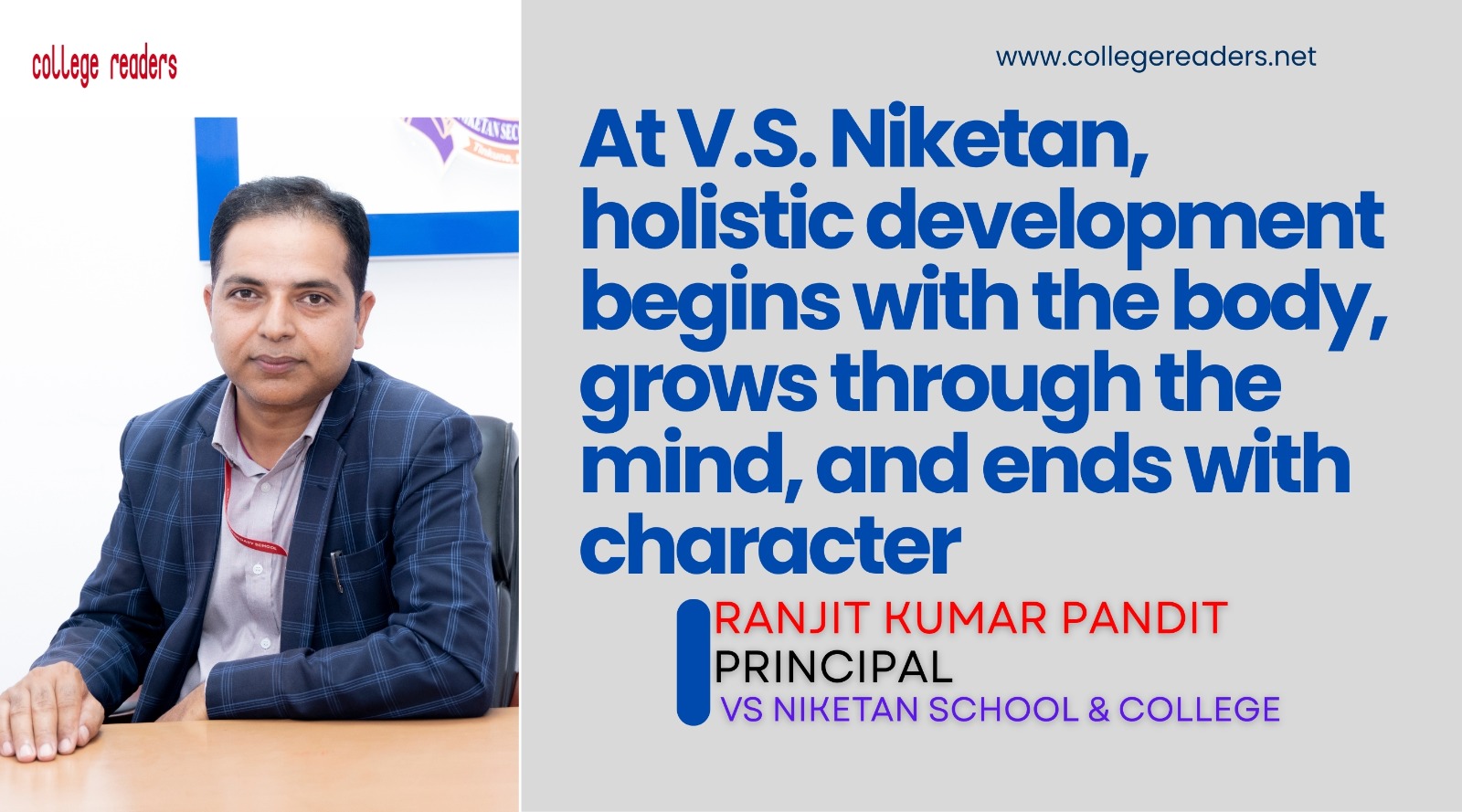
After SEE, many students feel confused between Science, Management, Humanities, Law, and other emerging options. In your view, what should students first understand about themselves before choosing a stream?
That’s an excellent question, and one that many students and parents grapple with. After SEE, the array of streams, Science, Management, Humanities, Law, and newer fields like IT or vocational courses, can indeed feel overwhelming. But before looking outward at subjects or job markets, I always advise students to look inward.
First, a student should understand their genuine interests. Not what their parents or peers admire, but what truly engages them. Do they enjoy solving abstract problems? Experimenting? Reading deeply? Debating ideas? Organizing events? Helping people? Interest is the fuel for sustained effort.
Second, they must assess their natural aptitudes, not just memorization ability, but also how they think. Are they more comfortable with logical, sequential reasoning (often suited for Science or Law)? Do they have strong verbal and interpersonal skills (Management or Humanities)? Do they enjoy working with data and systems (Commerce or IT)? A good fit between stream and ability reduces struggle and increases confidence.
Third, they should reflect on their learning and working styles. Science often demands lab work, precision, and long problem-solving sessions. Humanities might require extensive reading and critical essays. Management could need group projects and real-world case studies. Law demands argumentation and memory for statutes. Choosing a stream that matches how you naturally work makes daily study far more sustainable.
Fourth, be honest about your long-term values. Do you want a career with clear financial security? Intellectual discovery? Creative expression? Social impact? There’s no right answer, but different streams align differently with these values. For instance, Science opens many technical fields, but the humanities might nurture a thinker or policymaker.
Finally, students should understand that no stream closes all doors forever. Emerging interdisciplinary fields (like psychology with economics, or data science with humanities) are blurring old boundaries. And many skills, such as communication, ethics, and problem-solving, are transferable.
So, my advice: Before asking “Which stream is best?” ask “What do I love, what am I good at, how do I work best, and what matters to me?” Self-awareness is the true foundation for choosing a stream, or for redefining it later.
What are the most common mistakes students and parents make while selecting a stream, and how can they avoid making decisions based on pressure, trend, or misconception?
The three most common mistakes are: choosing based on peer pressure ("everyone is taking Science"), parental expectation without discussion, and myths like "Humanities is for weak students" or "Management has no scope."
To avoid these:
Separate hype from fit: A trending stream means little if it doesn't match the student’s interest and ability.
Have an honest conversation at home: Parents should ask, "What do you enjoy learning?" not "Which stream earns more?"
Look at real data, not rumors: Talk to seniors, check college entrance options, and use career counseling if available.
Above all, decisions made out of fear or prestige nearly always lead to burnout or switching later. A well-matched "less prestigious" stream is far better than a misfit "top" one.
How can a student realistically judge whether they are better suited for Science, Management, Humanities, or Law, especially when academic interest, ability, and future career goals do not always seem clear at this stage?
When interests, abilities, and goals feel unclear, students can take three practical steps:
Look back at past subjects: Which topics or assignments felt easier and more enjoyable? That often reveals natural aptitude.
Try low-risk exposure: Attend a short online course, talk to seniors in different streams, or shadow a professional for a day. Real experience beats guesswork.
Use a simple self-check : Ask: Do I enjoy solving problems with fixed answers (Science/Law)? Working with people or ideas (Management/Humanities)? Creating or interpreting meaning (Humanities/Arts)?
If still uncertain, choose a stream that keeps future options open. Science often allows switching to Management or Humanities later, but the reverse is harder. And remember: clarity comes with action, not waiting.
Beyond stream selection, what key factors should students and parents carefully examine while choosing a Plus Two institution—such as teaching quality, academic environment, Beyond the stream, examine five key factors:
Teaching quality. Not just reputation, but teacher-student ratio, qualification, and classroom engagement.
Academic environment. Is it competitive or collaborative? Supportive pressure matters; toxic stress doesn't.
Counseling support. Career guidance, mental health resources, and regular check-ins for stream-related doubts.
Facilities. Labs, library, IT access, and safe infrastructure directly affect learning.
Discipline and future guidance. Consistent rules create focus; college placement or entrance prep support shows long-term commitment.
Visit the institution, talk to current students, and ask: Will this school help my child grow, not just pass exams? counseling support, facilities, discipline, and future guidance?
What message or roadmap would you like to give SEE-appearing students so they can choose both the right stream and the right school with confidence, clarity, and long-term vision?
Here’s my roadmap for SEE-appearing students:
Step 1: Know yourself first. Identify your interest, aptitude, and work style before looking at streams or schools.
Step 2: Explore, don’t guess. Talk to seniors, try short courses, and use counseling if available. Clarity comes from curiosity.
Step 3: Match stream to strengths, not trends. No stream is superior; the right fit is superior.
Step 4: Choose an institution that builds you. Look for teaching quality, support systems, discipline, and future guidance, not just fancy buildings or exam results.
Step 5: Keep the long view. Your first stream is not your final destiny. Skills, adaptability, and self-awareness matter more than the label on your certificate.
Choose with patience, not panic. And remember: confidence comes from preparation, not perfection.


Popular Categories
Trending This Month












 Established in 2065 BS, COLLEGE READERS is a premier national-level educational magazine dedicated to serving the academic and informational needs of school and university students, teachers, educators, and concerned ones in Nepal. The magazine provides current and comprehensive information on various educational opportunities worldwide, aiming to guide school and college-level students in their academic and career journeys. It also highlights essential support services and service providers that play a crucial role in shaping students' career paths in today's competitive world.

- Our Location Putalisadak, Kathmandu
- Send Us Email collegereaders123@gmail.com
- Call Us Now 977 01 4518759
