
Call now
977 01 4518759
Send Message
collegereaders123@gmail.com
Our Location
Putalisadak, Kathmandu
Redefining Plus Two Education for a Practical, Competitive and Value-Based Future
- College Readers
- 19 May 2026
- Views
- Interviews , Op-ed
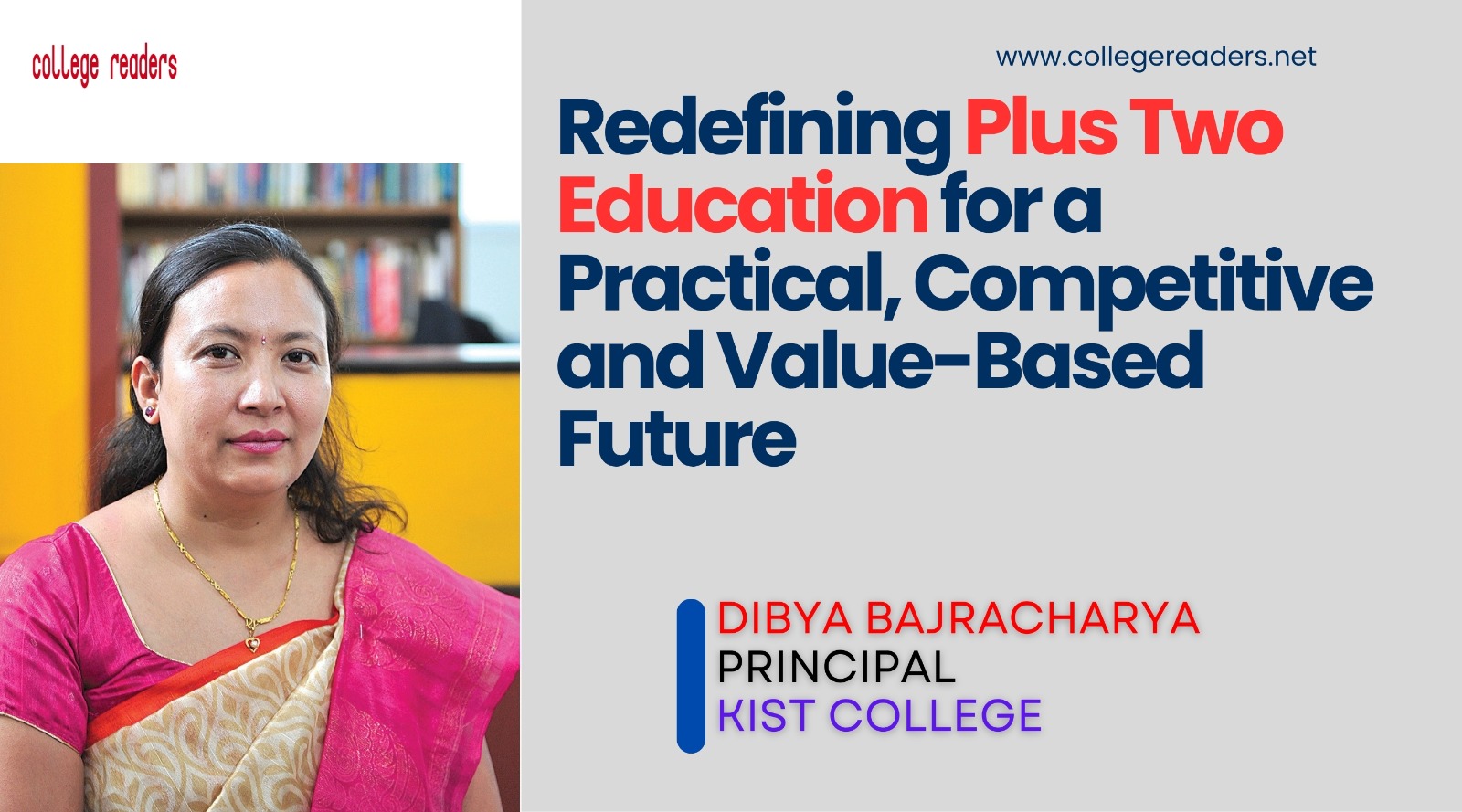
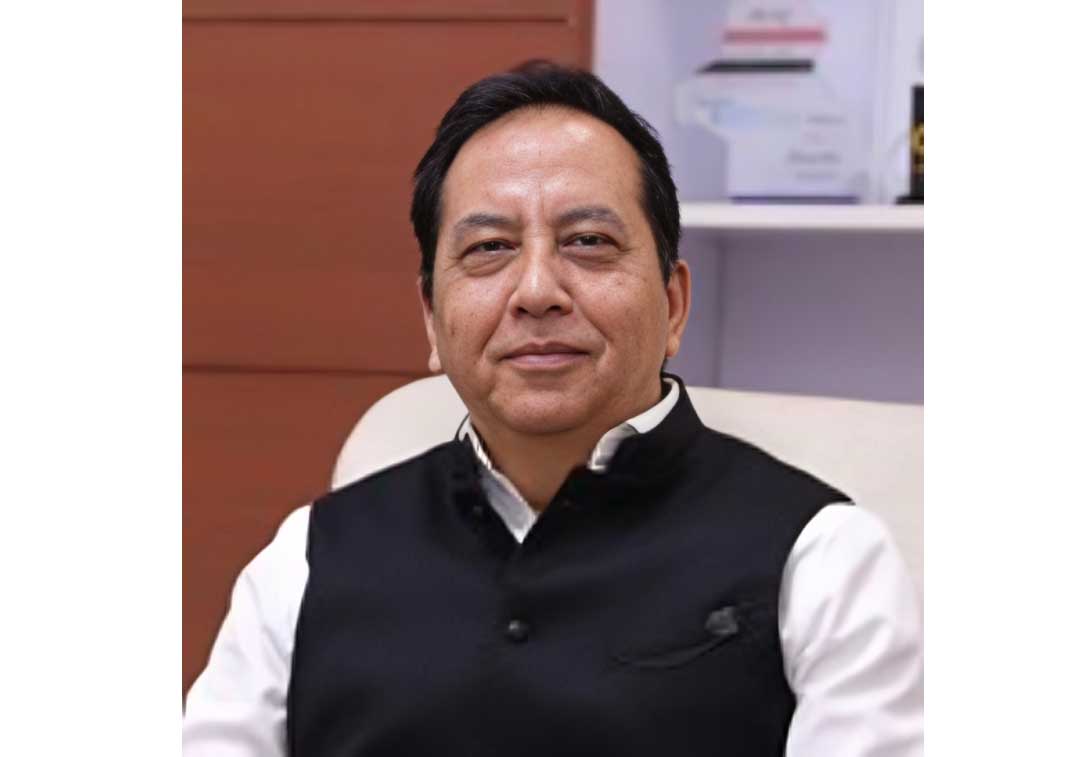
Dibya Bajracharya, Principal of KIST College, believes Nepal’s Plus Two education system must move beyond exam-oriented learning and embrace a more practical, analytical and student-centered approach. In this interview, he highlights the major challenges facing +2 education, including memorization-based teaching, uneven academic quality, lack of trained teachers and excessive pressure from board examinations. He emphasizes the importance of classroom engagement, project work, research exposure, digital literacy, ethical use of technology and strong institutional leadership. According to Bajracharya, the future of Plus Two education in Nepal depends on innovation, academic discipline, teacher development and preparing students for higher studies, employment and responsible citizenship.
What are the major challenges currently facing Nepal’s Plus Two education system?
In my assessment, the most pressing challenges in Nepal’s +2 education system are the excessive focus on memorization, limited practical understanding, uneven academic quality among institutions, shortage of well-trained teachers and high pressure surrounding board examinations. Many students are still encouraged to study mainly for marks rather than for knowledge, skills and deeper understanding.
To address these issues, we need serious reforms in teaching and learning practices. The system should focus more on conceptual clarity, analytical thinking, classroom interaction and academic foundations that prepare students for higher education. Students must be encouraged to understand, question, analyze and apply what they learn rather than simply reproduce textbook information in examinations.
How should Plus Two institutions prepare students for higher education, employment and citizenship?
Plus Two institutions must move beyond teaching only for board examinations. While examination success is important, it should not be the only goal of education. Students should be trained to think independently, communicate clearly, participate in meaningful discussions and apply classroom concepts in practical situations.
Institutions should introduce regular presentations, research-based assignments, project work, group discussions and academic counseling. These activities help students build confidence, improve communication skills and develop problem-solving abilities. At the same time, schools and colleges should also focus on discipline, responsibility, teamwork and ethical values so that students become capable learners as well as responsible citizens.
How can schools use technology and AI without weakening discipline and human values?
Technology and artificial intelligence can greatly support education if they are used in a balanced and purposeful way. Digital learning platforms, online resources and AI-based tools can make learning more accessible, interactive and updated. However, schools must introduce these tools in a structured manner.
Students should be taught not only how to use technology, but also how to use it ethically and responsibly. Academic discipline, critical thinking and originality must remain central. Technology should support the learning process, not replace the teacher-student relationship. No digital tool or AI system can replace the guidance, motivation and values provided by a good teacher. Human values must always remain at the heart of education.
Does Nepal’s current +2 curriculum meet global standards?
Honestly, I feel that Nepal’s present +2 curriculum still falls behind many international standards, especially in practical learning, research exposure and analytical development. Although there have been improvements, our teaching methodology is still largely exam-centered in many institutions.
To enhance the competitiveness of Nepali students nationally and internationally, the curriculum should be updated regularly according to changing academic and professional needs. Teaching should become more interactive, practical and concept-based. Students should receive more exposure to presentations, projects, research activities and real-world applications. If we can connect classroom learning with practical understanding, Nepali students can compete more confidently at both national and global levels.
What is your vision for the future of Plus Two education in Nepal?
Looking toward the next decade, I see Plus Two education in Nepal becoming more student-focused, research-oriented, practical and academically competitive. The future system should help students become independent thinkers, confident communicators and responsible individuals who are ready for higher education and the changing world of work.
Institutional leadership will play a major role in this transformation. Strong leadership means investing in teachers, encouraging classroom innovation, maintaining academic discipline and creating a learning environment where students are motivated to go beyond textbooks. Leaders must also ensure quality, consistency and accountability within institutions. If schools and colleges work with vision and commitment, Nepal’s Plus Two education can become much stronger, more meaningful and globally relevant.

Popular Categories
Trending This Month








 Established in 2065 BS, COLLEGE READERS is a premier national-level educational magazine dedicated to serving the academic and informational needs of school and university students, teachers, educators, and concerned ones in Nepal. The magazine provides current and comprehensive information on various educational opportunities worldwide, aiming to guide school and college-level students in their academic and career journeys. It also highlights essential support services and service providers that play a crucial role in shaping students' career paths in today's competitive world.

- Our Location Putalisadak, Kathmandu
- Send Us Email collegereaders123@gmail.com
- Call Us Now 977 01 4518759
