
Call now
977 01 4518759
Send Message
collegereaders123@gmail.com
Our Location
Putalisadak, Kathmandu
Making Plus Two Institutions the First Choice Through Quality, Care and Holistic Education
- College Readers
- 19 May 2026
- Views
- Interviews , Op-ed
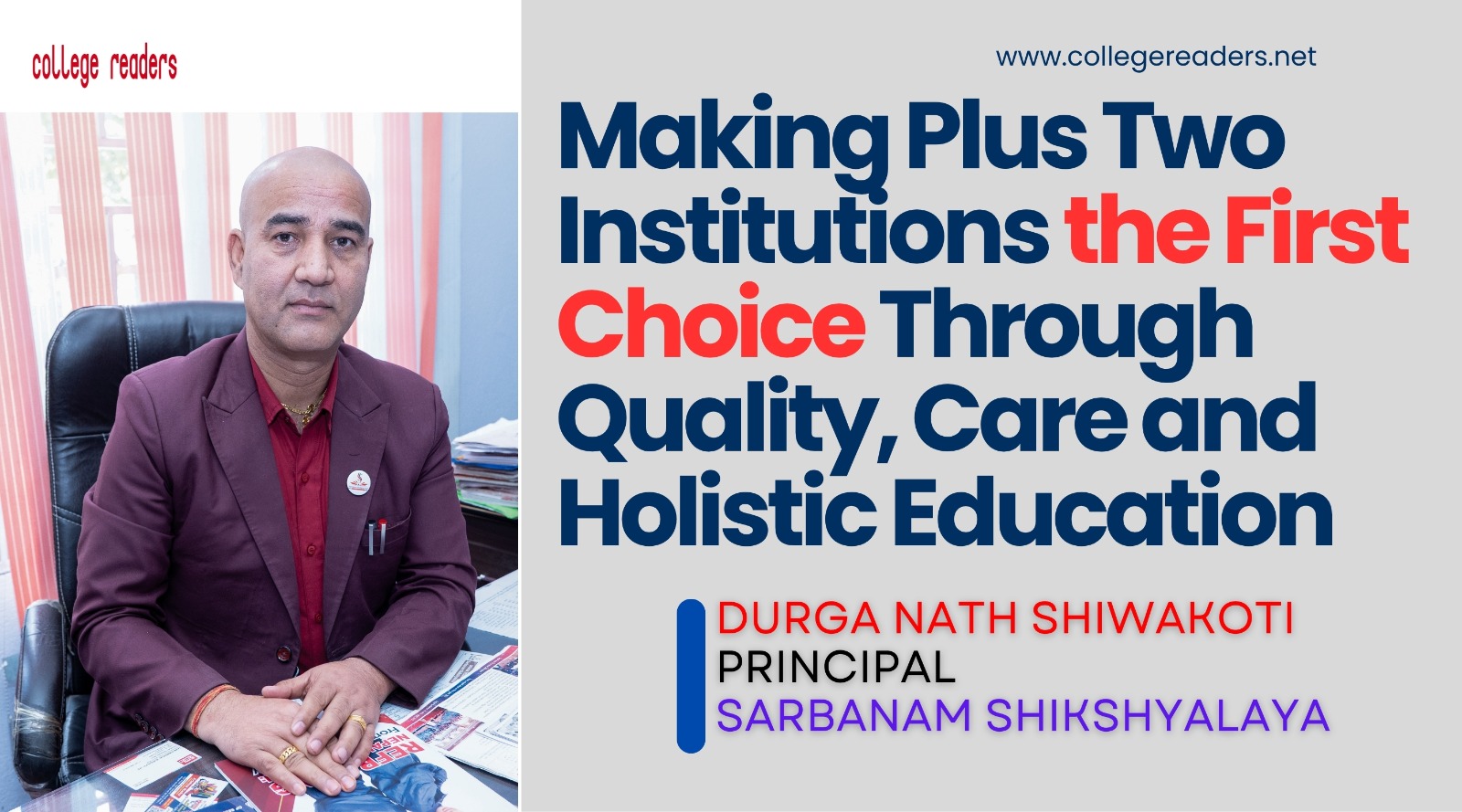
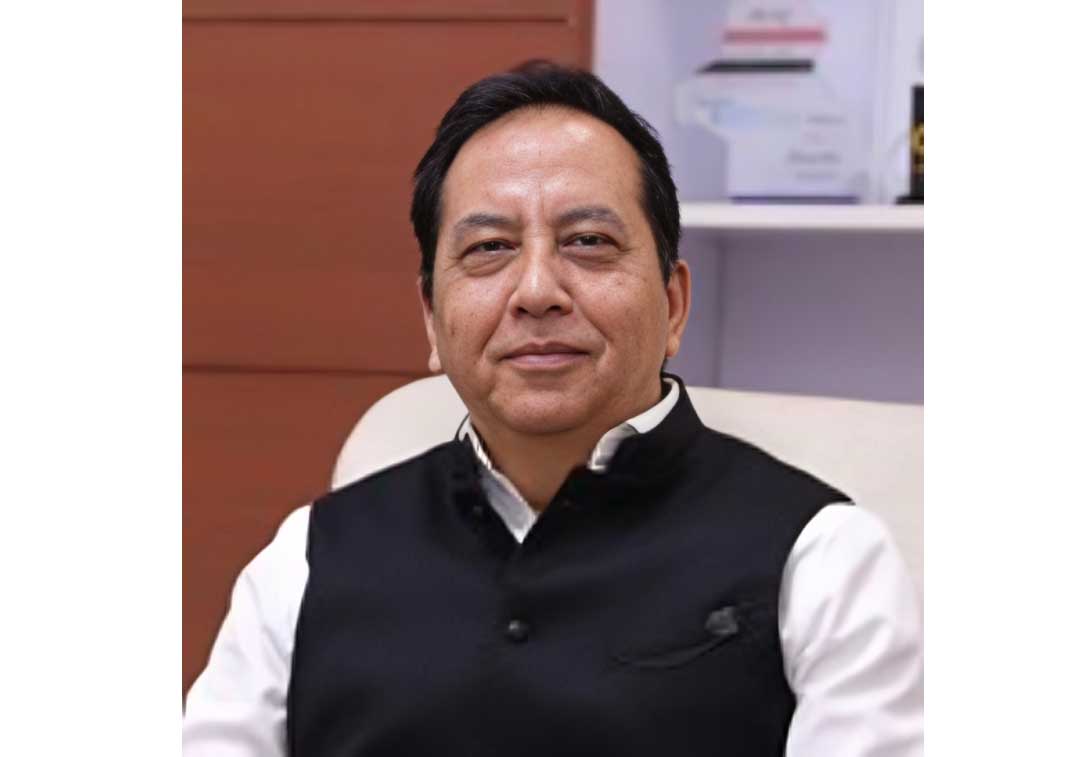
Durga Nath Shiwakoti, Principal of Sarbanam Shikshyalaya/College, emphasizes that a Plus Two institution becomes the first choice of students when it combines academic excellence with trust, discipline, care and future opportunities. In this interview, he explains that parents and students now seek more than board examination results; they expect character building, communication skills, career readiness and emotional support. He highlights the importance of qualified teachers, modern infrastructure, technology, extracurricular activities, counseling and transparent leadership. According to Shiwakoti, schools must shift from traditional teaching-centered models to student-centered holistic education, where every learner receives proper guidance, motivation and opportunities for overall growth, confidence, responsibility and lifelong success in a rapidly changing world.
In today’s highly competitive education sector, what do you believe makes a Plus Two institution become the first choice of students rather than just one option among many?
In the context of Nepal, a Plus Two institution becomes the first choice of students when it is able to combine academic excellence with trust, care, discipline, and future opportunities. Today’s students and parents do not only look at board examination results; they look for an institution that can shape character, confidence, communication skills, and career readiness. A school becomes preferred when it consistently produces successful graduates, maintains a safe and disciplined environment, provides personal attention to students, and creates a positive learning culture. Reputation built through transparency, quality teaching, responsible management, and genuine concern for students plays a major role. Institutions that understand the aspirations of modern SEE graduates and guide them toward higher education, employment, and life success naturally become the first choice rather than merely one among many options.
How important are academic quality, teaching faculty, discipline, and student support services in building a school’s reputation as a preferred destination for SEE graduates?
Academic quality is the foundation of any successful educational institution in Nepal. Skilled and dedicated teachers directly influence students’ learning achievements, confidence, and motivation. Along with strong faculty members, discipline is equally important because parents seek schools where students develop responsibility, respect, punctuality, and moral values. In recent years, student support services such as counseling, mentoring, remedial classes, career guidance, and emotional support have become increasingly essential. Many students face academic pressure, social challenges, and confusion regarding future careers, so schools that provide proper guidance earn greater trust from both parents and students. Therefore, the combined strength of quality education, disciplined culture, supportive teachers, and caring student services significantly contributes to building a school’s reputation as a preferred destination for SEE graduates.
Beyond examination results, what specific qualities or experiences should a school offer to win the trust and confidence of both students and parents?
In Nepal’s changing educational environment, schools must offer much more than good examination results to gain the trust of students and parents. A truly respected institution should focus on personality development, communication skills, leadership training, creativity, practical learning, and moral education. Parents today want schools that can prepare students not only for exams but also for life. Schools should create opportunities for public speaking, teamwork, innovation, social service, and real-world exposure. Maintaining close communication with parents, ensuring student safety, and providing a caring environment are equally important. Students feel more connected to schools where they are respected, heard, encouraged, and emotionally supported. Therefore, trust is built when schools demonstrate commitment to the overall growth and well-being of every learner rather than focusing only on marks and certificates.
What role do infrastructure, technology, extracurricular opportunities, career counseling, and emotional support play in making a school more attractive and meaningful to students?
Modern infrastructure and educational technology play a major role in attracting students in Nepal’s competitive education sector. Well-equipped classrooms, science and computer laboratories, libraries, sports facilities, and clean environments improve the quality of learning and student satisfaction. Similarly, technology-based teaching methods make education more engaging, practical, and globally relevant. Extracurricular activities such as sports, music, debates, leadership programs, educational tours, and social service help students discover their talents and build confidence. Career counseling is also extremely important because many students require guidance regarding higher studies and professional pathways. Alongside academic and career support, emotional support has become increasingly necessary in today’s stressful environment. Schools that provide counseling, motivation, mentorship, and emotional care create a positive atmosphere where students feel valued, secure, and inspired to succeed.
If you were to advise school leaders across Nepal, what roadmap would you suggest for transforming an ordinary institution into a school that students genuinely aspire to join as their first choice?
If advising school leaders across Nepal, the most important roadmap would be to shift from traditional teaching-centered education toward student-centered holistic education. Schools should first strengthen academic quality through trained teachers, modern teaching methods, continuous evaluation, and practical learning approaches. At the same time, institutions must maintain discipline while creating a friendly and motivating learning environment. Investment in technology, infrastructure, career guidance, extracurricular activities, and mental health support is equally necessary. Schools should build strong relationships with parents and local communities through transparency and regular communication. Leadership should focus on long-term vision rather than short-term publicity. Most importantly, schools must genuinely prioritize students’ growth, dignity, and future success. When institutions consistently provide quality education, emotional care, life skills, and career opportunities, they naturally become schools that students proudly aspire to join as their first choice.

Popular Categories
Trending This Month








 Established in 2065 BS, COLLEGE READERS is a premier national-level educational magazine dedicated to serving the academic and informational needs of school and university students, teachers, educators, and concerned ones in Nepal. The magazine provides current and comprehensive information on various educational opportunities worldwide, aiming to guide school and college-level students in their academic and career journeys. It also highlights essential support services and service providers that play a crucial role in shaping students' career paths in today's competitive world.

- Our Location Putalisadak, Kathmandu
- Send Us Email collegereaders123@gmail.com
- Call Us Now 977 01 4518759
