
Call now
977 01 4518759
Send Message
collegereaders123@gmail.com
Our Location
Putalisadak, Kathmandu
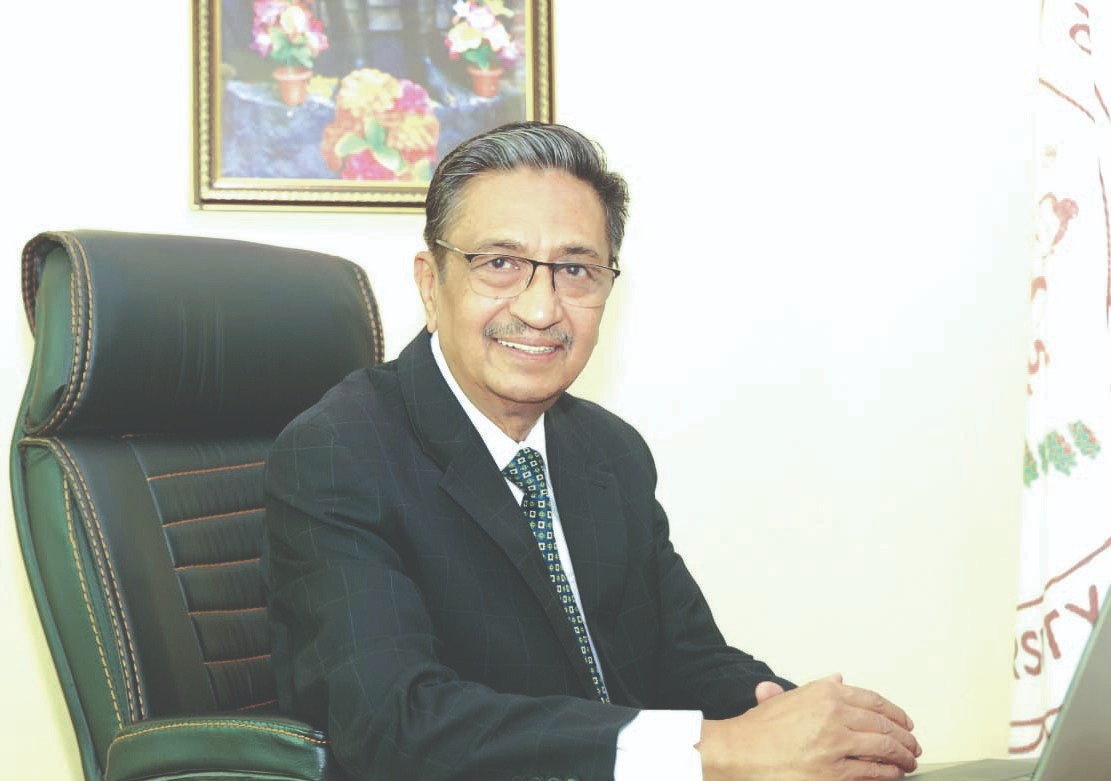
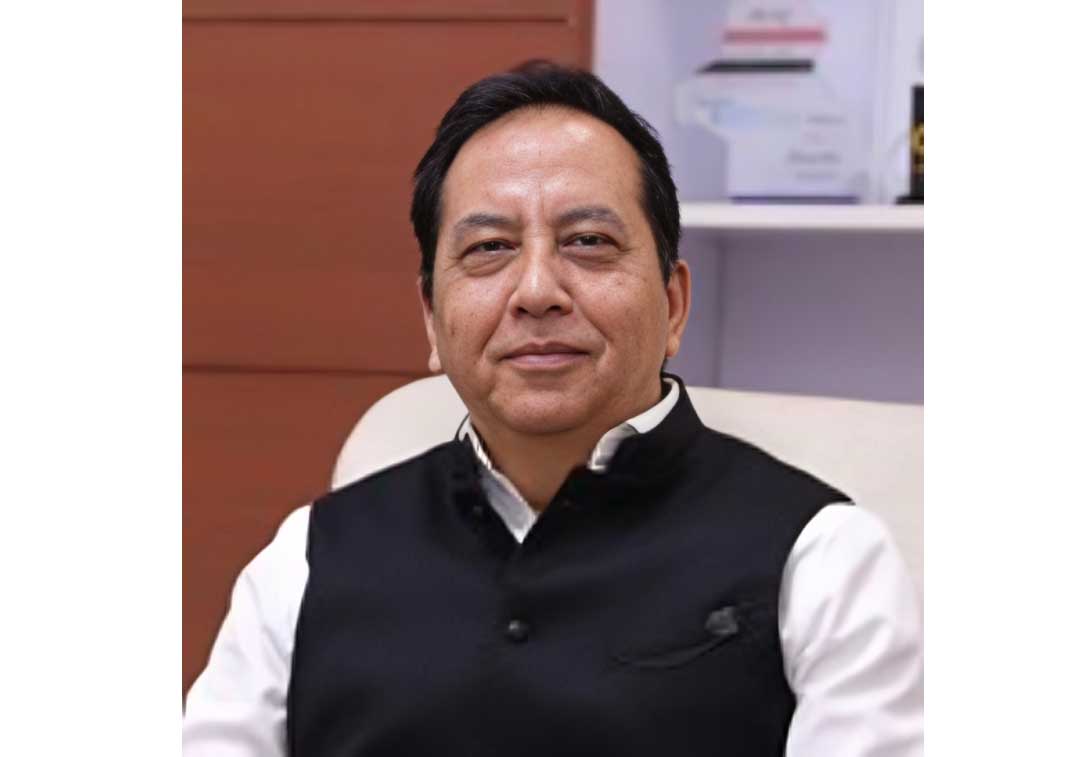
Prof. Dr. Subarna Lal Bajracharya
Vice-Chancellor
Lumbini Buddhist University
Reimagining Higher Education: A Blueprint for Keeping Nepal’s Students Home
- College Readers
- 18 Feb 2026
- Views
- Interviews
In the bustling corridors of Nepal’s academic institutions, a quiet exodus is underway. Each year, thousands of bright, young minds board flights to foreign shores, seeking an education they feel they cannot find at home. This brain drain represents one of the most significant challenges—and opportunities—for the future of the nation. At the heart of this issue is a critical question: What must Nepal’s universities do to not only stem the tide but to become world-class destinations in their own right?
To find answers, we sat down with a visionary leader at the forefront of educational reform, Prof. Dr. Subarna Lal Bajracharya, the Vice-Chancellor of Lumbini Buddhist University. A thinker who challenges the status quo, Prof. Dr. Bajracharya doesn’t just see problems; he sees pathways to solutions. From advocating for radical flexibility and job-oriented curricula to spearheading ambitious international projects, he outlines a compelling blueprint for a self-confident, innovative, and globally attractive Nepali higher education system. This is a conversation every student, educator, and policymaker should read.
Many believe that studying abroad is the only path to a world-class education. In your view, what is the fundamental first step to creating an environment where students choose to study here in Nepal?
The first step is a conscious, national commitment to creating a self-sustaining academic ecosystem. It begins with the universities themselves. We must build robust infrastructure—not just buildings, but digital libraries, advanced labs, and high-speed connectivity. We must design programs that are relevant on a global scale. But the most critical element, the linchpin of it all, is an uncompromising focus on quality. And to achieve that quality, we need one thing above all else: flexibility.
Flexibility seems to be a central theme for you. Could you elaborate on why it’s so crucial?
Absolutely. Without flexibility, our systems become fossils. Our rules, regulations, and curricula are often outdated, designed for a world that no longer exists. If we cannot update them dynamically to be market-oriented and forward-thinking, we will forever be losing our immense potential. We have brilliant students, but they cannot access high-tech, trending courses like advanced artificial intelligence, data science, or sustainable design because our rigid policies prevent us from designing and approving them quickly.
Even if we miraculously built the finest infrastructure tomorrow, it would be meaningless if our policies strangle innovation. We need a framework that allows us to be agile—to change when change is needed, to improve where improvement is necessary. We must empower our universities to make swift, market-oriented decisions. Without this foundational flexibility, even the most excellent strategic plans will fail upon impact with reality.
This lack of flexibility seems to be directly linked to the outflow of students after high school. What, in your experience, is the single biggest challenge driving this exodus?
The biggest challenge is a crisis of relevance. If you ask a student, “What will you do after this degree?” they often have no answer. And tragically, often, we as educators don’t have a clear answer for them either. Why? Because we have not built job-oriented programs. We confer degrees, but if those degrees do not translate into tangible skills and, ultimately, employment, their value diminishes significantly.
Abroad, the equation is different. Universities there offer a package: education plus opportunity. Students are permitted to work part-time—20 hours a week is standard—allowing them to support themselves in restaurants, hotels, or retail. They see a path to self-reliance. In Nepal, the model is different; students remain entirely dependent on their families for tuition, food, and accommodation. That financial autonomy is a powerful attractor.
We are failing to utilize our most potent national asset: our capable youth. The government and universities must strategize collectively to channel this youthful energy into industries and service sectors. Take IT, for example. We produce exceptional IT graduates, but without local job opportunities, their skills atrophy or, worse, are diverted into negative outlets like hacking out of frustration. This is a tragic waste of potential that we must urgently address.
Many universities create excellent strategic plans, but implementation remains weak. Why does this gap persist, and how can it be overcome?
It comes down to leadership and courage. If you only ever follow written rules to the letter, you don’t need to make any real decisions. But leadership roles like Vice-Chancellor, Registrar, or Rector demand more. They require you to take calculated risks for development. If a rule is a barrier to progress, you must work to amend it. The corporate world does this constantly; universities must learn to be equally adaptive. If leaders remain in their comfort zone, fearing to make a decision that isn’t pre-approved by a decades-old statute, nothing will ever change.
Let me give you the example of my own institution, Lumbini Buddhist University. We face criticism from some quarters for offering programs beyond core Buddhism. They ask, ‘Why is a Buddhist university teaching management or science?’ But I ask in return: if we only produce monks and nuns, how many students does that truly serve? Is that a practical model for a national university?
Our vision is different. We aim to provide Buddhist education in an applied way. The teachings of Buddha are not confined to scripture; they are universal principles that can be integrated into every field of life. Buddha’s teachings on ethics, mindfulness, and interdependence are incredibly relevant to modern management, law, environmental science, and mental health. We are not diluting Buddhism; we are amplifying its relevance for the contemporary world.
That’s a fascinating approach. How does this applied philosophy actually translate into the classroom? How does a course in, say, management at LBU differ from one at another university?
The difference is profound and it’s in the foundational values. When we teach management, we don’t just teach profit maximization. We integrate core Buddhist principles: ethics, moral values, spirituality, mindfulness, and compassion. We are shaping managers and leaders who understand that true success is not just financial, but also social and ethical. Our graduates are taught a win-win approach that respects employees, communities, and the natural environment.
We have developed unique courses in meditation science and mental health that are directly applicable in corporate wellness programs. Even in fields like engineering, we discuss the ethical implications of technology and the importance of sustainable design. This values-based, practical education produces graduates who are not just skilled, but are also conscientious citizens. They are equipped to contribute positively to society, not just extract from it. That is our distinctive advantage.
Speaking of a global outlook, LBU is undertaking a massive collaboration project with China in Devdaha. Can you tell us about this ambitious vision?
Certainly. Nepal’s geography is our strategic advantage. We are situated between two of the world’s largest and most dynamic economies: China and India. Our strategy is to ask: how do we become an educational hub that attracts students from these vast markets? We must offer programs they want but cannot easily access at home, coupled with Nepal’s natural advantages of a pleasant climate and lower costs.
We successfully presented this vision to China, and they assisted us in preparing a comprehensive master plan. The project envisions a large international campus in Devdaha capable of accommodating about 22,000 residential international students, with around 35 schools offering diverse programs. We have already begun; last year we enrolled 200 Chinese students, and this year our target is 500.
There is immense interest in China for courses like Buddhism, Nepal Studies, and Sanskrit. We are also developing specialized programs in translation and interpretation to meet the huge demand for translating ancient Buddhist texts from Sanskrit and Pali into Chinese and other languages. This isn't just about building infrastructure; it's about building intellectual bridges.
There is also talk of a massive meditation center to host 20,000 students. How does this fit into the vision of attracting international students?
This is a core part of our identity. The planning for this mega meditation center is complete, costing has been done, and we are working with the Investment Board of Nepal to bring it to fruition as a priority national project. The full construction is projected to take about eight years. Once complete, it will be a world-class center of attraction, drawing students and scholars from across the globe for study, research, and practice. Combined with our facilities in Devdaha, Butwal, and Bhairahawa, we will create a unique educational corridor in Lumbini Province.
So, ultimately, this is how the "Study in Nepal" campaign finds its true meaning?
Precisely. When foreign students choose Nepal in large numbers, it will build a powerful sense of confidence among our own students. The perception will shift. A major reason students leave is that we fail to provide timely, efficient, and relevant solutions. We have addressed this head-on at LBU by digitizing our entire ecosystem—from enrollment to Learning Management Systems to computer-based testing where students receive their results the same day. We are proving that Nepali universities can be efficient, modern, and responsive.
Finally, Sir, what is your closing message to our readers—students, educators, and leaders across Nepal?
My message is one of collaboration and confidence. The "Study in Nepal" campaign is excellent, but it must be met with concrete action from all universities. We must move beyond competing with each other and instead cooperate to elevate the entire sector. At LBU, we have developed digital platforms that we freely share with other universities, an initiative appreciated by the University Grants Commission.
We are introducing cutting-edge courses in AI, animation, and even drone piloting—a critical skill for a mountainous country like Nepal. We are launching joint degrees, like our "Diplomacy of Peace" program with Kathmandu University.
The future of Nepali education is bright, but it demands courage, flexibility, and a unwavering commitment to quality and relevance. There is no better place than Nepal to learn, to grow, and to contribute. We must all work together to ensure our students believe that, too. They shouldn’t have to leave to find their future; they should be able to build it right here.
Popular Categories
Trending This Month








 Established in 2065 BS, COLLEGE READERS is a premier national-level educational magazine dedicated to serving the academic and informational needs of school and university students, teachers, educators, and concerned ones in Nepal. The magazine provides current and comprehensive information on various educational opportunities worldwide, aiming to guide school and college-level students in their academic and career journeys. It also highlights essential support services and service providers that play a crucial role in shaping students' career paths in today's competitive world.

- Our Location Putalisadak, Kathmandu
- Send Us Email collegereaders123@gmail.com
- Call Us Now 977 01 4518759
