
Call now
977 01 4518759
Send Message
collegereaders123@gmail.com
Our Location
Putalisadak, Kathmandu
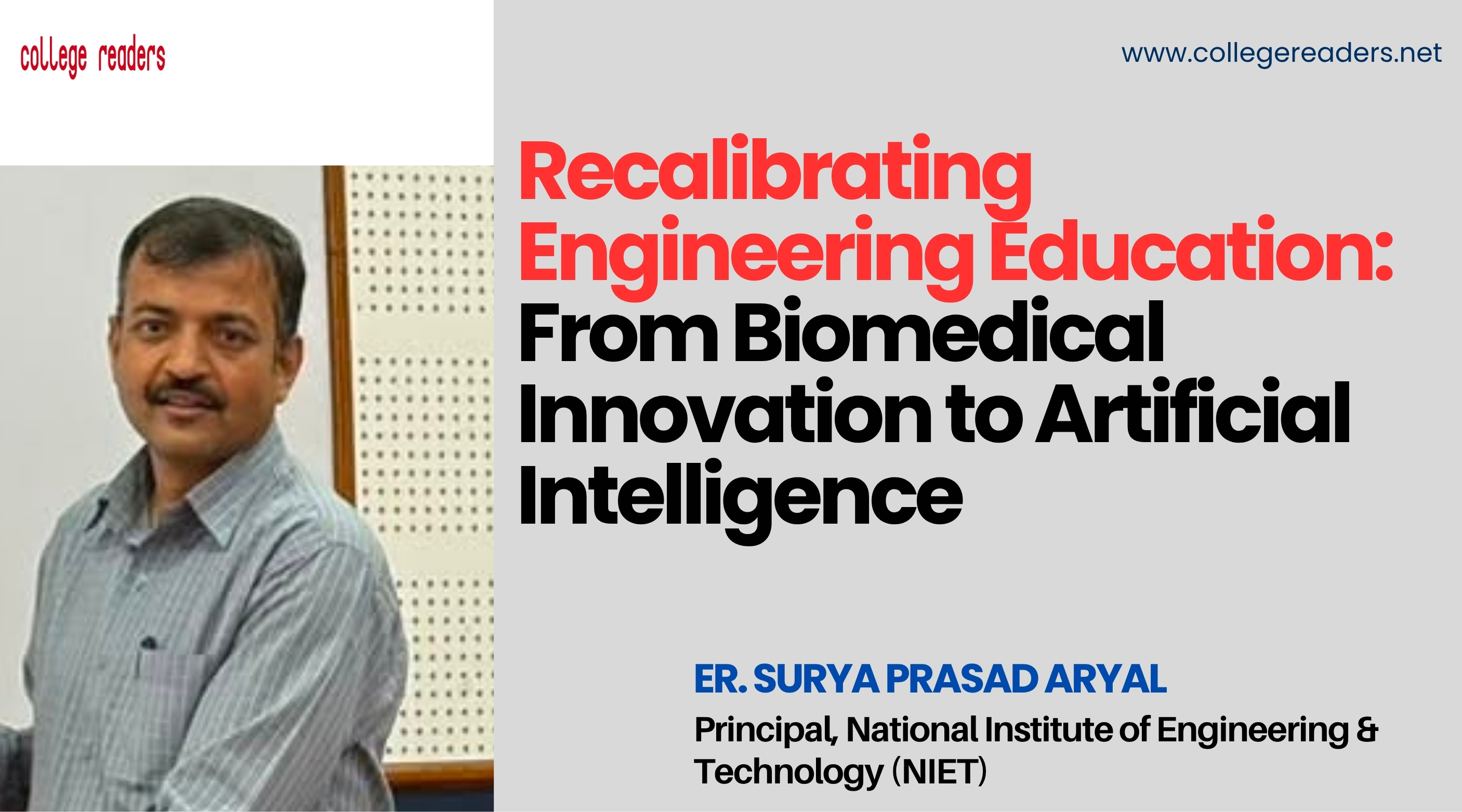
Recalibrating Engineering Education: From Biomedical Innovation to Artificial Intelligence
- College Readers
- 07 Jul 2026
- Views
- Interviews
Biomedical Engineering as Our Core Identity
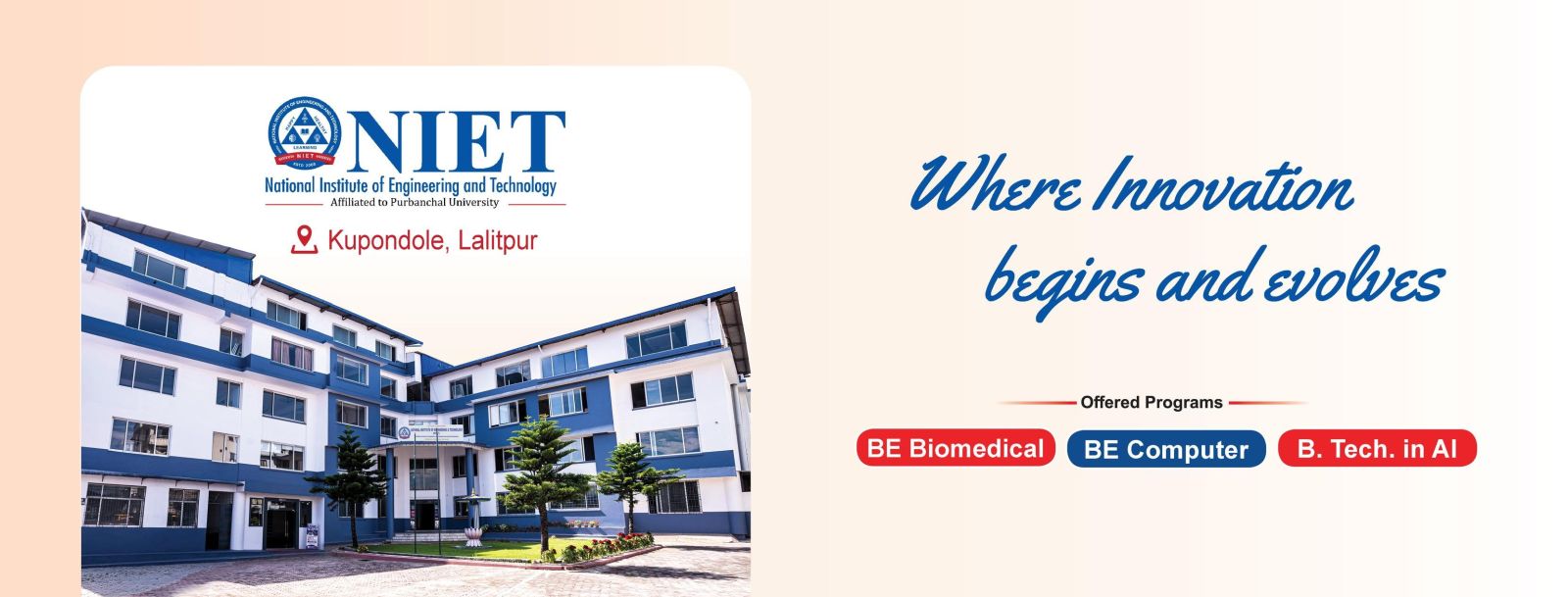
The strongest identity of NIET is biomedical engineering. We are the only institution in Nepal offering B.E. in Biomedical Engineering. Since 2005, we have remained dedicated to this field, and no other institution has established and continued the programme in the same way. Biomedical engineering is not only an academic course; it is a bridge between engineering and medicine. Hospitals need modern equipment, diagnostic systems, medical instruments and technical professionals who can operate, maintain and improve them. Biomedical engineers serve exactly this purpose. In a country where healthcare infrastructure is still developing, this field has direct national importance.
Quality Assurance and Institutional Trust
Quality is not created by words alone. It must be recognized through systems, performance and trust. NIET became the first private engineering college in Nepal to receive QAA certification from the University Grants Commission. In 2073 B.S., the Ministry of Education also recognized us as the Best College. These achievements are not just decorations for the institution. They remind us that academic quality requires discipline, qualified teachers, proper laboratories, transparent processes, student support and continuous improvement. For us, quality assurance is a daily commitment.
NIET has established itself as a distinctive engineering institution in Nepal by offering the country’s only B.E. in Biomedical Engineering and expanding into AI and Computer Engineering in response to changing global demand.
Moving with AI and Computer Engineering
Engineering education must also move with time. The world is now entering an age where artificial intelligence influences almost every sector. Healthcare is no exception. AI in healthcare has become a major research area, and biomedical engineering is increasingly connected with data, automation, diagnosis, image processing and intelligent systems. Therefore, we introduced B.Tech. in AI and B.E. in Computer Engineering. These programmes were not added merely because they are popular. We introduced them because the future of biomedical engineering, computer engineering and artificial intelligence is interconnected. Dedicated AI laboratories and computer facilities can support students from all these disciplines and help create a stronger academic environment.
Career Prospects and Employment Confidence
Career opportunities in biomedical engineering have been very encouraging. Until now, we have not found graduates saying they could not get jobs. In fact, employers often contact us asking whether we have biomedical engineers available. Around 40 to 50 percent of our graduates go abroad for further studies, and some receive scholarships for PhD programmes directly. Others work in Nepal’s hospitals, government sector, Public Service Commission positions, private companies or their own biomedical service enterprises. Medical instrumentation is necessary in every hospital, and skilled professionals are needed to support it. This is why the field has strong employment prospects.
AI and Computer Engineering are newer programmes at NIET, but their future is equally promising. AI is being used in education, health, finance, agriculture, industry, research and daily life. Computer engineering has become the backbone of modern development. Students who develop strong skills in these areas can work not only in Nepal but also for international clients while remaining in the country. This makes technology education especially powerful for Nepali youth.
Learning While Earning
The idea of learning while earning is also becoming practical. Many of our students already work while studying. That is why we run morning classes. Students can attend college early and then go to hospitals, companies, offices or their own work. In AI and Computer Engineering, opportunities are even wider because students can work from home through outsourcing. With a laptop, good skills and discipline, they can connect with global assignments. However, earning should support learning, not replace it. Students must first build strong knowledge.
Nepal’s bachelor-level education is strong enough to prepare students for employment, research, entrepreneurship and international study, making it wiser for students to complete their bachelor’s degree at home before going abroad.
Practical Education for Real Work
To make education practical, we try to appoint teachers and professors who have industry experience. We do not want education to remain limited to books and theory. Students need work-oriented teaching, training, workshops and real problem-solving. Hackathons, AI activities and practical sessions help students develop confidence, creativity and teamwork. We also organize programmes even for Plus Two students so they can understand emerging technologies early.
Bachelor’s Degree in Nepal First
One issue I feel strongly about is the growing habit of going abroad immediately after Plus Two. I advise students to complete at least their bachelor’s degree in Nepal. I say this from personal experience. I completed my bachelor’s degree in Nepal and later went abroad for higher studies, where I stayed for seven to eight years. I have seen the reality myself. At the bachelor’s level, scholarships abroad are very limited, fees are high, and the education is not always far superior to what capable Nepali institutions provide. Many students go abroad dreaming of permanent residency or easy income, but they face financial pressure and hardship. Families also sometimes believe their children will soon earn and send money home, which is rarely easy.
After completing a bachelor’s degree in Nepal, students become mature, skilled and academically prepared. At the graduate level, they have better chances of scholarships, research funding and meaningful international exposure. Therefore, Nepal’s bachelor-level education should not be underestimated. Our universities and colleges are capable of producing competent graduates if students choose seriously and study with commitment.

Popular Categories
Trending This Month








 Established in 2065 BS, COLLEGE READERS is a premier national-level educational magazine dedicated to serving the academic and informational needs of school and university students, teachers, educators, and concerned ones in Nepal. The magazine provides current and comprehensive information on various educational opportunities worldwide, aiming to guide school and college-level students in their academic and career journeys. It also highlights essential support services and service providers that play a crucial role in shaping students' career paths in today's competitive world.

- Our Location Putalisadak, Kathmandu
- Send Us Email collegereaders123@gmail.com
- Call Us Now 977 01 4518759
