
Call now
977 01 4518759
Send Message
collegereaders123@gmail.com
Our Location
Putalisadak, Kathmandu
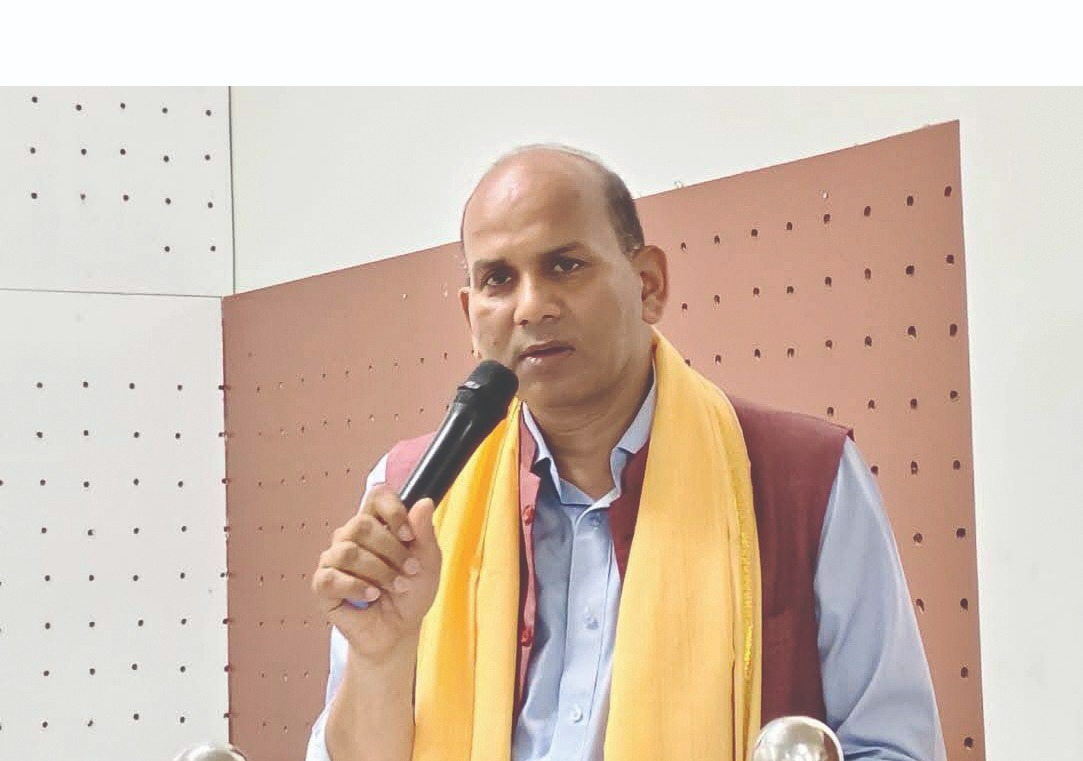
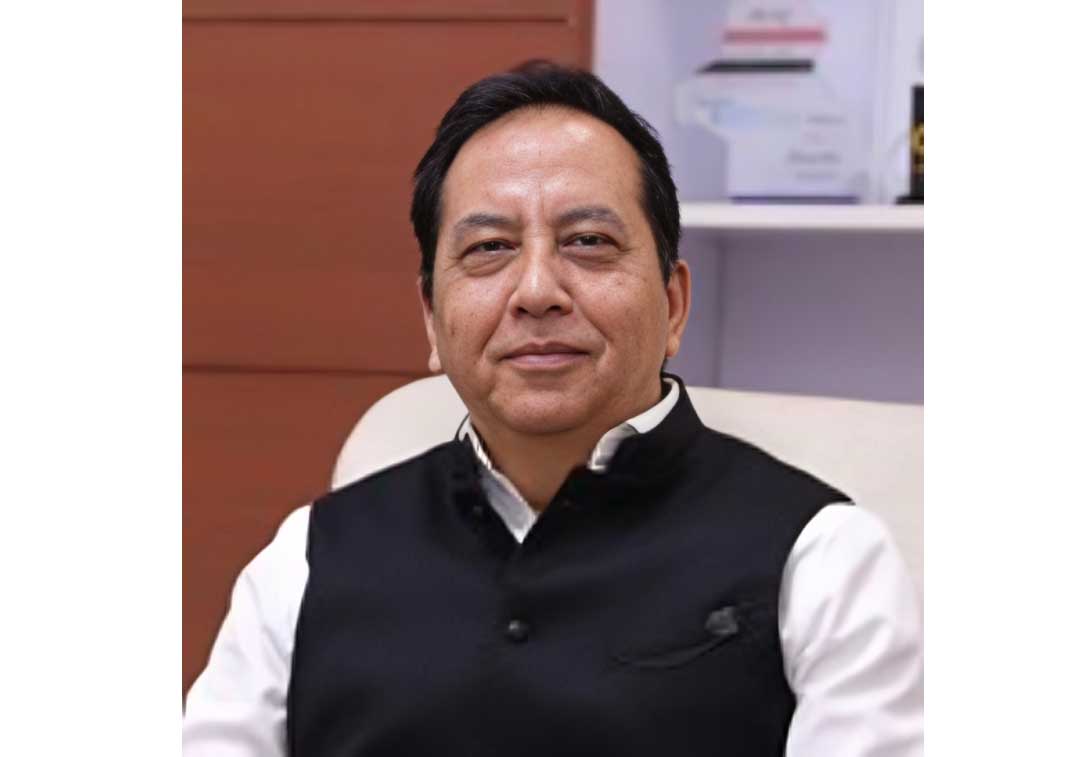
Prof. Dr. Amar Prasad Yadav
Vice Chancellor
Rajarshi Janak University
Rajarshi Janak University Sets Academic Benchmark Through Autonomy, Policy Flexibility, Faculty Incentivization
- College Readers
- 18 Feb 2026
- Views
- Interviews
In an era where Nepal faces an unprecedented exodus of students seeking education abroad, Prof. Dr. Amar Prasad Yadav, Vice Chancellor of Rajarshi Janak University, presents a compelling blueprint for revolutionizing higher education within the country. Through this exclusive interview with College Readers Magazine, Prof. Yadav reveals how his institution has grown from 300 to 2,400 students in under two years while pioneering innovative approaches that blend international standards with local cultural heritage. His candid assessment of Nepal's educational challenges and pragmatic solutions offers hope for stemming the brain drain that costs the nation thousands of its brightest minds annually.
How could your academic journey spanning decades and continents shaped the approach to leading Rajarshi Janak University?
My educational journey has been one of continuous learning and adaptation. After completing my MSc in 2052 BS, I began as a part-time faculty member at Tribhuvan University's Central Campus in Kirtipur. The transition to permanent faculty in 2054 BS was just the beginning. My PhD studies in Japan from 2055 BS opened my eyes to international educational standards and methodologies.
When I returned to Nepal, I brought back not just knowledge but a vision of what our education system could become. Achieving full professorship in 2072 BS at Tribhuvan University gave me the platform to implement changes, but it wasn't until my appointment as Vice Chancellor of Rajarshi Janak University on Shrawan1, 2080 BS, that I found the opportunity to build something transformative from the ground up.
You inherited significant challenges when you assumed leadership. What was the situation, and how did you address it?
The challenges were indeed monumental. When I arrived, the university lacked basic administrative structure—no registrar, no deans, no directors, no campus chiefs. It was an institution in name but lacking the skeletal framework necessary for academic excellence. Teachers and staff hadn't received salaries for months. Results for some programs were delayed by up to 16 months, creating a cascade of problems that disrupted the entire academic calendar.
My first priority was establishing administrative stability. I appointed key positions—registrar, deans, and directors—ensuring we had the leadership structure necessary for effective governance. We immediately addressed the salary crisis, understanding that motivated faculty are essential for quality education.
Simultaneously, we tackled the academic delays. We streamlined examination processes, upgraded our digital infrastructure, and implemented strict timelines for result publication. The transformation was dramatic—from an institution struggling with basic operations to one that now runs with clockwork precision.
The growth from 300 to 2,400 students is remarkable. What strategies enabled this expansion?
This growth wasn't accidental—it was the result of strategic planning and bold decision-making. We recognized that accessibility was crucial, so we provided affiliation to 60 private colleges across Nepal. This decentralized approach meant students could access our programs without relocating to our main campus.
We established three new campuses: Gaushala Engineering Campus in Mahottari, Pandit Mangal Kumar Upadhyaya Multiple Campus in Gaur, and Mahagadhimai Campus in Bariyarpur. Each campus was designed to serve specific regional needs while maintaining uniform quality standards.
Most importantly, we diversified our academic offerings. We now have 17 programs ranging from traditional disciplines to modern professional courses like BBA, MBA, IT, and Law. This diversity attracts students with varied interests and career aspirations. We project reaching 5,000 students once all programs are fully operational from this academic year's Mangsir session.
You've introduced a unique course on Mithila culture. How does this align with modern educational needs?
The three-credit hour non-credit course on Mithilology represents our commitment to cultural preservation alongside modernization. Rajarshi Janak University, being rooted in Madhesh, has a responsibility to preserve and promote our rich cultural heritage. This isn't about looking backward—it's about giving students a strong cultural foundation while preparing them for global careers.
International universities like Harvard and Oxford maintain strong connections to their cultural contexts while excelling globally. We're following a similar model. Students who understand their roots are more confident, creative, and capable of contributing meaningfully to both local and global communities. The workshops and training sessions we've conducted have shown overwhelming student enthusiasm for this integration of tradition and modernity.
Nepal's brain drain is a critical issue, with thousands of students leaving after Plus Two. What's driving this exodus, and how can universities stem this tide?
The brain drain is symptomatic of deeper systemic issues. Students leave not just for education but for the promise of better opportunities. They perceive—often correctly—that foreign universities offer superior infrastructure, more flexible learning systems, and clearer pathways to employment.
The fundamental problem is our rigid, outdated educational framework. Our academic year begins in Baishakh, creating synchronization issues with international systems. Our evaluation methods don't adequately assess practical competencies. Students can't easily balance work and study, and our programs often don't align with market demands.
But the issue goes beyond academics. When students compare facilities—from basic amenities to research infrastructure—many Nepali institutions fall short. They see modern laboratories, well-stocked libraries, and cutting-edge technology abroad, while here they might struggle with inconsistent electricity or internet connectivity.
What specific reforms would make Nepali universities competitive with international institutions?
First, we need complete autonomy in curriculum design and implementation. Universities should be able to rapidly adapt programs based on market needs without bureaucratic delays. If the IT industry needs blockchain specialists, we should be able to launch relevant courses within months, not years.
Second, flexibility in academic policies is crucial. Students should be able to pause studies for internships or employment, then return to complete their degrees. We need credit banking systems where students can accumulate credits over time, even from different institutions.
Third, infrastructure investment is non-negotiable. This isn't just about buildings—it's about creating environments that inspire learning. Modern laboratories, reliable internet, comfortable study spaces, and research facilities are essential. We've made significant progress at Rajarshi Janak University, but this needs to happen nationwide.
Fourth, faculty development and compensation must be prioritized. We need to attract and retain the best minds in academia. This means competitive salaries, research funding, and opportunities for international collaboration. When our professors are world-class, our education will be too.
Finally, and perhaps most importantly, we need industry-academia partnerships that guarantee employment pathways. When students see clear career trajectories within Nepal, the incentive to leave diminishes significantly.
You've emphasized the need for political consensus on education. How realistic is this given Nepal's political landscape?
Political consensus on education isn't just desirable—it's essential for our nation's future. Education policy shouldn't change with every government. We need a 20-30 year vision that transcends political cycles.
I've seen how political interference can derail educational initiatives. Appointments based on political affiliation rather than merit, frequent policy reversals, and the use of student unions for political purposes all undermine educational quality.
However, I'm optimistic. There's growing recognition across political spectrums that education is key to Nepal's development. We need to build on this consensus, perhaps through an all-party education commission that sets long-term goals and ensures continuity regardless of political changes.
Looking ahead, what's your vision for Nepal's higher education sector?
My vision is ambitious but achievable. I see Nepal becoming an education hub for South Asia, attracting students from neighboring countries rather than losing our own. This requires universities that combine international standards with unique offerings rooted in our cultural and geographical advantages.
Imagine specialized programs in mountain studies, Buddhist philosophy, or sustainable agriculture that leverage Nepal's unique position. Picture research centers studying climate change in the Himalayas or traditional medicine systems. These could attract international students and researchers while addressing local needs.
We need universities that don't just produce graduates but actively contribute to community development. Every university should have associated hospitals, schools, research stations, and incubation centers that directly improve lives while providing practical training for students.
Most importantly, we need an ecosystem where quality education leads to meaningful employment within Nepal. This requires coordination between universities, government, and industry to identify skill gaps and create targeted programs. When students see that a Nepali degree opens doors to rewarding careers at home, the brain drain will naturally reverse.
Any final message for students considering their educational options?
To students, I say this: Nepal's educational landscape is transforming rapidly. Universities like Rajarshi Janak are proving that world-class education is possible within our borders. Yes, challenges remain, but you can be part of the solution rather than adding to the brain drain.
Consider what you seek abroad—quality education, good facilities, employment opportunities—and ask whether those goals might be achievable here with some persistence and creativity. Many successful Nepalis studied locally and built impressive careers. You could be next.
To educators and policymakers, I urge continued commitment to reform. Change is slow, but it's happening. Every improved curriculum, every new laboratory, every successful graduate who stays in Nepal moves us closer to our goal.
Together, we can build an education system that not only retains our brightest minds but becomes a magnet for international students. The journey is challenging, but at Rajarshi Janak University, we're proving it's possible. Join us in this transformation.
Popular Categories
Trending This Month








 Established in 2065 BS, COLLEGE READERS is a premier national-level educational magazine dedicated to serving the academic and informational needs of school and university students, teachers, educators, and concerned ones in Nepal. The magazine provides current and comprehensive information on various educational opportunities worldwide, aiming to guide school and college-level students in their academic and career journeys. It also highlights essential support services and service providers that play a crucial role in shaping students' career paths in today's competitive world.

- Our Location Putalisadak, Kathmandu
- Send Us Email collegereaders123@gmail.com
- Call Us Now 977 01 4518759
