
Call now
977 01 4518759
Send Message
collegereaders123@gmail.com
Our Location
Putalisadak, Kathmandu
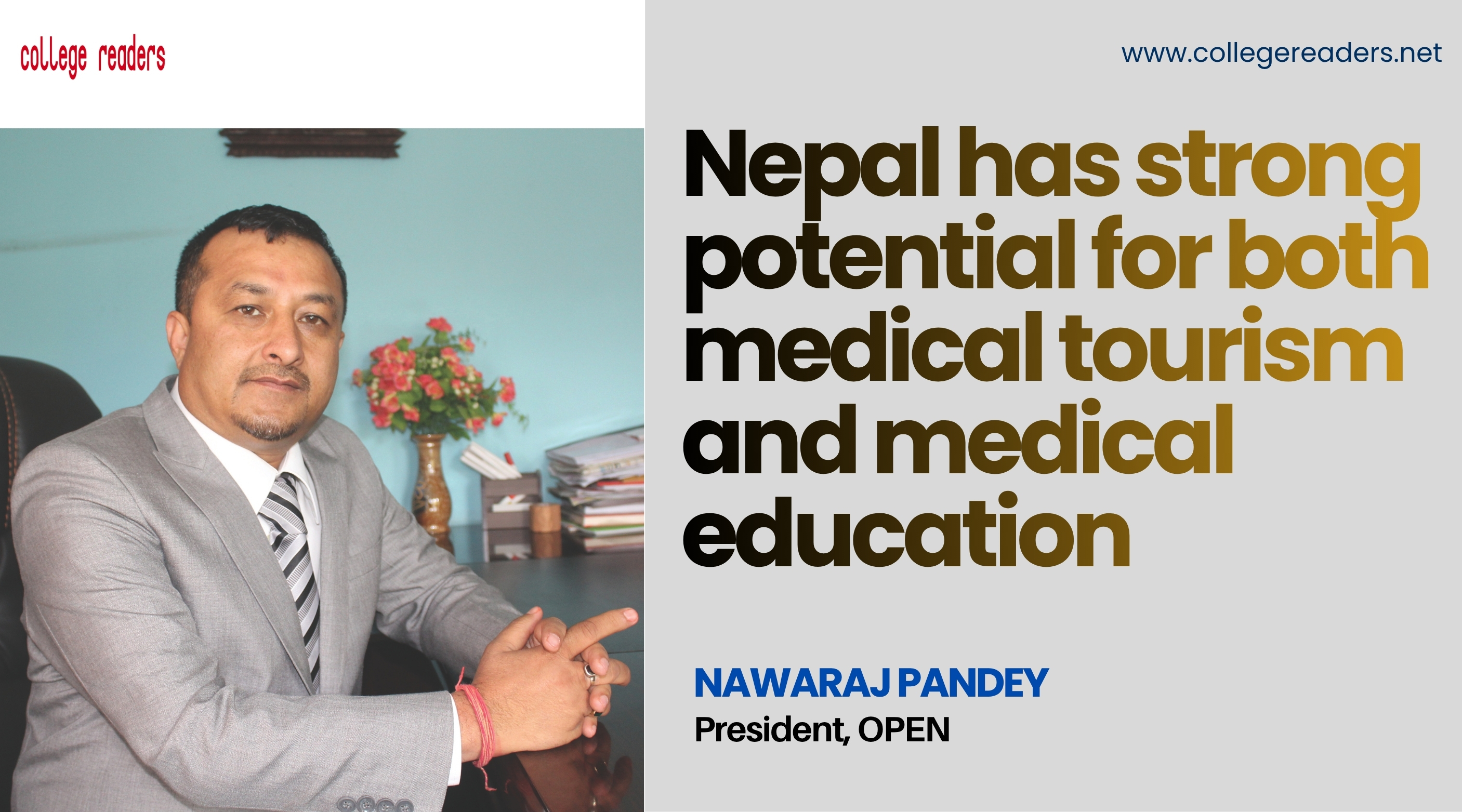
Nepal has strong potential for both medical tourism and medical education
- College Readers
- 07 Jul 2026
- Views
- Interviews
Q. You have long experience in health education. What major challenges do you see in this sector, and what roles should the government and private institutions play?
Health and education are not only Nepal’s needs; they are global needs. For a country like Nepal, they are even more important. Across the world, the private sector has played a vital role in promoting both health and education. Nepal should also recognize that role.
The new government seems willing to collaborate with the private sector. It has increased the foreign student quota for private medical colleges. If similar space is created for paramedical programs and more medical colleges are encouraged, health education can contribute strongly to national economic development.
Nepal sits between India, China, Bangladesh, and Pakistan, where huge populations need quality education and health services. This gives us a natural opportunity to become an education hub, especially in medical and health education. We are ready to work with the government. The new leadership is young, energetic, and exposed to global development. We believe it will create a cooperative environment.
We are already familiar with India because many Nepali patients go there when treatment is unavailable here. Now, looking at China’s technological and economic progress, Nepal should also cooperate with China in health and education. Private hospitals, investors, and educationists are prepared for such collaboration.
Q. After COVID, many health education institutions struggled with enrollment. Has the situation improved?
The situation has improved somewhat, but the criteria introduced through the Medical Education Act still create difficulty. MBBS students usually prepare for three or four years, so they can meet the examination requirements and fill the available quotas. But paramedical students are often tested with questions almost at MBBS level, and the process of examination, matching, and interview is too compressed. This frustrates students and pushes them abroad.
The country needs paramedics. If students cannot study here, they go to India, Bangladesh, Pakistan, the Philippines, or China. I request the government, especially because the Prime Minister chairs the concerned body, to create an environment where Nepali students can study in Nepal and foreign students can also come here. The old errors and traditional procedures must be corrected.
Nepal can become a medical education hub if government policy supports private investment, foreign students, medical tourism, and new health science programs.
Q. Can Nepal become an international hub for medical education?
Certainly. Nepal has strong potential for both medical tourism and medical education. We can bring foreign patients for treatment and foreign students for study. Our climate is good, our professors are capable, and the English proficiency of many faculty members is strong. By bringing in Chinese, American, Indian, and other global technologies, we can provide quality education and produce skilled human resources.
Even if Nepal contributes only one percent to global medical education, it will be meaningful. For a small country, that itself can become a major achievement.
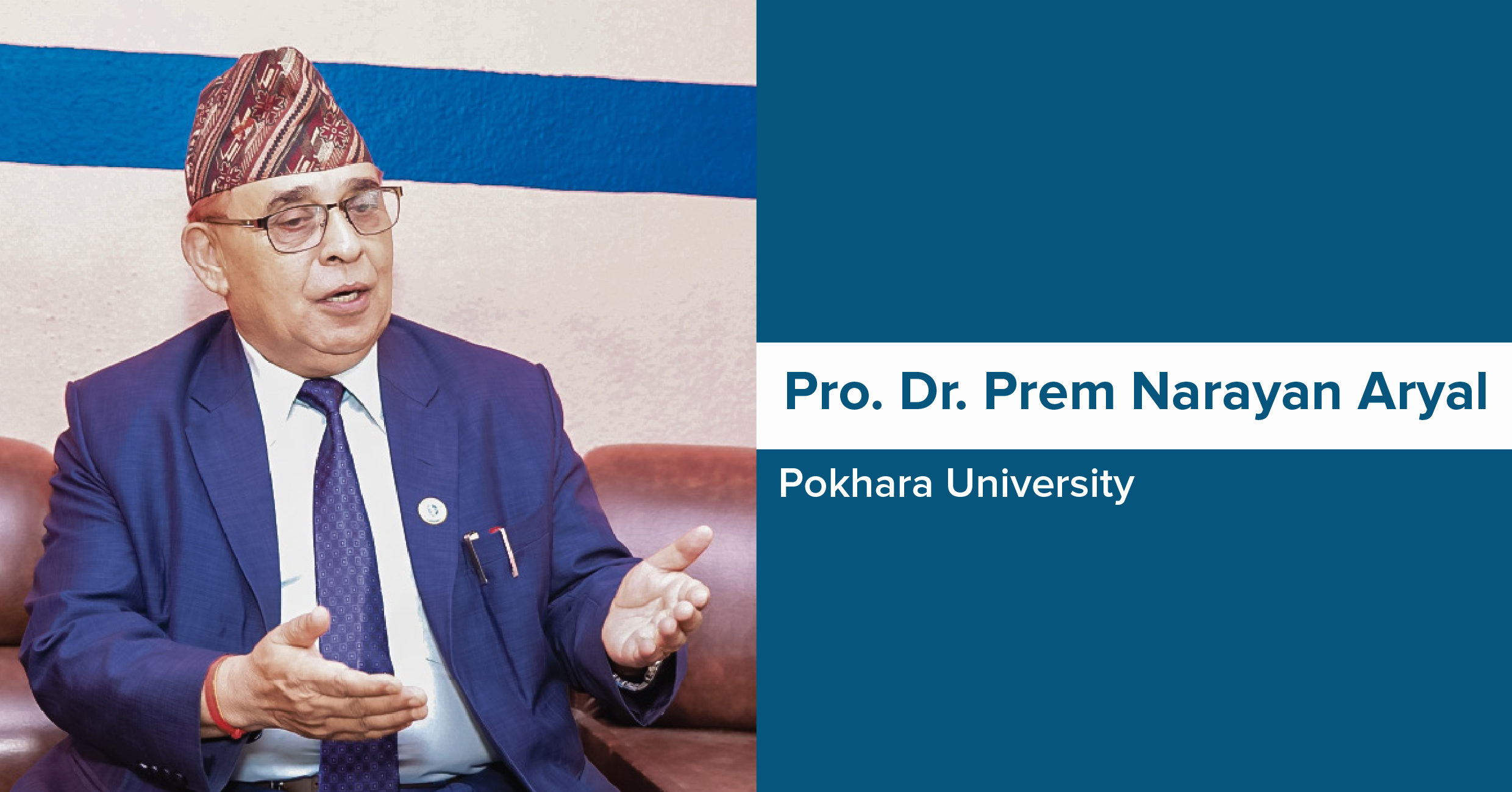
Q. How do you evaluate the programs under Pokhara University?
Pokhara University’s curricula are strong when developed through collaboration. For example, BSc Nursing is already aligned with international expectations, including CGFNS and NCLEX-oriented question patterns. Other programs are also good, but curricula must change with time.
The university should introduce new medical science programs according to global demand. Radiology has high demand. Physiotherapy and optometry have already moved ahead. More new subjects should be developed to meet international market needs. Pokhara University is already strong in engineering and management, but health sciences need further development. Since the university has started its own teaching hospital, it is moving toward a medical college. I believe the new young team will give this dream concrete shape.
Q. The trend of students going abroad after Grades 11 and 12 continues. Why?
The main reason is Nepal’s weak economic development. Students go abroad not only to study but also to work. Parents also think that after Grade 12, their children can go to Australia or America, work, and manage themselves. Therefore, the trend remains strong.
If the government creates economic growth and employment within four years, the ratio of students going abroad will decrease. At present, unemployment encourages students to leave. If Nepal provides part-time jobs and education loans for students studying here, many will choose to remain in the country.
Q. Why should students complete their Bachelor’s degree in Nepal before going abroad?
After Grade 12, students are still less mature. If they immediately go abroad, work pressure can damage their studies. Many become trapped between earning and learning. If they complete a Bachelor’s degree in Nepal first, their academic base becomes stronger and they become more independent. After that, they can go abroad for a Master’s degree or PhD with greater confidence, and many may return.
At present, some parents expect children abroad to send money because families face financial pressure. But students should not be treated only as future earners. Their foundation, maturity, and mental health matter.
Q. Can Nepal create an “earn while you learn” system?
If the government wants, it can. Nepal has many hydropower projects, construction works, hospitals, and industries. The government can set criteria requiring projects and institutions to employ Nepali graduates and students in relevant fields. Medical colleges can also be required to provide opportunities to students educated in Nepal.
Our own group of schools, colleges, and hospitals employs around 1,000 people. Institutions that create employment should be promoted and supported. The government alone cannot do everything. Nepal needs a development model suitable to its size and capacity, where government and the private sector work together.
A young and energetic team is now in government. People across the country have trusted it to deliver economic development. My request is that the government must not lose that trust.
Students should not rush abroad after Plus Two; a Bachelor’s degree in Nepal gives maturity, confidence, and stronger career direction.
Q. Are you optimistic about the new government’s role in higher education?
Yes, I am optimistic. Young leaders usually think differently from traditional leadership. Around the world, education has become a major economic industry. Australia benefits greatly from international student fees. America attracts students globally. China is also trying to bring students from across the world. If education and the private sector can contribute to economic development elsewhere, why not in Nepal?
The present leadership includes educated people who understand global systems. We believe they will bring international practices, cooperate with the private sector, and use education as a tool for national development.
Q. What is your final message to Plus Two graduates and parents?
Students who want to become doctors, engineers, managers, IT professionals, or nurses should complete their Bachelor’s degree in Nepal. They can study affordably, eat at home, live safely, and stay under family guidance. Whether it is MBBS, BE, IT, BBA, or Nursing, four years of Bachelor’s study will strengthen their future.
Why suffer abroad immediately after Plus Two when opportunities exist at home? Abroad, the same student may have to study, work, cook, wash dishes, drive, and manage stress alone. It is better to go abroad later, after maturity. My advice to parents is clear: send children abroad only after at least a Bachelor’s degree, so they can face life with confidence and strong professional discipline.

Popular Categories
Trending This Month








 Established in 2065 BS, COLLEGE READERS is a premier national-level educational magazine dedicated to serving the academic and informational needs of school and university students, teachers, educators, and concerned ones in Nepal. The magazine provides current and comprehensive information on various educational opportunities worldwide, aiming to guide school and college-level students in their academic and career journeys. It also highlights essential support services and service providers that play a crucial role in shaping students' career paths in today's competitive world.

- Our Location Putalisadak, Kathmandu
- Send Us Email collegereaders123@gmail.com
- Call Us Now 977 01 4518759
