
Call now
977 01 4518759
Send Message
collegereaders123@gmail.com
Our Location
Putalisadak, Kathmandu
Navigating the Future of Education: Policy, Stability, and the Power of Partnership
- College Readers
- 03 Apr 2026
- Views
- Op-ed , Study in Nepal
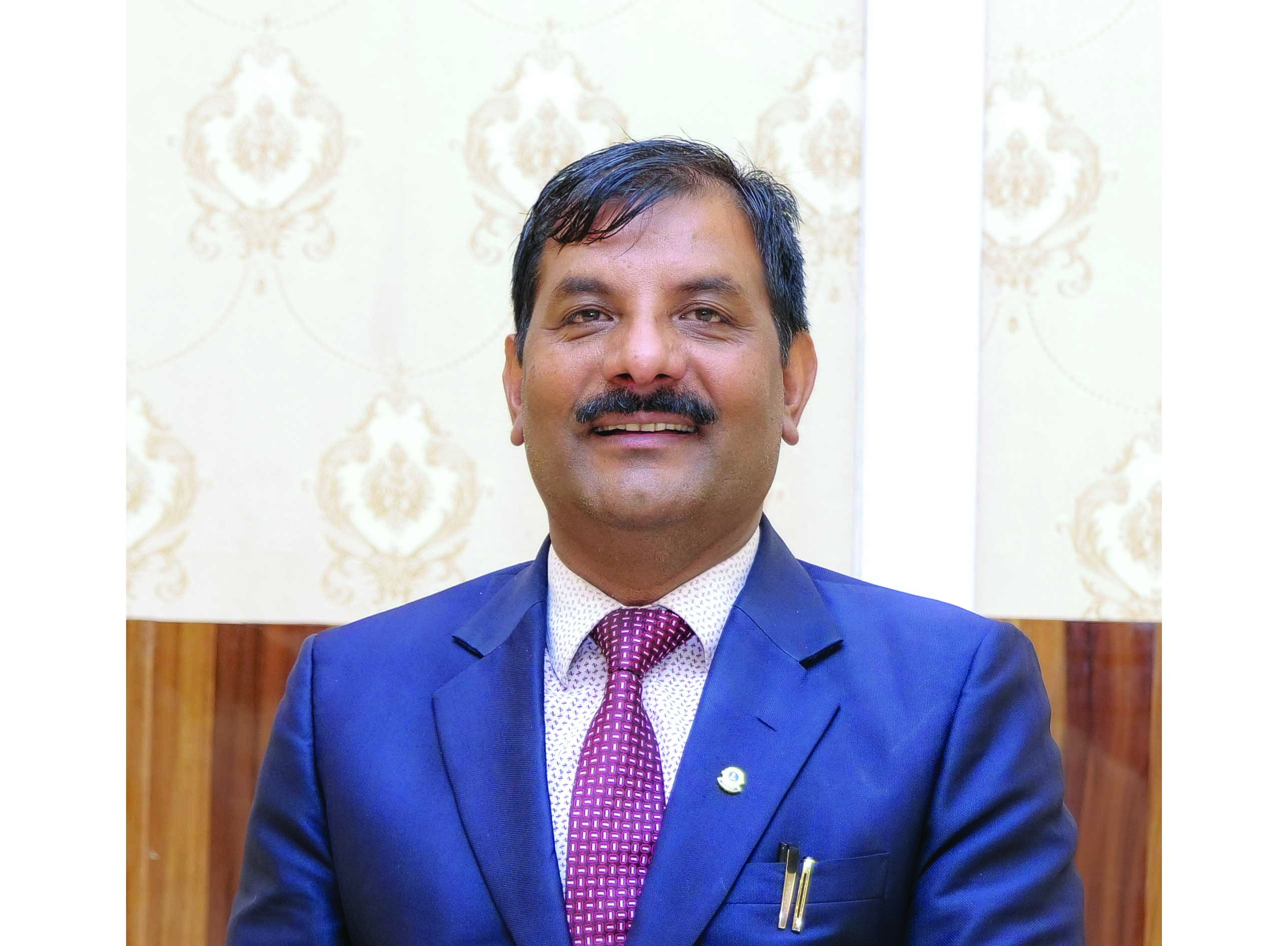
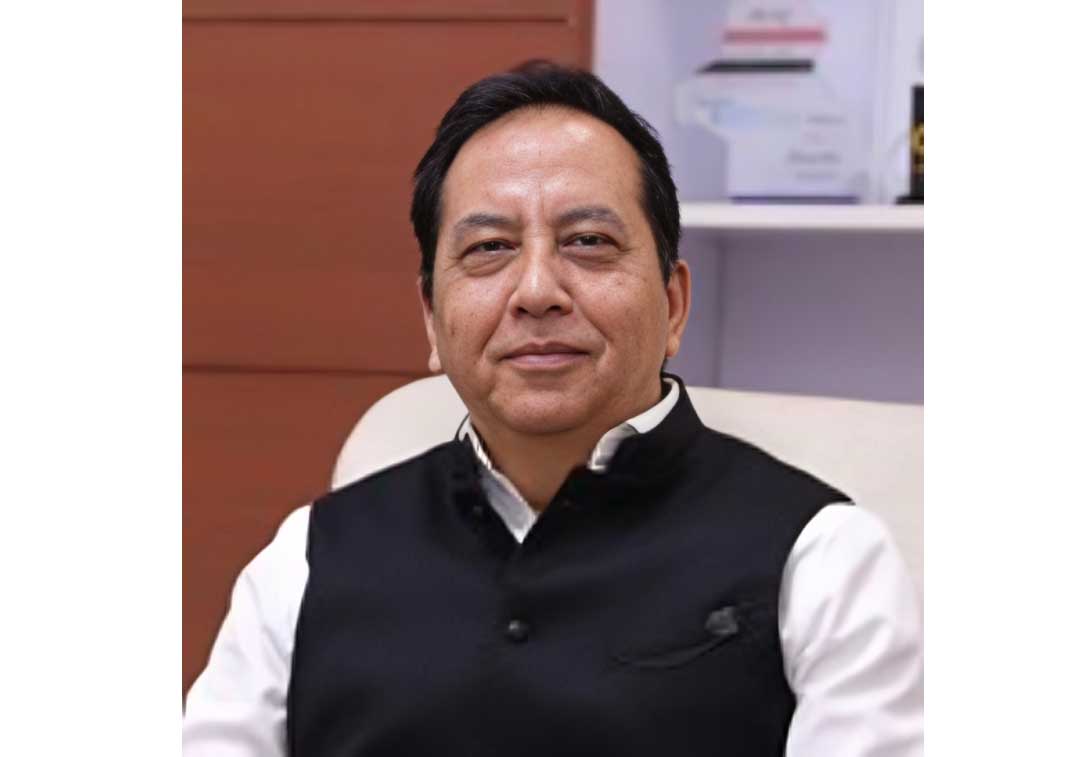
Ram Hari Silwal is a distinguished leader and visionary in Nepal’s private education sector. With years of experience advocating for institutional security and systematic educational reform, he has emerged as a prominent voice for private school operators and stakeholders. He is widely recognized for his balanced perspective on the “three-pillar economy,” emphasizing that while education is fundamentally a state responsibility, the private sector remains an indispensable partner in national development and human capital formation.Currently serving as the Principal of Himalaya School & College and the General Secretary of Central HISSAN, Ram Hari Silwal continues to play a vital role in shaping educational discourse in Nepal. In this article, he examines the critical intersection of political stability, policy reform, and the protection of private sector investment in the country’s education system. |
RAM HARI SILWAL | PRINCIPAL, HIMALAYA SCHOOL
The landscape of Nepali education is currently standing at a significant crossroads, characterized by both profound challenges and unprecedented opportunities. As we navigate the complexities of a shifting political environment—most notably the emergence of a government backed by a two-thirds majority—there is an understandable sense of anticipation, and in some quarters, agitation, within the private education sector. However, as we look toward the future, it is imperative that we move beyond reactionary concerns and instead focus on the systematic reforms necessary to build a resilient and world-class educational infrastructure in Nepal.
The Political Pulse and the Private Sector
Recent political shifts, particularly the significant presence of the Rastriya Swatantra Party (RSP) in the governance framework, have sparked intense discussion. In the past, certain legislative proposals suggested a transition of private institutions toward nationalization within a fixed timeframe. Naturally, such discourse created a ripple of uncertainty among those who have dedicated decades to building educational institutions under state permission.
However, the current stance of the private sector is not one of panic, but of "wait and see". We recognize that politics is the engine that drives a nation's destiny, and the policies formulated today will dictate the socioeconomic fabric of tomorrow. Our expectation from a government with such a strong mandate is simple: the creation of a stable, predictable, and fair environment for all educational stakeholders.
Education as a State Responsibility
There is an undeniable truth that we must all accept: education and health are primary responsibilities of the state. This is a principle grounded in social justice and the fundamental rights of our citizens. If the state were capable of providing high-quality, free education to every child in Nepal, the private sector would have no grounds for objection.
Yet, we must also acknowledge the practical reality. When the state is unable to meet the entirety of this massive demand, it is the state’s duty to encourage and protect those who step in to fill the gap. Private schools and colleges, operating under the state’s own laws and affiliations, are not competitors to the state; they are essential partners. To undermine these institutions is to undermine a system that currently educates a significant portion of our youth and prevents the massive outflow of national wealth to foreign institutions.
The Economic and Social Impact of Private Education
The contribution of the private sector extends far beyond the classroom. We are talking about a sector that has invested billions in infrastructure, created hundreds of thousands of jobs, and consistently produced the human capital required to drive Nepal’s economy. Furthermore, by providing quality education domestically, we act as a buffer against the "brain drain" and the financial drain that occurs when students seek higher education abroad.
Our institutions operate within the framework of the Constitution, which explicitly recognizes a three-pillar economy comprising the public, community, and private sectors. This constitutional guarantee includes the right to property and the right to conduct a profession or business. Any policy that fails to respect these fundamental rights risks destabilizing one of the most vibrant sectors of our national economy.
The Need for Systematic Governance over Hasty Directives
In recent months, we have witnessed a series of rapid-fire ministerial decisions—ranging from the dissolution of student unions in universities to the sudden suspension of bridge courses and tuition centers. While the intentions behind such moves may be rooted in a desire for reform, the execution has often led to confusion.
A responsible government must prioritize policy over personality and systems over slogans. We do not need a governance style that issues a notice one day and withdraws it the next. Instead, we need the long-awaited introduction of comprehensive legislation: the School Education Act, the Higher Education Act, the Vocational Education Act, and a University Umbrella Act. These laws should not be drafted in isolation but through rigorous consultation with the very stakeholders they seek to govern.
A Call for Investment Security
The primary demand of the private sector today is the security of investment. Educational entrepreneurs have spent decades building schools in an environment often marked by instability, donation demands, and political interference. Despite being labeled "Zones of Peace," schools have frequently been the targets of political agitation.
For the private sector to continue innovating and improving the quality of education, there must be a legal guarantee that their investments are safe and that the rules of the game will not change overnight. We seek a system that regulates rather than appropriates—a system that monitors quality, ensures compliance, rewards excellence, and punishes irregularities, all within a predictable legal framework.
Looking Forward: A Unified Vision for Nepal
Despite the challenges, I remain optimistic. The narrative that one must leave Nepal to find a quality education is slowly being challenged. Today, nearly 98% of our school-level students are being educated within our borders, and we are seeing a stabilization in the number of students heading abroad for higher studies.
The path to national prosperity lies in our ability to take the private sector into confidence. As the Finance Minister has rightly noted, no nation has achieved sustainable development without a strong partnership with private enterprise. We must stop viewing private education through a lens of suspicion and start seeing it as a pillar of our national strength.
Let us move forward together—the government, the private sector, and all educational stakeholders—to draft a new chapter for Nepali education. By focusing on quality, stability, and mutual respect, we can ensure that every Nepali student has the opportunity to achieve their dreams right here, at home.


Popular Categories
Trending This Month








 Established in 2065 BS, COLLEGE READERS is a premier national-level educational magazine dedicated to serving the academic and informational needs of school and university students, teachers, educators, and concerned ones in Nepal. The magazine provides current and comprehensive information on various educational opportunities worldwide, aiming to guide school and college-level students in their academic and career journeys. It also highlights essential support services and service providers that play a crucial role in shaping students' career paths in today's competitive world.

- Our Location Putalisadak, Kathmandu
- Send Us Email collegereaders123@gmail.com
- Call Us Now 977 01 4518759
