
Call now
977 01 4518759
Send Message
collegereaders123@gmail.com
Our Location
Putalisadak, Kathmandu
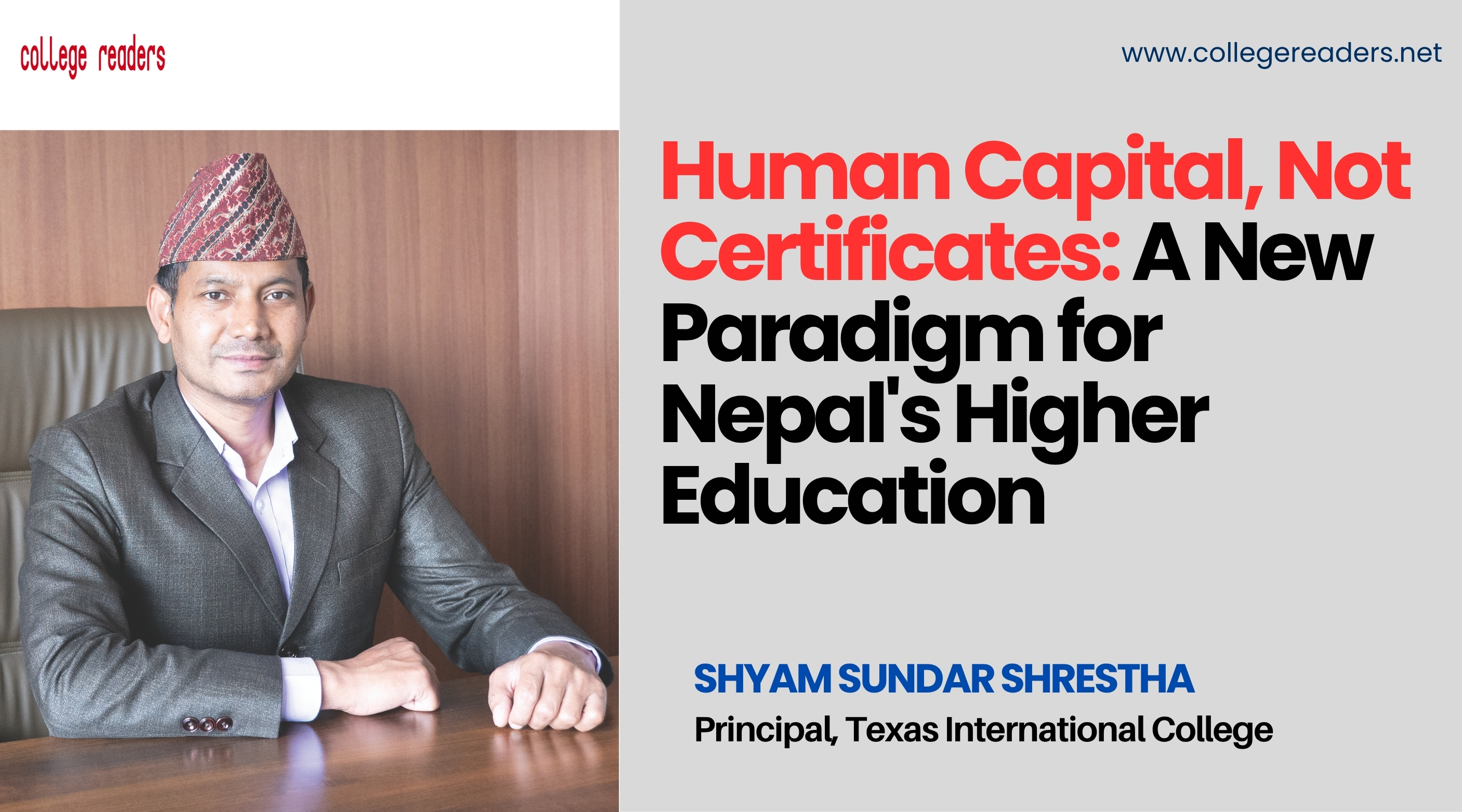
Human Capital, Not Certificates: A New Paradigm for Nepal's Higher Education
- College Readers
- 07 Jul 2026
- Views
- Interviews
Nepal’s Higher Education Has Strength
There is a tendency to think that quality education exists only abroad. I do not agree with that view. Nepal has many colleges and universities offering excellent education in engineering, medicine, IT, hospitality, humanities, law, management and other disciplines. Many Nepali graduates have gone abroad for master’s and doctoral studies and performed wonderfully in foreign universities. Their performance proves that Nepal’s education has quality, depth and strength.
However, we must also be honest. There is always space for improvement. In Nepal, we often hear about the gap between academia and industry. This concern is real, but it is not impossible to solve. Universities do not stop colleges from organizing value-added courses, seminars, workshops, training and professional development programs. If a college has determination, commitment and vision, it can prepare students not only as graduates but as skilled human resources and future leaders.
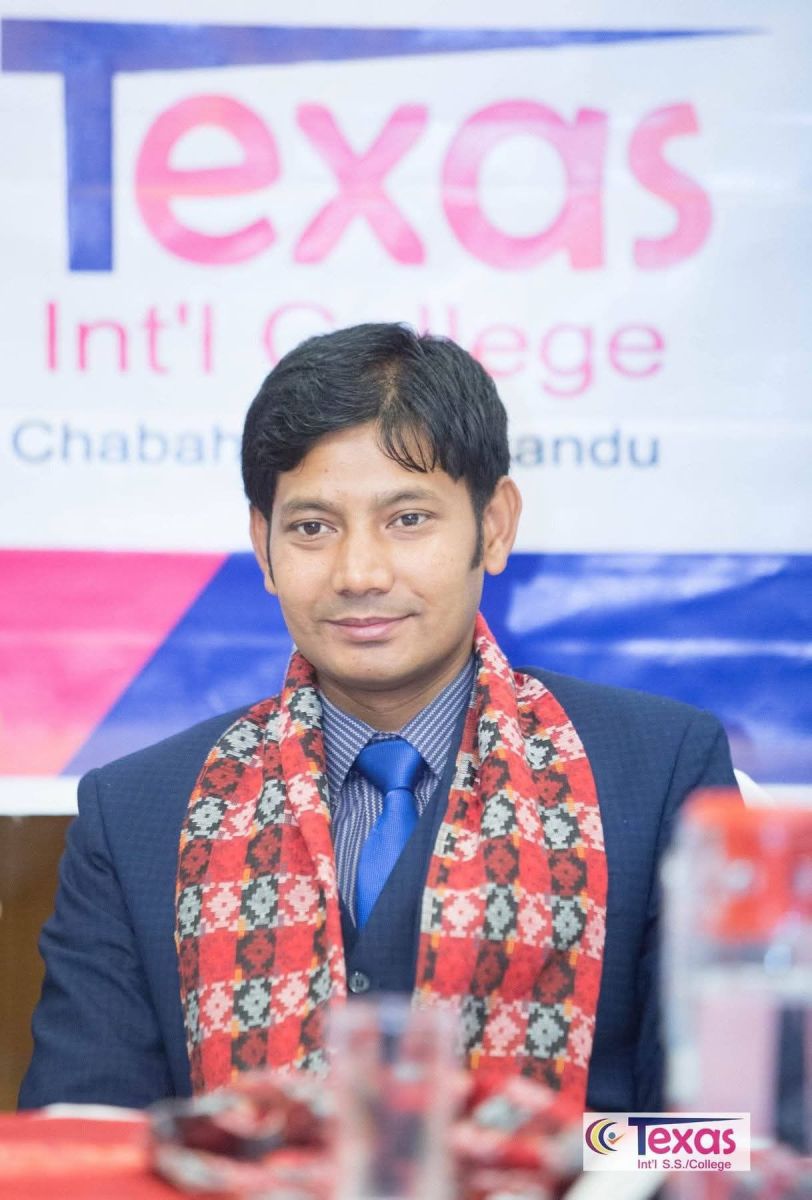
Connecting Education with Real Life
At Texas, we believe education must be student-centric and connected with real life. If a student studies BIT, for example, he or she must not remain limited to textbooks. The student needs exposure to IT-related fields such as Internet of Things, robotics, artificial intelligence, cybersecurity, network technology and VFX. For this reason, Texas has developed labs and learning spaces such as IoT lab, AI lab, robotics lab and VFX studio.
Our first responsibility is to provide students with skills according to their subject. But our responsibility does not end there. We also believe in balancing the material world with the spiritual world. Students today need technical knowledge, but they also need emotional discipline, calmness and inner strength. That is why we organize yoga and meditation sessions. We also conduct personality development training, public speaking activities, career days, career fairs and corporate visits. Through these activities, we try to support holistic development.
Quantity with Quality
Over the years, Texas has produced thousands of students. More than 20,000 students have passed through our educational network, and every year around 1,300 students enroll in bachelor’s-level programs in Texas International College and Texas College of Management and IT. We are also able to graduate more than 1,000 students annually. At present, around 4,000 to 5,000 students are studying across our programs.
These numbers are important, but numbers alone do not define success. The real question is: where are our students now? What are they doing in the market? How does the industry evaluate them? For me, the success of an institution is measured by the achievement, confidence and social contribution of its graduates.
Texas International Education Network has developed a complete educational pathway from Montessori to master’s level, with higher education focused on academic excellence, practical exposure and holistic development.
Why Students Still Want to Go Abroad
Many students still want to go abroad after school or college. I do not think this desire is only about quality education. At their age, students also seek freedom. They believe foreign countries offer better job opportunities, financial strength and the chance to earn in dollars or pounds. To some extent, this may be true, but it is not true for every student.
Life abroad is not always easy. In Nepal, students live with family support, social support and cultural belonging. Abroad, they may not find the same environment. They have to struggle, manage work, handle studies and live independently. Some students go abroad imagining only opportunity, but they later realize the weight of responsibility.
Still, we must accept that developed countries have advanced in many areas. Some students go abroad for enhanced education, exposure and better systems. That is natural. But my request is that students should not go abroad without preparation, maturity and purpose.
Complete Bachelor’s Degree First
My advice to students is clear: even if you want to go abroad, complete at least your bachelor’s degree in your own country first. If you complete bachelor’s or master’s level education, you become eligible for better opportunities and professional jobs. Without university-level education, students may be forced into low-skill, blue-collar jobs. With higher education, they can aim for skilled, respected and white-collar professions.
Students should go abroad for further studies with commitment, hope and a dream to return and contribute to Nepal. Education should not separate us from our motherland forever. It should empower us to serve it better.
Nepal can provide quality higher education, but colleges must reduce the gap between academia and industry through value-added courses, training, laboratories, seminars and real-life learning.
Choosing the Right College
For students who decide to study in Nepal, college selection is very important. They should not choose a college only because of advertisement or social influence. They should examine the academic environment, faculty members, institutional results, student support system and alumni success. They should ask where the graduates of that college have reached and how the market has accepted them. A serious and conscious analysis can guide students toward the right institution.
Why Texas Matters
Texas can be remembered because we connect students with practical exposure, real-life learning, a supportive academic environment, strong results, training, seminars and workshops. We create platforms where students can grow academically, professionally and personally. Our aim is not only to teach courses but to develop smart, skilled, confident and visionary individuals.

Popular Categories
Trending This Month








 Established in 2065 BS, COLLEGE READERS is a premier national-level educational magazine dedicated to serving the academic and informational needs of school and university students, teachers, educators, and concerned ones in Nepal. The magazine provides current and comprehensive information on various educational opportunities worldwide, aiming to guide school and college-level students in their academic and career journeys. It also highlights essential support services and service providers that play a crucial role in shaping students' career paths in today's competitive world.

- Our Location Putalisadak, Kathmandu
- Send Us Email collegereaders123@gmail.com
- Call Us Now 977 01 4518759
