
Call now
977 01 4518759
Send Message
collegereaders123@gmail.com
Our Location
Putalisadak, Kathmandu

HISSAN'S 9TH NATIONAL CONVENTION: A DEFINING MOMENT FOR NEPAL'S PRIVATE EDUCATION SECTOR
- College Readers
- 24 Dec 2025
- Views
- Features
THE HISTORICAL CONTEXT AND HISSAN'S EVOLUTION
The story of HISSAN is intrinsically linked to the evolution of private education in Nepal following the restoration of democracy in 2046 BS. When the Plus Two program was introduced in 2049/50 BS, only 38 higher secondary schools operated grade 11-12 classes under the then Higher Secondary Education Board (HSEB). By 2052 BS, this number had grown to 140 institutions. Recognizing the need for collective representation, HISSAN was established in 2053 BS under the leadership of Manorama Rana, with the first working committee formed through the initiative of Kathmandu valley school principals.
Yuvraj Sharma, currently Senior Vice President of HISSAN and Founder & CEO of WhiteHouse Education Foundation, provides valuable historical context. His journey in education began in 1992 when he established Alfa Beta Institution to provide computer and language training programs. "I ran these programs from 1992 to 1998 while simultaneously completing my higher education," he recalls. "In 1998, I established Kathmandu Don Bosco College in New Baneshwor and served as its Principal."
Sharma became affiliated with HISSAN in 1998 (2055 BS) when Manorama Rana was President, Baburam Pokhrel was General Secretary, and leaders like Umesh Shrestha and Rajesh Khadka were active in PABSON. The organization faced a critical challenge during Nepal's conflict period from 2001-2005 (2058-2062 BS).
"From 2001 to 2005, during the conflict period, HISSAN's activities became significantly weakened," Sharma explains. "At that time, PABSON was the dominant organization making all major decisions—whether to close schools, open them, or negotiate. We were more focused on saving our institutions rather than strengthening our organization. The organization essentially became dormant."
The revival process began in 2006 (2063 BS) under a coordination committee led by Dr. Madhav Baral. The 2007 (2064 BS) convention elected Umesh Shrestha as President and Sharma as General Secretary. "During my tenure as General Secretary, we focused heavily on organizational expansion," Sharma notes. "Under my leadership, we established 15-20 district committees. We worked extensively on curriculum matters, examination management, scholarship issues, and policies regarding new college affiliations."
The subsequent years saw HISSAN's expansion. The 4th Convention in 2065 BS at Little Angels School, Lalitpur, elected Umesh Shrestha. The 5th National Convention in 2068 at Hyatt Regency Hotel re-endorsed Shrestha's leadership. The 6th National Convention in 2071 BS at Park Village Resort continued this pattern. The 7th National Convention in 2073 at Trade Tower, Thapathali, elected Ramesh Kumar Silwal as President, though the committee took nine months to reach full form. The 8th National Convention was held on Chaitra 25-26, 2078, and continued Silwal's leadership.
THE CURRENT CRISIS IN NEPAL'S EDUCATION LANDSCAPE
The interviews reveal a deep concern among all leaders about the current state of education in Nepal, particularly the crisis of student migration. Ramesh Kumar Silwal, the outgoing two-term President, articulates this concern most vividly.
"Look at the current situation—there's a long queue of people going abroad either for studies or work," Silwal says. "This isn't just capital flight; we're losing the energy of our youth, their nationalism, our art and culture, our traditions, and the very pride of being Nepali. Questions are being raised about all of these."
Silwal identifies a fundamental gap in the education system: "Currently, even after someone graduates, they often lack clarity about which path to take. They're uncertain about what to do, where to find jobs, where opportunities lie. The fundamental purpose of education should be to build self-confidence in students. Our education system is weak in this aspect."
Nawaraj Pandey, Senior Vice President with 26 years in private education, expands on this theme. "This is indeed a serious issue that requires deep reflection, sustained dialogue, and collective action from all stakeholders. The growing outflow of students is not merely an education-related concern; it is a national challenge that directly affects the country's human capital, economy, and long-term development."
Pandey details his approach: "As part of our campaign and advocacy efforts, we have consistently encouraged students to consider the opportunities available within Nepal rather than immediately opting to go abroad. Our message has been clear: quality education and meaningful career pathways can and should be created at home, enabling young people to contribute directly to national growth and job creation."
Bhawani Paudel, former President of HISSAN Bagmati Province, adds another dimension to the crisis—regulatory uncertainty. "If HISSAN cannot move forward with a new vision, new commitment, and new planning, the organization's very existence will be in a critical situation," he warns. "Currently, there is an environment of uncertainty. There is no open and conducive environment for investment in education. The higher education policy is still in the process of being formulated and remains unclear."
ACHIEVEMENTS AND CONTRIBUTIONS
Despite these challenges, HISSAN has achieved significant milestones under the current leadership. Ramesh Kumar Silwal outlines several key accomplishments during his two-term presidency.
"First, private education institutions that previously operated more individually or in isolation have now embraced collectivism," Silwal states. "This is a very positive development. Second, we've focused not just on investors, but on empowering professors, teachers, and staff through training programs and seminars. Third, we've fostered a competitive spirit among students through sports and extracurricular activities every year."
Perhaps most significantly, Silwal highlights policy-level achievements: "We've worked towards finalizing the Education Act—bringing all stakeholders together to create a shared document. We've also taken initiatives for affiliation with universities and NEB, worked on academic calendar management, examination system reforms, and advocated for better recognition of teachers in private colleges."
Lok Bahadur Bhandari, two-term General Secretary, emphasizes his role in policy advocacy. "Whenever there was debate about whether private institutions would exist or not exist, whenever we needed to take overall leadership for that, we developed the capacity at HISSAN to provide collective team leadership," he explains.
Bhandari continues: "HISSAN President Ramesh Silwal is the member of a High-Level Education Commission. Working there, we pushed many of our agendas through. At that time, there was debate that all private institutions must be closed, must be converted to trusts, property must be nationalized. While minimizing that debate, in protecting private institution investments, in protecting private institutions, in protecting legitimacy—our role has been major."
On the ground level, HISSAN has conducted practical initiatives. "We are conducting examinations ourselves," says Ram Hari Silwal, current Vice President. "When the National Examination Board was not conducting Grade 11 examinations, we stepped in to conduct Grade 11 and Grade 12 examinations at the national level with dignity and integrity. In sports, schools serve as nurseries for producing national and international athletes, and we are working to produce athletes through competitions."
THE PRESIDENTIAL CANDIDATES AND THEIR VISIONS
The 9th National Convention features several leaders aspiring for the presidency, each bringing distinct experience and perspectives.
.jpg)
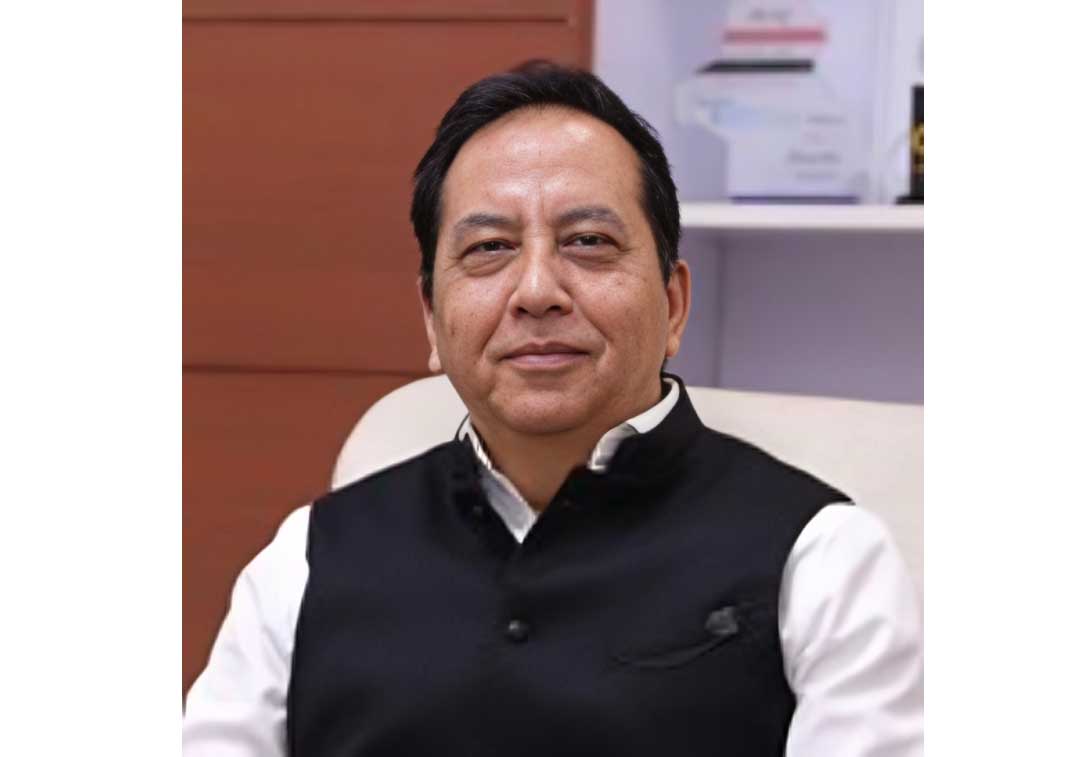
YUVRAJ SHARMA: Vibrant HISSAN as Non-negotiable Pillar of Education Policy
Yuvraj Sharma, who established WhiteHouse Education Foundation in 2001 and has been associated with HISSAN since 1998, presents his candidacy as a return to active organizational leadership. "It's natural to have the desire to lead an organization you've invested so much in," he says. "I gave HISSAN its revival as an educator; I dedicated significant time to it. Many colleagues approached me for this convention, saying I should come forward."
Sharma candidly assesses the past five years: "I'll be honest—there has been some stagnation. The activities we used to conduct—educational fairs under the banner 'Quality Education in Nepal,' examinations, trainings, international conferences—have somewhat diminished. Although provinces have done some good work, centrally we haven't been as proactive as we should have been."
His vision focuses on technological integration and policy advocacy. "The new generation of leaders must be ready to address contemporary issues—teaching methodologies, taking education toward technology and digital infrastructure. I've been thinking about the National AI framework that's being developed. We should train at least 50,000 teachers on AI integration."
.jpg)
LOK BAHADUR BHANDARI: Institutional Stability and Policy Strength Power HISSAN
Lok Bahadur Bhandari, having served two terms as General Secretary, argues that his experience makes him suitable for the presidency. "The presidential position means continuing the work done under leadership until now. This is a professional organization. First, there must be professional leadership. To take that professional leadership, we need to protect the sentiments of all, the minds of all, the existence of all organizations."
Bhandari is clear about his priorities: "I'm not in favor of debate and counter-debate. My thing even now—working with colleagues in a harmonious environment, protecting the organization in the best way, in a day when policy-level challenges exist, ensuring nothing fails policy-wise, protecting investing colleagues—those are the work to be done."
When asked about stepping aside for consensus, he states, "I won't talk about stepping aside or not stepping aside right now. I consider myself a possible candidate for that leadership. Beyond that, what's inside the team, who has what—that's an internal team matter."
.jpg)
NAWARAJ PANDEY: HISSAN should be the architect of Nepal’s Private Education
Nawaraj Pandey, who was the first President of HISSAN Kathmandu District and now serves as Senior Vice President, bases his candidacy on extensive experience. "Considering my long-standing experience in the education sector and my active involvement in operating and leading diverse educational institutions, it is natural for me to stake a claim for the position of President," he states.
Pandey's vision emphasizes curriculum consolidation: "I strongly believe that Nepal's education system must move toward a consolidated curriculum structure that aligns with international standards while remaining responsive to national needs. Such consolidation would not only reduce fragmentation within the education sector but also enhance credibility, facilitate student mobility, and better prepare graduates to compete in the international arena."
He also addresses the relationship between HISSAN and PABSON: "While concerns about overlapping jurisdictions and organizational friction are understandable, I do not believe that separation is the most constructive solution. Rather than narrowing our scope, I strongly believe in inclusive and integrated growth. HISSAN's strength lies in its ability to represent the broader education spectrum."
.jpg)
DR. SWAGAT SHRESTHA: United and Responsible Leadership Transition Fortifies HISSAN
Dr. Swagat Shrestha, currently serving his second term as Vice President and Chairperson of Kathmandu Valley School & College, presents a nuanced approach to the presidential race. "In the previous election, I was actually a candidate for the President's position. Yuvraj Sharma Sir and I were both presidential candidates. Some colleagues then requested us to come together for unity."
Dr. Shrestha advocates for generational transition: "Everyone has realized that it's too much for one person to hold power for almost ten years. It's not appropriate. New colleagues must be given opportunities. We have seen the capabilities of our executive members over ten years—what more is there to see?"
His approach prioritizes consensus: "Our approach is to move forward our two senior leaders and achieve consensus-based leadership. That's our priority. But if consensus doesn't work, then naturally there will be elections."
.jpg)
LEADERSHIP FOR OTHER POSTS
For the position of General Secretary, Ram Hari Silwal, current Vice Chairman who has served HISSAN since 2065 BS, is a strong candidate. "My candidacy is grounded in nearly 17 years of progressive leadership experience within HISSAN," he says. "I have served at every critical level of the organization."
Bhawani Paudel, former President of HISSAN Bagmati Province, has declared his candidacy for Secretary. "Starting from the district level, I have demonstrated my capabilities," he states. "I am a suitable candidate for this position."
THE RELATIONSHIP WITH PUBLIC AND FOREIGN EDUCATION
The leaders address complex questions about how private education relates to public institutions and foreign providers.
Ramesh Silwal advocates for a balanced approach: "I firmly believe that both sectors need to be strong for the country's education system to be truly quality-oriented, reliable, and competitive. Neither sector can achieve this alone. Private education thrives on competition—we call it competitive education."
Regarding foreign institutions, Silwal notes: "Look at how countries like China and India have welcomed institutions from America, Britain, Europe, and Australia. They've even provided special facilities to attract them. India's current education policy explicitly invites world-class universities to set up campuses there. Personally, I believe if top-ranked global institutions come to Nepal through joint ventures and work with local education providers, it would benefit everyone."
However, he highlights a critical disparity: "Institutions running foreign curricula pay 50% less than those running domestic education programs. There's no logic in this disparity. Rules and regulations should be equal for everyone. We haven't been able to bring positive results on this front yet."
THE CALL FOR UNITY AND CONSENSUS
The most consistent theme across all interviews is the urgent need for unity and consensus-based leadership selection. This sentiment emerges from leaders across the spectrum.
Ramesh Kumar Silwal, the outgoing President, makes a final appeal: "As HISSANists attending this convention, I have a few humble suggestions. First, come with an open mind and a spirit of unity. Leave personal interests aside and prioritize the collective good of the organization and the broader education sector. Second, engage constructively in the discussions on education reform. Third, choose your new leadership unanimously through consensus, not division. A united HISSAN is a strong HISSAN."
Dr. Swagat Shrestha echoes this sentiment: "All colleagues are capable. Everyone has managed their schools and colleges well and has done remarkable work in their institutions. Based on the performance and competence you have observed, support leadership change—because everyone's turn will come."
CONVENTION DETAILS AND EXPECTATIONS
The 9th National Convention is scheduled for Poush 11-12, 2082, at Park Village Resort, Budhanilkantha, Kathmandu. More than 500 participants from private schools and colleges across the country are expected to attend. The convention was delayed due to various reasons, including protests for the Education Act and the ZenZ Protest.
The convention's theme, "HISSAN's Campaign: Promoting Domestic Education," reflects the organization's focus on retaining students in Nepal and strengthening domestic educational institutions. Along with the leadership election, the convention will feature educational dialogue among representatives of government, private education sector, and independent academic experts.
CONCLUSION—A DEFINING MOMENT FOR HISSAN
As HISSAN approaches its 9th National Convention, the organization stands at a defining moment in its history. The challenges facing Nepal's private education sector are substantial: student migration continues unabated, regulatory uncertainty persists, political pressures mount, and technological integration becomes increasingly urgent.
Yet the achievements of recent years demonstrate HISSAN's capacity to advocate effectively for private education. The organization has successfully lobbied for policy changes, conducted national-level examinations, empowered teachers through training, and fostered competitive spirit among students.
The leaders gathered for this convention represent decades of combined experience and diverse perspectives. Yuvraj Sharma brings historical knowledge and revival experience; Nawaraj Pandey offers institutional memory and a vision for consolidation; Lok Bahadur Bhandari contributes policy-level expertise; Dr. Swagat Shrestha emphasizes consensus and generational transition; Ram Hari Silwal provides deep organizational understanding; Bhawani Paudel bridges rural and urban institutional concerns; R.B. Adhikari offers philosophical depth and entrepreneurial perspective; and Ramesh Silwal prepares to hand over leadership after two significant terms.
While their approaches may differ, all share common commitments: the need for unity over division, policy-level advocacy over internal politics, retention of Nepal's students over continued brain drain, and quality education as the foundation of national development.
The convention will determine whether HISSAN emerges as a unified force capable of shaping education policy and retaining Nepal's students, or whether internal divisions weaken its voice at this critical juncture.
The message from all leaders is clear: this convention must prioritize the collective good over individual ambition, unity over division, and the future of Nepal's education sector over political maneuvering. Only through such an approach can HISSAN fulfill its mission of making Nepal an education hub and preparing "patriotic, disciplined and highly righteous global citizens" for the nation's future.
As the delegates gather at Park Village Resort, they carry not just the responsibility of selecting leadership, but the weight of determining Nepal's educational future. The 9th National Convention of HISSAN is, in every sense, a defining moment for private education in Nepal.

Popular Categories
Trending This Month








 Established in 2065 BS, COLLEGE READERS is a premier national-level educational magazine dedicated to serving the academic and informational needs of school and university students, teachers, educators, and concerned ones in Nepal. The magazine provides current and comprehensive information on various educational opportunities worldwide, aiming to guide school and college-level students in their academic and career journeys. It also highlights essential support services and service providers that play a crucial role in shaping students' career paths in today's competitive world.

- Our Location Putalisadak, Kathmandu
- Send Us Email collegereaders123@gmail.com
- Call Us Now 977 01 4518759
