
Call now
977 01 4518759
Send Message
collegereaders123@gmail.com
Our Location
Putalisadak, Kathmandu
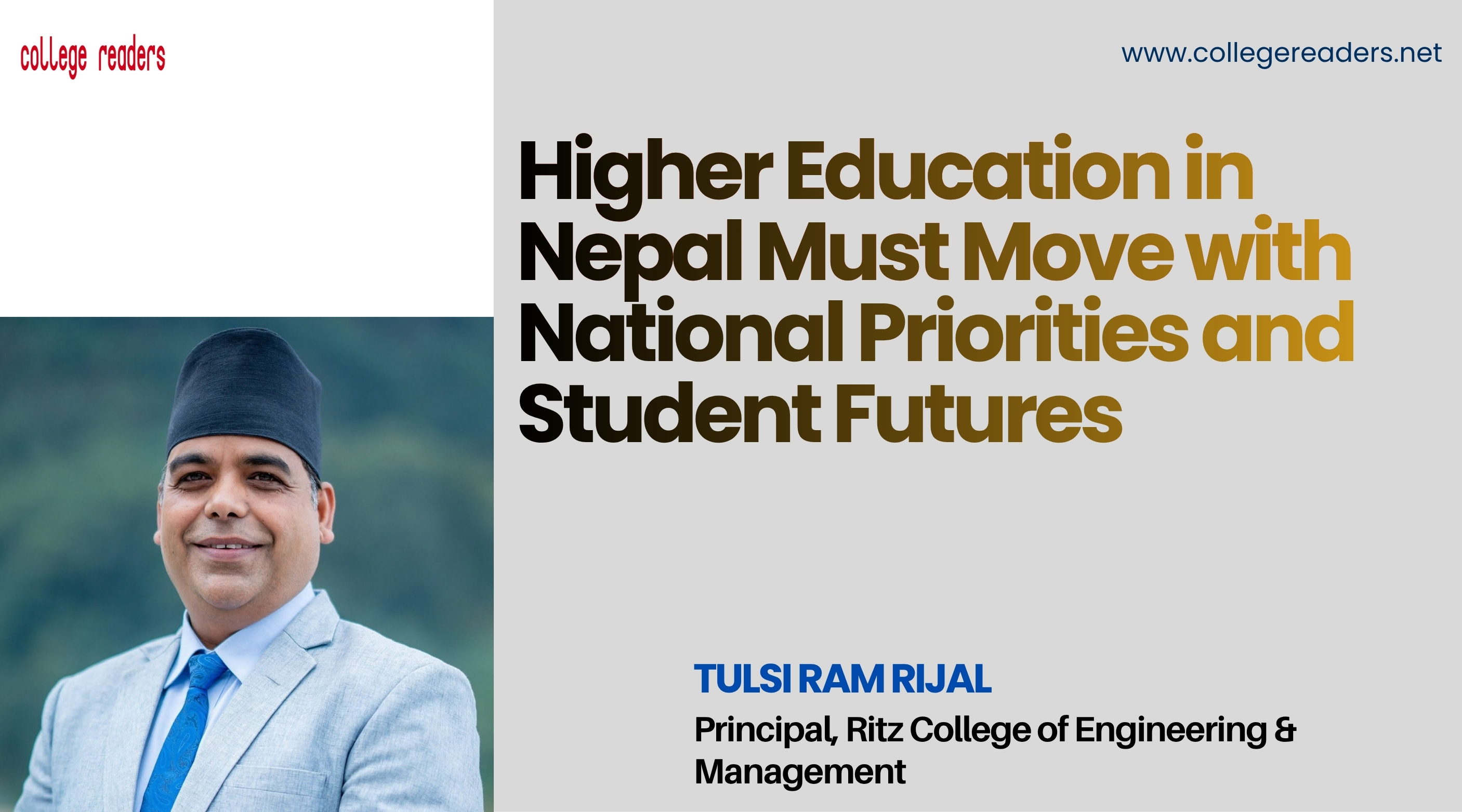
Higher Education in Nepal Must Move with National Priorities and Student Futures
- College Readers
- 07 Jul 2026
- Views
- Interviews
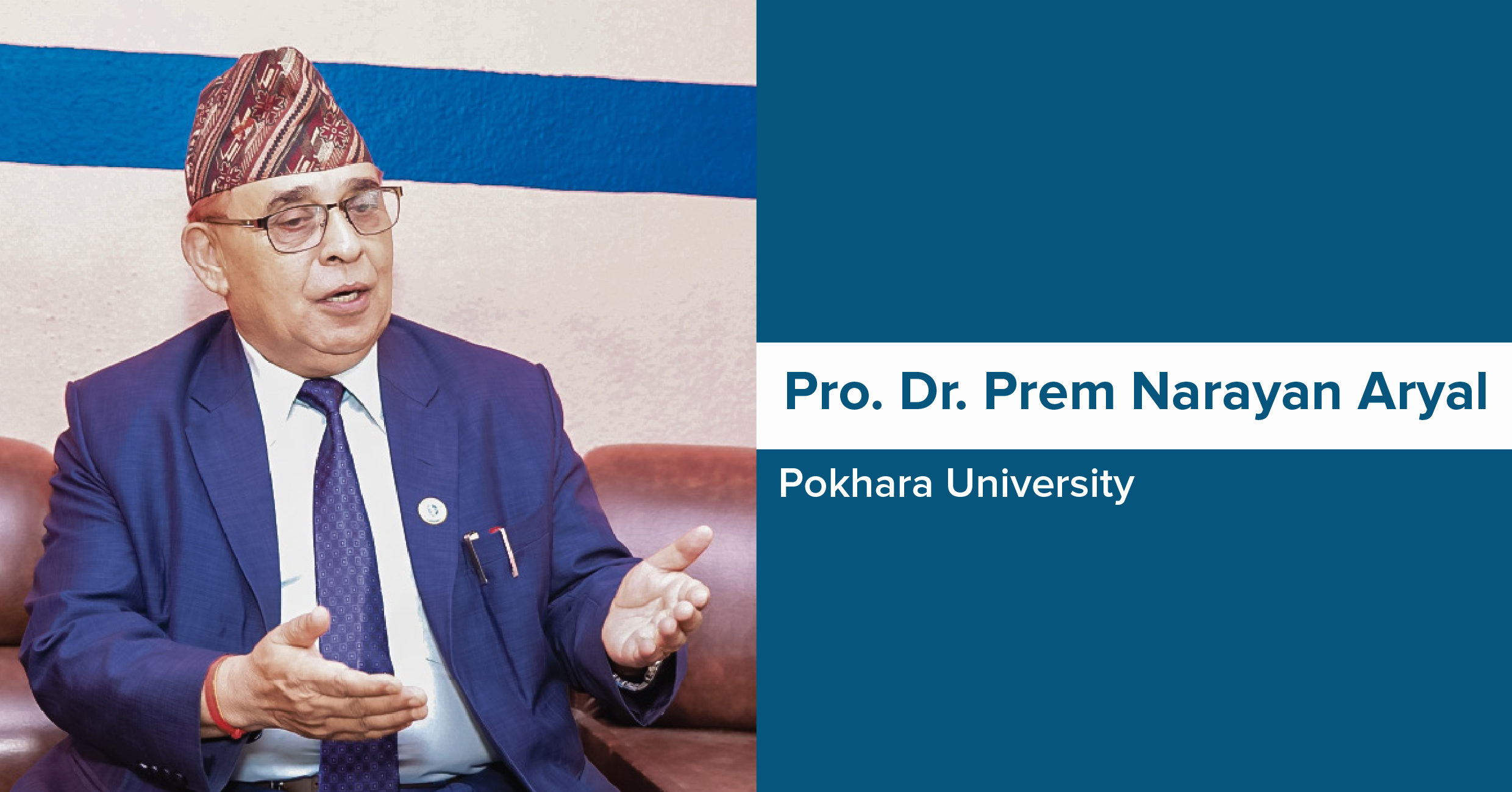
The first task is to understand what Nepal needs. We cannot design higher education only by repeating old programmes or copying foreign models. Nepal is a developing country, and no major sector has yet reached its full potential. Agriculture, tourism, hydropower, mines and minerals, information technology, engineering, health, hospitality and industry all hold possibilities. The state must identify which sectors deserve priority and allocate resources accordingly. Universities and colleges should then design programmes that prepare the human resources required by those sectors. If education follows development priorities, graduates will not remain disconnected from the market.

Higher education should also be based on research. Before launching or continuing a programme, institutions must study whether it is still relevant. Some programmes were useful in the past, but may no longer match present needs. Such obsolete programmes should gradually be replaced by new and emerging disciplines. At the same time, we must assess where graduates are employed, what kind of work they are doing and whether their education has helped them become productive. This feedback should guide curriculum reform.
One major debate today is why students should complete at least their bachelor’s degree in Nepal. Many students go abroad immediately after Plus Two, mainly because they believe they can earn while studying and improve their lifestyle. Some are attracted by foreign living standards, while others follow friends, relatives or social trends. There is also another group that leaves because their desired courses, such as pilot training, aeronautical engineering or some specialized medical and natural-resource fields, are not sufficiently available in Nepal. If such students go abroad, gain advanced knowledge and return to contribute here, that can be valuable.
Nepal’s higher education has strong possibilities if programmes are connected with national development priorities, industry needs and employability.
However, students who leave only for earning often face serious difficulties. At 17, 18 or 19 years of age, many are not mature enough to manage university study, work, rent, food, fees and personal responsibilities alone. In Nepal, they may not even have been exposed to basic household duties. Abroad, they must maintain academic regularity, find work and manage expenses at the same time. In countries where bachelor’s students can work only limited legal hours, their income may not cover all needs. Some then become vulnerable to illegal work, stress or academic failure. We have seen many students return without completing their courses.
Therefore, if standard bachelor’s programmes are available in Nepal and students are satisfied with them, they should seriously consider studying here first. After completing a bachelor’s degree, they become physically, mentally and academically more mature. If they then go abroad for graduate or master’s studies, they can handle responsibilities better and may also have broader work opportunities. This path can reduce struggle and make foreign study more meaningful.
Another challenge in Nepal is the excessive dependence on theoretical teaching. Historically, university education developed late in the country. Before Tribhuvan University was established, colleges such as Tri-Chandra operated under Indian affiliation. Early courses were shaped by the immediate needs of the state and focused largely on theory, humanities, management and core sciences. That tradition continued through affiliated and constituent campuses. As a result, higher education has often remained classroom-centered.
But the modern world demands both theory and practice. Practical knowledge cannot exist without theory, yet theory becomes weak if students do not know where and how to apply it. Teaching pedagogy must therefore be widened. Students should learn concepts, but they should also connect those concepts with laboratories, projects, field exposure, internships and workplace realities. In engineering and management education especially, employability depends not only on knowledge but also on skills, learning experience and attitude.
The idea of learning while earning is also relevant for Nepal. Students go abroad partly because they see income opportunities there. If Nepal develops sectors such as tourism, hotels, agriculture, technology and industries, students can work part-time while studying. Colleges and universities should collaborate with industries to provide training, internships, field exposure and job-linked learning. This cannot happen overnight, but gradual collaboration can create a strong ecosystem.
Such a system will benefit not only students but also the nation. When students study and earn in Nepal, the country’s money remains here, families face less financial pressure, industries receive young manpower, and national productivity increases. Developed countries also passed through phases where education and industry supported each other. Nepal must now move in that direction with patience and planning.
Students should complete bachelor’s-level education in Nepal when standard programmes are available, and colleges must balance theory, practice, skills and career exposure.
For Plus Two graduates, my advice is clear: choose your bachelor’s programme after serious self-assessment. Do not select a course only because others are choosing it. Ask yourself what your interest is, whether you can perform well in that field, what employment opportunities it offers and how it can enhance your career. Visit colleges, compare programmes and understand the learning environment before deciding.
Education should be connected with profession, contribution and personal growth. Students should ask: Can I do something meaningful in this sector? Can I contribute to my country through this field? Can this education strengthen my future? If these questions guide subject selection, higher education becomes purposeful.
I remain optimistic. If Nepal reviews obsolete programmes, introduces relevant ones, connects colleges with industries, balances theory with practice and supports students to study and earn at home, higher education can become a powerful driver of national development. The future is promising, but only if we act thoughtfully today.
For institutions like ours, the responsibility is to guide students honestly, build confidence in local education, and prove through outcomes that Nepal can educate competent graduates for national and international opportunities with real dignity.

Popular Categories
Trending This Month








 Established in 2065 BS, COLLEGE READERS is a premier national-level educational magazine dedicated to serving the academic and informational needs of school and university students, teachers, educators, and concerned ones in Nepal. The magazine provides current and comprehensive information on various educational opportunities worldwide, aiming to guide school and college-level students in their academic and career journeys. It also highlights essential support services and service providers that play a crucial role in shaping students' career paths in today's competitive world.

- Our Location Putalisadak, Kathmandu
- Send Us Email collegereaders123@gmail.com
- Call Us Now 977 01 4518759
