
Call now
977 01 4518759
Send Message
collegereaders123@gmail.com
Our Location
Putalisadak, Kathmandu
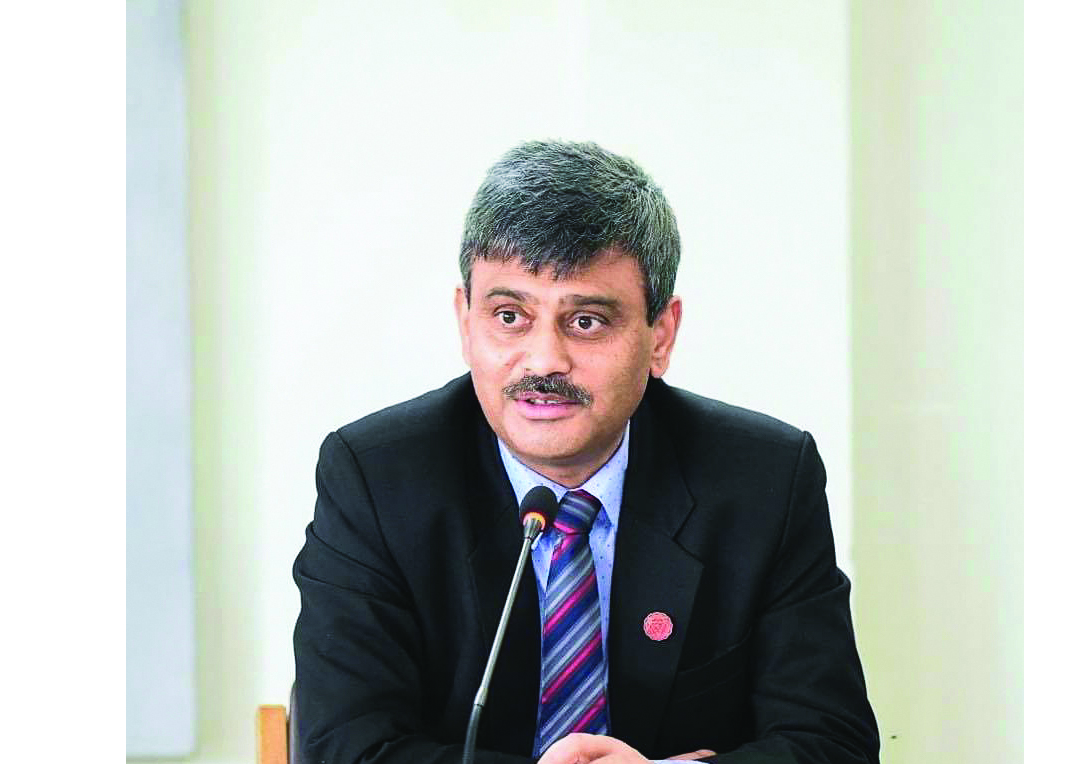
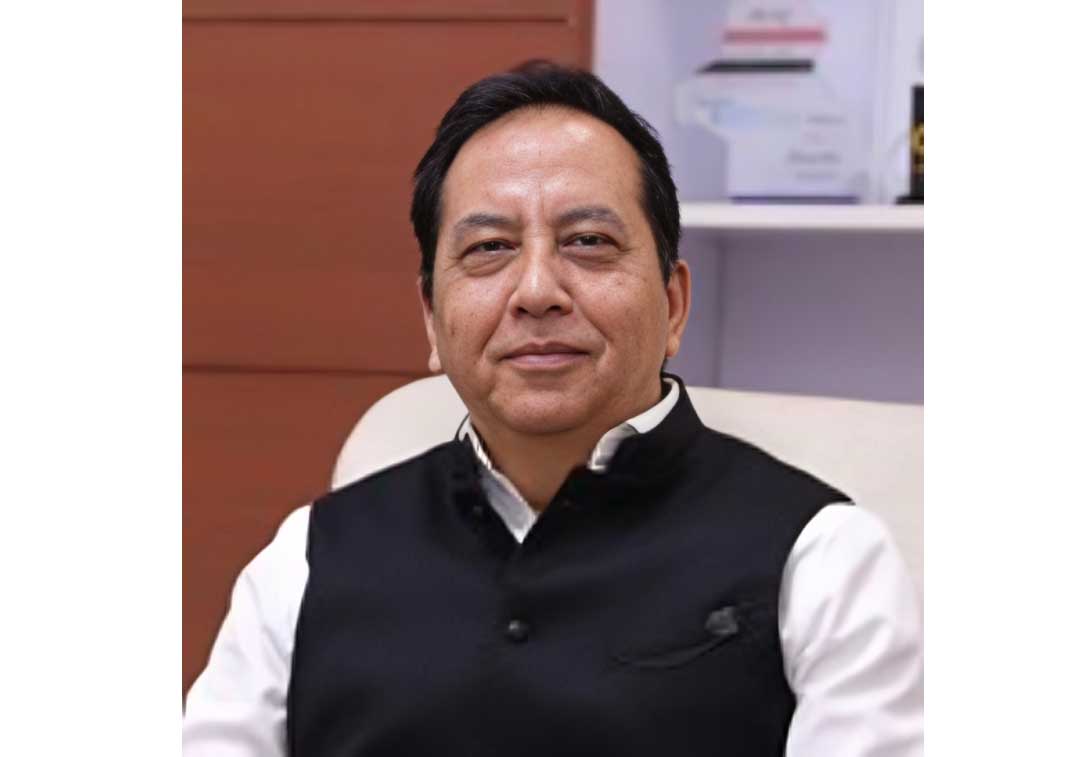
Prof. Dr. Bhola Thapa
Former VC
Kathmandu University
Higher Education Governance Challenges Undermining Student Retention in Nepalese Universities
- College Readers
- 18 Feb 2026
- Views
- Interviews
Prof. Dr. Bhola Thapa served as the Vice Chancellor of Kathmandu University (KU) from January 2021 to January 2025, guiding the university through a transformative post-COVID period. A distinguished Professor of Mechanical Engineering, he began his journey at KU as a young Lecturer in 1994—the year KU launched its engineering programs—and has since held numerous leadership roles, including Registrar, Acting VC, Dean of the School of Engineering, and Head of various departments.
Dr. Thapa earned his PhD in Mechanical Engineering from the Norwegian University of Science and Technology (2004), following graduate and undergraduate degrees from BITS Pilani and Punjab Engineering College. A pioneer in hydraulic machinery research, he established the Turbine Testing Lab, a landmark facility in Nepal. He has authored nearly 100 publications and the book Engineering of Engineering Education. Currently, he continues to teach, advise national academic bodies, and promote multidisciplinary innovation in engineering, energy, and indigenous knowledge.
Prof. Thapa, highlights his deep insights into Nepal’s growing trend of outbound student mobility. Dr. Thapa explains that most students pursue studies abroad not due to poor academic quality at home, but because of stronger job prospects, aggressive foreign university marketing, and systemic challenges within Nepal’s higher education system. He emphasizes the cultural legacy of migration, evolving student autonomy, and the need for Nepalese universities to modernize, expand programs, and strengthen student support. Dr. Thapa urges targeted government reforms and strategic investment to enhance domestic higher education and curb long-term risks of youth outflow.
Identify the core reasons many +2 (grade 12) graduates choose higher education overseas rather than within Nepal.
One of the major reasons Nepali Grade 12 graduates look abroad for higher education is the weak connection between Nepali universities and prospective students. Many universities in Nepal have not invested adequately in outreach, career counseling, or promotional activities targeted at +2 graduates. As a result, students often lack clear information about available programs, admission pathways, or institutional strengths within the country.
In contrast, foreign universities actively market themselves in Nepal through education fairs, agents, scholarships, and attractive study packages. Their visibility and persuasive promotional strategies make international study appear more accessible and appealing. Moreover, foreign universities often highlight opportunities for part-time work and post-study employment, which further motivates students seeking economic stability and global exposure.
Additionally, persistent internal issues within Nepal’s higher education system—such as irregular academic calendars, outdated or rigid curricula, limited flexibility in program delivery, and inconsistent fee structures—create uncertainty for students. These systemic challenges reduce confidence in local institutions and ultimately push many young learners to seek what they perceive as more reliable, structured, and opportunity-rich alternatives abroad.
In your assessment, what share of the outbound student decision is driven by perceived academic quality abroad versus economic or social aspirations? Please justify with examples or evidence if available.
Except few extraordinary students (which hardly I can provide example), most of the outbound students are not due to lack of quality of education in Nepal. Disturbance in calendar and quality are different things.
I believe, most of outbound students are because of prospective job opportunity after the education. This can also be guessed from the country and program where large number of LOI is issued by MoEd for students aspiring higher education abroad.
Historically, Nepali society is accustomed in “Lahurae” culture for more than century. Youths used to go in foreign army to show they are different than others as Lahure and while service as Lahure, their income was also much better than other profession. Same is true now as well. Students going for study will convert themselves as Lahure, not necessarily in foreign army, but for economic region they work in any discipline they get job.
Hence socially. Each family in Nepal wanted someone from their family to go out either for study or work.
How do parents and community expectations influence students’ decisions to study overseas?
Parents and community expectations influence students’ decisions to study overseas is very minimal present days. Children of present days are smarter than parents, they have more access of information than parents’ generation. Even through parents will be supporting financially for their travel and educational expenses, I feel there is very less parent can say about the courses and country of study.
Have you observed differences by region, socio‑economic status, or subject area (STEM vs humanities)?
Traditionally, in the past, students from Madhesh were dominant in technical areas, but now situation has changed. Students from all region and community are going for any type of programs.
It seems students are preferring IT and Management courses in UG level to get job easily even in foreign countries.
There is also a tendency to go for TEVT courses in certain countries like Japan and Australia for job prospective.
Students outbound in Graduate level are mostly in technical area research in universities.
What interventions (information campaigns, counselling, scholarships) are most effective at addressing family/community drivers to advocate 'study in Nepal' campaign?
Peer counselling is most effective. If good students start studying in the country and if they start getting good job in country, they can influence many of their peers.
Scholarships to study in Nepalese universities will also tempt students to study in Nepal. Hence Nepali University even government can provide more scholarships in Nepalese universities.
How do Nepalese higher‑education institutions — in curriculum, reputation, infrastructure, research, industry linkages, and career services — either retain students or push them abroad? Please use Kathmandu University as an illustrative reference were helpful.
Nepalese university curriculum, reputation, infrastructure, research, industry linkages, and career services are not bad, if it is not good as compared to we established universities around the world. But growth and progress of institutions abroad are faster than what we are doing. They have more resources to fund for changes. And developed countries have advantage of attracting good students from Developing countries for other reasons.
When KU started offering new courses, we were able to retain many students going abroad. But even the pace of KU is not sufficient now. We should be more active, offer new courses, be more flexible and student centric, and co-fund the education with other sources.
What responsibility does the state bear (policy, funding, scholarships, labour regulation) for the student outflow, and which three policy reforms would you prioritize to make domestic higher education more attractive?
Even if government has accepted the investment and delivery of Higher Education through private, public and government, even society has not accepted Investment of Private Sector in Education as ethical. Mostly investment in education is considered as Profitable business. Any business should be profitable, otherwise there will not be expansion of organization. Universities in our neighbouring countries have grown and expanded quite rapidly. There could be more regulatory control in academic institutes for their governance, but they should also be given more academic authorities.
Present system is somehow not practical, Universities take all academic responsibilities, not colleges, when they teach and train. We should revisit out policy and we may be more liberal making individual institutions more accountable.
Do you view the sustained outflow of young graduates as a long‑term risk for Nepal—especially given demographic trends? Which demographic, economic, or social risks worry you most, and what urgent, actionable measures (policy, institutional, or programmatic) would you recommend to mitigate them in the next 2–5 years?
Definitely continuous outflow of students is worrying sign for Nepal. Some people think, they might come back with knowledge and money. But new generation who are growing abroad, who are born in foreign countries, have much less chance of coming back. Even if they come back, by that time our culture may already have huge irreparable negative impact.
It is now time for us to identify which are the area of strategic importance for Nepal and start funding for those programs by public or government. Government is not necessarily fund for the program from which youths are going abroad.
We need to have clear understanding of youths’ interest and National need for next 10 years and we need to invest accordingly.
Government investment should not only go for the program with high job prospect, which even private can do, government funding can go for the area of untapped natural resources, basic science, culture, indigenous traditions and security (knowledge, skill, energy, food, climate, communication, international relations, language etc).
Popular Categories
Trending This Month








 Established in 2065 BS, COLLEGE READERS is a premier national-level educational magazine dedicated to serving the academic and informational needs of school and university students, teachers, educators, and concerned ones in Nepal. The magazine provides current and comprehensive information on various educational opportunities worldwide, aiming to guide school and college-level students in their academic and career journeys. It also highlights essential support services and service providers that play a crucial role in shaping students' career paths in today's competitive world.

- Our Location Putalisadak, Kathmandu
- Send Us Email collegereaders123@gmail.com
- Call Us Now 977 01 4518759
