
Call now
977 01 4518759
Send Message
collegereaders123@gmail.com
Our Location
Putalisadak, Kathmandu
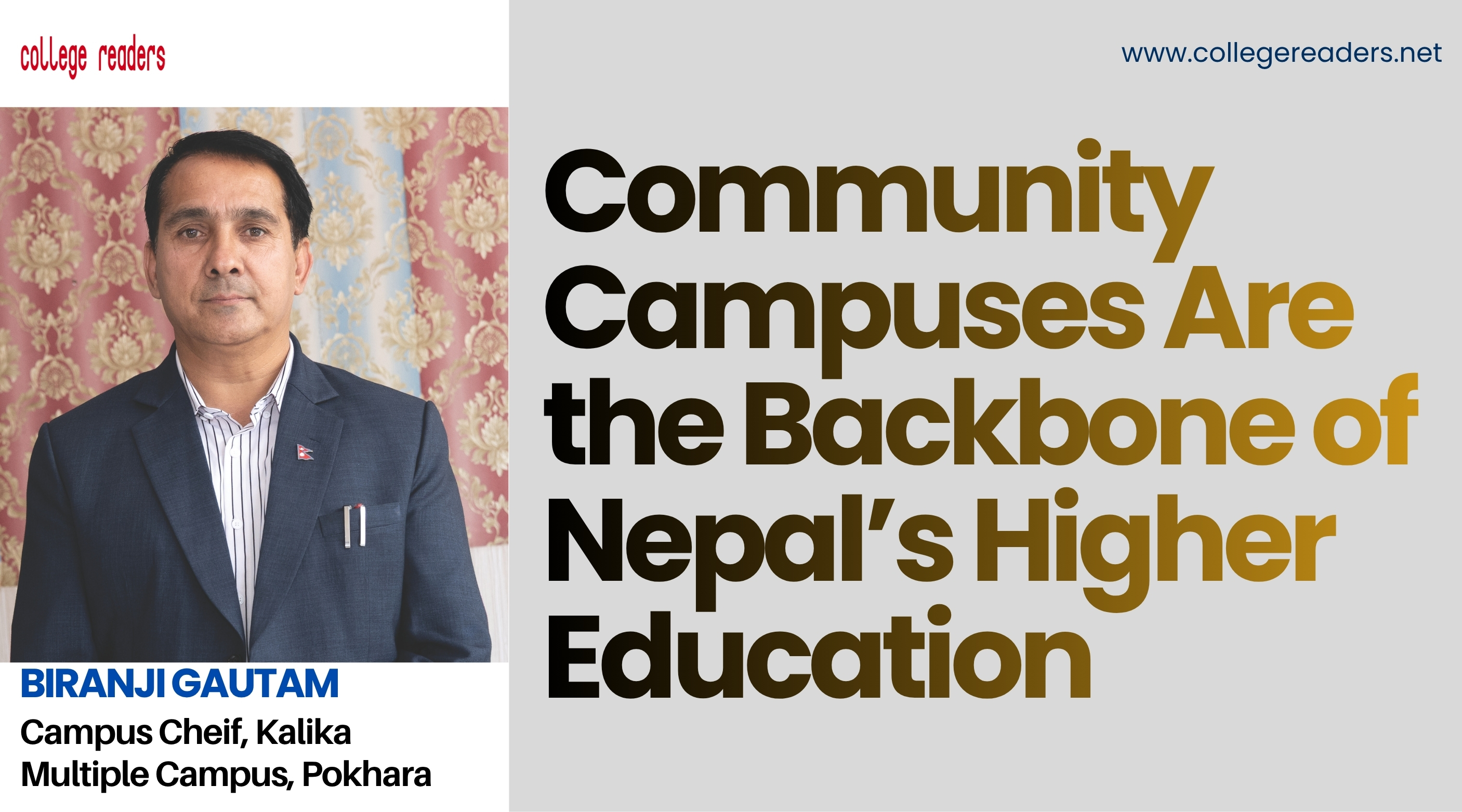
Community Campuses Are the Backbone of Nepal’s Higher Education
- College Readers
- 09 Jul 2026
- Views
- Interviews
College Readers: How do you view the role of community campuses in Nepal’s higher education?
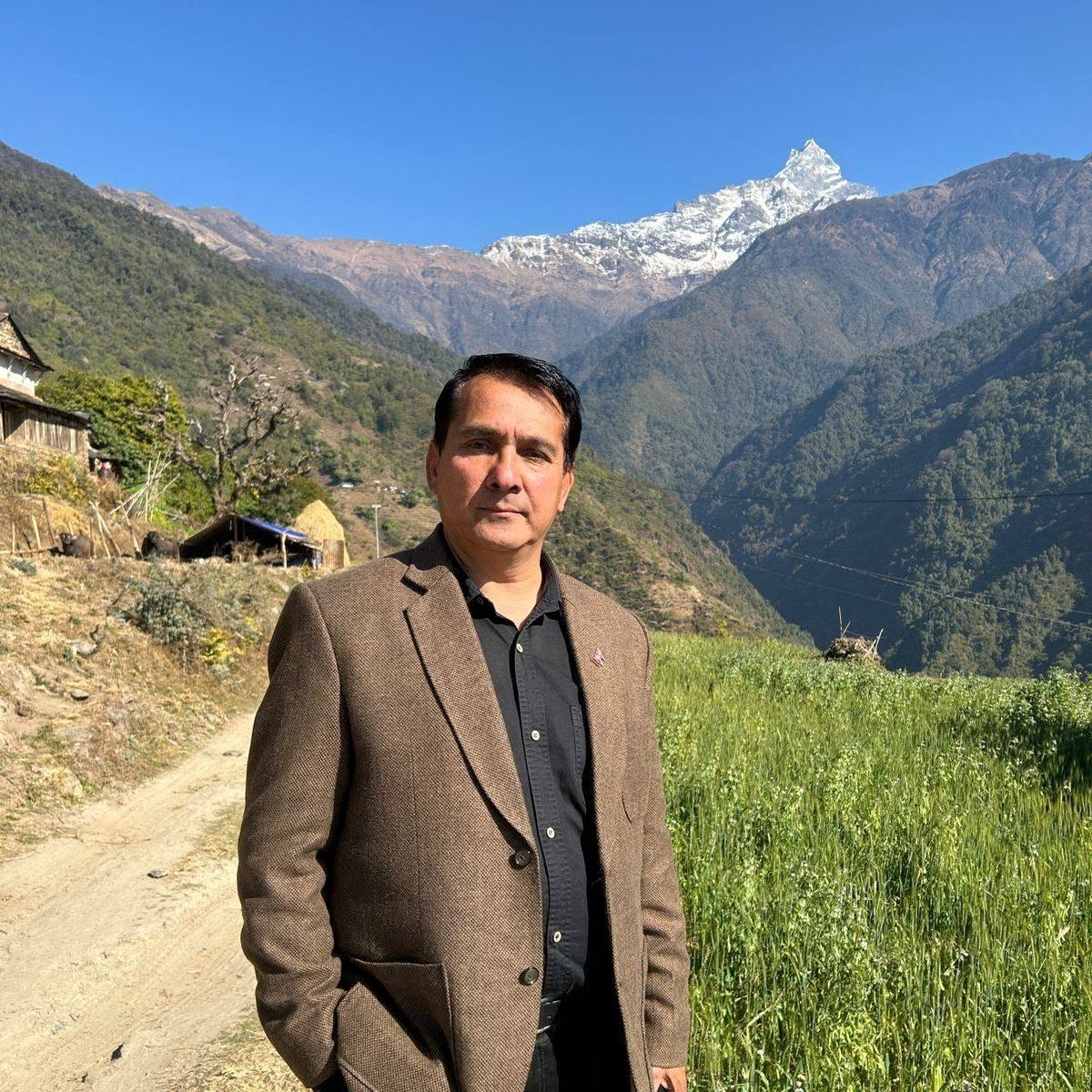
Biranji Gautam: In Nepal’s context, the role of community campuses is extremely important. In fact, the foundation of higher education in Nepal was laid through community campuses. Many of the large government campuses that exist today also began as community-based institutions in the past.
Community campuses have played a remarkable role because they were established in places where the state had not reached. Local people, education-loving personalities and community leaders came together to create opportunities for higher education. These campuses opened the door of higher education for students who otherwise might not have had access. Therefore, I see community campuses as highly important institutions that have made a historic contribution to Nepal.
College Readers: More than 80 percent of QAA-certified campuses are community campuses. Does this show that community campuses are more focused on quality?
Biranji Gautam: Yes, it reflects the quality-oriented nature of community campuses. These campuses were established by the people and are accountable to the people. Their purpose is not profit-making but service. They were opened to provide quality education at affordable fees to local students and to produce skilled human resources.
QAA certification is very important for institutional development, programme expansion and quality assurance. Community campuses are strong in this process because they have public ownership. The people have invested in their infrastructure, and teachers, staff and stakeholders also feel a sense of responsibility toward the institution.
Since community campuses are non-profit institutions, whatever income they generate is reinvested into the same campus. This helps improve infrastructure, human resources, policies and procedures. Because of this culture of ownership and reinvestment, many community campuses have been able to meet QAA standards. This is why a large number of QAA-certified institutions are community campuses.
Community campuses are the backbone of Nepal’s higher education, making quality education accessible beyond the reach of the state.
College Readers: What are the major financial challenges faced by community campuses?
Biranji Gautam: The biggest challenge is limited resources. Community campuses were established through public effort. Local people contributed from their own resources. Many teachers taught voluntarily in the early stages, and gradually these institutions developed. But even today, the main source of income for community campuses is student fees.
The University Grants Commission provides some regular grants, but the amount is very nominal. If we compare the state’s investment, government campuses receive far higher support per student, while community campuses receive very little. Yet the number of students studying in community campuses is very large.
This situation demands serious rethinking from the state. If community campuses are to survive and grow, the government must provide financial support and resources. Protecting community campuses means protecting higher education within Nepal. It also means helping reduce the pressure of students going abroad.
College Readers: Has the trend of students going abroad after Plus Two reduced in recent times?
Biranji Gautam: If we look at the current admission rate and dropout situation, students’ interest in studying within Nepal seems to be increasing. Many students are gradually understanding the reality. Earlier, many students went abroad not only for study but mainly with the intention of working. However, the study and work environment abroad has not always been as easy or favourable as expected.
Because of that, the message is slowly spreading that students can study and find opportunities in Nepal itself. If we strengthen this message, more students will stay in the country. Even if students want to go abroad, it is better for them to complete graduation or acquire skills in Nepal first. That will benefit the students, parents and the country.
Many students who go abroad without proper understanding face academic, financial and psychological difficulties. Some experience depression, anxiety and frustration because the reality does not match their expectations. Therefore, we must create confidence among students that meaningful education and opportunities are possible in Nepal.
Kalika Multiple Campus focuses on QAA-based quality, employment linkage and entrepreneurship to make education practical and relevant.
College Readers: How successful have Kalika Multiple Campus graduates been in employment and further studies?
Biranji Gautam: Kalika Multiple Campus conducts a tracer study every year. According to our tracer study data, around 63 percent of our students are employed or placed in jobs, while the remaining students are pursuing further studies. Those who go for further studies have also shown good academic performance.
Our employed graduates are working in different sectors, including government offices, banking, schools and private organisations. Employers have given positive feedback about our students. They are recognised as skilled, disciplined and capable human resources.
This shows that the education provided by Kalika Multiple Campus has practical value. We do not only focus on classroom learning; we also focus on the future placement and career development of our students.
College Readers: What initiatives has the campus taken to connect students with employment?
Biranji Gautam: We have built linkages with reputed business and industrial organisations. For example, we have agreements with organisations such as KC Group, Sujal Dairy and various banks. Through these partnerships, we connect our graduates directly with job placement opportunities.
Representatives from these organisations come to the campus, meet interested students, conduct interviews and select them for employment. This direct connection between campus and employers has been very useful.
We also run entrepreneurship training programmes. Our aim is not only to produce job seekers but also job creators. Through our entrepreneurship support programme, we provide seed money to some students so that they can start their own businesses. Some of our students have already developed the capacity to run enterprises independently.
College Readers: What advice would you like to give to students after completing Grade 12?
Biranji Gautam: After completing Grade 12, students should first understand their own interest, ability, family capacity and financial situation. They should not choose a subject only by following trends or pressure from others. Choosing the right subject and institution is very important for future success.
I strongly suggest that students give priority to QAA-certified campuses. QAA certification is an assurance that the institution has maintained certain academic and institutional standards. Certificates from such campuses are valued nationally and internationally, and employers also view graduates from QAA-certified campuses positively.
Students should choose subjects they are capable of studying and completing successfully. Parents should also support choices that match the student’s interest, ability and financial capacity. If students choose unsuitable subjects, they may fail to complete their studies and later feel that education has no value. Therefore, thoughtful academic selection is essential.
.jpg)

Popular Categories
Trending This Month








 Established in 2065 BS, COLLEGE READERS is a premier national-level educational magazine dedicated to serving the academic and informational needs of school and university students, teachers, educators, and concerned ones in Nepal. The magazine provides current and comprehensive information on various educational opportunities worldwide, aiming to guide school and college-level students in their academic and career journeys. It also highlights essential support services and service providers that play a crucial role in shaping students' career paths in today's competitive world.

- Our Location Putalisadak, Kathmandu
- Send Us Email collegereaders123@gmail.com
- Call Us Now 977 01 4518759
