
Call now
977 01 4518759
Send Message
collegereaders123@gmail.com
Our Location
Putalisadak, Kathmandu
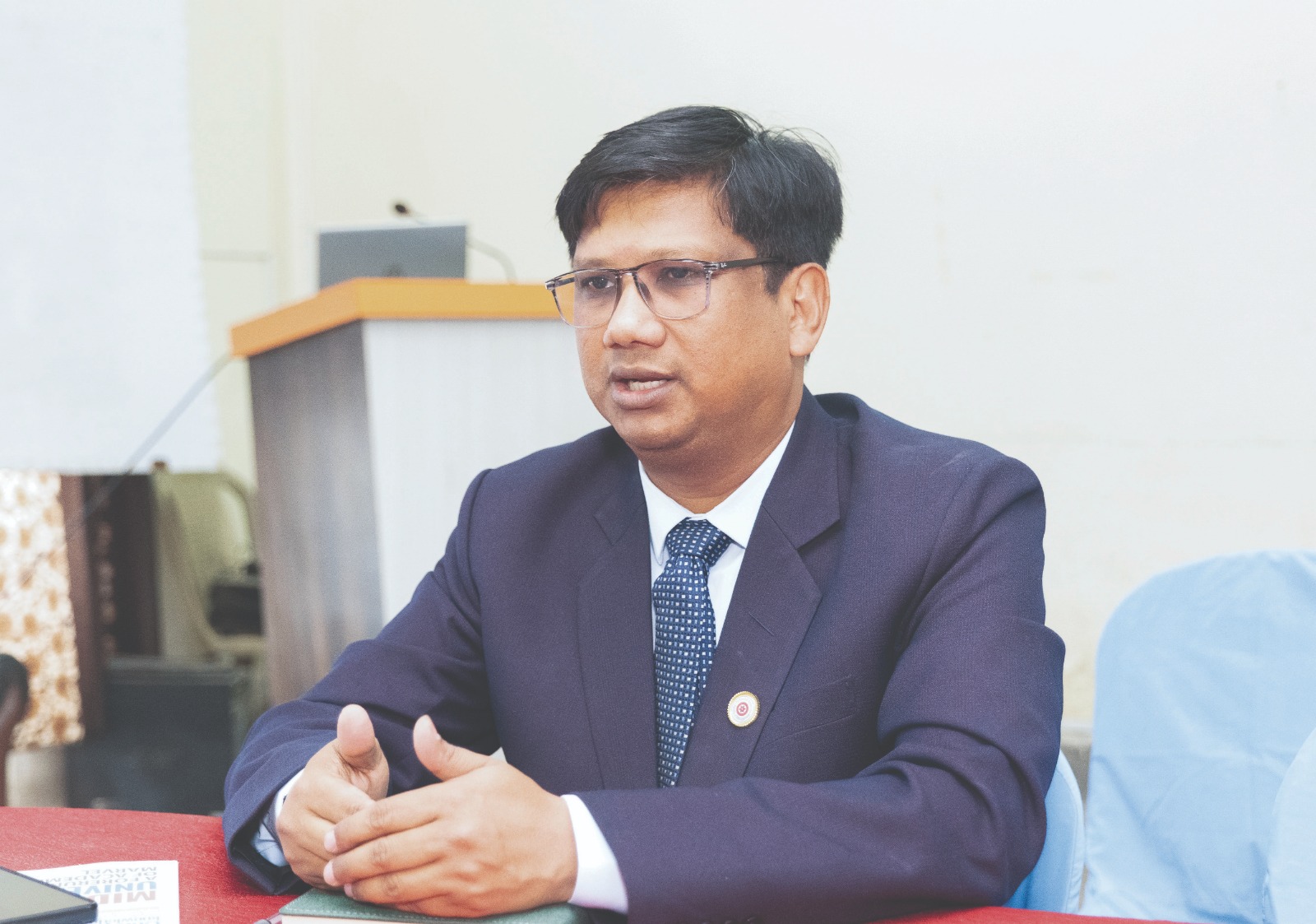
Prof. Dr. Biju Kumar Thapaliya
Vice-Chancellor
Purbanchal University
Brain Drain to Brain Gain: Purbanchal University's Path to Retaining Top Talent
- College Readers
- 18 Feb 2026
- Views
- Interviews
When Prof. Dr. Biju Kumar Thapaliya walks into a room, he carries with him more than the title of Vice-Chancellor of Purbanchal University—he carries the weight of decades spent shaping Nepal’s academic landscape. Known for his sharp intellect, unwavering discipline, and forward-looking vision, he is widely celebrated as a reformer who refuses to see education as static. For him, every lecture, every policy, and every institution must serve a larger purpose: the transformation of society.
His career is a testament to this belief. From the lecture halls where he first inspired young minds, to the policymaking tables where he pressed for bold reforms, Prof. Thapaliya has remained consistent in one conviction—that higher education in Nepal must aspire to global standards without losing its local soul. He recognises the surge of students leaving for opportunities abroad, but rather than lament the trend, he dares Nepal’s universities to compete, to innovate, and to earn the trust of their own people.
At the heart of his leadership lies a rare combination of vision and discipline. He insists that true excellence is not only about ideas and innovation but also about upholding academic calendars, nurturing research culture, and fostering partnerships with industry. Under his stewardship, Purbanchal University is striving to become a model of both rigour and inspiration.
Prof. Thapaliya’s message is simple yet profound: education in Nepal can be transformative, empowering a new generation to believe that building a self-reliant nation begins at home.
At present, we see a growing trend of Nepali students leaving the country for higher education right after completing their +2. How do you view this in relation to the state of higher education in Nepal?
This trend is indeed very visible. After completing +2, many young people immediately apply for universities abroad, believing that opportunities outside Nepal are automatically superior. However, the reality is more nuanced. If we look carefully at the data of Purbanchal University, the situation is not entirely discouraging. Only some faculties have experienced a slight decline. For instance, programs in Arts and Humanities have seen reduced enrollment over the last few years, and during the COVID-19 pandemic, we faced a temporary setback across faculties.
But what is often overlooked is that since then, our enrollment has been steadily recovering. On average, student intake at Purbanchal University has been increasing by nearly six percent annually, and our 2024 intake is even stronger than before. Faculties such as Medicine, Nursing, Pharmacy, and Management are not only stable but growing, while Engineering—although it had a temporary dip—is also bouncing back. So while many students are going abroad, those who stay are increasingly recognizing the opportunities we are creating here at home.
Many students argue that Nepali universities are unable to offer globally competitive and market-relevant programs, which pushes them abroad. How would you respond to that concern?
I agree that this perception exists, and in part, it is justified. For years, Nepal’s universities were slow in introducing market-oriented, globally competitive programs, particularly in technical and professional disciplines. Students in Engineering, IT, and Business fields often felt compelled to go abroad for exposure to newer technologies and approaches.
At Purbanchal University, however, we have taken this challenge seriously. We have introduced forward-looking programs such as B.Tech in Artificial Intelligence, Bachelor of Information Technology, and postgraduate diplomas in Cybersecurity and AI applications. In the applied sciences, our biotechnology and pharmacy programs are drawing a growing number of students who see clear career pathways in Nepal as well as abroad.
Moreover, we are working with industry partners to ensure these programs are not just theoretical but grounded in real-world application. In the coming years, we aim to expand offerings in Data Science, Robotics, and Renewable Energy Systems. When students see that such courses are available at home—with qualified faculty, practical training, and industry linkages—they will be less inclined to leave.
If this outflow of students continues, don’t you think it could negatively affect the future of higher education in Nepal?
Yes, without question. When a large portion of our brightest students leave, our own universities face a talent vacuum. This affects not only enrollment numbers but also the vibrancy of classroom discussion, research culture, and innovation at home.
However, I firmly believe that this trend can be managed. We need to make our programs globally relevant, and we must also build trust among students and parents that a degree earned in Nepal carries both national and international value. If universities like ours offer cutting-edge courses, research opportunities, and placements in partnership with industry, students will see staying in Nepal as a viable and even advantageous choice.
In your opinion, what specific policies should the government adopt to address this trend and strengthen quality education within Nepal?
First and foremost, policies should not be overly Kathmandu-centric. For decades, higher education policy has been designed around central institutions, while universities in provinces and regions have been given less flexibility and fewer resources. To strengthen Nepal’s education system, universities outside the capital must be empowered with autonomy, infrastructure, and qualified manpower.
Second, regulatory frameworks must be flexible. Sometimes universities are ready to introduce new and innovative programs, but the approval process is so lengthy and restrictive that opportunities are lost. The government should streamline approval mechanisms and allow constituent and affiliated campuses across regions to launch new programs as per local and national demand.
At Purbanchal, for example, we’ve already introduced specialized diplomas in Cybersecurity and Artificial Intelligence. We are preparing to launch courses in Data Science and Entrepreneurship as well. But for these programs to flourish nationwide, supportive policies and funding are essential. If given that environment, regional universities can become powerful centers of excellence and significantly reduce the compulsion to go abroad.
How do innovation, research, and industry collaboration contribute to improving the quality of education in Nepal?
Universities cannot operate in isolation. To deliver quality education, we need a complete ecosystem where academia, industry, and government work hand in hand. At Purbanchal University, we are fostering a culture of innovation and research by encouraging students to engage in projects, start-ups, and entrepreneurship. We have incubation centers where young innovators can test ideas and receive mentorship.
But equally important is collaboration with the private sector. Without job creation and industry engagement, the risk of brain drain remains. That is why we are expanding partnerships with industries to provide internships, placements, and research opportunities.
Another crucial aspect is academic reform. We are shifting from outdated, exam-heavy models to a continuous evaluation system that includes practical assignments, project-based learning, and research components. This makes our graduates more competent and globally competitive. Maintaining a strict academic calendar, avoiding unnecessary delays, and ensuring timely results are also part of our quality agenda.
What is your long-term vision for Purbanchal University to make it more attractive to students who might otherwise go abroad?
My vision rests on two pillars. The first is academic innovation—updating existing programs and continuously introducing new ones aligned with global market needs. This includes cutting-edge areas like Artificial Intelligence, Data Science, Climate Studies, and Public Health. By diversifying and modernizing our programs, we ensure that our graduates are prepared for both national and international opportunities.
The second pillar is academic discipline—strictly adhering to the academic calendar. One of the biggest criticisms of Nepali universities is that a four-year course often takes five or six years to complete due to delays. We are determined to change that. At Purbanchal, we are publishing results on time, minimizing administrative delays, and ensuring students graduate within the promised timeline. If we consistently deliver on these two aspects—relevance and reliability—I am confident that students will trust us and prefer to stay in Nepal.
Finally, what would be your message to Nepali students, especially those who have just completed their +2?
My heartfelt message is this: do not rush to go abroad simply because your peers are doing so. First, carefully explore the wide range of programs offered within Nepal. Every university here has opportunities that are often overlooked. Many of our programs are already at par with international standards, and they provide a strong foundation for future careers.
It is easy to be influenced by the glamour of life abroad as portrayed on social media. But the reality often involves enormous struggle, financial pressure on families, and the challenge of adjusting in a foreign land. Studying in Nepal allows you to focus fully on your academics without those extra burdens. Once you complete a strong foundation here, you can always pursue specialized opportunities abroad if you wish.
So, my advice is: make well-informed decisions, prioritize quality over glamour, and give serious consideration to the opportunities available right here in Nepal. By doing so, you contribute not only to your own growth but also to the strengthening of our country’s education system.
Popular Categories
Trending This Month








 Established in 2065 BS, COLLEGE READERS is a premier national-level educational magazine dedicated to serving the academic and informational needs of school and university students, teachers, educators, and concerned ones in Nepal. The magazine provides current and comprehensive information on various educational opportunities worldwide, aiming to guide school and college-level students in their academic and career journeys. It also highlights essential support services and service providers that play a crucial role in shaping students' career paths in today's competitive world.

- Our Location Putalisadak, Kathmandu
- Send Us Email collegereaders123@gmail.com
- Call Us Now 977 01 4518759
