
Call now
977 01 4518759
Send Message
collegereaders123@gmail.com
Our Location
Putalisadak, Kathmandu
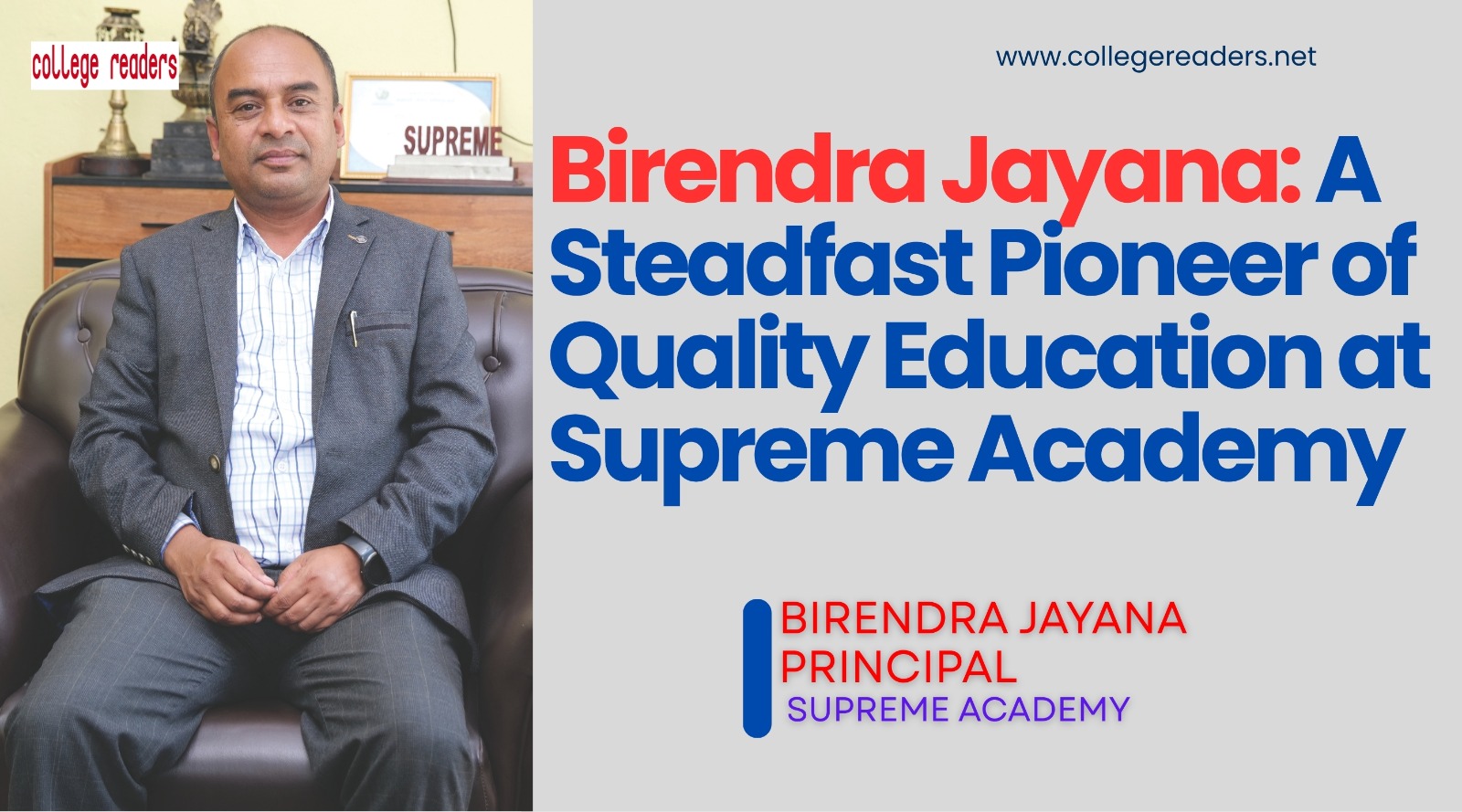
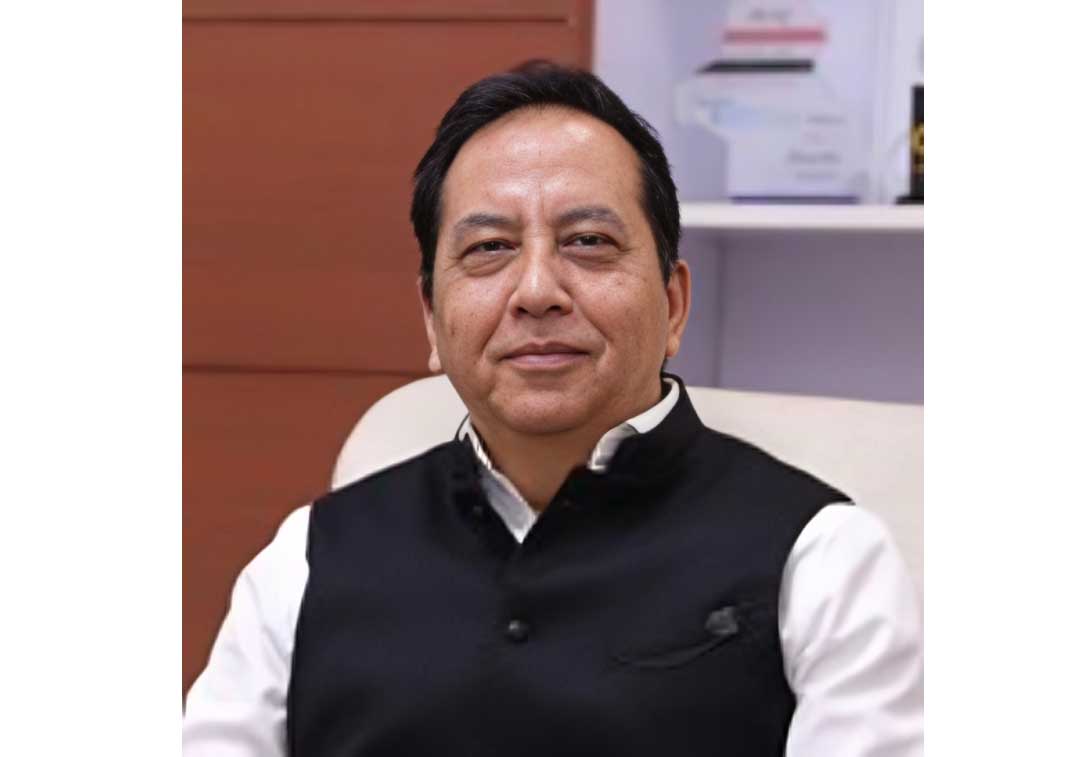
Birendra Jayana: A Steadfast Pioneer of Quality Education at Supreme Academy
- College Readers
- 18 May 2026
- Views
- Interviews , Op-ed
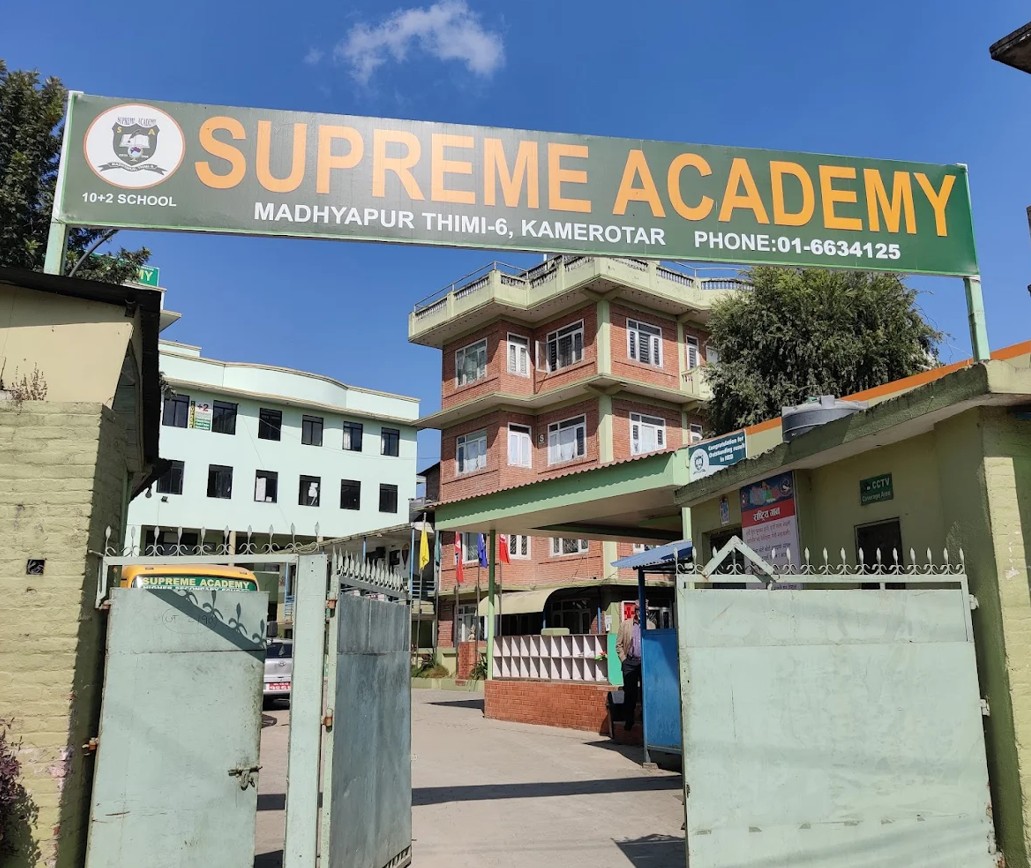
Birendra Jayana represents a unique trajectory in Nepal's educational landscape—an academic professional whose journey from reluctant student to influential educational leader demonstrates how circumstance, policy changes, and personal conviction can converge to create lasting institutional impact. As Founder Principal of Supreme Academy and Central Vice President of a prominent national educational association, Jayana has dedicated his entire career to teaching and educational entrepreneurship, becoming a respected voice in Nepal's private education sector while building one of the most respected institutions in the Madhyapur Thimi area.
Jayana's path into education emerged organically from his own academic experiences. He candidly acknowledges that during his student days, he was not particularly distinguished academically. However, when results were announced, he consistently performed well, demonstrating that systematic effort produces outcomes regardless of self-perception. This experience shaped his later understanding that students often underestimate their capabilities and need supportive environments to discover their potential. Following his academic success, his department directly assigned him to teach at Amrit Science Campus, marking the beginning of a teaching career continuing uninterrupted to the present day.
Notably, Jayana has never applied for any government or non-government job throughout his entire career. From his initial appointment at Amrit Science Campus, he committed himself entirely to educational work, demonstrating remarkable focus about his professional path. This single-minded dedication to education—rather than treating teaching as a stepping stone to other opportunities—has characterized his entire professional life and shaped his institutional vision.
The transition from academic teaching to founding private institutions emerged unexpectedly rather than through deliberate planning. When government regulations changed during a particular policy shift, Jayana recognized opportunity in the evolving landscape. He decided to enter private education with determination, choosing to fight challenges from within rather than remain solely in government structures. Around this period, he recognized that the Thimi area required a quality academic institution. Starting with modest investment, he established what would become Supreme Academy. Seven years after founding his institution, when the government opened applications for permanent academic positions and Jayana applied successfully through written examinations, he had already committed himself fundamentally to the institution he built.
Jayana offers thoughtful perspectives on defining quality education within Nepal's specific context. He observes that quality education receives different definitions across regions and cultures, shaped by local soil and circumstances. From his observations comparing Nepal with international contexts, quality education fundamentally connects to how individuals can navigate life successfully after their educational journey. The skills, knowledge, and values gained must translate into life capability—enabling students to handle any work their lives present.
He believes Nepal's educational system requires nation-specific frameworks rather than imported templates. While drawing from global best practices, regulations must reflect Nepal's soil, culture, and developmental needs. This perspective challenges both blind imitation of foreign systems and rigid adherence to outdated local practices, advocating thoughtful synthesis appropriate to Nepali realities.
Regarding private education's current state, Jayana observes generally positive trajectory while recognizing challenges. He acknowledges government efforts to improve community education continue, but criticizes tendencies focusing on undermining existing resources rather than effectively utilizing available capacity. He believes meaningful advancement requires upgrading both private and community schools simultaneously rather than treating them as competing alternatives.
Supreme Academy has grown remarkably under Jayana's leadership. Beginning with 60-70 students, the institution now serves approximately 1,000 students from Nursery through Class 12. Within this enrollment, 650 students attend the school level, while approximately 300 students pursue Plus Two studies, primarily in Management stream. This growth demonstrates sustained quality combined with effective community engagement.
Defining quality for his institution's students, Jayana emphasizes that creating proper learning environments represents fundamental quality. He explains that beyond standard subject teaching, Supreme Academy provides annual teacher training programs aligned with contemporary needs, including integration of Information Technology and Artificial Intelligence concepts. Staff members receive training through partnerships with various organizations, ensuring all institutional members continuously develop relevant capabilities. Students engage in educational tours, sports activities, and various extracurricular pursuits, supporting holistic development beyond classroom instruction.
Regarding student migration patterns, Jayana acknowledges the persistent trend of students moving from outlying areas to Kathmandu for higher education despite quality alternatives existing locally. He attributes this to Nepal's structural challenge where Classes 11 and 12 operate as college-level rather than school-level education, creating perception that higher education requires capital city access. He believes systemic change requires policy-level transformation incorporating Classes 11 and 12 within school structures.
Significantly, Supreme Academy attracts students from far eastern districts including Dolakha, Ramechhap, and Sindhuli—reversing typical migration patterns by drawing students toward Bhaktapur for quality education. Jayana views this natural flow as inevitable while emphasizing that institutions must focus on maintaining quality rather than trying to control student movement. He expects future policy developments will create more uniform educational standards across regions.
For SEE graduates selecting Plus Two institutions and subjects, Jayana offers practical guidance. He emphasizes that Plus Two level offers numerous subject choices across faculties. Rather than blindly following peer choices or geographical assumptions, students should select subjects aligned with genuine interest and future aspirations. He invites prospective students to visit Supreme Academy—not necessarily to enroll immediately, but to experience the institution's environment firsthand.
Supreme Academy provides comprehensive facilities at affordable fees—computer laboratories, libraries, and essential infrastructure comparable to Kathmandu institutions. The institution maintains basic facilities supporting quality learning at reasonable costs, demonstrating that excellent education need not require expensive distant alternatives.
Supreme Academy operates on three fundamental values Jayana established as institutional pillars. His consistent emphasis on quality education, holistic student development, and community responsibility suggests these foundational principles shape every institutional practice. His approach demonstrates commitment to substance over superficiality, building genuine educational value rather than projecting impressive appearances.
Birendra Jayana exemplifies educational leadership combining personal conviction, professional dedication, and institutional integrity. His refusal to pursue alternative career paths despite opportunities, his commitment to building something meaningful in Madhyapur Thimi community, and his thoughtful engagement with both local realities and national educational challenges position him as a respected voice in Nepal's educational discourse. By focusing exclusively on education throughout his career and building Supreme Academy systematically over decades, he demonstrates transformative educational institutions emerge from sustained commitment rather than opportunistic ventures.

Popular Categories
Trending This Month








 Established in 2065 BS, COLLEGE READERS is a premier national-level educational magazine dedicated to serving the academic and informational needs of school and university students, teachers, educators, and concerned ones in Nepal. The magazine provides current and comprehensive information on various educational opportunities worldwide, aiming to guide school and college-level students in their academic and career journeys. It also highlights essential support services and service providers that play a crucial role in shaping students' career paths in today's competitive world.

- Our Location Putalisadak, Kathmandu
- Send Us Email collegereaders123@gmail.com
- Call Us Now 977 01 4518759
