
Call now
977 01 4518759
Send Message
collegereaders123@gmail.com
Our Location
Putalisadak, Kathmandu
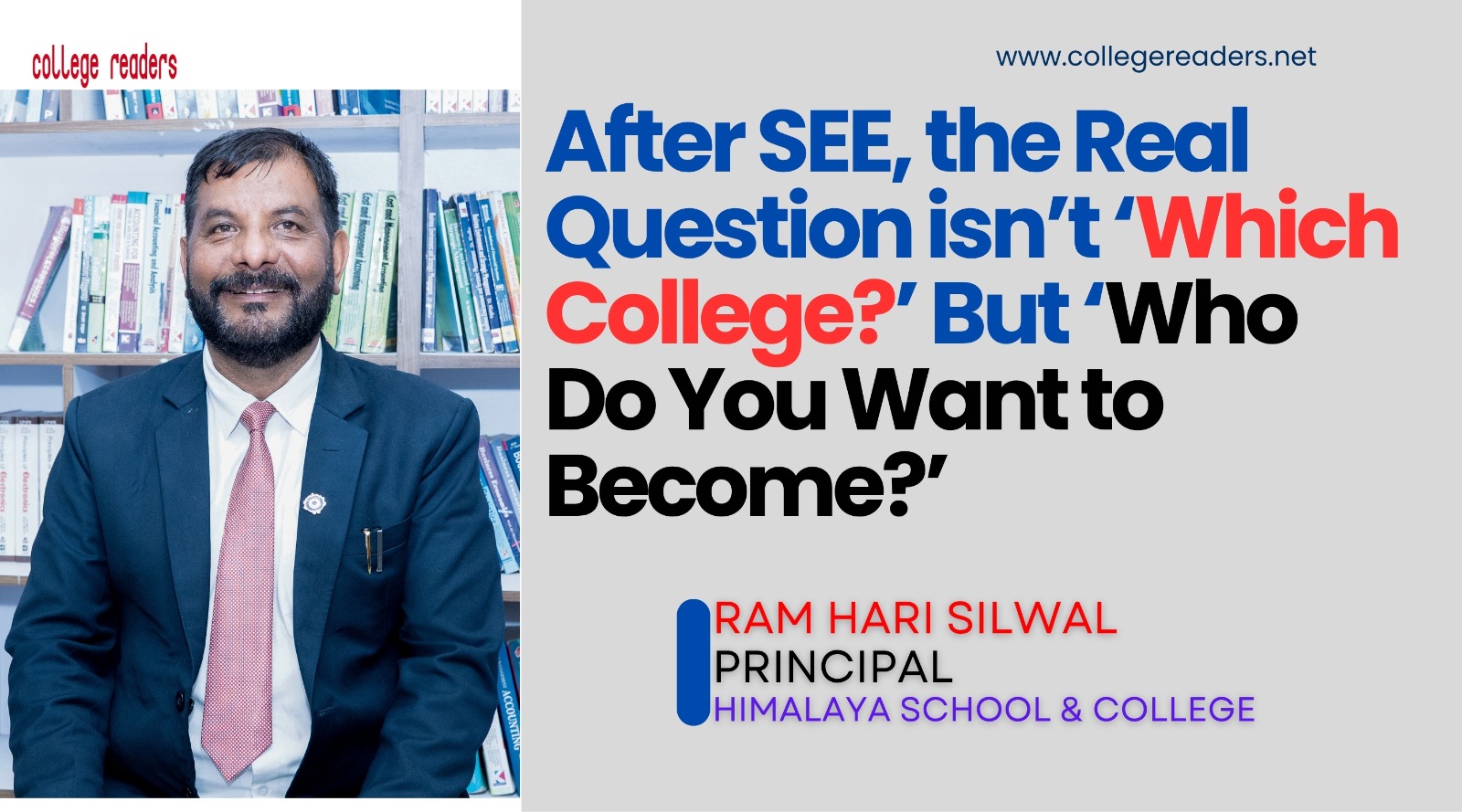
After SEE, the Real Question isn’t ‘Which College?’ But ‘Who Do You Want to Become?’
- College Readers
- 19 May 2026
- Views
- Interviews , Op-ed
Every year, after the SEE results, thousands of young Nepalis stand before one of the first serious decisions of life: what should I study, and where should I study? This question is more than an admission form. It is a question of identity, confidence, family expectation, economic reality and future citizenship. Plus Two education, Grades XI and XII, has therefore become the most sensitive bridge between school learning and university ambition.
Nepal’s Plus Two system began around 2046 B.S., when the country started moving away from the old Proficiency Certificate Level offered by universities. The transition was not immediate, but it was historic. As universities gradually phased out PCL, Grades XI and XII entered the national school structure and gave secondary education a new shape. Today, official schooling is generally understood as a continuum up to Grade XII, and the National Examination Board remains the public authority most closely associated with examinations and certification at this level.
The beauty of Plus Two education lies in its possibilities. It offers students Science, Management, Humanities, Education, Law, technical pathways and international alternatives. It brings laboratories, libraries, sports, debate, leadership, community work and career exposure into the same campus culture. A student from a modest family can dream of medicine, engineering, entrepreneurship, law, journalism, teaching, agriculture, hospitality, technology or public service from within Nepal. This is an achievement that should not be underestimated.
Private institutions have made a visible contribution to this journey. With government approval and public expectation, they invested in buildings, laboratories, qualified teachers, counselling, co-curricular activities and result-oriented academic systems. The growth of Plus Two colleges also reduced the earlier belief that quality schooling after Grade X had to be searched abroad or only in a few urban centres. From Kathmandu to provincial cities and emerging municipalities, competitive institutions have widened access and raised ambition.
HISSAN has also played an important role in organising the private sector’s voice. Its principle of competition with cooperation is meaningful in education because schools may compete in results, but they must cooperate in standards, training, policy dialogue and student welfare. Nepal needs both public and private institutions to rise together. The nation cannot produce confident human capital through rivalry alone; it needs shared commitment to quality, affordability and relevance.
The achievement of Plus Two education is already visible in Nepali students studying in reputed universities inside and outside the country. Many have entered medicine, engineering, information technology, management, social sciences, law, agriculture and research. Others have become entrepreneurs and skilled professionals. When a Grade XI classroom in Nepal prepares a student for global competition, it proves that the system has achieved something important.
Yet the greatest challenge appears exactly at the point of choice. After SEE, many students are confused. Some parents still think high GPA means Science, average GPA means Management and low GPA means Humanities or Education. This is a damaging hierarchy. GPA may show performance in an examination, but it does not define talent, creativity, leadership, compassion, communication skill or long-term discipline. No subject is inferior; only an uninformed choice is dangerous.
Subject selection must begin with self-understanding. A student should ask: What do I enjoy learning? Which activity makes me curious? Am I comfortable with mathematics, experiments, business ideas, social issues, language, law, technology or service? Interest alone is not enough, but without interest, study becomes punishment. Capacity, discipline and economic feasibility must also be considered. A dream is strong when it is supported by honest preparation.
Parents should guide, not command. Their experience matters, but their unrealised dreams should not become the child’s burden. Teachers must help students identify strengths and weaknesses. Colleges should offer counselling before admission, not merely marketing. Nepal still lacks a strong culture of institutional career guidance, and this gap often pushes students toward fashionable decisions. Career counselling must become an essential service in every school.
Choosing a college is equally important. Since the national curriculum is broadly common, the difference lies in implementation. Students and parents should examine teacher quality, regular classes, laboratory facilities, library use, skill development, academic results, discipline, counselling, scholarships, transport, distance, safety, fees and extracurricular opportunities. A tall building or loud advertisement cannot replace committed teachers and a supportive learning environment.
Affordability deserves special attention. Families should choose an institution that matches their financial capacity. An expensive college is not automatically the best, and a moderate-fee college is not automatically weak. The right college is the one that provides honest teaching, transparent fees, accessible teachers, required facilities and a culture where students are known by name, not treated as numbers.
Students should also understand the changing world. Artificial intelligence, digital work, climate challenges, global migration and new industries are changing career paths. Management now needs technology; Science needs ethics; Humanities needs research; Law needs digital literacy; agriculture needs innovation; education needs creativity. Therefore, Plus Two should not be seen as a narrow stream but as a foundation for adaptable learning.
My advice to SEE graduates is simple: do not rush. Visit colleges. Ask questions. Meet teachers. Talk with seniors. Compare costs. Understand subjects. Listen to parents, but listen to yourself too. If necessary, take professional guidance. Choose a subject that connects your interest, ability and future goal. Choose a college that can nurture your character as well as your marks.
For that reason, policy makers must protect access, monitor standards, support teachers, and respect institutions that have invested sincerely in national educational progress with fairness, accountability, vision, and care.
Plus Two education is beautiful because it carries hope. It is the stage where adolescents begin to become responsible adults, where dreams meet discipline, and where family aspiration meets personal identity. Nepal’s task now is to make this level more inclusive, skilled, ethical and future-ready. If students choose wisely, parents support patiently, teachers guide honestly and institutions serve responsibly, Grades XI and XII will remain not merely a bridge, but a launching ground for Nepal’s next generation.
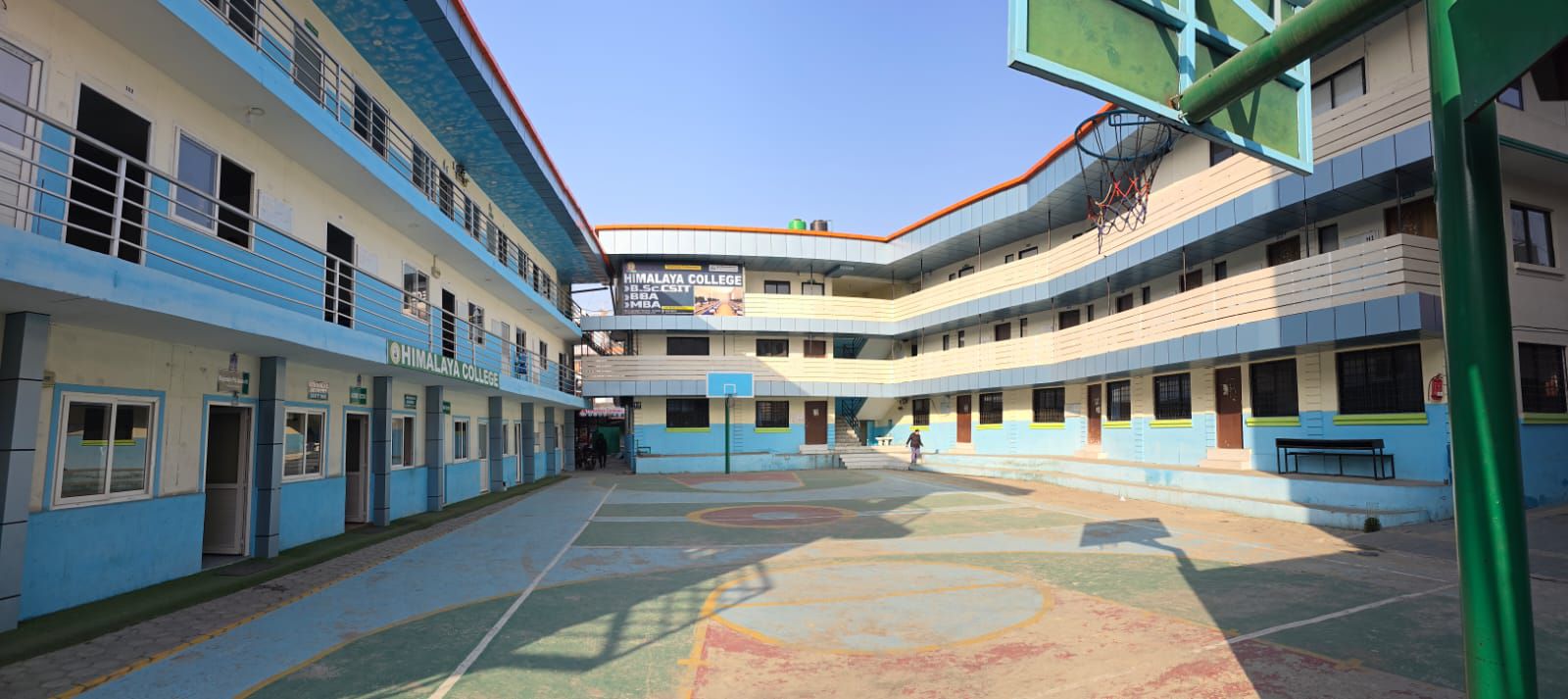
The writer, Ram Hari Silwal, is the Chief Editor of College Readers, Principal of Himalaya School & College, and General Secretary of HISSAN — Higher Institutions and Secondary Schools’ Association Nepal.
Popular Categories
Trending This Month








 Established in 2065 BS, COLLEGE READERS is a premier national-level educational magazine dedicated to serving the academic and informational needs of school and university students, teachers, educators, and concerned ones in Nepal. The magazine provides current and comprehensive information on various educational opportunities worldwide, aiming to guide school and college-level students in their academic and career journeys. It also highlights essential support services and service providers that play a crucial role in shaping students' career paths in today's competitive world.

- Our Location Putalisadak, Kathmandu
- Send Us Email collegereaders123@gmail.com
- Call Us Now 977 01 4518759
