
Call now
977 01 4518759
Send Message
collegereaders123@gmail.com
Our Location
Putalisadak, Kathmandu
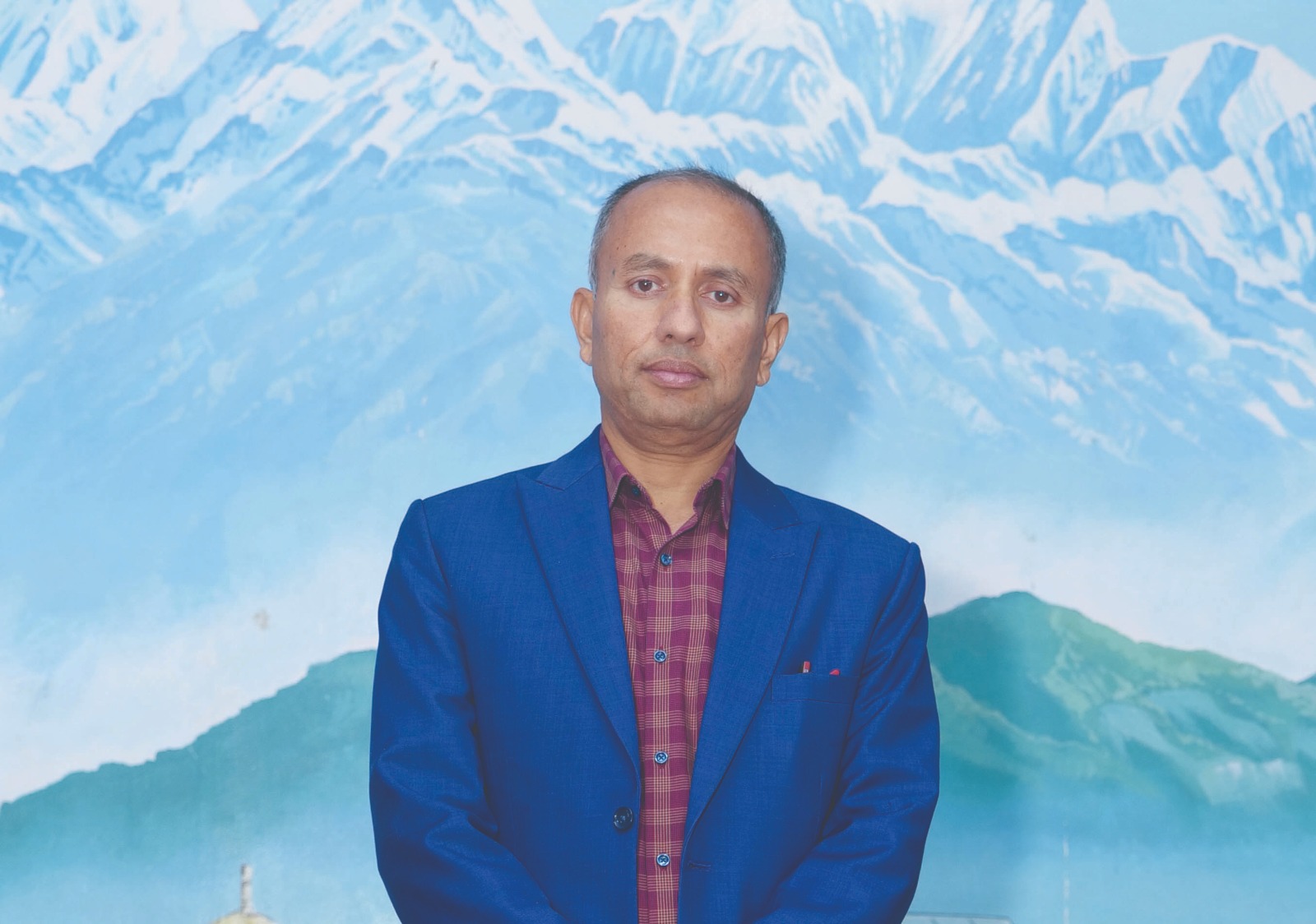
Subash Neupane
President
N-PABSON
Why Nepal Must Be Our Classroom and Our Future
- College Readers
- 18 Feb 2026
- Views
- Interviews
Excerpts: Student attrition in Nepal is driven by a combination of push factors. The primary driver is a constricted job market that offers few opportunities for graduates, compelling them to seek employment abroad. This is compounded by an outdated educational curriculum that lacks relevance in the 21st century, failing to impart critical technological and entrepreneurial skills. Furthermore, the higher education system is plagued by politicization, leading to institutional instability and chronic disruptions that diminish the quality of learning.
Contrary to popular belief, domestic institutions—particularly in the private sector—provide commendable education and infrastructure. The perception that foreign qualifications are inherently superior is often inaccurate and imposes a significant financial burden on families. A change in perspective is essential to encourage students to appreciate local opportunities and contribute to national development.
Ultimately, addressing this exodus requires a dual approach: a public mindset shift and substantive government policy reform. The education system must be modernized and insulated from political interference to align with global standards. As the cornerstone of socio-economic progress, revitalizing Nepal's education system is imperative for the country's future.
When I look at today’s society, I often hear accusations that private schools are fueling brain drain. Critics argue that by making students proficient in English, communication, and international languages, we are preparing them to leave Nepal for opportunities abroad. I do not deny that many of our graduates pursue foreign studies, but let me be clear—this is not unique to Nepal. Even in countries with strong education systems like China and South Korea, young people dream of studying in top universities in the United States, the United Kingdom, or Australia. It is a global phenomenon.
Some students will naturally go abroad. But in Nepal, a dangerous mindset has developed: if a student does not leave the country, they are seen as less capable. Parents often take pride in sending their children overseas, and society has built a structure where migration is celebrated as success. This thinking must change.
Why Students Leave
There are several push factors behind this trend. First, the lack of job opportunities. After completing grade 12, many students want to work while pursuing higher studies. In Europe and the U.S., students above 18 can sustain themselves by working part-time and funding their education. In Nepal, limited industries and scarce jobs make this impossible, and so students look outward.
Second, our curriculum is outdated. In the 21st century, education must be aligned with modern needs, from technology to entrepreneurship. Yet we continue with traditional syllabi, while the rest of the world adapts quickly.
Third, the politicization of universities has severely damaged higher education. I have seen institutions remain closed for months—even an entire year—due to strikes and disputes. Professors often lack motivation, leadership appointments are delayed, and management is weak. This chaos drives students to foreign universities.
Quality Exists at Home
Despite these challenges, I do not believe that higher education in Nepal is lacking in quality. In infrastructure, pedagogy, and the caliber of our teachers, Nepal is not behind. In fact, private colleges are excelling in medicine, engineering, management, and banking. To say that quality education exists only abroad is simply wrong.
Yes, foreign universities are prestigious, but the financial reality cannot be ignored. Tuition fees are exorbitant, and only a handful of Nepali parents can afford them. Many students assume they can work and pay for their education, but in practice, this is nearly impossible. A large number end up enrolling in short vocational courses lasting six to eighteen months, taking jobs for survival, and presenting certificates as if they were full degrees. Few manage to complete rigorous academic programs abroad.
That is why I constantly advise students: you can complete a meaningful degree right here in Nepal. And even if you choose to study abroad, make Nepal your workplace. The soil where we are born should also be the place where we contribute.
Shaping a New Mindset
At N-PABSON, we are counseling students, especially those in grades 10 to 12, to shift this mindset. Encouragingly, I see positive changes. Enrollment at Kathmandu University and other institutions is increasing. But this is not something schools alone can fix. Society must also reject the belief that progress is only possible overseas.
Nepal is not a country without prospects—it is a land full of opportunities. We have fertile land, hydropower potential, abundant herbs, tourism resources, affordable labor, and water resources that most nations envy. The claim that Nepal has no future is not just mistaken; it is a conspiracy against our nation’s potential. What we need is entrepreneurship and the courage to harness these strengths. If we work together to build our country, Nepal can offer as much as anywhere else.
What Government Must Do
Of course, much depends on government policy. The way laws and strategies for education are framed determines whether our system thrives or collapses. Unfortunately, I see a narrow mindset in current policy drafts. For instance, the proposed School Education Act insists on teaching certain subjects only in Nepali as a form of nationalism. But nationalism does not come from restricting language—it comes from protecting our culture, values, and traditions. In today’s world, students need both national and international languages to thrive.
The government must also link education to technology, entrepreneurship, and professional development. The so-called “Alpha Generation” cannot be taught with outdated models. They need skill-based, research-driven education that prepares them for the realities of a modern economy.
At the school level, Nepal has achieved much. Both private and community schools are now well-managed and largely self-sufficient. Higher education still has hurdles, but it is gradually improving. If we can free our institutions from politics and reform curricula, there is no reason why Nepal cannot compete with the rest of the world.
Education as the Foundation of Development
Above all, we must remember that education is the foundation of national development. If we allow it to deteriorate, our manpower deteriorates, and the nation weakens. We must not create divisions between private and community schools or foster negative perceptions. Instead, we must build a collective vision where education becomes the highest national priority.
For that, policies must be broad, forward-looking, and manpower-oriented. Education must be qualitative, relevant, and linked to opportunities within the country. Only then can we stop the outflow of talent and channel it into building Nepal’s future.
I believe the day is not far when students will realize that opportunities do not just exist abroad—they exist right here at home.

Popular Categories
Trending This Month









 Established in 2065 BS, COLLEGE READERS is a premier national-level educational magazine dedicated to serving the academic and informational needs of school and university students, teachers, educators, and concerned ones in Nepal. The magazine provides current and comprehensive information on various educational opportunities worldwide, aiming to guide school and college-level students in their academic and career journeys. It also highlights essential support services and service providers that play a crucial role in shaping students' career paths in today's competitive world.

- Our Location Putalisadak, Kathmandu
- Send Us Email collegereaders123@gmail.com
- Call Us Now 977 01 4518759
