
Call now
977 01 4518759
Send Message
collegereaders123@gmail.com
Our Location
Putalisadak, Kathmandu
Visionary Stewardship and Transformative Leadership for HISSAN and the Future of Nepali Education
- College Readers
- 18 Feb 2026
- Views
- Interviews
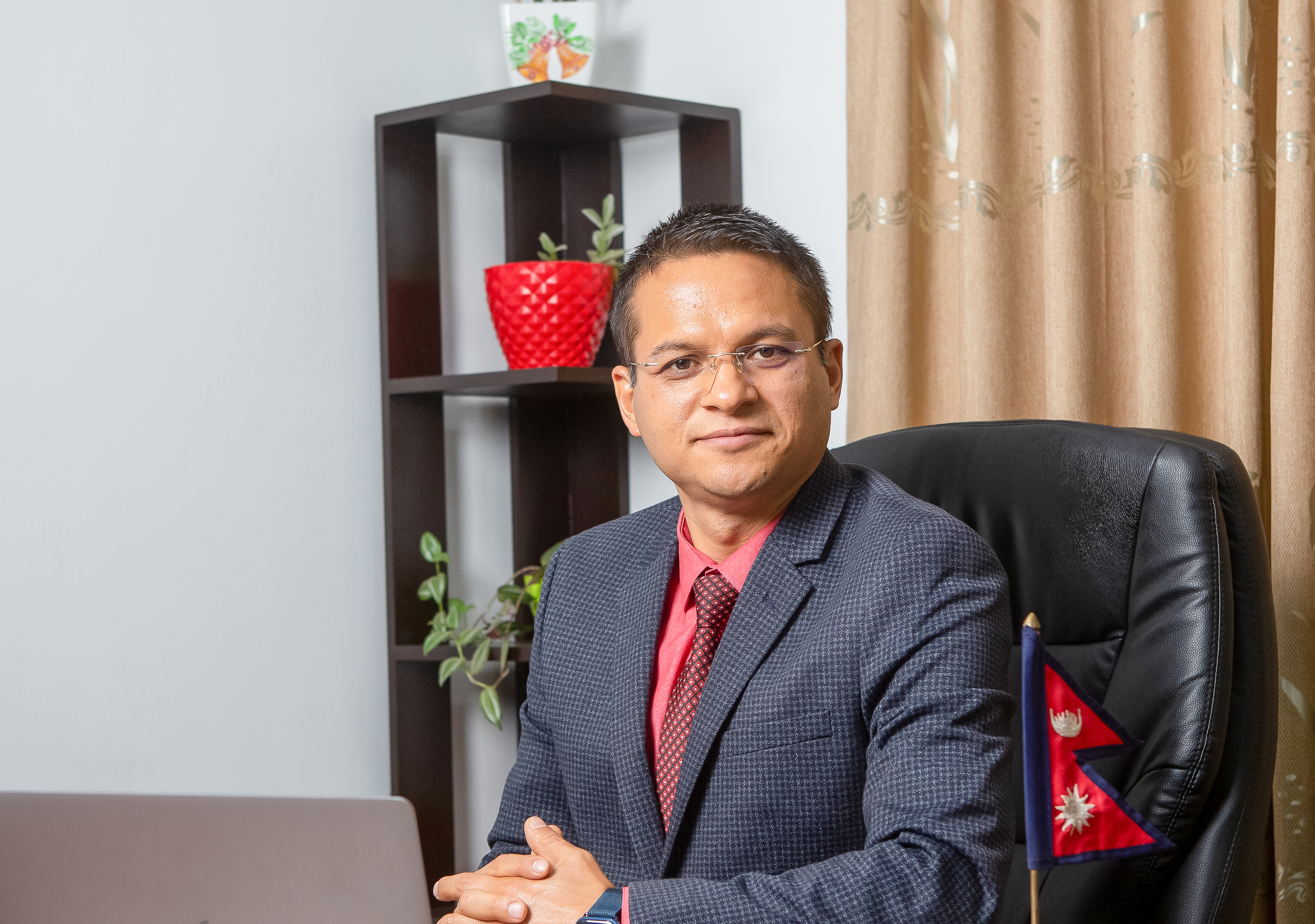
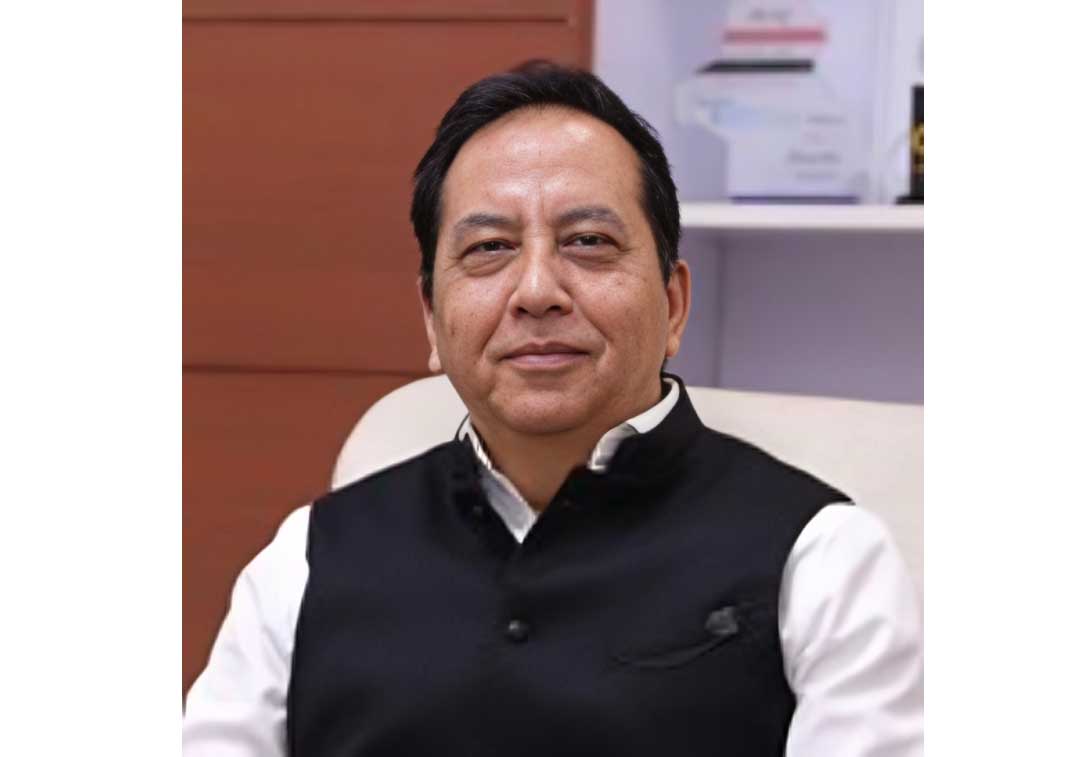
Dr. Swagat Shrestha, Chairperson of Kathmandu Valley School & College and the recently elected Senior Vice President of Central HISSAN, is distinguished for his visionary stewardship and steadfast dedication to fortifying Nepal’s educational landscape. Celebrated for his indefatigable energy and collegial ethos, he has assiduously endeavored to ensure that HISSAN remains vibrant, participatory, and strategically progressive.
In this exclusive dialogue with College Readers, Dr. Shrestha articulates his expansive vision for the organization’s long-term trajectory, underscores the pivotal salience of the Kathmandu district within HISSAN’s institutional architecture, and critically examines the multifaceted challenges confronting contemporary Nepali education. He also delineates his anticipations for the forthcoming Kathmandu HISSAN Convention. Central to his discourse is a resolute emphasis on unity, the cultivation of transformative leadership, and the uncompromising pursuit of academic excellence as the foundational pillars for shaping the intellectual and moral future of Nepal’s students.
Congratulations on your recent success as Senior Vice President. How do you view this new responsibility?
Thank you. This responsibility is both an honor and a commitment. Having served HISSAN for many years in different roles, I see this position not as a personal achievement but as an opportunity to further strengthen the organization collectively. HISSAN is a volunteer-driven institution, and its effectiveness depends on how sincerely we dedicate our time, expertise, and cooperation.
My focus now is to ensure that the central leadership functions as a facilitator—supporting districts, encouraging autonomy, and building stronger coordination among institutions. We want to create a system where leadership grows organically from the grassroots and evolves into national-level stewardship.
Kathmandu is often regarded as the heart of HISSAN. Why is its leadership so crucial?
Kathmandu is indeed our principal district. It hosts the highest number of member institutions, the largest student population, and many of the country’s leading schools and colleges. Naturally, decisions and innovations initiated here influence the rest of the nation.
Because of this, Kathmandu requires leadership that is active, capable, inclusive, and visionary. The district must not only manage its own responsibilities but also set examples for others. A strong Kathmandu HISSAN means a stronger national organization.
What qualities do you expect from the new leadership emerging from the district convention of HISSAN Kathmandu?
The new leadership must understand HISSAN’s values and spirit. It should be able to unite institutions of all sizes—large or small—under a shared mission. Leadership is not about authority; it is about coordination, trust-building, and delivering meaningful programs that engage members.
Equally important is fairness. When institutions feel equally represented and heard, organizational strength naturally grows. The coming leadership must embrace collaboration, transparency, and accountability.
How will Central HISSAN support Kathmandu in becoming more dynamic and effective?
Central HISSAN is committed to working closely with Kathmandu because many of our office bearers and administrative structures are based here. We are focusing on clear division of responsibilities, financial autonomy, and transparent decision-making processes.
Our role is to empower district committees, not control them. We aim to provide resources, coordination, and guidance so that Kathmandu can implement impactful activities—from academic initiatives to leadership development programs. Eventually, these district leaders will evolve into future national leaders.
HISSAN recently held elections for the first time in its history. Has this transition created challenges?
Yes, this was a significant shift. For nearly three decades, leadership was selected unanimously. Introducing elections is a natural democratic progression, but it also brought the challenge of ensuring unity afterward.
Our first priority has been to bring everyone together, including colleagues who may not have secured positions. An organization grows only when every member feels included. We are actively fostering dialogue and participation to maintain harmony.
What do you see as the biggest challenge facing Nepal’s education sector today?
The most pressing challenge is the increasing trend of students seeking higher education abroad immediately after Grade 12. Economic uncertainties, policy inconsistencies, and perceptions about quality have contributed to this mindset.
HISSAN represents institutions from secondary to higher education—including management, science, engineering, nursing, and more. Our responsibility is to build confidence among students and parents that quality education is available within Nepal.
We must collaborate with policymakers to create supportive educational policies, strengthen academic standards, and align education with national development goals. Human capital is the country’s greatest asset, and education must reflect that priority.
Organizational expansion is another issue you have mentioned. What strategies are being adopted?
Expansion requires engagement, not just membership drives. We are initiating academic programs such as model examinations, collaborative training, and district-level activities to connect institutions across the country.
By organizing meaningful programs, we create relevance. Institutions join not merely for affiliation but for value—academic support, professional development, and shared learning platforms. Our approach is gradual and systematic: step by step, not rushed.
There is sometimes perceived overlap between HISSAN and other educational organizations. How do you address this?
In education, collaboration is more important than competition. Different organizations may operate at overlapping levels, but our expertise lies primarily in Grades 11 and 12 and higher education pathways.
We believe in “competition with cooperation.” By respecting each organization’s strengths and working together in areas like examinations, training, and policy advocacy, we can serve students better. At the leadership level, relationships are cordial and collaborative.
Having previously led Kathmandu HISSAN, what immediate steps should the new district committee take?
First, they must reconnect with member institutions and ensure inclusive participation. Second, they should design impactful programs—academic forums, professional development sessions, and student-centered initiatives—that demonstrate HISSAN’s relevance.
Leadership must adapt to changing times. What worked years ago may not suffice today. Innovation, communication, and responsiveness to institutional needs are essential.
Central HISSAN will stand beside the district committee with full support, but implementation must be locally driven.
Finally, what message would you like to share with HISSAN members and educators nationwide?
The upcoming Kathmandu Convention is an opportunity to build a united, forward-looking team. Differences in aspiration should be viewed positively—they show that people care about the organization.
Let us evaluate leadership based on competence, experience, and contribution, and move ahead collectively. Education is not just an institutional responsibility; it is a national mission. If we work together with sincerity, we can create an environment where Nepali students see their future within Nepal.
I extend my best wishes to all members for a successful convention and a stronger HISSAN in the years ahead.
Popular Categories
Trending This Month








 Established in 2065 BS, COLLEGE READERS is a premier national-level educational magazine dedicated to serving the academic and informational needs of school and university students, teachers, educators, and concerned ones in Nepal. The magazine provides current and comprehensive information on various educational opportunities worldwide, aiming to guide school and college-level students in their academic and career journeys. It also highlights essential support services and service providers that play a crucial role in shaping students' career paths in today's competitive world.

- Our Location Putalisadak, Kathmandu
- Send Us Email collegereaders123@gmail.com
- Call Us Now 977 01 4518759
