
Call now
977 01 4518759
Send Message
collegereaders123@gmail.com
Our Location
Putalisadak, Kathmandu
Suman Basnet: Turning Educational Dreams into Institutions of Impact
- College Readers
- 17 May 2026
- Views
- Interviews , Op-ed
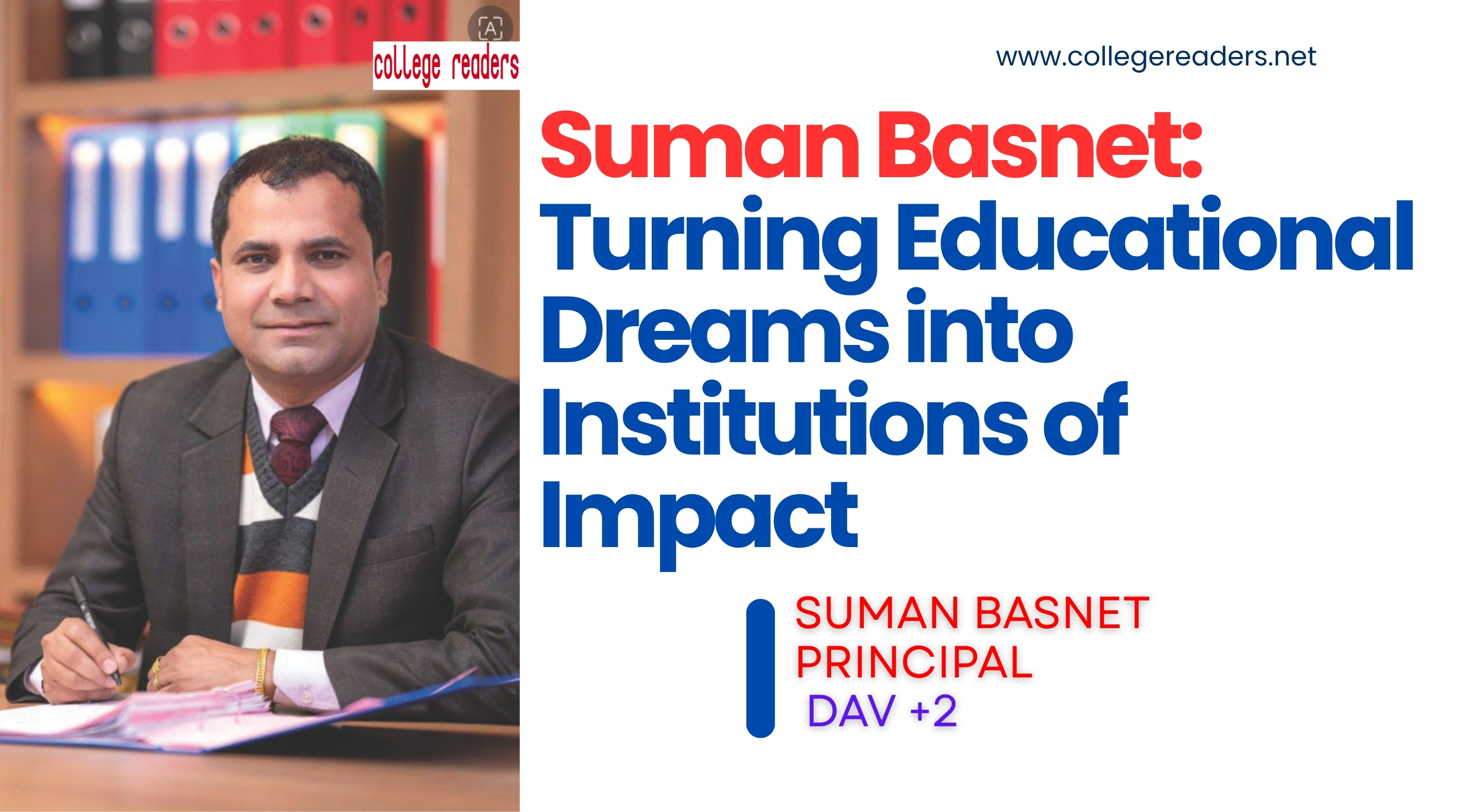
Suman Basnet stands as a testament to unwavering dedication in Nepal's education sector, having devoted twenty-two years to shaping young minds and transforming educational institutions. Currently serving as the Principal of DAV College's Plus Two program, Basnet embodies a leadership philosophy rooted in discipline, quality education, and genuine commitment to student success. His journey from a part-time teacher to heading one of Kathmandu Valley's most respected educational institutions reflects not merely career advancement but a profound evolution in educational leadership.
Basnet's entry into the education field stemmed from a deeply personal conviction that teaching represents the profession where individual capability receives its truest recognition—even more so than sports, he believes. From his earliest days, he harbored an ambition to educate as many individuals as possible, viewing education as the most powerful tool for societal transformation. This foundational belief has remained the compass guiding his professional decisions throughout two remarkable decades.
His career began in 2066 BS at Desh Tilak Secondary School in Mid-Baneshwor, where he worked as a part-time teacher. Those initial years were characterized by extraordinary struggle and hustle. Basnet taught across multiple institutions simultaneously—spanning Bhaktapur, Kathmandu, Lalitpur, and Kirtipur districts—eventually connecting with twenty-two to twenty-three different schools. This period wasn't limited to classroom teaching; he also worked as an accountancy teacher and established himself as a writer, authoring textbooks published through various educational publications. This multifaceted experience across three districts provided him with an unparalleled understanding of Nepal's diverse educational landscape and the varying challenges students face across different socioeconomic contexts.
The transition from teacher to leader began at News Meet, where Basnet served as coordinator for several years. This role marked his first formal leadership position, followed by a year as coordinator at CCRC College. These experiences equipped him with crucial management skills and exposed him to the administrative complexities of running educational institutions. However, his defining chapter began sixteen years ago when he joined DAV College, initially as a coordinator.
At DAV, Basnet's leadership journey unfolded progressively. He started in coordination when the college didn't yet have designated subject coordinators for science and mathematics. The principal at that time had limited availability, which meant Basnet effectively managed all operations despite not holding the principal's title. His performance led to promotion as Vice-Principal, then Director, and finally Principal—a position he has now held for eight to nine years. This gradual ascent wasn't merely about titles; it represented increasing trust in his ability to transform the institution's culture and outcomes.
When Basnet assumed leadership responsibilities at DAV, the college had just two sections each in Science and Management streams, with approximately sixty Management students and eighty Science students. The institution today tells a dramatically different story: DAV now enrolls 2,200 students in Plus Two alone, with 1,100 students in each grade level. Beyond Plus Two, Basnet also oversees BCA and BSc programs, though his primary focus remains on the foundational Plus Two education. This explosive growth—from 140 students to 2,200—represents one of the most successful institutional transformations in Kathmandu Valley's competitive education market.
Basnet attributes this success to a dual-focused philosophy that intertwines discipline with quality education. He found philosophical alignment with DAV's founder, Anil K.D. Rana, particularly regarding the belief that quality education cannot develop without a foundation of discipline. However, Basnet's conception of discipline extends beyond physical behavior to encompass academic discipline—structured study habits, time management, intellectual rigor, and consistent effort. He compares the relationship between discipline and quality to flesh and bone, suggesting they are inseparable and mutually reinforcing elements.
His leadership style emphasizes comprehensive institutional involvement rather than hierarchical distance. Basnet personally engages across all operational levels—sometimes performing clerical work, occasionally teaching classes, assisting administrative staff, answering registration calls, and helping with accounting. This hands-on approach serves multiple purposes: it provides him direct knowledge of every institutional process, prevents staff from deceiving him with excuses, demonstrates commitment that motivates other employees, and maintains his connection to ground realities. When he identifies problems, whether in discipline, accounting, or academics, he personally investigates rather than relying solely on reports. This leadership model creates accountability throughout the organization while inspiring staff through leading by example.
The results of Basnet's approach manifest tangibly in student outcomes. DAV students consistently perform exceptionally in medical and engineering entrance examinations, with ten to twelve students annually securing medical scholarships and twenty to twenty-two earning engineering scholarships. Beyond academic metrics, Basnet takes particular pride in what he considers the ultimate measure of institutional success: over fifty percent of new enrollments come through referrals from former students. Alumni studying abroad maintain contact through social media, sending messages expressing satisfaction with their DAV education and requesting admission for their younger siblings. This organic recruitment through satisfied alumni validates that DAV delivers meaningful, lasting value.
Basnet's educational philosophy rejects limiting students to traditional academic pathways. While encouraging students to complete at least bachelor's degrees in Nepal before considering foreign education, he acknowledges that government policies, parental preferences, and various factors make retaining students increasingly challenging. Nevertheless, he remains focused on what he can control: providing excellent education, maintaining discipline, and ensuring students leave DAV well-prepared for whatever path they choose.
For prospective students selecting colleges, Basnet offers clear guidance shaped by his extensive experience. He emphasizes that Plus Two represents "the turning point of your life," demanding careful institutional selection. He advises visiting multiple colleges, comparing facilities, examining results, and assessing discipline. Key evaluation criteria should include: student-friendly teachers, IT infrastructure, physical facilities, affordable fees, result orientation (both NEB board results and medical/engineering entrance performance), strong teaching teams with experienced faculty, and comprehensive support systems. He warns against decisions influenced solely by peer pressure, miscommunication, or inadequate information, urging students to make informed choices based on thorough research.
Regarding physical infrastructure, Basnet recognizes its motivational impact on students. Appropriate learning environments—climate-controlled classrooms, visual learning tools, sports facilities, and recreational spaces—significantly influence student engagement and holistic development. While excellent teaching remains vital, infrastructure creates conditions where learning flourishes.
Despite achieving remarkable success, Basnet rejects self-identification as successful, maintaining that learning never ends. His leadership philosophy centers on continuous improvement, institutional commitment, and results-oriented work. He tells his staff that organizations succeed only when employees prioritize institutional interests, and individuals achieve success through organizational success. This perspective reflects deep understanding that personal and institutional destinies intertwine inseparably.
Suman Basnet represents a leadership model increasingly rare in Nepal's commercialized education sector: an educator-leader who genuinely prioritizes student welfare, maintains hands-on involvement, balances discipline with compassion, and measures success through student outcomes rather than profit margins. His journey from struggling part-time teacher to principal of 2,200 students demonstrates that authentic commitment, consistent values, and genuine care for student success create lasting institutional excellence. In an era where education often becomes merely transactional, Basnet reminds us that transformative education requires leaders who view their role as sacred responsibility rather than professional obligation.



Popular Categories
Trending This Month








 Established in 2065 BS, COLLEGE READERS is a premier national-level educational magazine dedicated to serving the academic and informational needs of school and university students, teachers, educators, and concerned ones in Nepal. The magazine provides current and comprehensive information on various educational opportunities worldwide, aiming to guide school and college-level students in their academic and career journeys. It also highlights essential support services and service providers that play a crucial role in shaping students' career paths in today's competitive world.

- Our Location Putalisadak, Kathmandu
- Send Us Email collegereaders123@gmail.com
- Call Us Now 977 01 4518759
