
Call now
977 01 4518759
Send Message
collegereaders123@gmail.com
Our Location
Putalisadak, Kathmandu
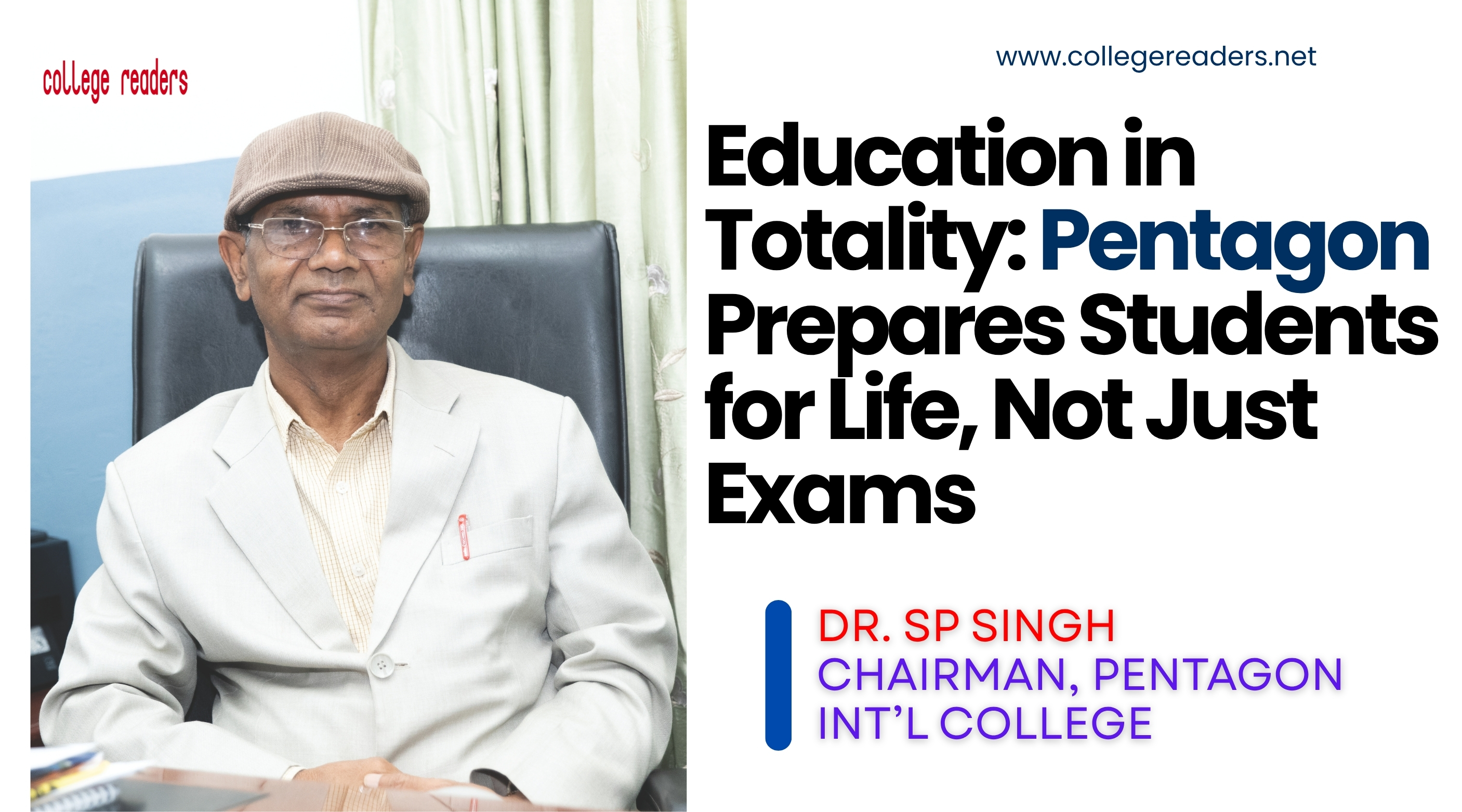
Education in Totality: Pentagon Prepares Students for Life, Not Just Exams
- College Readers
- 17 May 2026
- Views
- Interviews
The SEE result marks a defining career gate in Nepal’s education system, where the choice of college and subject can shape an entire lifetime. In this exclusive conversation with College Readers, Dr. SP Singh, Chairman of Pentagon International College, brings over four decades of experience in education to bear on the questions that confront every plus two aspirant. Pentagon International College, founded eighteen years ago, operates on a guiding philosophy of education in totality—quality teaching, structured extra-curricular activities, individual counselling, and personal care for every student. This interview explores how students should choose a college, select a subject, evaluate scholarships, and navigate the pressures of this critical, defining stage.
College Readers: Sir, with the SEE results out and admissions opening, students face one of the most consequential decisions of their lives. What should they prioritise when choosing a college?
Dr. SP Singh: SEE is a deeply important stage. Once SLC was called the iron gate; today, plus two has become the real career gate. Students should examine past results, the qualifications of teaching faculty, discipline on campus, and depth of pedagogy. Bookish knowledge alone is insufficient. The modern concept is education in totality—a student must learn beyond textbooks, which demands structured extra-curricular activities that build well-rounded citizens. Do not be misled by large buildings or aggressive advertising. Visit the campus, meet the principal, examine the laboratories, speak to senior students, and only then decide where your future will be shaped.
College Readers: Affordability is a real concern for many Nepali families. How should students balance fee structure, scholarships, and living costs when making this choice?
Dr. SP Singh: Absolutely. In Nepal, most families belong to lower and middle-income groups, and not everyone can afford Kathmandu. Food and accommodation often cost more than tuition itself, so both must be weighed. Reputable colleges, including Pentagon, offer scholarships based on SEE grading, performance in extra-curricular activities, quizzes and sports, and the student’s economic situation. The municipality also provides a ten percent scholarship through its own examination. So I tell students: do not be dazzled by five-star infrastructure alone—that adds directly to your fee. Examine where quality education is paired with affordable fees, and make your decision on substance, not show.
College Readers: A common complaint is that colleges promise much at admission and deliver less afterwards. How can students protect themselves from such disappointments?
Dr. SP Singh: The simplest safeguard is to take honest feedback from those who have studied there before, and from guardians whose children have already passed through the institution. Visit the campus yourself and check whether the promised facilities actually exist on site. Most colleges do honour their commitments fully. Some may not, and you must protect yourself from those exceptions—but please do not assume every college is dishonest. Many institutions teach with sincere intent. Examine the infrastructure with your own eyes, inspect the laboratories, speak with senior students about their real experience, and only then sign the admission form. This small upfront effort saves enormous regret later and protects your investment.
College Readers: Subject selection is equally critical. Many students follow parental ambition or a friend’s path. What is the right way to choose?
Dr. SP Singh: In Nepal today, many parents arrive with a fixed mindset—my child will be a doctor, an engineer, a Chartered Accountant. They feed this ambition to the child without checking whether the child has any inner tendency for that field. Neither parent nor student truly knows. The proper tool is an aptitude test, which can identify the right direction with around eighty percent accuracy. This year, we have engaged experts at Pentagon to conduct aptitude tests and guide students. Every student must ask themselves: what subject makes me genuinely happy and feels effortless? You need not become a doctor or engineer—choose the field where you can thrive and excel.
College Readers: Sir, with over four decades in education, what challenges do you see in today’s plus two students, and what should colleges do to address them?
Dr. SP Singh: The age that follows SEE is genuinely a dangerous threshold. Students at this stage can drift in any direction—they may fall into bad habits, unstable relationships, or simply lose focus. Boys, in my experience, face this risk slightly more than girls, and we have seen promising careers derailed. The solution is structured counselling. At Pentagon, when teachers notice warning signs during class—incomplete homework, lapsed attention, behavioural changes—we route the student to our counsellor, and when needed, we call the guardian in. Family difficulties often surface here too. With timely intervention, most of these problems are fully solvable. Awareness, observation, and early action all protect a student’s future.
College Readers: What about students whose parents are working abroad? Do you see specific challenges with this group?
Dr. SP Singh:
Yes, this is a real and growing issue. Children whose parents work abroad usually have money in plenty—they are admitted to whichever college they wish, and given whatever they ask for. But at this age, students have abundant energy without matching judgement. They are easily drawn into peer habits and harmful influences. We see this pattern more strongly among students whose parents are overseas. So colleges must take this on as a duty—when warning signs appear, or when feedback comes from teachers, we are obliged to provide treatment, counselling, and individual attention. Money cannot substitute for guidance.
College Readers: Finally, why should a student choose Pentagon International College, and what message would you give every plus two aspirant?
Dr. SP Singh: Pentagon is not a college of yesterday. Although we opened eighteen years ago, our teachers carry decades of classroom experience. We can read our students—we know who is studying, who is distracted, and who needs help. We understand student psychology and track each child’s daily progress. When a problem appears, we counsel the student individually, and if needed, we call the guardian. My final message is simple: whichever school or college you choose, ensure it offers quality teaching, structured extra-curricular activities, sincere counselling, and individual care. Pentagon offers all of this. So please come, visit our campus once, and then decide where your future will be built.
Popular Categories
Trending This Month








 Established in 2065 BS, COLLEGE READERS is a premier national-level educational magazine dedicated to serving the academic and informational needs of school and university students, teachers, educators, and concerned ones in Nepal. The magazine provides current and comprehensive information on various educational opportunities worldwide, aiming to guide school and college-level students in their academic and career journeys. It also highlights essential support services and service providers that play a crucial role in shaping students' career paths in today's competitive world.

- Our Location Putalisadak, Kathmandu
- Send Us Email collegereaders123@gmail.com
- Call Us Now 977 01 4518759
