
Call now
977 01 4518759
Send Message
collegereaders123@gmail.com
Our Location
Putalisadak, Kathmandu
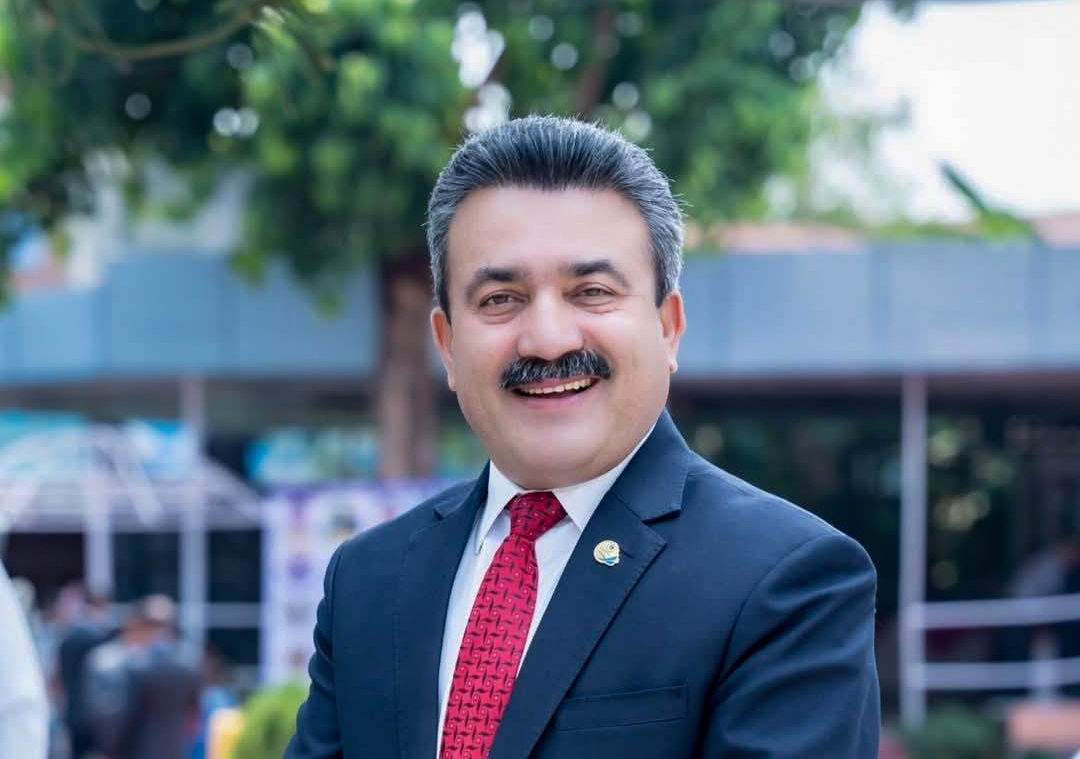
DK Dhungana
Former president
PABSON and founder Principal of Radian Readers Academy
Smart and Preparatory Education is an Imperative for a Competitive World
- College Readers
- 03 Apr 2026
- Views
- Interviews
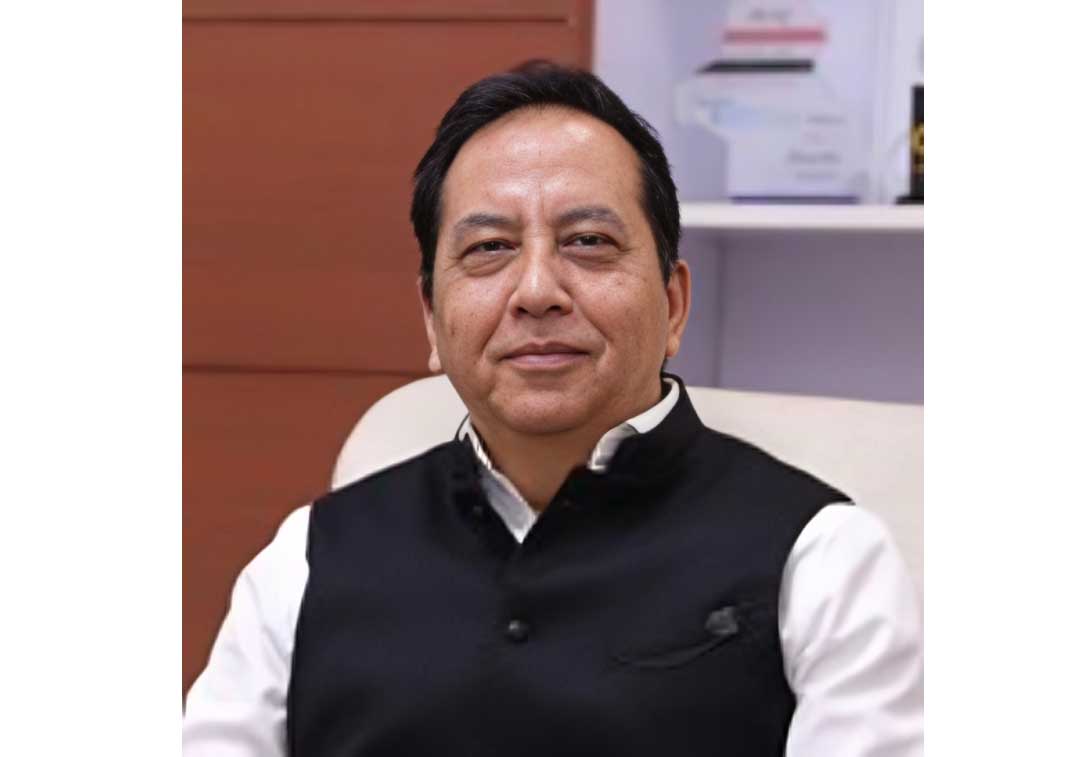
DK Dhungana, former president of PABSON and founder Principal of Radian Readers Academy, emphasizes that Nepal’s education system stands at a turning point shaped by policy uncertainty, technological change, declining student numbers, and uneven access to quality learning. He argues that meaningful progress requires strong coordination between government, private institutions, schools, teachers, and parents. According to him, private education has an important role in delivering quality, innovation, and partnership, while the state must adopt inclusive policies that support disadvantaged learners. He stresses that education today must balance knowledge, skills, values, and technology, while preparing students not only for national needs but also for global competition through holistic, future-oriented, and student-centered development.
As a school leader, how do you view the current challenges facing Nepal’s education system, especially school education, in this rapidly changing context?
There are many challenges before us today. First, there are policy-level challenges, which remain unresolved. The Education Act has still not been finalized, and with all 753 levels of government now involved in the governance of education, coordination among them remains a major issue.
Alongside policy challenges, there are also managerial challenges. The world is changing quickly, and technology now influences nearly every aspect of life. Schools have had to introduce technology into classrooms, but at the same time, we must also manage the changes technology has brought in children’s behavior, learning habits, and overall development, including its negative side effects.
We are also facing a shortage of human resources. Teachers and educational staff need training, empowerment, and continuous professional development. Yet, despite this need, the sector is becoming less attractive to many people. Student numbers are also declining, largely because the birth rate itself has fallen. So overall, the challenges range from policy-making to classroom management and educational productivity.
At the same time, we should not speak only about challenges. There are opportunities as well. A new government is coming, one that may have a strong majority. If it can maintain law and order, recognize and take ownership of private sector investment, and treat private institutions as important stakeholders, Nepal could make real progress. If we also embrace global competition and create a healthy public-private partnership model, Nepal could develop into an educational destination.
We are located between two giant neighbors, each with populations of around 1.4 billion. If the right conditions are created, Nepal could imagine not only tourism but even education tourism as a real possibility. That is a significant opportunity.
As a former president of PABSON, how do you think the new government should address long-standing concerns around the Education Act, scholarships, and the strengthening of private educational institutions? How can these areas be balanced so that the future of private education in Nepal remains bright?
The government should adopt a simple and fair principle: take from those who have the means and support those who do not. Our Constitution guarantees education as compulsory and free at certain levels. The question is not whether education should be free, but how it can realistically be made free. One practical way is to collect from those who can afford to contribute and use those resources to support those who cannot.
Institutional strengthening will happen only when the state recognizes that private schools are also part of the national education system. If the state sees private schools as partners rather than outsiders, and at the same time addresses the problems and constraints of public schools, then both sectors can grow together.
Scholarships already contribute to this goal to some extent. For example, around three million students currently study in private schools. If the existing scholarship provisions—such as the 10 percent scholarship requirement—were properly implemented, around 300,000 students from marginalized, disadvantaged, or remote backgrounds could benefit.
Likewise, there are many families in public schools who are capable of contributing financially. If those who can contribute do so, and if the system is designed strategically, the number of students benefiting from quality education could rise significantly. We also know that many parents in private education are willing to support others if given a proper framework. This is common in other countries too, where those who can afford to do so sponsor or help those who cannot.
If Nepal develops strategic programs based on this principle, I believe we could provide free education to as many as one million students.
Do you mean within private schools only?
Not only within private schools. I mean through partnership—private schools supporting public education as well. For example, private schools currently pay around 25 percent tax. Instead of collecting all of that purely as tax revenue, why not reduce it and channel part of that amount directly into educational support mechanisms?
There are many such opportunities. If we think creatively, institutional development can go hand in hand with social responsibility. Students can be supported through scholarships, sponsorships, donations, or other facilitation measures. In the end, the most effective policy is one that collects from those who have the capacity and invests in those who do not.
If such a system were adopted
Then many more students could benefit. And more importantly, they would gain access to quality education.
At present, many students in community schools are still not receiving education in the way they should. Community schools in urban centers may be doing relatively well, but schools in remote villages and districts face serious shortages of facilities, resources, and support. The children studying there also have dreams. They also want to learn, achieve, and build meaningful lives. What holds them back is not a lack of desire, but a lack of resources. That gap can and should be addressed.
When it comes to teaching and learning inside the classroom, can you confidently say that quality private schools are truly delivering quality education?
Yes, I can say that a great deal of meaningful work has been done in the private school sector. Whether you look at a modest private school in a remote area or a well-known institution with international exposure, private schools have worked seriously to deliver results.
The reason is simple: private schools survive because parents choose them and pay for them. Their sustainability depends on public trust. Parents are not going to continue paying for poor-quality service. There is judgment, accountability, and choice involved.
And today, this accountability is even stronger than before. We live in a time of technology, social media, and easy access to information. Parents can search online, review school records, observe activities, hear from other parents, and form their own judgment. In this environment, a weak institution cannot survive for long.
That said, improvement must always continue. There is always room to become better. Schools need to invest in teacher empowerment, professional development, student-centered pedagogy, child-friendly infrastructure, parent-friendly communication, and greater transparency with society. So yes, private schools have done meaningful work, and there is no reason for the private sector to feel discouraged or inauthentic. But we must keep improving.
Technology has now taken schools deeply into the digital world. On one hand, it has introduced innovation into teaching and learning. On the other hand, many argue that it is reducing students’ creativity and reading culture. How should private schools balance these two realities?
At our school, we have already adopted a guiding formula: education with knowledge, skills, values, and technology.
The purpose of the school is to provide knowledge, but the means through which that knowledge must now be delivered include skills, values, and technology. It is true that reading culture has weakened because of digitalization, media, and overexposure to gadgets. But we are trying to address that by creating balance.
Technology alone is not enough. It is necessary, yes, but theoretical understanding and disciplined learning are equally necessary. These two must go together. We cannot ignore technology anymore; that is simply not possible. The world has advanced too far for that. Our classrooms must accept it, and parents must also accept it.
At the same time, we must consciously improve children’s reading culture. That does not depend only on schools. It also depends on the culture at home. If children are told not to stay on mobile phones or laptops all day, but parents themselves remain constantly engaged with gadgets, then the message loses credibility.
This is where values become important. Values do not mean only discipline in the narrow sense. They also mean reading habits, eating habits, communication habits, and ways of living. If we strengthen this cultural foundation at home and in school, then we can do much better. Technology and culture are now deeply interconnected. We cannot leave one behind and move forward with the other alone.
When we talk about Gen Z and the new generation, is the education we are providing really aligned with students’ expectations? What about parents’ expectations? And since quality ultimately depends so much on teaching faculty, how updated are our teachers today?
That is a very important and timely question.
The reality is this: students today are moving at rocket speed. Teachers are moving at bus speed. And parents, in many cases, are moving at tractor speed.
Our challenge is to bring all three to the same pace.
Schools therefore face a major responsibility. Teachers must be brought closer to the speed of students, and parents must also be helped to understand the world their children are living in. A tractor, a bus, and a rocket do not move at the same speed—but unless we bridge that gap, the system cannot function well.
Today’s students are extremely sharp. They think ahead, ask deeper questions, and process the world very differently. If we look at Gen Z as a generation, we can clearly see this in their attitudes, narratives, and expectations. Parents, however, often still want their children to be taught the way they themselves were taught. They want traditional authority and structure, but they also admire the speed, confidence, and dynamism of their children. These two desires often clash.
Today’s children are techno-children. Their thinking, their habits, and even their expression are shaped by a highly advanced environment. Many adults, by contrast, were raised in much more traditional settings. So our task is to bring these worlds together—to create a fusion, or an integration, among students, teachers, and parents.
That is why the relationship among school, teacher, parent, and student must be very close. We are all different stakeholders, but we share the same purpose. And when we create shared programs around that common purpose, we achieve meaningful outcomes.
To make learning more enjoyable and to make student-centered teaching-learning activities more effective, what kinds of initiatives is Radian Readers Academy currently undertaking?
At Radian Readers Academy, we are guided by two core principles.
The first is that we carefully study what today’s students want and how they see their own future. We try to understand their aspirations, decode their needs, and then design programs accordingly.
The second is that we pay close attention to global educational practices and think seriously about how to bring those practices into our own context in a meaningful way.
In practice, this means we try to meet three expectations at once: the expectations of students, the expectations of parents, and the pace of global development. Roughly speaking, we divide our focus into two equal parts. Fifty percent of our effort goes into achieving the goals set by the formal curriculum. The other fifty percent goes into developing students’ perspectives, skills, and clarity of understanding. We call this practice-based learning.
We do believe in tests, because standardized assessments remain important at different levels—Grade 8, Grade 10, Grade 12, and beyond. But alongside that, we also focus on life skills: how well students can live, communicate, lead, and apply what they know.
We tell our students something very important: your goal is not simply to come first. Your goal is to become the best version of yourself in your field. Being first and being best are not the same thing. A student who ranks first may not necessarily be the most knowledgeable, while a student who strives for real mastery often develops more deeply.
So rather than teaching students to run only after marks, we encourage them to grow in knowledge, skills, and values. That is why we also focus on leadership, public speaking, communication, music, dance, sports, and many other areas that prepare them for the realities of global competition.
As the head of Radian Readers Academy, what message would you like to share with parents today?
My message is simple: in changing times, parents must also change.
This is the age of technology and information. If we do not understand this properly, we will not be able to raise our children in the best possible way. Good parenting is no longer just about telling children to “study, study, study.” Today, parents must understand the art of parenting.
We need to think not only about what children are learning, but also about what they may be missing. In a world of global competition, we must think in terms of holistic development. Children need balanced growth in knowledge, skills, values, confidence, presentation, leadership, and perspective.
Parents therefore need to change their outlook. Children today are not only competing within Nepal—they are competing globally. A student in Kathmandu is competing with students in Delhi, Beijing, Melbourne, Washington, Berlin, and every other part of the world.
Our students are not being prepared only for the labor market of Nepal. They are also being prepared for the global market. The question is: are we preparing them to sell labor, or to contribute intellect? For too long, we have relied on labor. The coming generation must be prepared to contribute intelligence, innovation, and skill at the highest level.
That is why parents must raise their children with an awareness of technology, global change, new ways of thinking, changing lifestyles, and evolving work cultures. And they must work in close coordination and cooperation with schools and educational institutions to do so.
Popular Categories
Trending This Month








 Established in 2065 BS, COLLEGE READERS is a premier national-level educational magazine dedicated to serving the academic and informational needs of school and university students, teachers, educators, and concerned ones in Nepal. The magazine provides current and comprehensive information on various educational opportunities worldwide, aiming to guide school and college-level students in their academic and career journeys. It also highlights essential support services and service providers that play a crucial role in shaping students' career paths in today's competitive world.

- Our Location Putalisadak, Kathmandu
- Send Us Email collegereaders123@gmail.com
- Call Us Now 977 01 4518759
