
Call now
977 01 4518759
Send Message
collegereaders123@gmail.com
Our Location
Putalisadak, Kathmandu
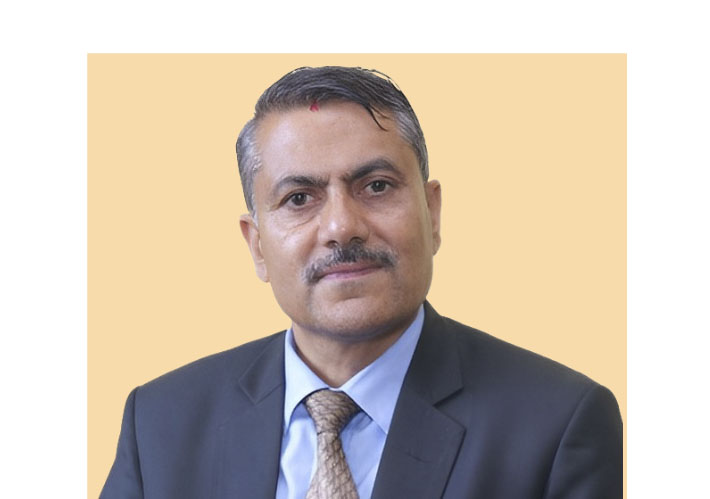
Dr. Dhruba Bhattarai
Director
KMC School
Results Matter, but Real-World Readiness Matters More
- College Readers
- 03 Apr 2026
- Views
- Interviews
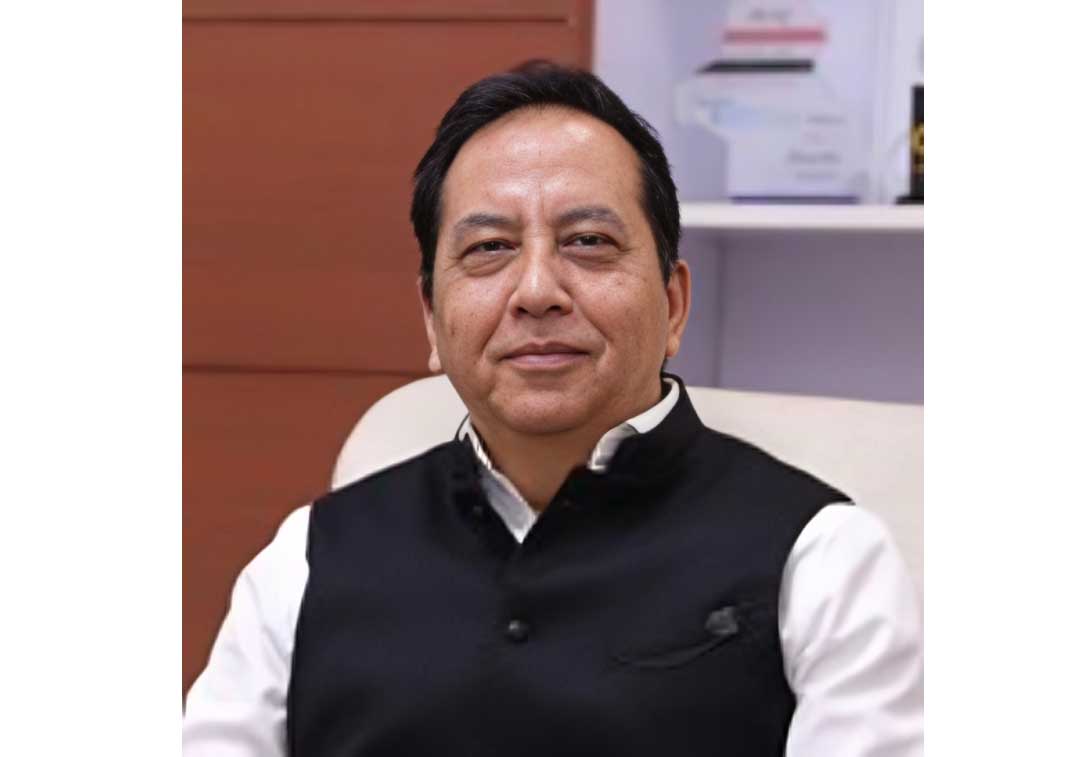
Dr. Dhruba Bhattarai, Director of KMC School, has spent more than three decades in the field of education. Originally from Palpa, he has devoted his professional life to the belief that education is one of the strongest tools for social upliftment, personal empowerment, and national development. In this conversation with College Readers, he reflects on what drew him into education, the challenges school leaders face in a rapidly changing world, the urgent need to connect learning with industry and innovation, and the role schools must play in preparing students not just for examinations, but for life.
As a school leader, what challenges do you see in today’s rapidly changing educational environment?
One of the biggest changes today is the rapid development of media and information technology. Students are now deeply connected to the digital world, and that is shaping their thinking, learning habits, and mental capacities in many ways. But the challenge is whether our available human resources—our teachers, trainers, and institutions—are developing just as rapidly.
So one major challenge is teacher preparation. We need continuous and high-quality training so that our educators can respond effectively to the demands of the present age. The second challenge is infrastructure. Today’s education requires IT-based systems, digital tools, and new learning environments. Schools must be able to integrate technology meaningfully into teaching and learning.
The third challenge is even more important: education must lead to opportunity. What we teach through formal courses must help students build a better future and better livelihoods. Even at the undergraduate and master’s levels, students should be able to connect learning with earning. For that, education must be linked with industry and real-world work as early as possible.
How do you ensure that teaching and learning in the classroom remain consistently high in quality?
The idea of quality has changed over time. In the past, we often judged a school by exam results, distinctions, and percentages. But today, quality must be understood differently. The real question is: how well can students perform in the real world? How capable are they in their work, in society, and in life?
That is why our concern is not only to teach from textbooks. We must teach in practical, innovative, and meaningful ways so that students become competent not only within the classroom, but also within the community and even in the international sphere. This requires schools to rethink pedagogy and adapt teaching methods.
At KMC, we are trying to move beyond conventional teaching by emphasizing active learning, presentations, practical engagement, and student participation. At the same time, curriculum delivery must align with the school’s mission, vision, and educational goals. Quality is not accidental; it must be intentionally built into classroom practice.
What role do you play in curriculum planning and academic monitoring as a school leader?
In Nepal, schools must fundamentally work within the curriculum framework provided by the government. However, private schools do have some space to introduce new ideas, additional courses, and creative approaches that respond to present-day needs.
I strongly believe that curriculum today must be shaped around the realities of the twenty-first century. It should not only transmit knowledge; it should also build confidence and capability. A good curriculum should be employment-oriented, income-generating, and innovation-driven. It should make students feel from within that they are capable of doing something meaningful in life.
That is why curriculum development requires discussion, dialogue, and collaboration. It cannot be made in isolation. Schools can contribute ideas, but a larger responsibility lies with the government in terms of listening, cooperating, and creating curriculum that reflects both national needs and global demands. We continue to coordinate, contribute, and hope for stronger partnership in the future.
How do you approach conflict resolution among students, parents, and teaching staff?
I believe that students and parents are central stakeholders in education. In a way, they are the people for whom schools exist. Therefore, we must give them space to speak, to discuss, and to participate in decision-making where appropriate. Their aspirations, interests, and concerns must be heard.
Conflict usually becomes manageable when there is communication and trust. As school leaders, we must create good coordination among students, parents, teachers, and management. When guardians feel that the school understands their expectations, and when students feel their interests and future are being taken seriously, a more positive environment develops.
Education should ultimately bring security, growth, and happiness—not only to students, but also to their families. So conflict resolution is not only about solving problems; it is about sustaining relationships and shared confidence.
What initiatives has your school introduced to make learning enjoyable and student-centered?
The first step is motivation. Students need encouragement, and parents also need orientation. So we focus on motivation through different forms of training, guidance, and supportive engagement.
The second step is continuous improvement. Parents want to see steady growth in their children, and students want to feel that they are progressing in the right direction. When a school can clearly demonstrate development—academic, personal, and practical—it builds trust.
Student-centered learning also means creating an environment where students feel supported, valued, and inspired. If there is strong cooperation among school management, teachers, students, and parents, then students learn with greater interest and confidence. And when that happens, learning becomes enjoyable, meaningful, and effective.
Every school claims to provide quality education. Why should parents choose KMC School?
Every school naturally says it is good, and that is understandable. But the real distinction lies in service—how sincerely a school works, how well it coordinates with stakeholders, and how faithfully it fulfills what it promises.
At KMC, we believe that satisfaction comes when plans are implemented properly and when all stakeholders—students, parents, teachers, and management—work together with trust. A school must not only talk about excellence; it must create an environment where students grow properly and where guardians truly feel the difference.
That is why we welcome families to KMC School with confidence. Our commitment is to nurture students in a way that supports both their present learning and their future endeavors.
Finally, what message would you like to give to parents who are considering KMC School for their children?
At KMC School, we believe in the principle: “Simply the Best, Achieve the Greatest.” For us, this means helping students become disciplined, responsible, creative, and future-ready. Only such students can generate new ideas, adapt to technology, and fulfill their aspirations.
We remain deeply committed to building students’ capabilities through all our programs. Our aim is not only to educate children, but to prepare them for the larger world with confidence and competence. That is our promise, and that is why families are always welcome at KMC School.
Popular Categories
Trending This Month








 Established in 2065 BS, COLLEGE READERS is a premier national-level educational magazine dedicated to serving the academic and informational needs of school and university students, teachers, educators, and concerned ones in Nepal. The magazine provides current and comprehensive information on various educational opportunities worldwide, aiming to guide school and college-level students in their academic and career journeys. It also highlights essential support services and service providers that play a crucial role in shaping students' career paths in today's competitive world.

- Our Location Putalisadak, Kathmandu
- Send Us Email collegereaders123@gmail.com
- Call Us Now 977 01 4518759
