
Call now
977 01 4518759
Send Message
collegereaders123@gmail.com
Our Location
Putalisadak, Kathmandu
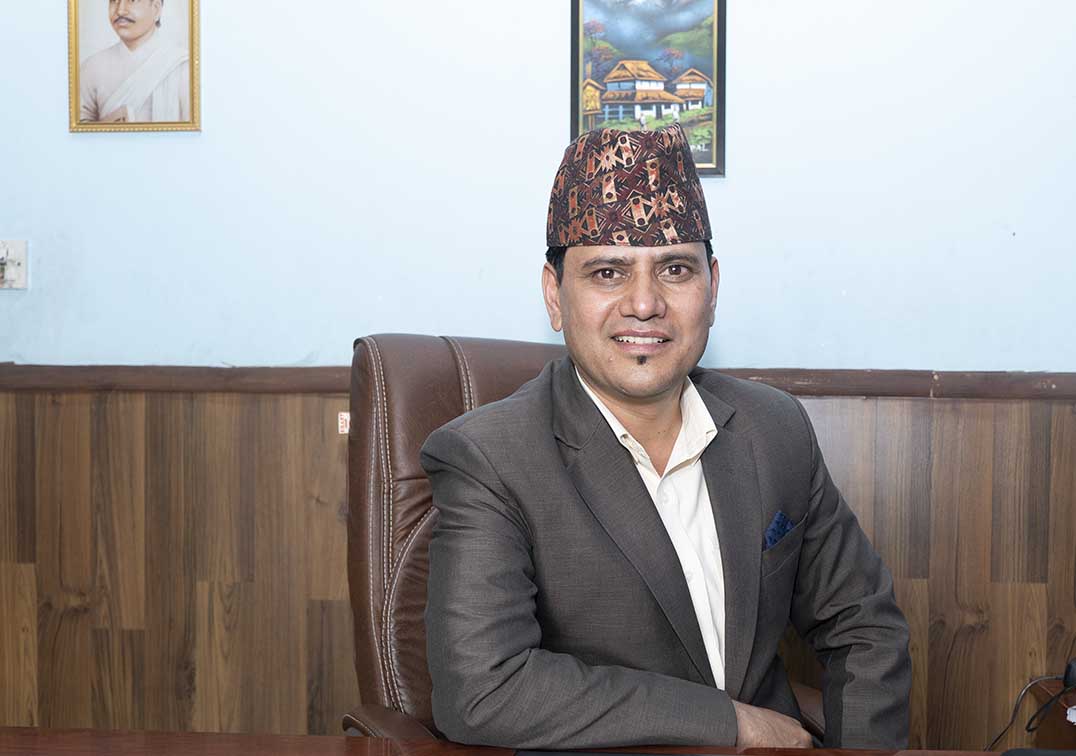
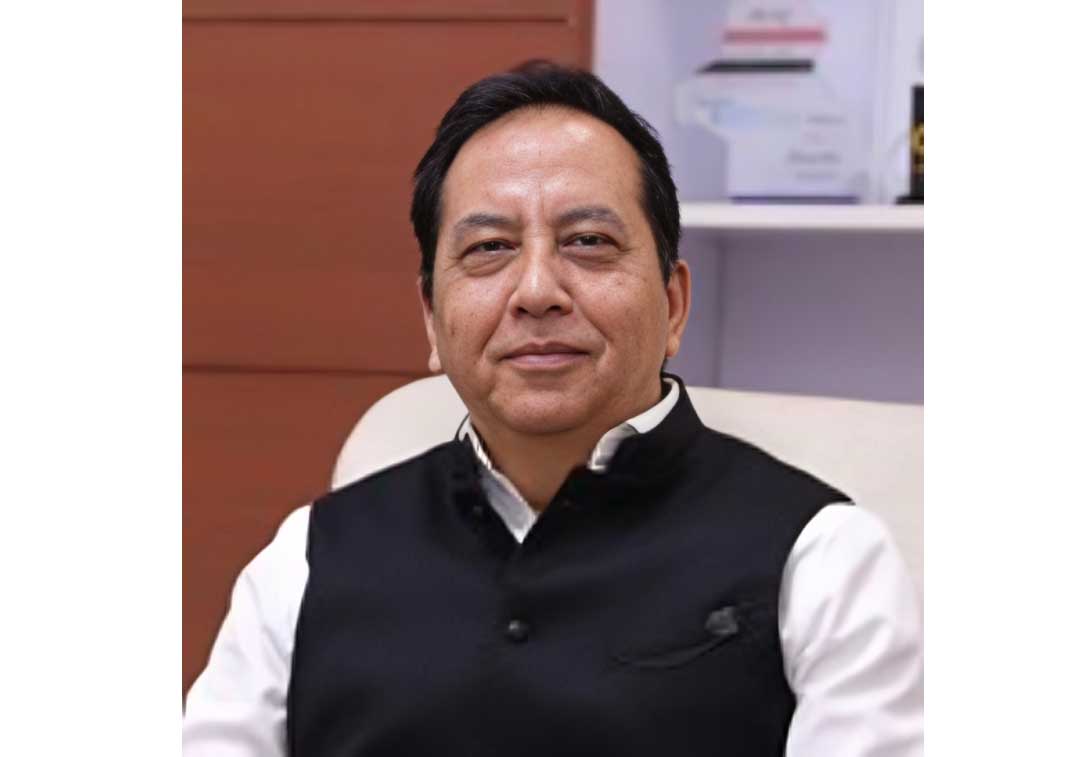
R.B. Adhikari
Principal
Kashyap Academy Vice President, HISSAN
Reclaiming Purpose: The Shift to Holistic Learning in the Digital Age
- College Readers
- 26 Mar 2026
- Views
- Interviews
Education did not begin for me as a grand dream or a clearly defined mission. To be very honest, I did not enter the school sector with a big vision in the beginning. It was more a matter of circumstances, perhaps even fate, that led me into this field. At that time, I had not even decided whether I would remain in education for the long term.
But as the years passed and my experiences deepened, something within me began to change. I slowly started to understand the deeper meaning of being involved in education. What once felt like a profession began to reveal itself as a purpose. I came to realize that among all the work a human being can do in life, teaching stands as one of the most meaningful and noble. There is no greater satisfaction than knowing that through my effort, my thoughts, my knowledge, and my dedication, someone else’s life becomes brighter, more fulfilled, and more meaningful.
That realization transformed my journey. Education became not just my workplace but my calling. Today, I see students not simply as learners sitting in classrooms, but as future leaders, innovators, policymakers, and contributors to society and the world. The children we teach today may become tomorrow’s prime ministers, ministers, entrepreneurs, or visionaries. If I have the opportunity to shape them with knowledge, skills, and values, then I believe there is no greater work than this. That is why my entire family and I have become deeply devoted to the field of education.
As I reflect on the current educational landscape, especially in the twenty-first century, I do not see it merely as a space full of challenges. I see it as a space full of possibilities. Of course, there are changes that concern me. One of the most significant changes is the shifting mindset of learners. Today, knowledge is available instantly. With just one click, answers to almost any question can be found. Because of this, many students no longer feel the same urgency to prepare themselves deeply or build a strong foundation of knowledge in advance. There is a growing tendency to think that learning can be postponed until it is needed.
Another visible transformation is the increasing influence of digital life. Children today are surrounded by screens more than ever before. However, I do not believe that children alone are responsible for this. Digital accessibility entered our society suddenly, affecting not only students but also parents. In many cases, children are simply reflecting the behavior they observe at home. When parents themselves are deeply engaged in digital devices, children naturally follow the same pattern.
Despite these concerns, I do not believe that digital advancement is something to be feared. In fact, I see it as a powerful opportunity. When I compare today’s learning environment with my own time as a student, the difference is remarkable. We depended on teachers, books, and very limited sources of information such as radio and occasional television. Today’s children, however, have access to a vast world of knowledge. The real issue, therefore, is not the presence of technology, but the absence of guidance in using it wisely.
What we need now is not restriction alone, but direction. We need to develop digital literacy and digital etiquette. Just as a child’s physical growth follows a natural progression—from milk to solid food—their mental development also requires age-appropriate exposure. It is not appropriate for a very young child to consume the same content, use the same applications, or engage in the same digital environments as an adult. When a developing mind is exposed to content beyond its capacity, it cannot process it properly.
I strongly believe that we need a structured approach to digital usage—one that involves families, schools, and even national policies. Accessibility to digital platforms should be guided according to age and maturity. If managed properly, the digital world can become one of the greatest tools for learning rather than a source of distraction.
Beyond digital concerns, I also feel that education today must expand beyond academic knowledge. Learning is not only about gaining information. It is also about developing the body, mind, and character. In urban environments especially, children often lack physical space to play and engage in activities. As a result, schools must take on a greater responsibility in providing physical development opportunities. Playgrounds, sports facilities, and spaces for movement are no longer luxuries—they are necessities.
At the same time, children today are exposed to global standards through digital media. This creates a natural expectation for modern infrastructure in schools. Therefore, educational institutions must strike a balance between physical readiness and technological advancement.
At Kashyap Academy, I have tried to reflect these ideas through what I call the SSCE model of education—Spirituality, Science and Technology, and Entrepreneurship. For me, education must begin from within. Spirituality does not mean religion alone; it means understanding oneself, developing values, and building inner strength. Science and technology prepare students for the modern world, while entrepreneurship helps them think independently and creatively.
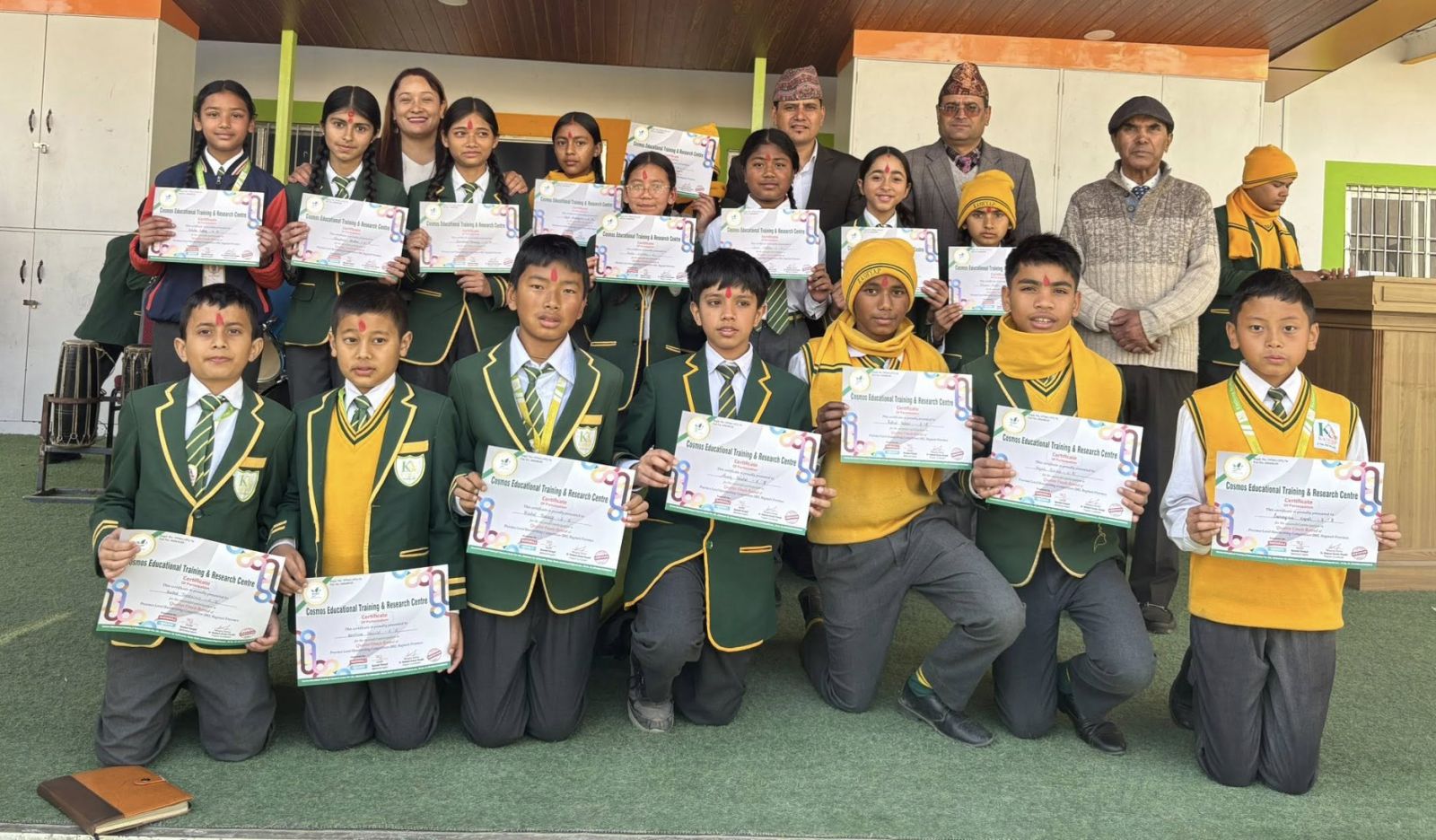
Alongside this model, I have embraced progressive educational practices. For me, progressive education is not just a fashionable term. It is a responsibility. It means creating a learning environment where students feel respected, where learning is joyful, and where practical application is emphasized. It also means recognizing that each child is unique and learns differently.
I have come to understand that children today are emotionally sensitive. Harsh words, negative attitudes, or even subtle psychological pressure can deeply affect them. Therefore, education must move away from punishment—both physical and psychological. Instead, we must create an environment where students feel safe, valued, and encouraged to explore.
Evaluation is another area where I believe change is necessary. For a long time, we have measured quality education through marks, grades, and GPA. But I do not believe that numbers alone can define a child’s potential. A student who excels in academics is certainly commendable, but a student who shows strength in creativity, leadership, emotional intelligence, or physical ability is equally valuable.
That is why we have adopted a continuous assessment approach. We look at the overall development of each student—their physical growth, emotional maturity, social behavior, and various forms of intelligence. We regularly communicate with parents and involve them in this process because education is not something that can be achieved by schools alone.
Creating a joyful and student-centered learning environment has been one of my key priorities. I believe that learning becomes meaningful when it connects with a child’s interests and abilities. Some children learn best by listening, some by doing, some by feeling, and others by interacting. Understanding these differences is essential.
At Kashyap Academy, we have worked to build a friendly and supportive environment where teachers and students can connect beyond formal roles. We also maintain close relationships with parents, encouraging open communication and shared responsibility.
In addition to academics, we provide a wide range of opportunities for students to grow. From sports facilities like futsal and basketball to activities such as dance, yoga, meditation, robotics, and artificial intelligence, we aim to offer diverse learning experiences. Our student development clubs allow children to engage in areas they are passionate about, which brings genuine joy into the learning process.
As an institution, we are continuously evolving. We are strengthening our infrastructure, investing in teacher training, and expanding our academic programs. I firmly believe that teachers must remain lifelong learners themselves. What was sufficient yesterday is not enough for tomorrow. Education must always move forward.
One of the most important lessons I have learned as a school leader is that education is not a transaction. It is not a service that is simply bought and sold. It is a shared journey. When parents see school as a service provider and schools see parents as customers, something essential is lost. Education becomes meaningful only when there is a sense of shared ownership.
I always tell parents, “This is your school.” Because ultimately, it is their children who benefit the most. The future of the child, the family, and even the institution are interconnected. When this understanding develops, many conflicts disappear, and collaboration becomes natural.
In the end, my message to parents is simple but deeply important. Choosing a school is not just an administrative decision—it is a life decision. It is an act of trust. When you enroll your child, you are entrusting a part of your life to that institution. Therefore, the decision must be made thoughtfully, not based only on reputation or cost, but on values, vision, and purpose.
Education is greater than money. While financial aspects are necessary to sustain institutions, the true value of education lies in the transformation it brings to a child’s life. And that transformation requires partnership—between school, parents, and students.
For me, education is not just about preparing children for exams. It is about preparing them for life. It is about shaping individuals who are knowledgeable, capable, ethical, and grounded. In a rapidly changing digital world, I believe that the future of education lies in maintaining this balance—between technology and humanity, between knowledge and wisdom, and between progress and purpose.

Popular Categories
Trending This Month








 Established in 2065 BS, COLLEGE READERS is a premier national-level educational magazine dedicated to serving the academic and informational needs of school and university students, teachers, educators, and concerned ones in Nepal. The magazine provides current and comprehensive information on various educational opportunities worldwide, aiming to guide school and college-level students in their academic and career journeys. It also highlights essential support services and service providers that play a crucial role in shaping students' career paths in today's competitive world.

- Our Location Putalisadak, Kathmandu
- Send Us Email collegereaders123@gmail.com
- Call Us Now 977 01 4518759
