
Call now
977 01 4518759
Send Message
collegereaders123@gmail.com
Our Location
Putalisadak, Kathmandu
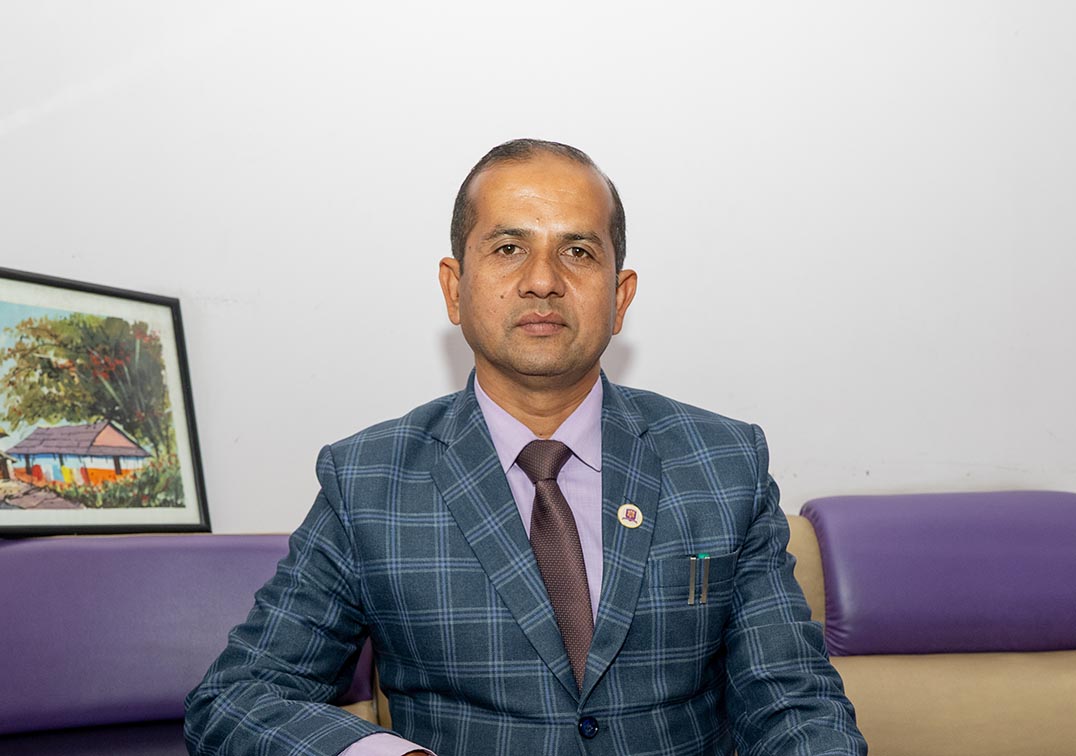
Ramesh Ghimire
Principal
Asia Pacific School and College
Education from Spirituality to Technology for Balancing Values and Innovation
- College Readers
- 26 Mar 2026
- Views
- Interviews
Ramesh Ghimire, a calm yet articulate educational leader, serves as the principal of Asia Pacific School and College in Tokha, Kathmandu. Known for his balanced perspective, he blends traditional values with modern innovation. His core philosophy—“education from spirituality to technology”—reflects his belief that true learning must nurture both human values and technical competence. In this conversation with College Readers, Ghimire shares his journey, insights on Nepal’s education system, and his vision for a holistic, future-ready generation.
College Readers: How do you view the current state of school education, especially in Nepal’s changing socio-political context?
Ramesh Ghimire: There is a significant gap in our system. Traditionally, our education was meant to reflect our own culture and context, rooted in Eastern philosophy. However, we are now trying to adopt Western models while also preserving our originality. This has created a kind of mixed system, where clarity is lacking.
Another concern is that our curriculum and examination systems are not aligned with students’ interests, abilities, or age. We have not yet been able to design an education system that truly responds to the needs of learners.
College Readers: What are the major challenges in school leadership today, particularly in the 21st-century educational environment?
Ramesh Ghimire: There are multiple challenges. One major issue is the divide between public and private education. Private schools are often perceived as better due to results, while public schools are viewed as less effective, sometimes influenced by politics.
Another challenge is defining “quality education.” Parents often prioritize academic results, but the real world demands both academic knowledge and soft skills. If we focus only on academics, students lack practical abilities. If we go fully progressive, academic performance may decline due to existing exam systems.
As a leader, I face the challenge of integrating both—ensuring academic excellence while also developing skills. Different parents expect different outcomes, so balancing these expectations is not easy.
College Readers: With rapid technological advancement, how should schools adapt to maintain quality education?
Ramesh Ghimire: Technology has undoubtedly changed learning. Reading culture has declined due to digital platforms. But we cannot ignore technology—it is part of life.
Instead of resisting it, we must integrate it into education. Learning, assignments, and even evaluations can be conducted through digital platforms. This creates a blended learning environment.
I remember visiting a school in Israel where students used mobile devices for all learning activities. Even those who couldn’t afford devices were supported by the school. That is the mindset we need—utilizing technology positively.
If we separate technology from education, we create a disconnect between real life and learning. That approach does not work.
College Readers: How do you ensure consistent quality teaching and learning in your school?
Ramesh Ghimire: Quality education requires clear parameters. At our school, we integrate digital learning with traditional values. While we do not allow unrestricted mobile use, we teach students about AI, coding, and robotics through structured classes.
Our classrooms are digitalized with smart boards, and both teachers and students actively participate.
Our guiding principle is “education from spirituality to technology.” This means we focus not only on technical skills but also on human values. We teach yoga, meditation, and cultural awareness alongside modern education.
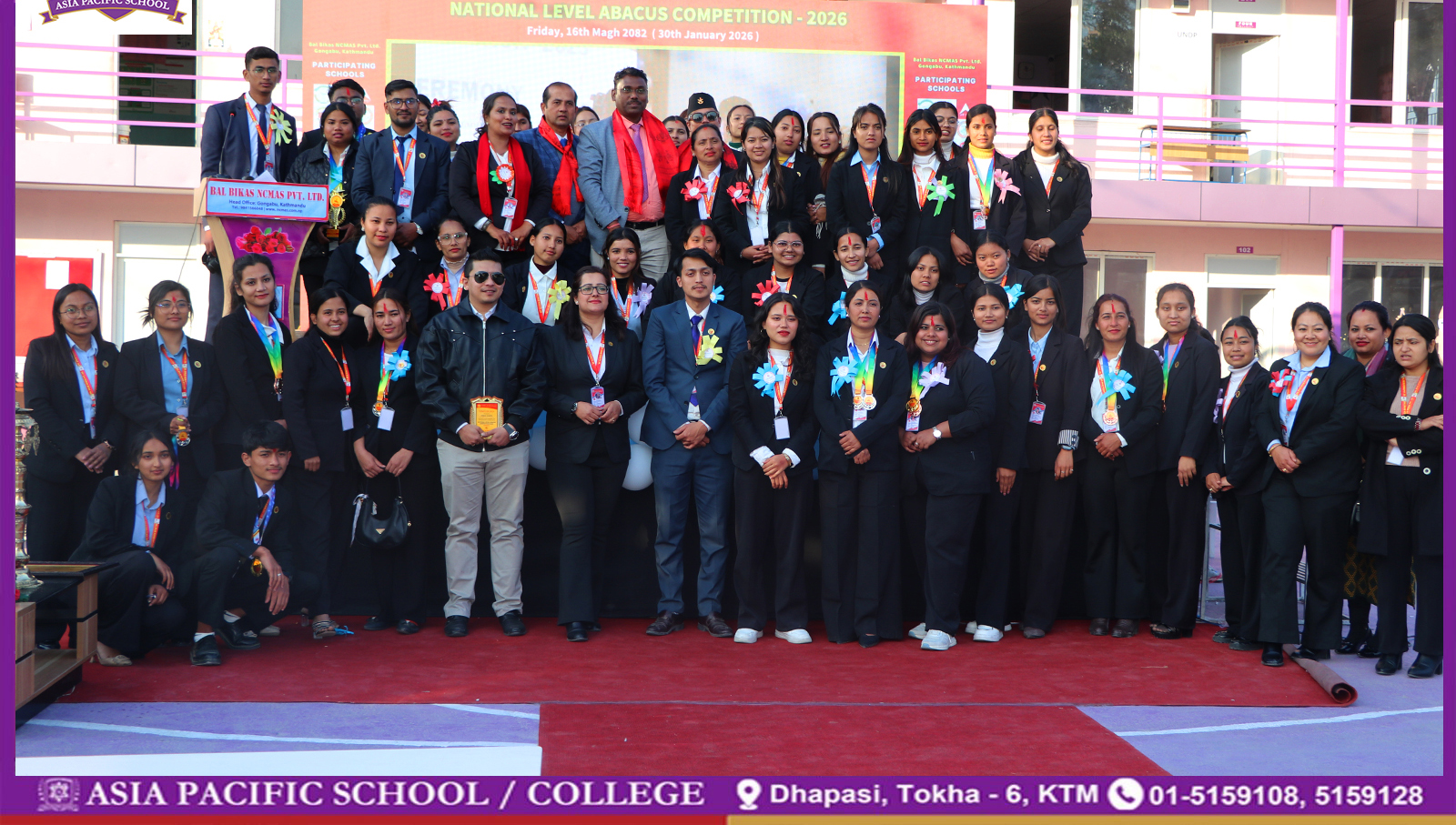
We want our students to be technologically capable but also grounded in humanity and culture.
College Readers: How do you approach curriculum planning and academic supervision?
Ramesh Ghimire: The role of teachers is crucial. A teacher must have a clear understanding of what they will teach and what outcomes they expect.
We emphasize structured planning—teachers design yearly plans, implement them, assess progress, and reflect on results. Without a clear goal, the teaching process becomes directionless.
We follow a cycle: planning, action, and reflection. Additionally, we provide regular training, workshops, and collaborate with universities to enhance teaching quality.
College Readers: How do you manage the relationship between students, parents, and teachers?
Ramesh Ghimire: This triangular relationship often creates challenges. Parents expect schools to handle everything, while teachers believe behavior should be shaped at home.
In reality, behavior is influenced by family, society, and peers. As a school leader, my role is to bridge this gap.
We encourage teachers to act as role models and help parents understand their responsibilities. Collaboration between all three is essential for a child’s development.
College Readers: There is an ongoing debate—should quality be measured by academic scores or value-based education. What is your view?
Ramesh Ghimire: I strongly believe that becoming a good human being is more important than just achieving high grades.
Every child is unique. Some excel in academics, while others shine in creativity, sports, or technical skills. Our system often fails because it treats all students the same.
It is like asking different animals to climb a tree—each has different strengths. We must recognize individual abilities and provide appropriate opportunities.
College Readers: What initiatives has your school taken to enhance student development?
Ramesh Ghimire: We focus on Social Emotional Learning (SEL). This approach helps students develop self-awareness and decision-making skills.
Instead of punishment, we encourage reflection. For example, when conflicts occur, we guide students to think about their actions. This leads to genuine understanding and behavioral change.
Additionally, our “spirituality to technology” model ensures that students develop both inner values and external competencies.
College Readers: Finally, what message would you like to share with parents?
Ramesh Ghimire: I would like to emphasize the importance of collaboration. We have designed our curriculum and activities to support holistic development.
Parents and schools must work together. If parents stay engaged and aligned with the school, children benefit greatly.
Education is a shared responsibility. By cooperating, we can ensure that children develop knowledge, skills, and positive behavior, leading to a brighter future.
Popular Categories
Trending This Month








 Established in 2065 BS, COLLEGE READERS is a premier national-level educational magazine dedicated to serving the academic and informational needs of school and university students, teachers, educators, and concerned ones in Nepal. The magazine provides current and comprehensive information on various educational opportunities worldwide, aiming to guide school and college-level students in their academic and career journeys. It also highlights essential support services and service providers that play a crucial role in shaping students' career paths in today's competitive world.

- Our Location Putalisadak, Kathmandu
- Send Us Email collegereaders123@gmail.com
- Call Us Now 977 01 4518759
