
Call now
977 01 4518759
Send Message
collegereaders123@gmail.com
Our Location
Putalisadak, Kathmandu
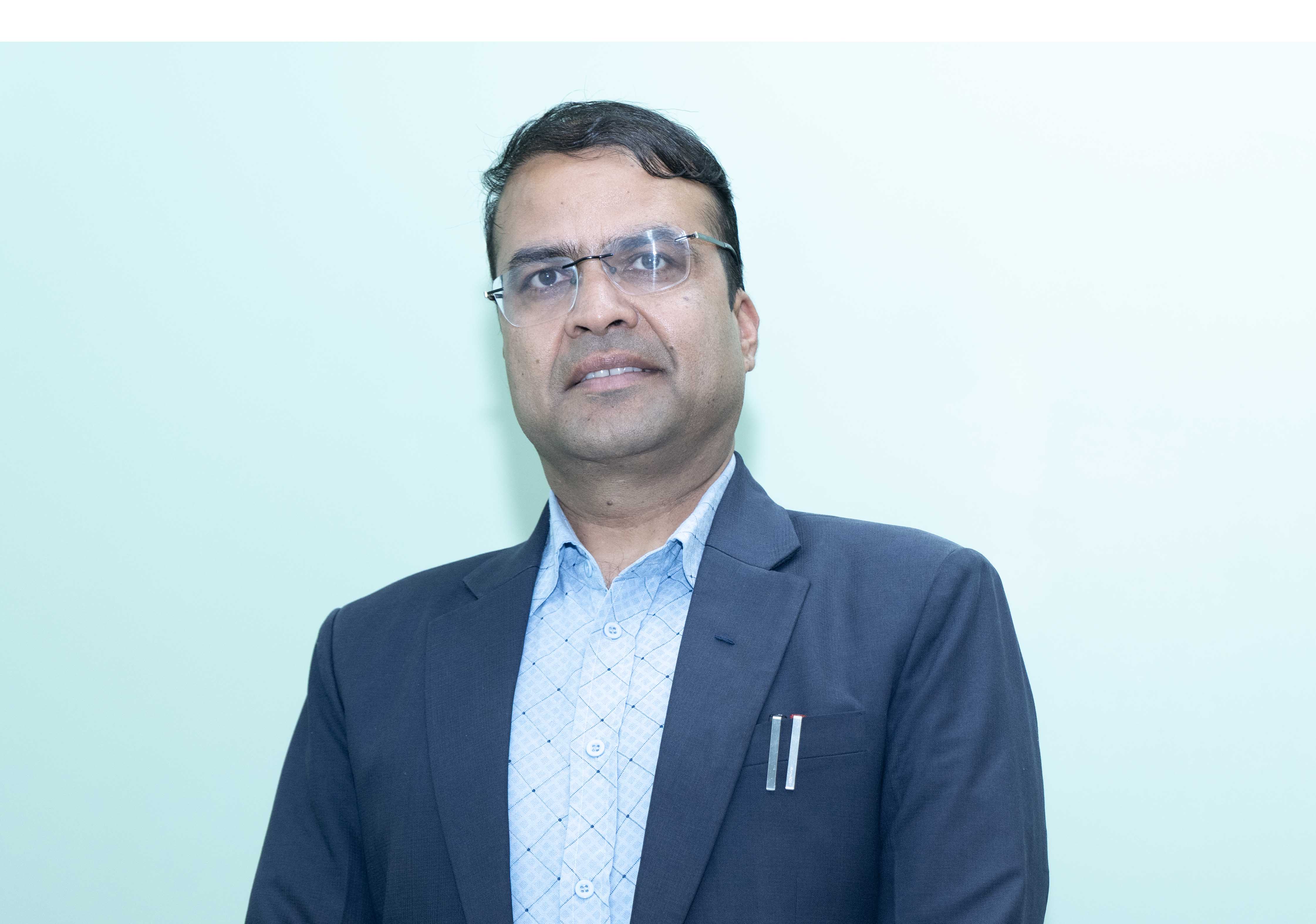
HISSAN Focuses on Bridging State and Private Education for Meaningful Outcomes
- College Readers
- 26 Mar 2026
- Views
- Interviews
In a time when Nepal’s education system stands at a critical turning point, leaders like Gopiraj Parajuli are actively shaping conversations around quality, structure, and future direction. As the Principal of Precious National School and College and the District President of HISSAN Kathmandu, Parajuli brings nearly two decades of experience in the field. In this conversation with College Readers, he reflects on his journey, institutional leadership, and his vision for strengthening education in Nepal.
College Readers: Could you briefly share how you became inspired to enter the education field?
Gopiraj Parajuli: To be honest, I feel that I am someone who always had the mindset of doing something independently. I wanted to contribute in some field, and gradually, as circumstances connected me to education, I started my journey as a teacher. From there, step by step, I reached where I am today.
Another important factor was my family background. My father was also the principal of a secondary school, and I studied in that same school. So, there was naturally an influence from the family as well. At the same time, I always had the mindset of doing something that connects with society on a broader level. That desire to engage with society in a meaningful way also brought me into the education sector.
College Readers: You have recently been elected as the District President of HISSAN Kathmandu. What strategic plans do you have to strengthen the organization?
Gopiraj Parajuli: As HISSAN is a professional organization representing investors in education, one of our main responsibilities is to raise our voice for the rights and interests of investors. That is a key priority.
At the same time, we want to move beyond just investors and connect with all stakeholders—students, teachers, staff, and school operators. We are planning programs that directly support capacity development for students and educators. Our goal is to expand our engagement and work more closely with different levels of the education system.
Another important plan is to create platforms for students. We believe that students in our member institutions should have access to opportunities. So, we are planning to organize competitions, sports events, and extracurricular programs that can help them showcase their abilities and grow.
We are also focusing on examination systems. After the National Examination Board stopped conducting Grade 11 exams at the centralized level, we have observed some issues related to quality. While continuous assessment is important, examinations have also played a role in maintaining standards. Therefore, we are working on organizing Grade 11 exams in a more systematic and structured manner.
College Readers: HISSAN Kathmandu has expanded through municipal and metropolitan committees. However, there are concerns about their effectiveness. How do you plan to make them more active?
Gopiraj Parajuli: Initially, HISSAN worked only with institutions running Grades 11 and 12. But as we expanded to include secondary and higher secondary education, the organization also grew in size.
The concept of municipal committees was first implemented in Kathmandu. In the past, there may have been some lack of coordination in terms of roles and responsibilities. However, recently we have completed all municipal-level conventions and selected new leadership.
Now, our focus is on making these committees more active and effective. We are planning to provide them with proper support, guidance, and coordination. I am confident that in the coming days, you will see more impactful work from both metropolitan and municipal committees.
College Readers: As a school leader, how do you see the future of school education, especially Grades 11 and 12, in the current changing educational environment?
Gopiraj Parajuli: For Grades 11 and 12, the key focus should be on making the system more organized. This includes improving the curriculum, strengthening the examination system, and ensuring that we produce quality students.
From our side, we must do everything we can to maintain high standards. At the same time, we also need to advocate for improvements at the policy level, especially regarding curriculum and assessment systems.
One major concern is what happens after Grade 12. We are seeing that many students are not staying in Nepal for higher education. They are either leaving or not engaging with universities here. This is a serious issue.
Of course, this problem is not limited to education alone—it is connected to broader national factors. But still, we must take responsibility and engage in discussions to find ways to minimize this trend. This is something we are actively thinking about.
College Readers: There have been coordination issues among organizations like HISSAN, PABSON, and N-PABSAN, especially regarding exams. How can this be improved?
Gopiraj Parajuli: This is indeed an important issue. Sometimes, people question why there are multiple organizations with similar objectives. Ideally, it would be better if we could work together in a unified way.
However, until that happens, there has been a kind of functional division—PABSON focusing on up to Grade 10, and HISSAN focusing on Grades 11 and above.
Recently, there were some communication gaps regarding exam operations, but we have already started discussions to address this. I believe that all organizations should sit together and find a coordinated approach.
At the same time, we are clear about our position. We do not interfere in activities up to Grade 10. But in the case of Grades 11 and 12, we expect that our role should be respected, and there should not be unnecessary interference.
College Readers: Finally, what message would you like to share with the education community?
Gopiraj Parajuli: In general, I would say that we need to work together to make Nepal’s institutional and private education system more organized and effective.
We also need to help the state understand the importance of private education and the contributions it has made. There is still a lot to be done in this area.
We are moving forward with clear plans and structured programs. I am hopeful that by the end of my tenure, we will be able to show visible and meaningful results in Kathmandu district.
Popular Categories
Trending This Month








 Established in 2065 BS, COLLEGE READERS is a premier national-level educational magazine dedicated to serving the academic and informational needs of school and university students, teachers, educators, and concerned ones in Nepal. The magazine provides current and comprehensive information on various educational opportunities worldwide, aiming to guide school and college-level students in their academic and career journeys. It also highlights essential support services and service providers that play a crucial role in shaping students' career paths in today's competitive world.

- Our Location Putalisadak, Kathmandu
- Send Us Email collegereaders123@gmail.com
- Call Us Now 977 01 4518759
