
Call now
977 01 4518759
Send Message
collegereaders123@gmail.com
Our Location
Putalisadak, Kathmandu
Private Medical Colleges Suspend Resident Doctors’ Stipends Over Government
- College Readers
- 31 Jul 2026
- Views
- News
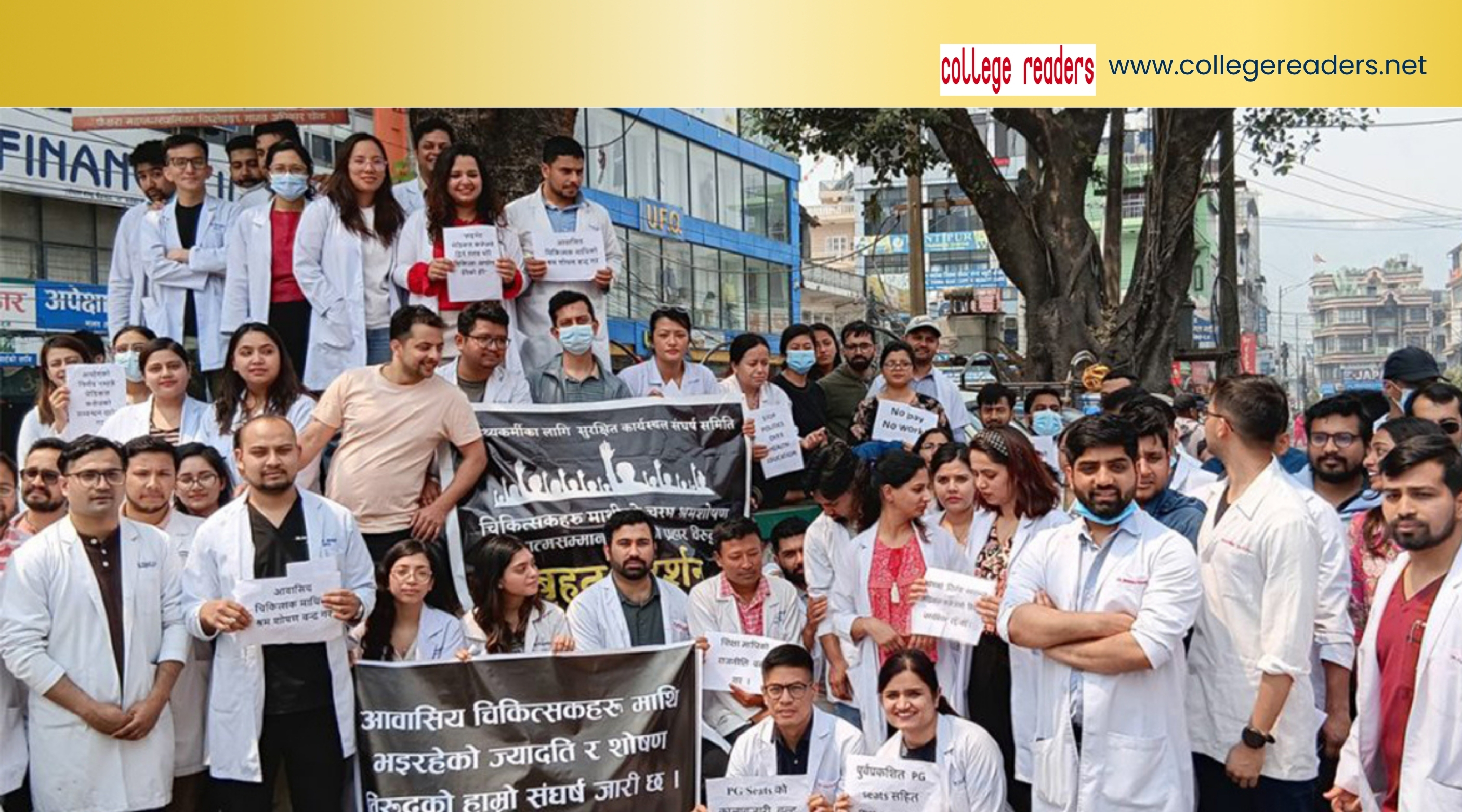
Kathmandu, July 30 — Private medical colleges in Nepal have suspended the monthly stipends paid to MD and MS resident doctors, expressing strong dissatisfaction with a recent agreement between the government and medical education reform campaigner Prof. Dr Govinda KC.
The decision has placed resident doctors at the centre of a policy and funding dispute.
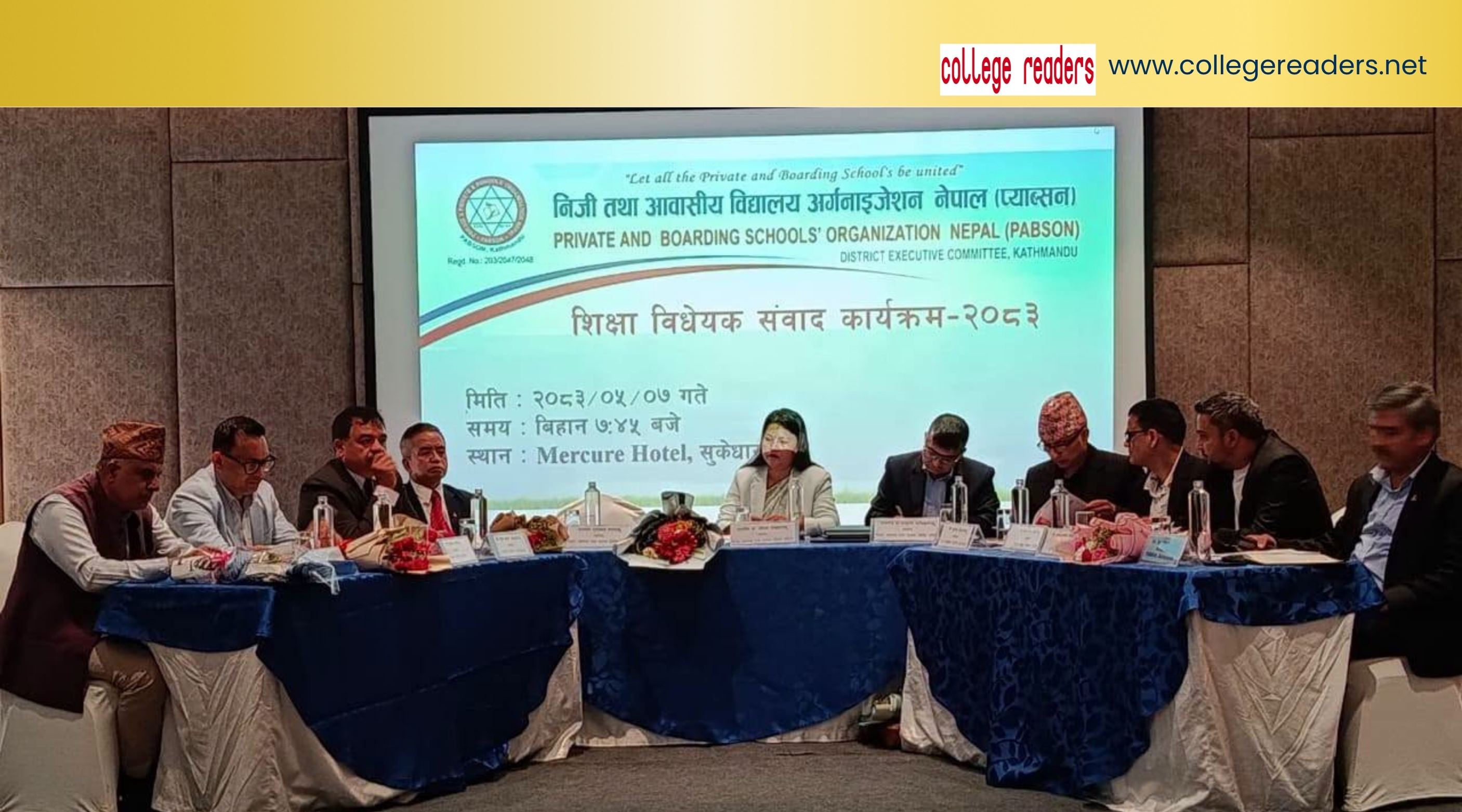
The Association of Private Medical and Dental Colleges of Nepal, the umbrella organisation of private medical and dental institutions, announced that the suspension would take effect from Thursday. It said payments would not resume until Clauses 3 and 4 of the agreement were amended or withdrawn.
Resident doctors in postgraduate MD and MS programmes have been receiving a monthly stipend of Rs 48,737. The association said it could no longer bear the increased financial obligation because the government had reversed an earlier understanding to gradually increase MBBS seats in qualified private colleges.
Association President Prof. Dr Gyanendra Man Singh Karki wrote to the health ministry demanding the immediate cancellation of the disputed clauses. The association argued that the latest agreement contradicted commitments previously made to private medical colleges.
“Private colleges cannot be expected to increase investment, services and resident stipends while the government simultaneously blocks the expansion of student seats needed to sustain those obligations.”
According to the association, private colleges agreed last year to raise the stipend from Rs 20,000 to Rs 48,737 after the government verbally committed to increasing MBBS quotas in phases. The additional seats, it said, were intended to help institutions manage the financial burden created by the higher stipend.
Some private colleges had already been allowed to increase their MBBS intake from 100 to 130 students. The association claimed there was also an understanding that eligible colleges would be permitted to enrol up to 150 students from the current academic session. The latest agreement has created uncertainty over that plan.
Clause 3 states that the Medical Education Commission will determine quotas according to the National Medical Education Act, 2018, the National Medical Education Regulations, 2020, and the integrated procedure on quality assessment and seat allocation adopted in 2026. It also says seats will not be increased in private institutions, although public institutions may expand their intake if they meet the required standards. Existing scholarship provisions will remain unchanged.
Clause 4 concerns Section 47 of the National Medical Education Act, which envisages medical teaching institutions gradually operating as non-profit and service-oriented organisations. Under the agreement, the education ministry is expected to propose a high-level task force to study the issue and submit recommendations within six months.
The association argued that implementing Section 47 in this manner would interfere with private investment, economic freedom and constitutional protections. In its letter, it said colleges were unable to continue paying the Rs 48,737 stipend until the two clauses and any resulting proposals were revised.
The dispute has also revived debate over medical education seats. The Medical Education Commission’s 21st meeting had raised the MBBS ceiling from 100 to 130 seats and the BDS ceiling from 50 to 60. College operators later agreed to pay higher stipends after then prime minister and commission chair KP Sharma Oli reportedly assured them that fee and seat-related concerns would be reviewed.
However, officials have questioned whether many private colleges possess the infrastructure, qualified faculty and patient flow required for further expansion. A senior commission official said colleges were already struggling to teach their existing students and argued that granting more than 100 seats without adequate facilities would mainly serve commercial interests.
“Seat allocation must be based on inspection, infrastructure, teaching capacity and legal standards—not on political pressure, personal demands or overnight agreements.”
Dr Karki accused the government of repeatedly staging negotiations while targeting private colleges. He said commitments made about nine months ago had not been implemented and claimed the authorities had called the association for further talks without reviewing its earlier demands.
According to him, the government had urged colleges to immediately increase resident doctors’ stipends and promised to address their remaining concerns later. He said the failure to study those demands for nine months reflected irresponsible conduct.
The association has presented four demands: repeal Section 47 of the National Medical Education Act; increase quotas in MBBS, nursing and paramedical programmes for institutions meeting required standards; simplify admissions for foreign students; and determine medical education fees on a scientific and transparent basis.
It has given the government 15 days to address the demands and warned that stronger protests will follow if no solution is reached. The association said the government would bear responsibility if demonstrations disrupted health services or students’ education.
Copies of the letter were sent to the Prime Minister’s Office, the education ministry, the Medical Education Commission, Tribhuvan University, Kathmandu University, the Nepal Medical Council, the Nepal Medical Association, and medical and dental colleges nationwide.
Popular Categories
Trending This Month








 Established in 2065 BS, COLLEGE READERS is a premier national-level educational magazine dedicated to serving the academic and informational needs of school and university students, teachers, educators, and concerned ones in Nepal. The magazine provides current and comprehensive information on various educational opportunities worldwide, aiming to guide school and college-level students in their academic and career journeys. It also highlights essential support services and service providers that play a crucial role in shaping students' career paths in today's competitive world.

- Our Location Putalisadak, Kathmandu
- Send Us Email collegereaders123@gmail.com
- Call Us Now 977 01 4518759
