
Call now
977 01 4518759
Send Message
collegereaders123@gmail.com
Our Location
Putalisadak, Kathmandu
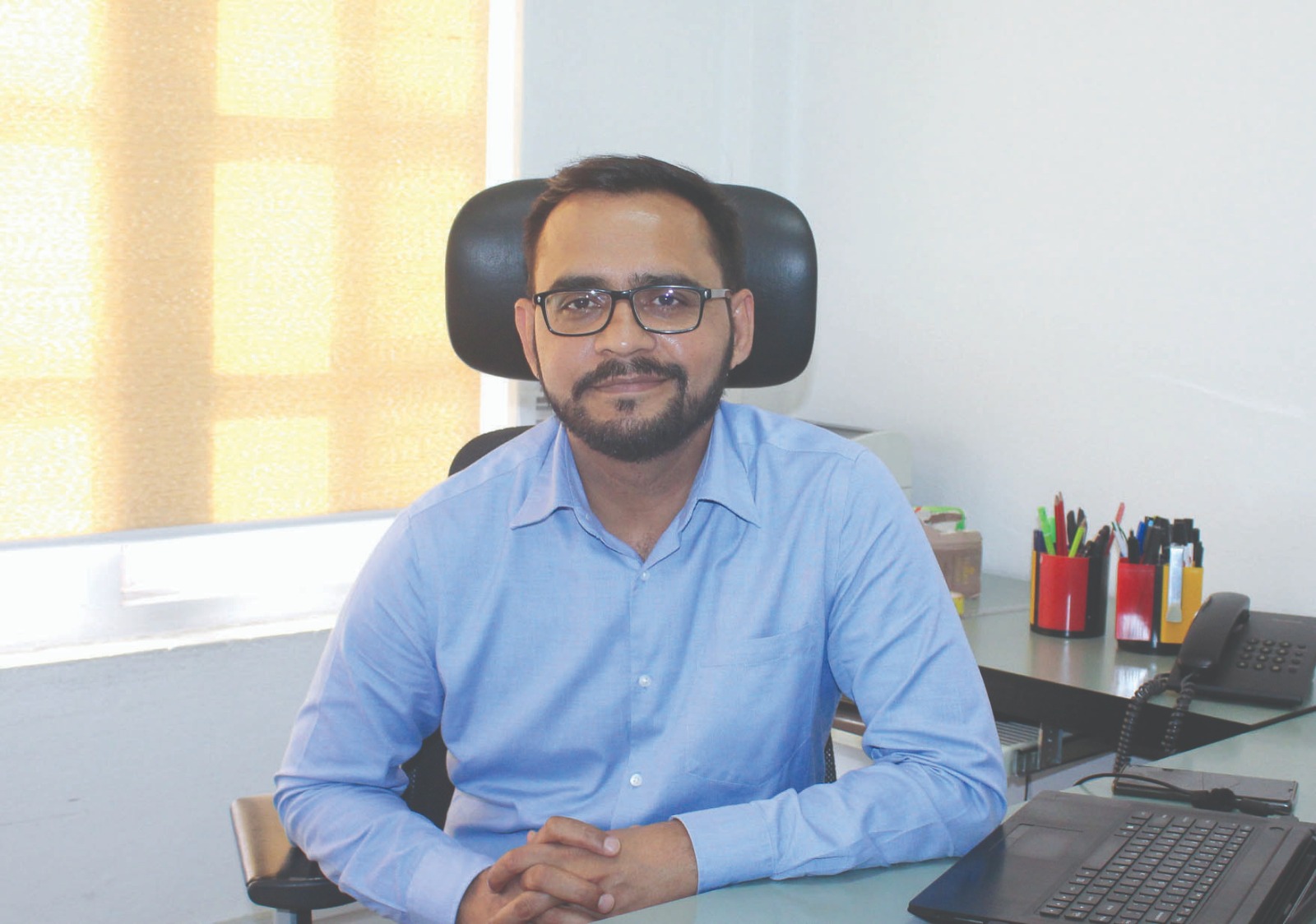
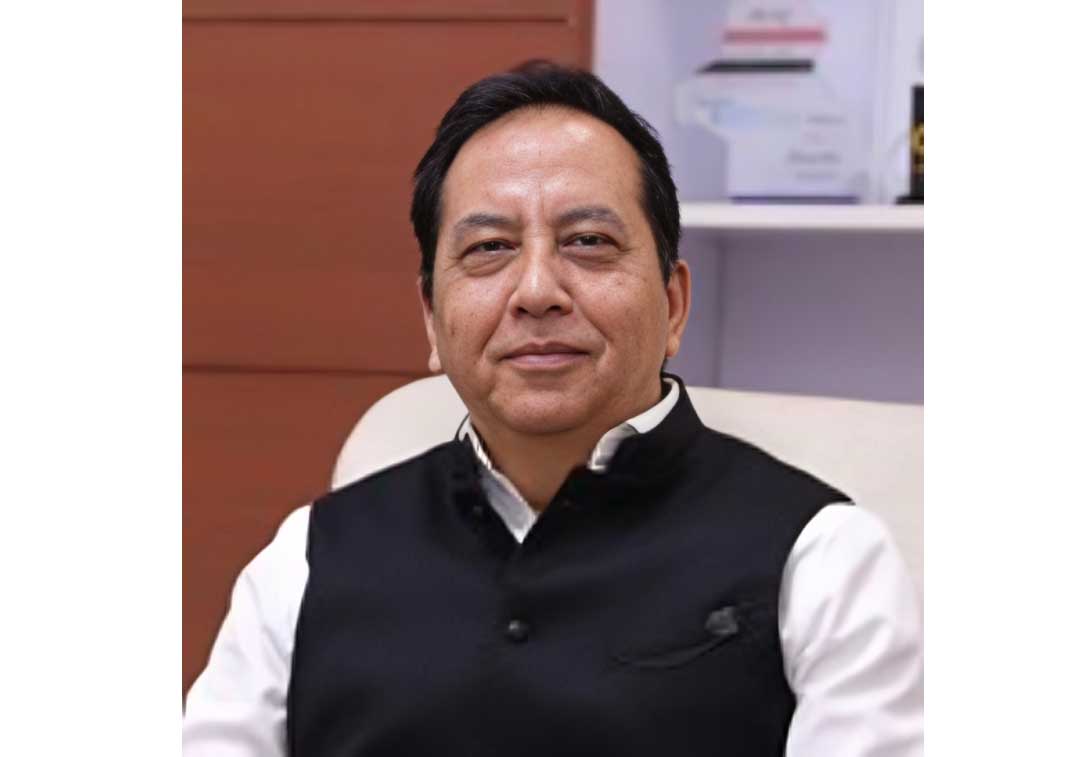
Ashish Tiwari
Principal
Ace Institute of Management
Pokhara University Champions Practical, Career-Ready Education: Build Your Future in Nepal
- College Readers
- 18 Feb 2026
- Views
- Interviews
Ace Institute of Management, in affiliation with Pokhara University, has been meticulously cultivating the nation’s corporate vanguard for over two decades. By orchestrating a symbiosis of scholastic rigor, pragmatic immersion, and entrepreneurial scaffolding, the institution has emerged as a paragon of Nepal’s gradual yet inexorable metamorphosis in tertiary education.
Guiding this intellectual citadel is Ashish Tiwari, its Principal and Director, whose unwavering stewardship since the institute’s inception in 1999 reflects nearly three decades of indefatigable devotion to academia. Beyond his administrative gravitas, Tiwari sustains an abiding ardor for pedagogy, with scholarly foci encompassing marketing, branding, strategic management, and entrepreneurship. His peregrinations across international universities endow him with a cosmopolitan vantage, enabling a nuanced calibration of local practices against global benchmarks.
In an era when the pursuit of overseas education is often romanticized as a societal emblem of prestige, Tiwari advances a more judicious proposition: that Nepalese students may discover intellectual fecundity and professional ascendancy within their own borders. Through his erudition and cross-cultural perspicacity, he elucidates the imperative of reimagining Nepal’s higher education as a locus of opportunity, innovation, and global competitiveness.
What are the key factors students should consider when choosing to pursue higher education in Nepal?
I'd rather begin by asking, "Why not study in Nepal?" The landscape has dramatically transformed over the past two decades. When I was a student 25-30 years ago, studying abroad was often a compulsion due to limited quality institutions here. Today, it's a choice, not a necessity.
Nepali higher education now stands at par with international standards in terms of quality, academic rigor, content, and delivery. Having taught at universities abroad, I can confidently say our curriculum compares favorably with any good institution globally. This isn't an exaggeration—it's based on direct experience and observation.
Beyond academic quality, studying in Nepal offers unique advantages. You understand the local business context, culture, and society intimately—advantages that become invaluable when building a career here. There's also the emotional and social benefit of staying close to family and your support system. Moreover, after the state has invested in your education for 18 years, contributing to national development rather than joining the brain drain becomes a meaningful choice.
Which programs are most in demand in Nepal's current educational landscape?
The clear trend is toward technology integration across all disciplines. Students aren't just looking for standalone technology courses—they want technology, artificial intelligence, and data analytics integrated into traditional programs like BBA or MBA. Whether it's finance, marketing, or management, the demand is for contemporary, modernized courses that prepare students for a digital future.
Data analytics, business analytics, and AI-integrated programs are particularly sought after. The market is clearly signaling that tomorrow's professionals need to be tech-savvy regardless of their primary field of study.
What unique features does Pokhara University offer through your institution?
Pokhara University has consistently been progressive in its approach. It was the first university in Nepal to launch a four-year BBA program, introduce an MBA in the trimester system, and start an Executive MBA program back in 1999. This forward-thinking approach continues today.
The university excels in providing autonomy to educational institutions—crucial for academic excellence—while maintaining strict quality standards. Their academic calendar runs like clockwork, with timely exams and results. Most importantly, the curriculum is highly practical and industry-oriented. Our recently revamped two-year MBA program is among the best in the country, offering progressive content that meets industry needs.
What additional support systems does Ace provide for students' overall development?
Ace is renowned for its holistic approach to education. We believe learning extends far beyond classroom walls. With over 20 student clubs and 35+ major annual events—from Spectrum to Unplugged, Expression to various conclaves—there's always something happening on campus.
Students interested in music, public speaking, theater, stock markets, or entrepreneurship all find dedicated clubs. These platforms develop leadership skills, communication abilities, and professional networks that prove invaluable in careers.
Our Center for Industrial Relations and Career Services has MOUs with 85 organizations, facilitating internships, real-life projects, and placements while providing career guidance. Additionally, our startup center, Ascend, runs bi-annual incubation programs, transforming ideas into investment-ready ventures. We have committed seed funding of NPR 1 million available for promising student startups, with investor networks ready to support viable ventures.
How do you see the future of higher education in Nepal evolving?
The sector is advancing rapidly through curriculum modernization, globalization, and internationalization initiatives. We regularly send students to international management competitions and festivals, while hosting students from the UK, US, Bangladesh, and India for collaborative projects. This cross-cultural exchange enriches our educational environment.
Technology integration through learning management systems has revolutionized assignment submission and course delivery. We're actively incorporating AI and emerging technologies into our curricula, ensuring graduates are prepared for tomorrow's workplace.
Despite challenges—we've navigated armed conflict, earthquakes, and COVID-19—I remain optimistic. Our generation faced tremendous obstacles, yet we've built quality institutions. The upcoming generation has even brighter prospects with better infrastructure and opportunities already in place.
What advice would you give students choosing their educational path?
First, don't follow others blindly or rely solely on opinions. Do thorough research. When selecting a subject, honestly assess your strengths and interests—choose accordingly, not based on trends or peer pressure.
When selecting an institution, evaluate several factors: reputation and brand image, institutional history, alumni success stories, industry connections, faculty quality, curriculum relevance, and academic rigor. Don't chase easy degrees—they're ultimately worthless pieces of paper. A quality education requires effort and dedication.
Look for institutions with strong alumni networks. At Ace, our graduates lead major organizations across Nepal's banking, corporate, and entrepreneurial sectors. This network becomes invaluable for career growth.
Any closing remarks for our readers?
Nepal is a land of opportunities—this might sound clichéd, but it's true. Think of Nepal as a clean slate where you can write your own success story. It's much easier to create your narrative here, in familiar surroundings with local understanding, than to compete in foreign lands as an outsider.
Give Nepal a chance. The competition might seem intense, but so are the opportunities. With quality education now available at home, staying in Nepal for higher education isn't settling for less—it's choosing to be part of the solution, contributing to national development while building a meaningful career.
Popular Categories
Trending This Month








 Established in 2065 BS, COLLEGE READERS is a premier national-level educational magazine dedicated to serving the academic and informational needs of school and university students, teachers, educators, and concerned ones in Nepal. The magazine provides current and comprehensive information on various educational opportunities worldwide, aiming to guide school and college-level students in their academic and career journeys. It also highlights essential support services and service providers that play a crucial role in shaping students' career paths in today's competitive world.

- Our Location Putalisadak, Kathmandu
- Send Us Email collegereaders123@gmail.com
- Call Us Now 977 01 4518759
