
Call now
977 01 4518759
Send Message
collegereaders123@gmail.com
Our Location
Putalisadak, Kathmandu
Nepal’s Education at a Crossroads: Invest, Reform or Risk the Nation’s Future
- College Readers
- 24 Jul 2026
- Views
- Op-ed
Education as the Foundation of National Development
Education is the principal instrument for advancing development, prosperity, good governance and economic activity in any country. The quality and effectiveness of education depend largely on how seriously state authorities value education, recognise it as a fundamental right, allocate budgetary resources and develop universities as centres of research and inquiry. They also depend on the level of investment and accountability demonstrated in curriculum development, physical infrastructure, technology, human resources, pedagogy, assessment systems, capacity-building and motivation.
The pace of educational progress is also determined by the extent to which major stakeholders are invited to participate in discussion, debate, interaction and policy formulation, and by the degree of cooperation and support sought from them.
Education is an ecosystem. The entire system—from pre-school to university—is interdependent. To make higher education high-quality, skills-oriented, capable, research-driven and relevant to life, Nepal must define clear national educational goals, objectives and directions for implementation.
The government must address the problems facing the education sector and allocate an adequate budget. According to widely cited international benchmarks, at least 20 percent of the national budget and between 4 and 6 percent of gross domestic product (GDP) should be invested in education. Nepal, however, allocates only about 10 percent of its national budget and roughly 3.5 percent of GDP to education, which is presented in the source as seriously inadequate. Nepal is also described as lagging behind other South Asian countries in educational investment. Increasing public investment is therefore essential to improve quality, promote research, produce skilled human resources and advance the education sector as a whole.
Table 1. Education Expenditure as a Share of the National Budget and GDP
| Country | National Budget | GDP |
|---|---|---|
| Nepal | 10.28% | 3.7% |
| Bhutan | 18–22% | 7% |
| Maldives | 15–17% | 5% |
| India | 12–14% | 4.2% |
| Sri Lanka | 8–10% | 2% |
| Finland | 13% | 2% |
| United Kingdom | 12% | 7% |
| United States | 11.3% | 6% |
| Japan | 11% | 4% |
| Sweden | 13% | 7% |
Human Development Rankings
The source presents the following Human Development Index rankings in relation to education, health and income:
Table 2. Human Development Index Rankings Listed in the Source
| Country | Rank |
|---|---|
| Iceland | 1 |
| Norway | 2 |
| Switzerland | 3 |
| Denmark | 4 |
| Germany | 5 |
| Finland | 12 |
| United States | 17 |
| Singapore | 9 |
| United Kingdom | 20 |
| Japan | 24 |
| India | 130 |
| Maldives | 93 |
| Sri Lanka | 89 |
| Bhutan | 125 |
| Bangladesh | 129 |
| Nepal | 145 |
| Pakistan | 168 |
Institutional Composition of Nepal’s Education Sector
Pre-school Education
Table 3. Pre-school Institutions and Student Enrolment
| Sector | Share of Institutions | Students | Institutions | Share of Students |
|---|---|---|---|---|
| Private | 19% | 682,000 | 8,500 schools | 52.5% |
| Government | 81% | 618,000 | 34,200 schools | 47.5% |
School Education: Grades 1–12
Table 4. Schools and Student Enrolment in Grades 1–12
| Sector | Share of Institutions | Students | Institutions | Share of Students |
|---|---|---|---|---|
| Private | 25% | 2,700,000 | 8,941 | 38% |
| Government | 75% | 4,300,000 | 27,110 | 62% |
| Total | 100% | 7,000,000 | 36,051 | 100% |
Higher Education Colleges
Table 5. Higher Education Institutions and Student Enrolment
| Sector | Share of Institutions | Students | Institutions | Share of Students |
|---|---|---|---|---|
| Private | 53% | 225,000 | 723 | 31% |
| Community | 35% | 241,000 | 547 | 32% |
| Government | 12% | 279,000 | 164 | 37% |
| Total | 100% | 745,000 | 1,434 | 100% |
Technical Education
Table 6. Technical Institutions and Student Enrolment
| Sector | Share of Institutions | Students | Institutions | Share of Students |
|---|---|---|---|---|
| Private | 80% | 14,758 | 407 | 32% |
| Government | 20% | 30,826 | 116 | 68% |
| Total | 100% | 45,584 | 525 | 100% |
Advanced Technical Education: MBBS
Table 7. MBBS Institutions and Student Enrolment
| Sector | Share of Institutions | Students | Institutions | Share of Students |
|---|---|---|---|---|
| Private | 70% | 1,575 | 35 | 70% |
| Government | 30% | 775 | 15 | 30% |
| Total | 100% | 2,350 | 50 | 100% |
Engineering Education
Table 8. Engineering Student Enrolment
| Sector | Share of Institutions | Students | Institutions | Share of Students |
|---|---|---|---|---|
| Private | 80% | 16,000 | 58 | 80% |
| Government | 20% | 4,000 | 12 | 20% |
| Total | 100% | 20,000 | 70 | 100% |
Pilot Training and Nursing Education
Pilot training is reported to be 99 percent privately operated.
Table 9. Nursing Education
| Sector | Share | Students | Institutions |
|---|---|---|---|
| Private | 77% | 3,500 | 200 |
| Government | 23% | 8,000 | 30 |
Historical Development of Higher Education in Nepal
Formal higher education in Nepal is generally considered to have begun with the establishment of Tri-Chandra College in 1975 B.S. Before that, only a small number of people studied in traditional gurukul systems or travelled to India and other countries for higher education. Nepal’s higher education sector began to gain momentum after Tribhuvan University was established in 2016 B.S.
Following the establishment of the Panchayat system in 2017 B.S., a state-controlled education system gradually developed. Various colleges were established during this period, slowly creating opportunities for the children of ordinary citizens to pursue higher education. Mahendra Sanskrit University was established in 2043 B.S.
After the political change of 2046 B.S., major transformations began to take place in the education and health sectors.
Challenges Facing Higher Education
The establishment of nursing colleges expanded access to education for the children of ordinary families. Nevertheless, hundreds of colleges have fewer than 100 students because of inadequate infrastructure, a shortage of competent teachers and faculty, and limited access to technology. Curricula have not kept pace with changing needs, and many institutions have been unable to provide high-quality, skills-based education. Political interference has severely weakened higher education, while thousands of students remain enrolled in low-quality universities. Unstable government policies, unemployment and the absence of social security are among the principal reasons Nepali students feel compelled to study abroad.
From school education to higher and technical education, Nepal has attracted substantial private investment. Private institutions produce skilled human resources, create employment and contribute to the national economy. Yet the state appears more inclined to constrain private investment than to support it as a partner in educational development. Despite billions of rupees invested in infrastructure, technology and human resources, universities continue to deny affiliation on various pretexts, discouraging privately funded educational institutions. Earlier governments failed to guide schools, colleges and universities properly in accordance with laws and regulations, leaving education vulnerable to political interference.
Policy has repeatedly shifted: at different times, institutions have been proposed as trusts, nationalised, organised as companies or placed under cooperative models. Such instability has weakened Nepal’s education sector. Private educational institutions have helped keep education functioning despite extreme politicisation. Armed conflict, earthquakes, the COVID-19 pandemic and the Gen Z movement have further disrupted the sector. Although the formation of a new government created hope that education would recover with a fresh beginning, the government’s activities during its first three or four months have deepened disappointment within the sector.
Government Policy, Taxation and Private-Sector Concerns
Since the formation of the government, the announcement of the new academic session, the introduction of a two-day weekly holiday and appointments to universities and education-related bodies through ordinances have been handled on an ad hoc basis. The absence of a transparent appointment process and the low priority given to education in the budget indicate that the government has pushed the sector into even greater uncertainty.
A review of the government’s policies, programmes, budget provisions and education regulations reveals arbitrariness, impulsiveness and immaturity. The imposition of an additional 3 percent levy in the name of an “equity tax”—described in the source as having no international parallel—undermines the principle that education is a fundamental right and weakens the character of a welfare state.
It is regrettable to tax education in the same manner as alcohol, cigarettes and gutkha, particularly when such a policy is viewed as being contrary to Nepal’s Constitution, laws and established principles.
Countries including India, Japan, Finland, Norway, the United States and Australia—whether developed, least developed or developing—are described in the source as not imposing an additional tax specifically on education. Countries generally levy income or corporate taxes of between 15 and 30 percent. Nepal, however, is presented as applying a 25 percent income tax, a 10 percent house-rent tax, tax deducted at source (TDS), hoarding-board tax, waste-management charges, salary taxes and other levies. The argument advanced in the source is that Nepal has imposed an exceptionally heavy tax burden on education.
Table 10. Income/Corporate Tax and Additional Equity Tax
| Country | Income/ Corporate Tax | Additional Equity Tax |
|---|---|---|
| Nepal | 25% | 3% |
| Maldives | 15% | — |
| India | 22% | — |
| Bangladesh | 26% | — |
| Pakistan | 29% | — |
| Bhutan | 25% | — |
| Sri Lanka | 30% | — |
| United States | 21% | — |
| United Kingdom | 25% | — |
| Canada | 15% | — |
| Australia | 25% | — |
| Finland | 20% | — |
| Norway | 22% | — |
| Netherlands | 28% | — |
However, no country in the world is described as imposing a tax on examinations or educational quality. The combined regulatory and governmental approach appears intent on driving private educational institutions towards collapse. Government investment in education has become like water poured into sand.
The government appears determined to weaken private educational institutions and reduce them to the condition of poorly performing public institutions. Instead, the state should be encouraged to compete in quality, technology and management. All stakeholders should work together to raise Nepal’s education system to an international standard.
HISSAN, together with PABSON, N-PABSAN and guardians’ associations, played a pivotal role in opposing the 3 percent equity tax in education, which was against the interests of the public. Their collective advocacy ultimately compelled the government to withdraw the tax.
Gross Enrolment Ratio in Higher Education
What proportion of people who are eligible to attend college actually enrol? The source provides the following gross enrolment ratio (GER) figures:
Table 11. Gross Enrolment Ratio (GER) Figures Listed in the Source
| Country/Region | GER |
|---|---|
| Nepal | 20% |
| Maldives | 15% |
| India | 22% |
| Bangladesh | 26% |
| Pakistan | 25% |
| Bhutan | 25% |
| United States | 21% |
| United Kingdom | 25% |
| Canada | 15% |
| Australia | 25% |
| Finland | 20% |
| Norway | 22% |
| Japan | 66% |
| South Korea | 96% |
| Singapore | 95% |
| Germany | 75% |
| England | 67% |
| South Asia | 30% |
| Asia | 53% |
| Worldwide | 44% |
The rate of college enrolment per 100 eligible people is described as extremely low in Nepal.
The Role of Private Education and the Way Forward
In conclusion, private educational institutions, which are described as accounting for nearly 47 percent of Nepal’s total education sector, have continued to provide quality education. They represent an investment of NPR 1 trillion, directly and indirectly support one million jobs, contribute to the national economy and, according to the source, account for 9 percent of GDP. Rather than discouraging educational entrepreneurs who help keep the economy moving, federal, provincial and local governments should facilitate the establishment of universities, colleges and schools within their respective jurisdictions. They should provide suitable sites, tax concessions and a supportive environment for importing vehicles and laboratory equipment, developing libraries and purchasing land. With such support, Nepal’s education sector could be transformed within a short period.
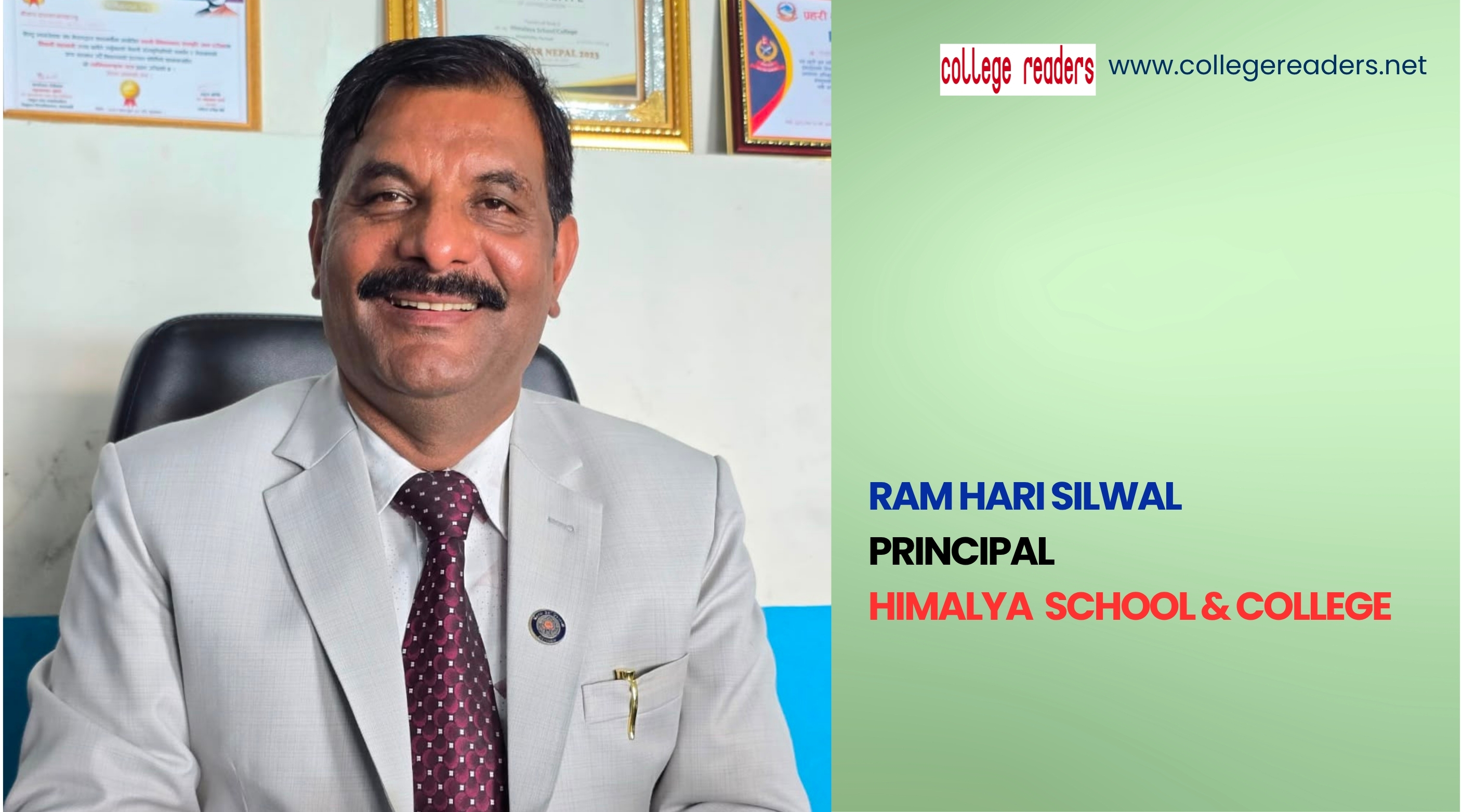
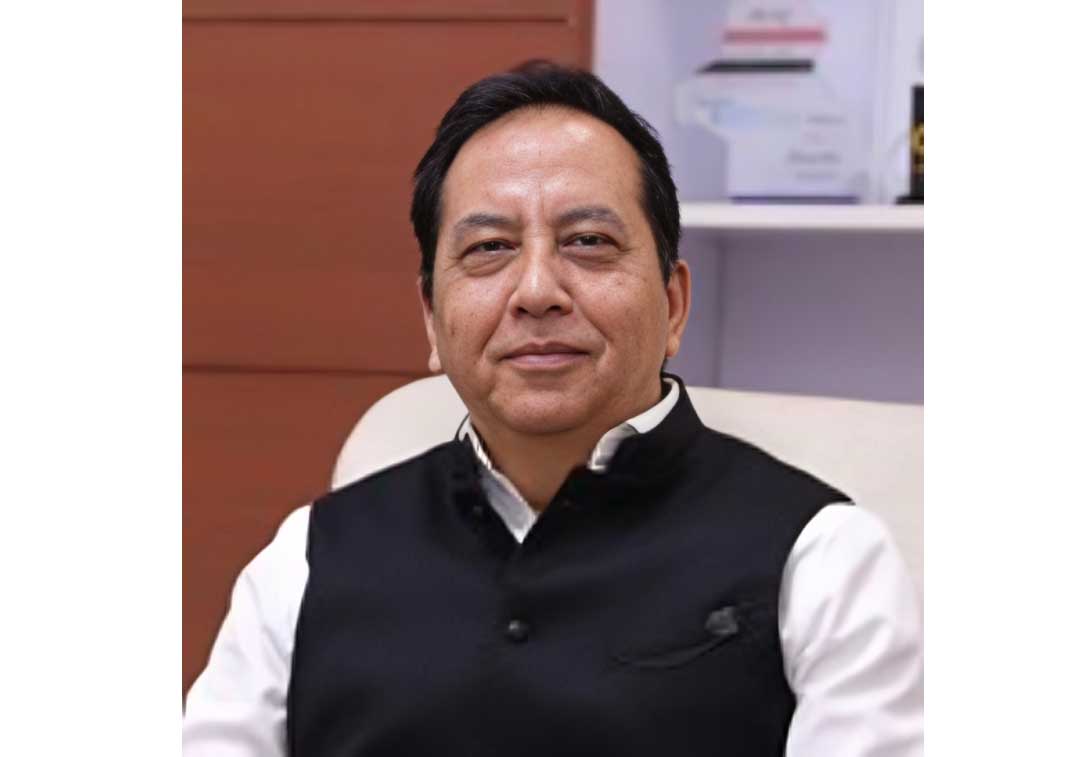
The writer, Ram Hari Silwal, is the Principal of Himalya School & College, General Secretary of HISSAN, and Editor-in-Chief of College Readers.

Popular Categories
Trending This Month








 Established in 2065 BS, COLLEGE READERS is a premier national-level educational magazine dedicated to serving the academic and informational needs of school and university students, teachers, educators, and concerned ones in Nepal. The magazine provides current and comprehensive information on various educational opportunities worldwide, aiming to guide school and college-level students in their academic and career journeys. It also highlights essential support services and service providers that play a crucial role in shaping students' career paths in today's competitive world.

- Our Location Putalisadak, Kathmandu
- Send Us Email collegereaders123@gmail.com
- Call Us Now 977 01 4518759
