
Call now
977 01 4518759
Send Message
collegereaders123@gmail.com
Our Location
Putalisadak, Kathmandu
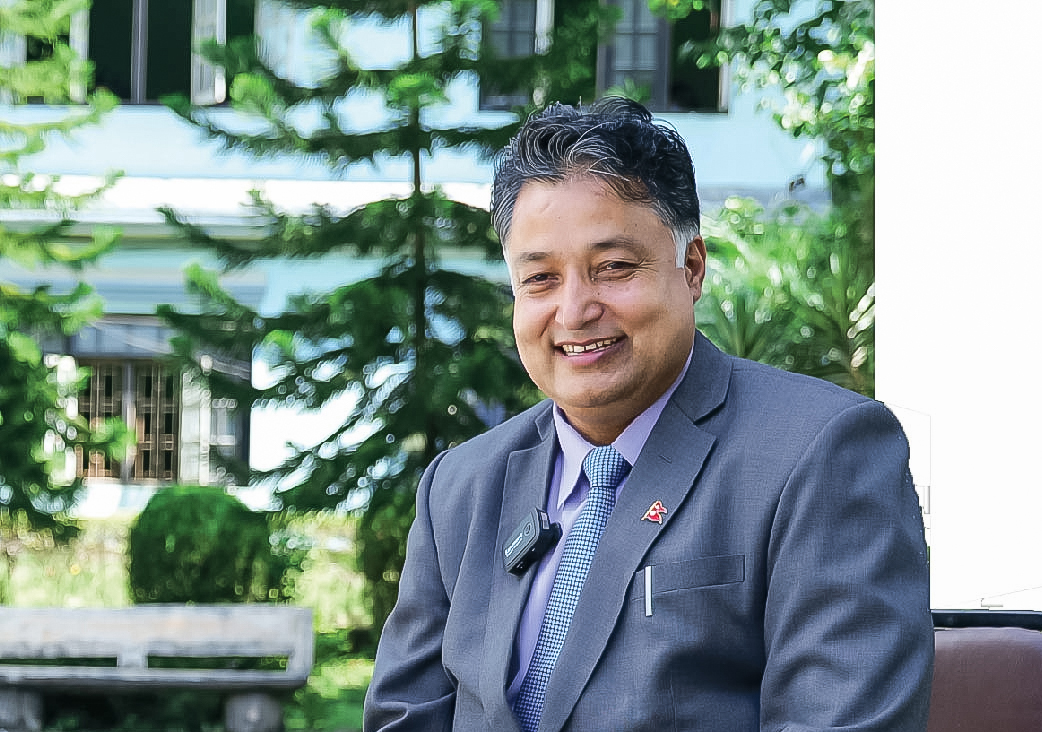
Kathmandu Must Lead by Example on Responsibility, Visibility, and Setting the Standard
- College Readers
- 18 Feb 2026
- Views
- Interviews
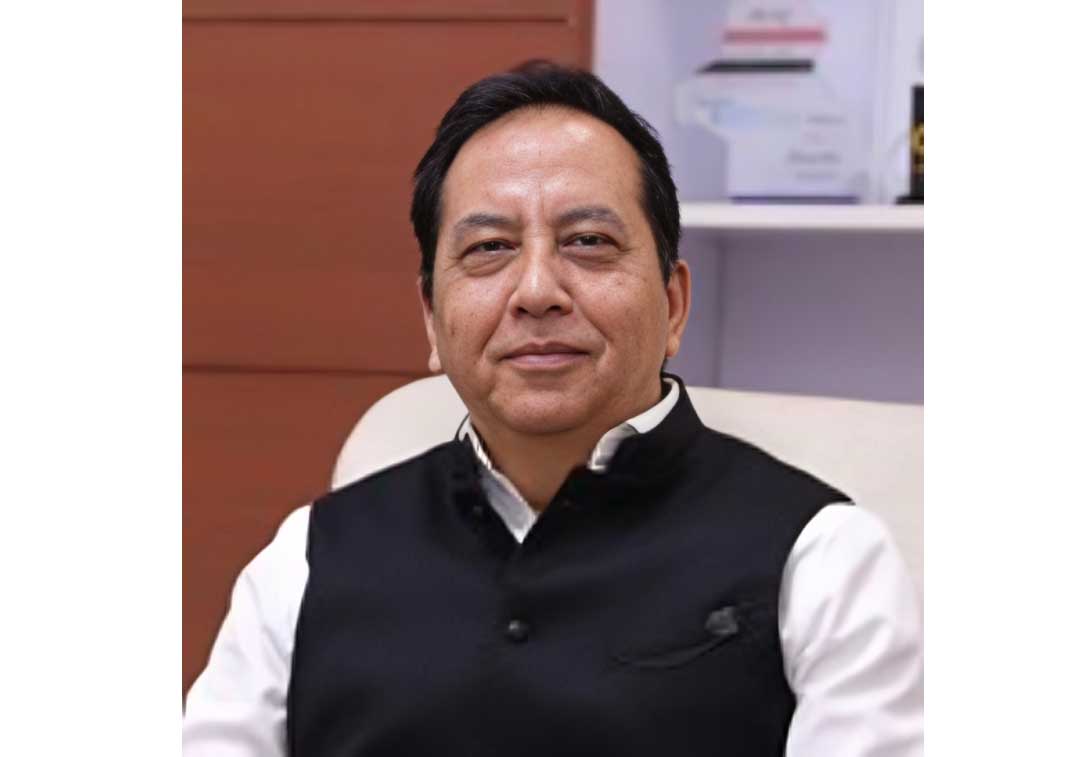
As Kathmandu prepares for the 7th District Convention, Mr. Bhawani Prasad Paudel reflects on institutional unity, grassroots strengthening, and the evolving role of private education within Nepal’s federal structure. Having recently completed his tenure as President of HISSAN Bagmati Province and now elected as Central Secretary, Paudel shares his vision for reinforcing the district widely regarded as the organization’s operational backbone.
As an advisor to HISSAN Kathmandu district, what contributions and guidance have you offered to help move the organization forward?
My journey began at the grassroots level—as an Executive Member, then Secretariat Member, and later Secretary. These roles allowed me to understand the organization from within. Even when I moved to provincial leadership, my attention remained focused on strengthening Kathmandu District because it functions as what we often call “Next to the Center.”
Kathmandu is not just another district; it is the operational model others observe and emulate. During my tenure, we worked to build trust among member institutions by organizing sports competitions, professional development trainings, residential meetings, and collaborative gatherings. Such activities were not merely ceremonial—they were designed to foster unity and institutional belonging.
One of our major efforts was to systematize examination practices. Examinations are a shared responsibility that binds institutions together through common academic standards. Even now, in my advisory capacity, I continue to encourage maximum participation in Grade 11 and 12 examinations because they strengthen both credibility and cohesion.
You often emphasize unity through engagement. Why are social and professional programs equally important in an educational organization?
Paudel: An organization cannot thrive on policy discussions alone. Relationships matter. Informal gatherings—such as picnics, interactive workshops, and retreats—create familiarity among members, making collaboration easier when serious challenges arise.
Professional training, on the other hand, ensures quality improvement. When teachers and administrators benefit from shared learning opportunities, the entire network grows stronger. Engagement builds emotional ownership; training builds institutional capacity. We need both.
Nepal’s transition to a federal structure has changed how education is governed. How should educational organizations adapt to this new framework?
Paudel: Federalism demands structural alignment. Education is now influenced by federal, provincial, and local governments, so organizational coordination must follow the same pattern. We have therefore focused on building strong local-level committees.
Our philosophy is simple: activities should begin at the Palika (municipal) level, then progress to the district, province, and center. Whether it is sports, training, or examinations, grassroots participation ensures sustainability.
Strong local committees also allow institutions to coordinate directly with municipalities and metropolitan offices. This is crucial when advocating for policies that create a supportive environment for private education.
Collaboration among private-sector organizations has often been discussed. How important is collective advocacy today?
Paudel: It is essential. Private education institutions face similar policy environments, regulatory challenges, and public expectations. Fragmented voices weaken advocacy; a unified front strengthens it.
That is why I have always advised coordination with other stakeholders at the local level. When organizations stand together, they can contribute constructively to national education policy rather than reacting defensively to it.
Historically, Kathmandu District has been viewed as the most influential unit after the central body. What responsibilities come with that status?
Paudel: Leadership brings visibility—and responsibility. Institutions across the country watch Kathmandu to see how programs are organized, how disputes are handled, and how innovation is introduced. In many ways, Kathmandu serves as a demonstration model.
This means the district must function as a center of reliability and confidence for members. Its activities should reflect professionalism, inclusivity, and organizational discipline. If Kathmandu performs well, the entire network benefits.
What challenges do you foresee for the new leadership team emerging from the convention?
Paudel: The greatest challenge will be inclusivity. Kathmandu represents institutions of varying sizes and capacities—from large, well-established schools to smaller colleges striving for growth. Leadership must address the expectations of all.
If larger institutions disengage, momentum is lost. If smaller institutions feel unheard, unity weakens. The new team must become a platform where every member feels represented.
What immediate priorities should the incoming committee focus on to strengthen the district?
There are several urgent tasks:
- Systematizing Examinations: Ensure academic programs and materials reach every member institution without exception.
- Inclusive Participation: Expand involvement in sports, co-curricular activities, and collaborative events.
- Policy Presence: Establish the organization as a credible stakeholder in education dialogue at all levels of government.
- Internal Cohesion: Differences of opinion are natural, but they must never create division. Professional respect must guide all interactions.
If these priorities are addressed, Kathmandu will remain capable, relevant, and forward-looking.
Many national leaders have historically emerged from Kathmandu. How should this influence the mindset of the new team?
Leadership here should be viewed as preparation for greater responsibility. Kathmandu has long served as a training ground for national leadership because it exposes individuals to complex organizational realities.
The new committee should work with the awareness that their performance will shape future leadership pathways. If they function effectively, other provinces and districts can learn from their model.
Finally, what are your wishes for the 7th District Convention?
I hope the convention brings forward a capable, balanced, and efficient team. Representation should reflect institutions of all scales—large, medium, and small—so that no voice is excluded.
While it is natural for many colleagues to aspire to leadership, consensus-based selection would set a powerful example. A clean image, mutual respect, and readiness to serve should define the outcome.
My message to all participants is simple: prepare thoroughly, think collectively, and present a unified team ready to work from day one. If we achieve that, the district will not only remain strong—it will become a model of collaborative educational leadership.
Popular Categories
Trending This Month








 Established in 2065 BS, COLLEGE READERS is a premier national-level educational magazine dedicated to serving the academic and informational needs of school and university students, teachers, educators, and concerned ones in Nepal. The magazine provides current and comprehensive information on various educational opportunities worldwide, aiming to guide school and college-level students in their academic and career journeys. It also highlights essential support services and service providers that play a crucial role in shaping students' career paths in today's competitive world.

- Our Location Putalisadak, Kathmandu
- Send Us Email collegereaders123@gmail.com
- Call Us Now 977 01 4518759
