
Call now
977 01 4518759
Send Message
collegereaders123@gmail.com
Our Location
Putalisadak, Kathmandu
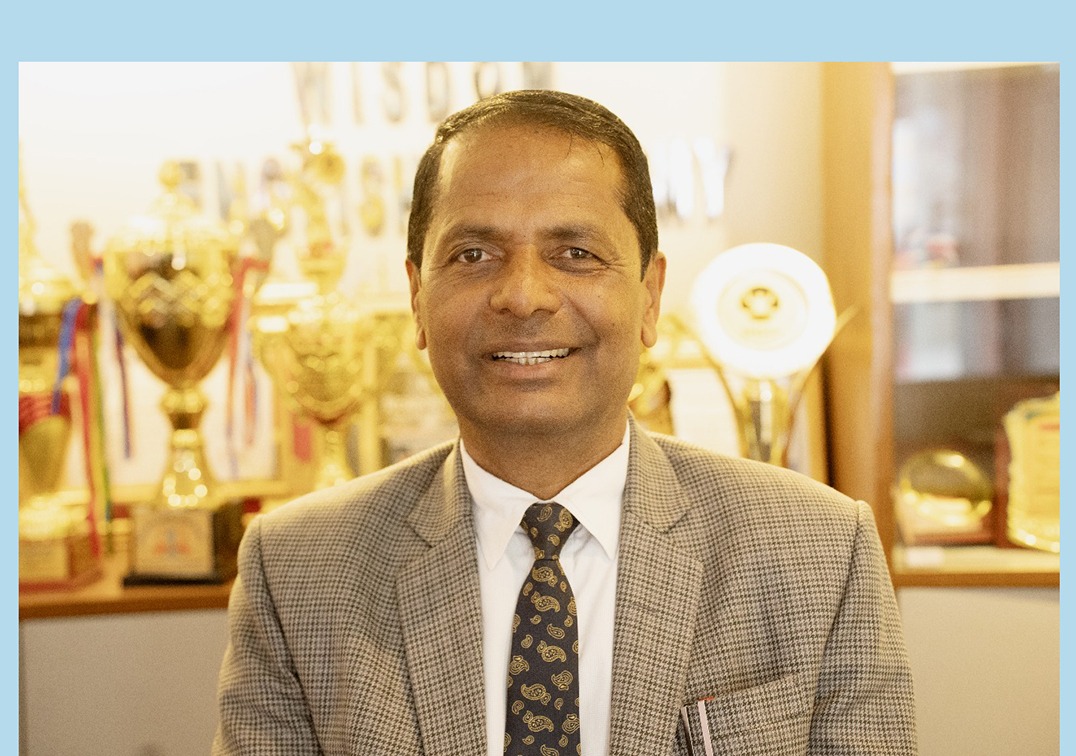
Shiva Adhikari
Founder Principal
Wisdom English Academy
GPA Glory or Real-Life Learning? Rethinking Education in the Age of AI
- College Readers
- 26 Mar 2026
- Views
- Interviews
Shiva Adhikari, an education entrepreneur and institutional leader, stands at the intersection of traditional schooling and emerging educational reform in Nepal. As the founder chairperson of Success Academy, Galchhi, and founder principal of Wisdom English Academy, Kalanki, he represents a generation of educators questioning the effectiveness of exam-oriented learning. Soft-spoken yet firm in his views, Adhikari advocates for a shift from rote learning to skill-based, technical, and value-driven education. In this conversation with College Readers, he reflects on the challenges of Nepal’s education system, the impact of digital transformation, and the urgent need to align learning with real-world demands.
College Readers: How do you assess the current state of school education in Nepal, especially with changing times and generations?
Shiva Adhikari: If we look at today’s learners—Gen Z and Gen Alpha—it is clear that our existing system is not fully aligned with their needs. So far, we have largely been providing an education that simply helps students pass exams. It lacks practical skills.
With new government structures expected to come, I believe there is an opportunity to redesign the system. Education must become more skill-oriented and technical. We are already in the age of artificial intelligence, so integrating AI into the syllabus is no longer optional—it is necessary.
College Readers: There is often discussion around the lack of value-based education. Where do you think we are falling short?
Shiva Adhikari: Value-based education does not come from schools alone. It must come from families and society as well. Unfortunately, we are seeing a decline in positive cultural practices, discipline, and social values.
Even in politics and public discourse, negativity dominates. People tend to criticize rather than encourage. This environment influences children as well. On social media, negative content gets more attention than positive content.
Because of all this, the value-based education that we should be providing is not being delivered effectively.
College Readers: As a school leader managing two institutions, what challenges do you face in today’s educational environment?
Shiva Adhikari: One major challenge is that our current system is still focused on passing exams rather than building skills. Until the new Education Act is implemented, meaningful change will remain difficult.
Another issue is the structure itself. I feel that up to a certain level—perhaps around twelve years of schooling—students should be taught strong foundations in language, communication, and basic knowledge. After that, education should be more interest-based.
For example, if a student is interested in sports, there should be specialized sports schools. If someone is inclined toward music or technical fields, they should have the option to pursue those paths. Without such flexibility, the system cannot evolve.
College Readers: When we talk about quality education, society often measures it through exam results and GPA. What is your view on this?
Shiva Adhikari: This is one of the biggest misconceptions. Today, success is measured by GPA—whether a student scores 4.0 or 3.95. But we rarely ask how that knowledge is applied in real life.
In both of our schools, we have been able to achieve good results in terms of pass rates, largely due to strong support from parents and the dedication of our teachers. So, by current standards, we are maintaining “quality.”
However, I do not believe this definition of quality will remain valuable in the future. Many students who perform well academically still struggle in practical life. Some remain unemployed in Nepal, while others go abroad and end up doing low-level jobs.
This indicates a deeper issue. Even though we are meeting expectations, I personally feel unsatisfied with the system.
College Readers: What changes are needed to move toward progressive learning?
Shiva Adhikari: The first step is to recognize that every child is different. Right now, we are teaching all students in the same way, as if they are identical. This is not effective.
We need to identify each student’s talent and design education accordingly. I believe that a large portion—perhaps around 80 percent—of the curriculum should focus on technical and practical skills.
Without major reforms, continuing with the traditional system will only produce more unemployed youth, both in Nepal and abroad.
College Readers: The concept of “ideal learning” is often discussed. Do you think we have achieved it?
Shiva Adhikari: No, we have not achieved ideal learning yet. It remains more of a concept than a reality.
Before implementing ideal learning, we need to educate parents and society. Even in private schools, when we try to adopt progressive methods, parents often complain if their child’s GPA is not high.
So, change must come from multiple levels—the government, local authorities, schools, and parents. Without a collective effort, ideal learning will remain difficult to achieve.
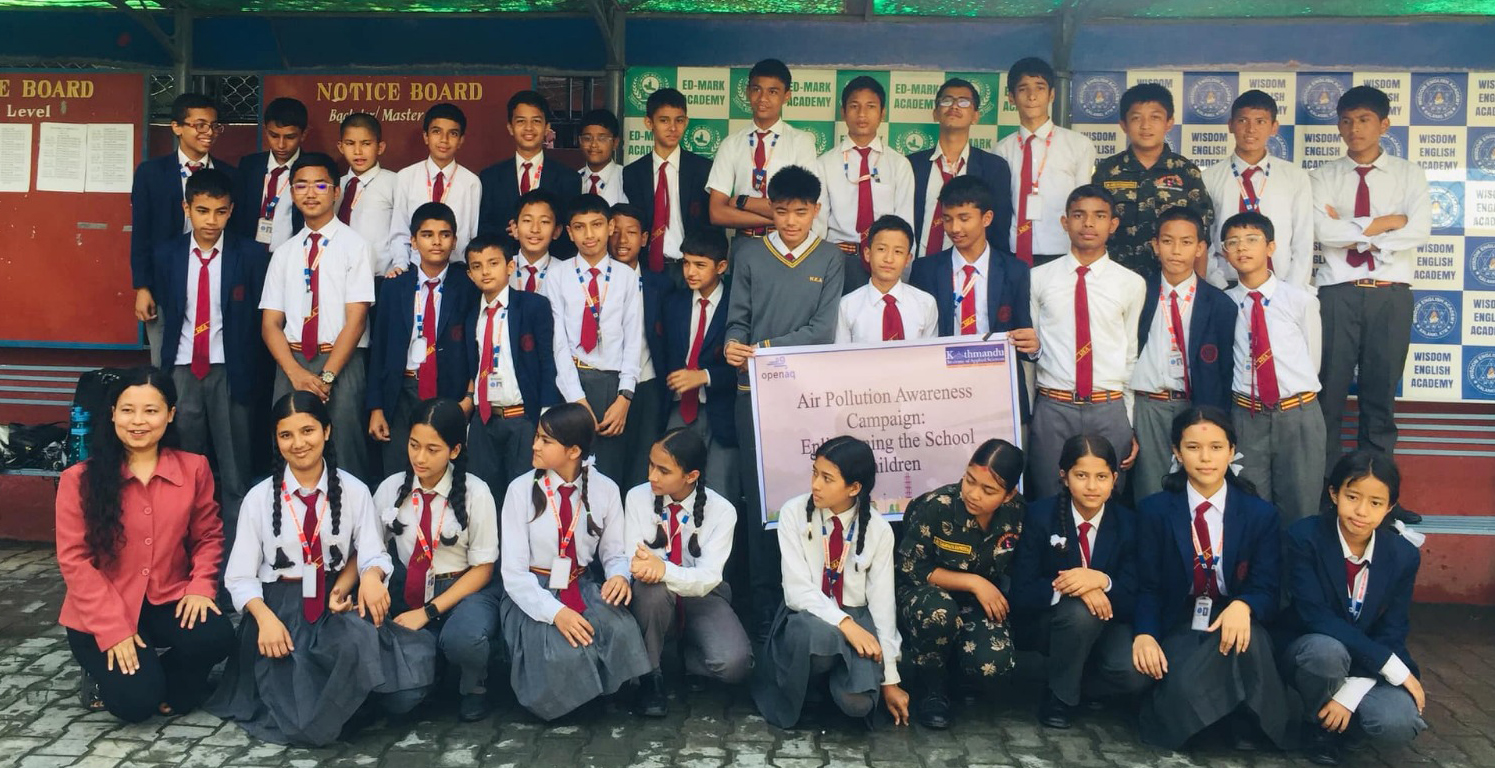
College Readers: What initiatives have your schools taken to make learning more student-centered and effective?
Shiva Adhikari: Over the past four years, we have made it a practice to collect feedback from parents every term. They visit the school, respond to structured questions, and provide suggestions.
We have also collaborated with Kathmandu University to improve teaching methods and understand modern educational needs.
Additionally, we are working in a research-based way—studying what society and the nation require. We also analyze international education systems, including those in Finland, Japan, the UK, the USA, and Australia.
We maintain strong coordination with parents. As a result, we have observed some positive changes in students, although there is still a gap between school learning and societal influence.
College Readers: In the digital age, screen time has become a major concern. How are you addressing this issue?
Shiva Adhikari: This is one of the most pressing challenges today. Parents frequently complain that children are spending excessive time on screens.
The problem is not technology itself, but its misuse. Screen time can be beneficial if used properly, but currently, misuse is more common.
We advise parents to regulate usage—through time limits or monitoring systems. However, in many cases, parents themselves spend significant time on screens, which influences children.
Excessive screen time is affecting creativity. Students are copying assignments from tools like ChatGPT rather than thinking independently.
This has created tension between schools and parents. We cannot completely eliminate digital tools, but their use must be guided and monitored.
I believe Nepal should consider policies similar to other countries, where children’s access to mobile devices is regulated until a certain age.
College Readers: Finally, what message would you like to share with parents?
Shiva Adhikari: We have been working in the education sector for over three decades. For us, every student is like our own child.
We genuinely care about their success and feel responsible for their growth. When they do well, we feel proud; when they struggle, we feel concerned.
I request parents to collaborate with schools. Education is not a one-sided effort. Together, we must prepare children according to the needs of today’s world.
We are committed to using modern technologies and improving continuously. With continued support from parents, I believe we can create better outcomes for our children.
Popular Categories
Trending This Month








 Established in 2065 BS, COLLEGE READERS is a premier national-level educational magazine dedicated to serving the academic and informational needs of school and university students, teachers, educators, and concerned ones in Nepal. The magazine provides current and comprehensive information on various educational opportunities worldwide, aiming to guide school and college-level students in their academic and career journeys. It also highlights essential support services and service providers that play a crucial role in shaping students' career paths in today's competitive world.

- Our Location Putalisadak, Kathmandu
- Send Us Email collegereaders123@gmail.com
- Call Us Now 977 01 4518759
