
Call now
977 01 4518759
Send Message
collegereaders123@gmail.com
Our Location
Putalisadak, Kathmandu
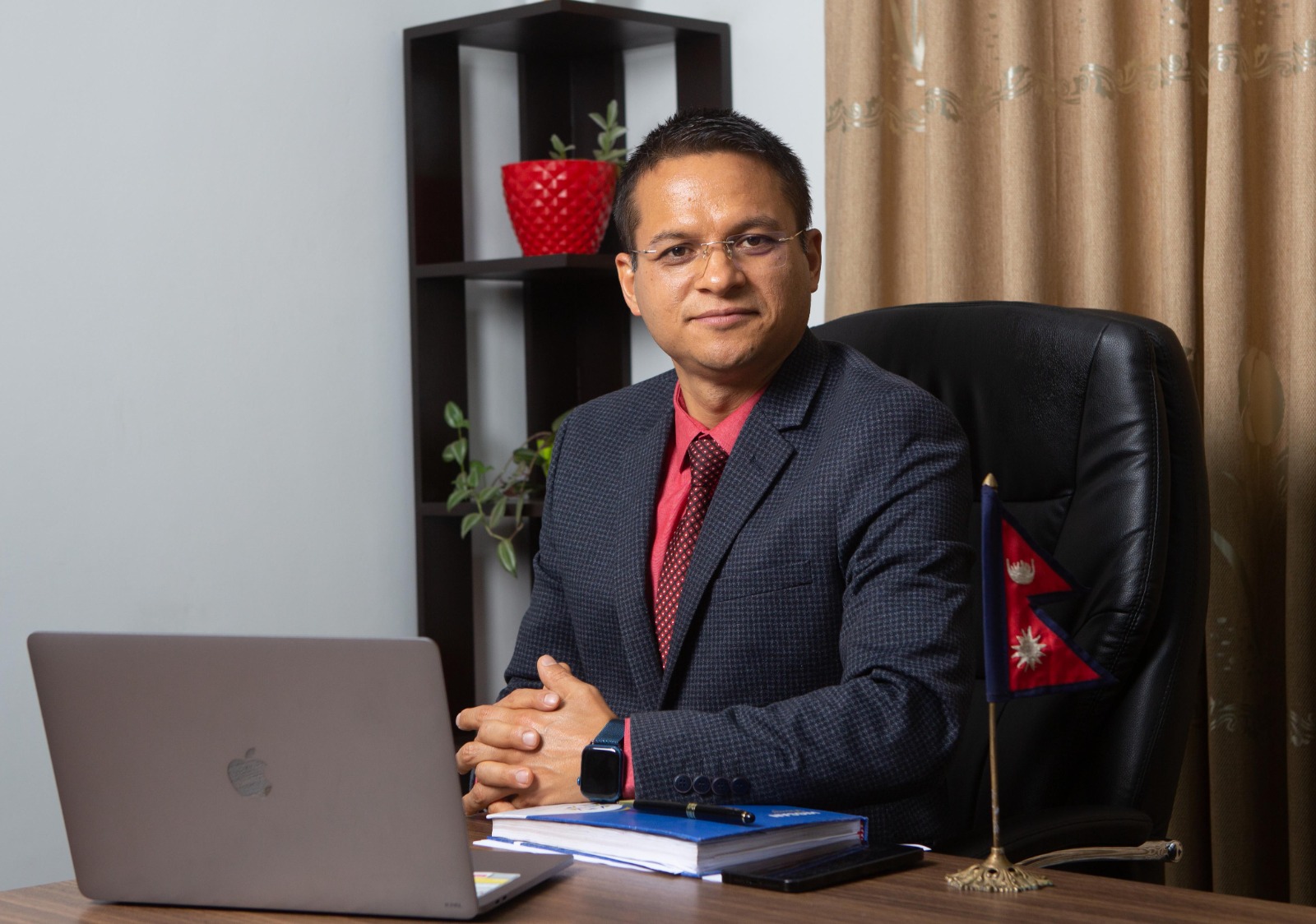
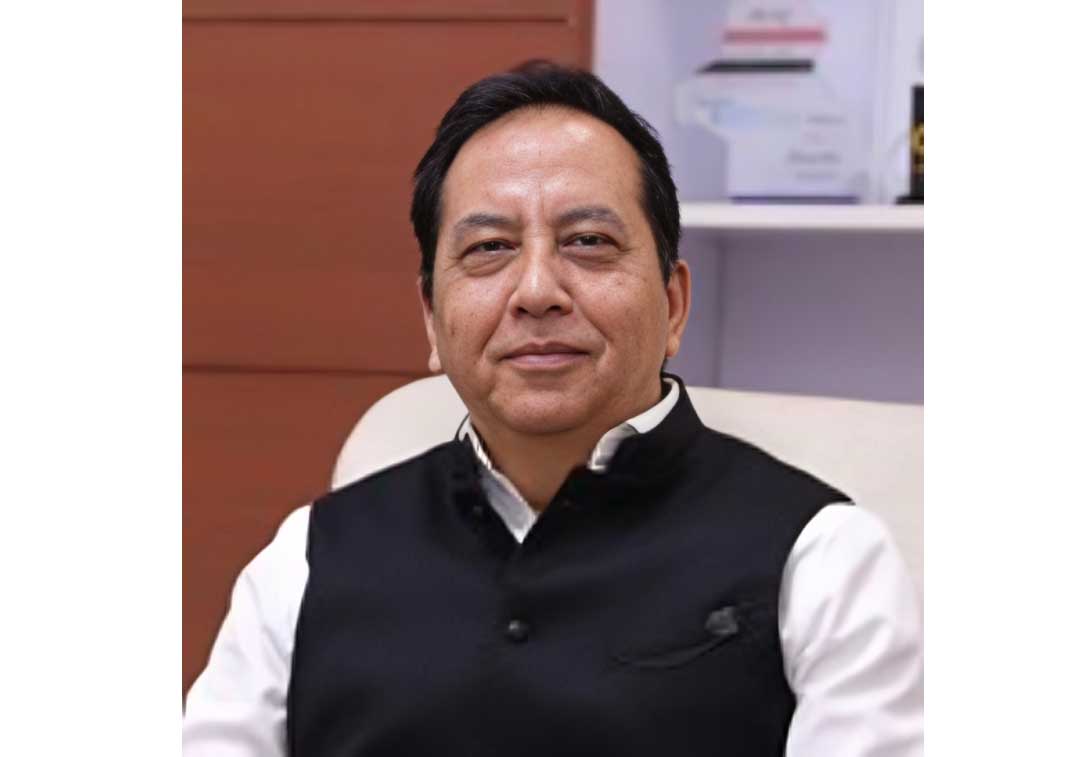
Dr. Swagat Shrestha
Chairperson
Kathmandu Valley School & College | Senior Vice President, Central HISSAN
Education’s Future isn’t Recall—It’s Wise Application
- College Readers
- 03 Apr 2026
- Views
- Interviews
As Nepal’s education system navigates the complexities of rapid technological transformation, leaders who can bridge tradition and innovation are more crucial than ever. Dr. Swagat Shrestha, Chairperson of Kathmandu Valley School & College and Senior Vice President of Central HISSAN, represents such a leadership voice—visionary, pragmatic, and forward-thinking.
With deep involvement in institutional leadership and educational policy advocacy, Dr. Shrestha offers sharp insights into the realities of modern schooling. From the rise of digital-native learners to the need for systemic alignment in education, he presents a compelling argument for rethinking how schools teach, how teachers adapt, and how society defines learning.
In this conversation with College Readers, he explores the challenges, opportunities, and future directions of education in Nepal’s digital era.
In today’s rapidly changing context, what challenges and opportunities do you see in school education?
We are witnessing the arrival of a completely new generation of learners—students who are born into the digital era. These learners are digital natives, familiar with gadgets, artificial intelligence, and instant access to information from an early age.
This presents both an opportunity and a challenge. On one hand, such a generation can significantly contribute to national development. On the other hand, the pace of change is unprecedented. Earlier, generational shifts took decades; now, they occur within a year or two.
The biggest challenge lies in whether schools, teachers, and management systems can adapt quickly enough. We must continuously update our teaching methods, infrastructure, and mindset to match the expectations and learning styles of these students.
As a leader in HISSAN, what initiatives or collaborations are needed to strengthen school education in Nepal?
The first step is clarity at the national level. We must define a clear vision: What kind of country do we want to build through education?
Every nation has its own strength—its unique identity or USP. Some focus on technology, others on agriculture or hospitality. Nepal must identify its strengths and align its education system accordingly.
Once that is clear, we need:
- A curriculum aligned with national priorities
- Activity-based learning frameworks
- Skilled teachers and leadership teams
- Effective monitoring and regulatory mechanisms
Organizations like HISSAN, PABSON, and others must also take responsibility. Educational leaders must continuously upgrade themselves—understanding new technologies, modern teaching practices, and student psychology.
Today’s students are often described as smarter due to technology. Are our teachers keeping up?
This is a critical issue. We often view digital devices as distractions rather than essential tools. That mindset must change.
The reality is that education systems have not kept pace with technological advancement. Students today cannot focus on a 40-minute lecture like before. Research shows attention spans are shrinking significantly.
Yet, many classrooms still follow outdated teaching methods—long lectures, rote learning, and minimal interaction.
Teachers must:
- Integrate technology meaningfully
- Shorten and diversify teaching methods
- Engage students through interactive learning
More importantly, educators must overcome the illusion that they already know enough. Learning must be continuous—even for teachers.
There is concern that technology and AI may reduce creativity. How should we respond?
This concern is understandable, but we must look at it differently.
Technology is not the problem—misuse is the problem.
Think about how tools have evolved. In the past, we valued mental arithmetic; later, calculators became essential. Today, tools like Excel are indispensable. We no longer reject these tools—we embrace them.
Similarly, AI and platforms like ChatGPT are now part of our reality. Instead of resisting them, we must learn how to use them creatively.
“The question is not whether to use technology—it is how to use it wisely.”
We must shift from memorization to application. Knowledge is no longer about storing information—it is about accessing, analyzing, and applying it effectively.
Does this mean traditional knowledge is no longer important?
Not at all. Knowledge remains important, but its nature has changed.
What is no longer essential is rote memorization—learning facts without understanding or application. Today, information is readily available.
What matters now is:
- Skills to use information
- Critical thinking
- Practical application
For example, memorizing data like dates or statistics is less relevant today. But knowing how to use information to solve real-world problems is essential.
What are the key parameters of education in the modern era?
The parameters of education have evolved significantly. Today, the focus should be on:
- Attitude – mindset and adaptability
- Communication skills – the ability to express ideas clearly
- Practical activities – learning by doing
- Technology integration – using tools effectively
In today’s world, everyone has access to information. What differentiates individuals is how they present, communicate, and apply that knowledge.
Artificial Intelligence can replace repetitive tasks, but it cannot replace human creativity, originality, and emotional intelligence.
How can schools make teaching and learning more effective today?
Schools must shift toward activity-based and technology-supported learning.
Students today are naturally inclined toward technology. Ignoring this reality only creates disengagement.
Instead, schools should:
- Use digital tools in classrooms
- Encourage interactive learning
- Focus on student engagement rather than passive listening
Education should move away from rote methods and toward experiences that make learning enjoyable and relevant.
What initiatives has Kathmandu Valley School & College taken to promote ideal learning?
At Kathmandu Valley School & College, we are committed to creating a model learning environment.
We have:
- Integrated AI and digital tools into classroom learning
- Installed advanced smart boards
- Developed technology-enabled labs and systems
- Conducted regular teacher training programs
- Collaborated with technology partners
We emphasize activity-based learning and provide a supportive, disciplined, and student-friendly environment.
Our goal is to ensure that students not only learn but also explore, innovate, and prepare for diverse career paths.
What advice would you give to parents in this changing educational landscape?
Choosing the right school is important, but parents must understand that education does not begin or end at school.
“The first and most important school is the home.”
Parents should:
- Select schools thoughtfully, considering values and environment
- Engage with school leadership and other parents
- Maintain consistency rather than frequently changing schools
Most importantly, children learn by observing. If parents want disciplined, responsible children, they must model those behaviors themselves.



Popular Categories
Trending This Month








 Established in 2065 BS, COLLEGE READERS is a premier national-level educational magazine dedicated to serving the academic and informational needs of school and university students, teachers, educators, and concerned ones in Nepal. The magazine provides current and comprehensive information on various educational opportunities worldwide, aiming to guide school and college-level students in their academic and career journeys. It also highlights essential support services and service providers that play a crucial role in shaping students' career paths in today's competitive world.

- Our Location Putalisadak, Kathmandu
- Send Us Email collegereaders123@gmail.com
- Call Us Now 977 01 4518759
