
Call now
977 01 4518759
Send Message
collegereaders123@gmail.com
Our Location
Putalisadak, Kathmandu
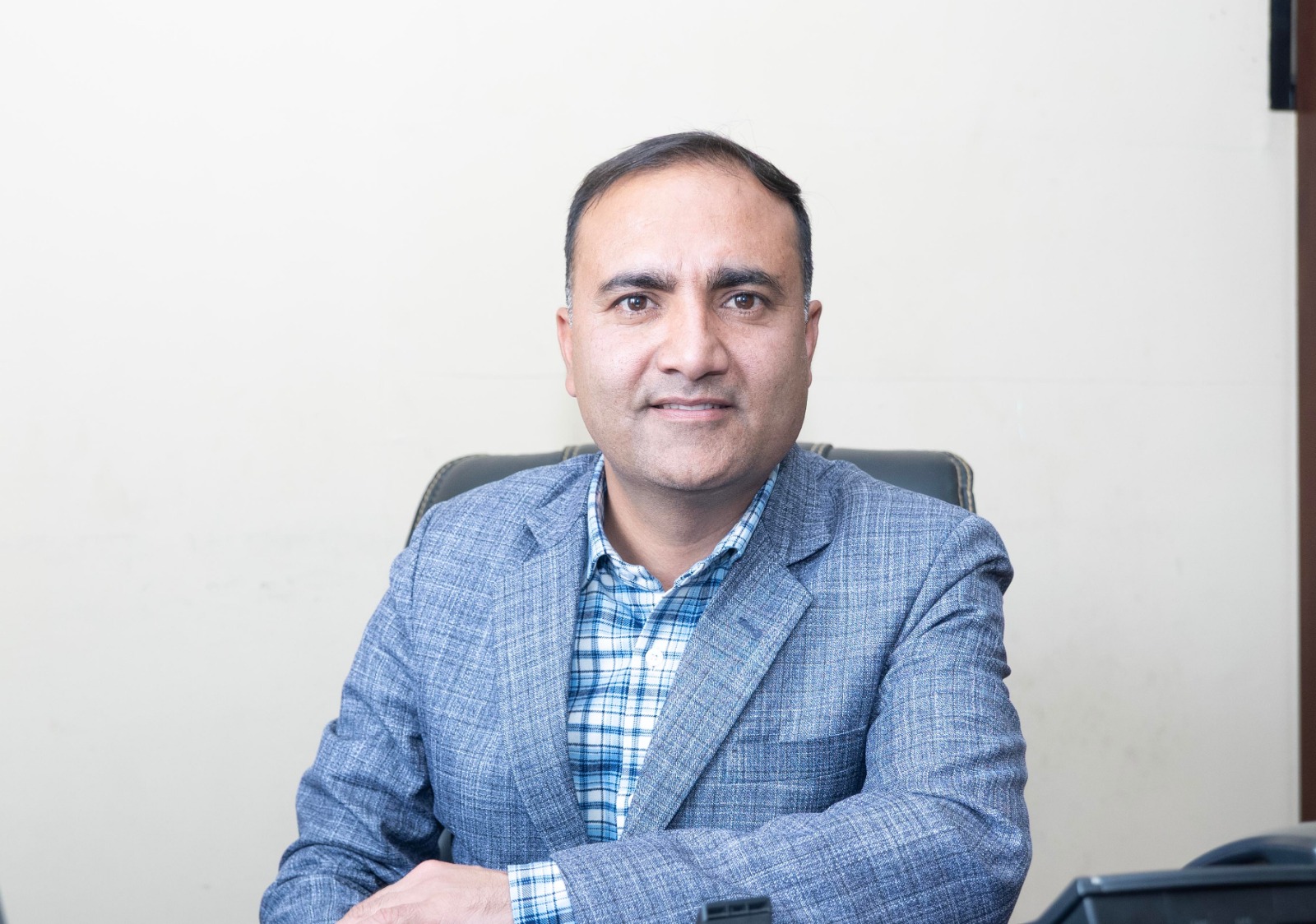
Kamal Prasad Gnawali
Principal
Prarambha World School & College
Education Must Prepare Students for Real Life
- College Readers
- 30 Mar 2026
- Views
- Interviews
Kamal Prasad Gnawali, Principal of Prarambha World School & College, believes that education must go beyond textbooks and examinations. In this conversation with College Readers, he reflects on his journey into education, the challenges facing school leaders today, the importance of skill-based learning, the role of technology in the classroom, and why parents must recognize the unique interests and abilities of their children. His message is clear: schools must prepare students not only to earn certificates, but also to think, create, and confidently step into the real world.
In today’s changing educational environment, what major challenges do you see as a school leader?
The biggest challenge today is that education must become more time-relevant and skill-based. Although curricula are changing and new visions are being introduced, many institutions are still relying too heavily on theory and lecture-based teaching. Students are often not involved enough in practical learning. Another challenge is technology. We are living in a digital age, but many students are still not being connected to technology in meaningful, productive ways. When students leave school or college with a certificate, they should be able to begin some kind of work confidently. Education should not only produce certificate holders; it should produce capable, independent individuals. If we fail to do that, students will continue to look abroad for opportunities.
What role should a school leader play in curriculum planning, academic monitoring, and maintaining quality?
A school leader has to balance both administration and management. The first task is to hire skilled and capable people. But today, because so many young people leave the country, even finding quality manpower has become a challenge. Once teachers and staff are brought into the institution, they need proper training. Curriculum alone is not enough; teachers must know how to deliver it in a practical, skill-based way.
The second part is infrastructure and environment. Without proper infrastructure, quality education cannot be implemented well. Students need counseling, encouragement, and motivation. Teachers and staff also need an environment where they feel respected, self-motivated, and committed. A leader should not be overly autocratic. Rather, a leader should create a supportive environment, provide resources, and act as a facilitator.
How do you ensure quality and consistency in classroom teaching and learning at Prarambha World School?
Our first priority is quality education, and that begins with quality manpower. We make sure that our teaching team is experienced and trained. I also place strong emphasis on practical education, not just theory. Technology is another key part of quality learning today. At Prarambha, we have digitalized every classroom because if we want education to match the present time, proper resources must be available.
Another important factor is class size. Overcrowded classrooms reduce quality. No matter how good a teacher is, effective interaction becomes difficult when there are too many students. So our policy is to keep a limited number of students in each class, allowing teachers to communicate, interact, and follow up with every learner. In short, our focus is on trained teachers, practical learning, digital support, and manageable classrooms.
Many people say digitalization is harming students’ creativity. How do you address this concern?
That concern is valid. Parents often say that children are always attached to devices, and there is a feeling that excessive digital exposure makes students dependent and less serious. But the answer is not to reject technology. The real need is to teach students how to use technology properly. We regularly guide them on the right use of technology. We encourage its positive use, but we try to prevent misuse and overuse.
At the same time, we do not allow students to depend only on screens. We encourage them to think, write, and express ideas in their own language and style. We organize quiz contests, speaking activities, presentations, and research-based projects. We also place strong emphasis on building a reading culture. Students are encouraged to read beyond textbooks, write reviews, and take part in book talks. In fact, students at our school have already written books of their own. That shows that creativity can grow when students are encouraged to read, think, and create independently.
Expectations from both parents and students are very high today. How does your school respond to those expectations?
Parents today want schools to prepare their children as global citizens, and that expectation is understandable. To respond to that, we do not rely only on textbooks. We connect learning with extra activities and multiple platforms. Every student is different. Each has a unique ability, interest, and destination. Our responsibility as a school is to help students discover and develop those strengths.
One child may be interested in music, another in dance, another in technology, medicine, or art. So we create many opportunities for students to explore their interests. Our school follows a progressive, activity-based approach, and we regularly train teachers to stay updated. In subjects like computer studies, for example, we do not stop at teaching only the basics. We encourage students to explore programming, coding, and practical digital skills.
We have also introduced a UK-based digital curriculum, and our students have already developed software and participated successfully in competitions. This shows that when students are given the right platform, they can perform far beyond expectations.
Finally, what message would you like to give to parents?
My message to parents is simple: understand your children first. Identify their abilities and recognize their interests. Then, both at home and at school, encourage them in the direction that suits them best. Children should not be forced to fulfill only the desires of their parents. In many cases, we still see children being pushed toward paths chosen by adults rather than by their own interests. But when a child is pushed into the wrong field, success becomes difficult.
So I request every parent to create an environment in which children can bloom naturally according to their own interests and abilities. If we do that, the same school can produce a national player, a singer, a doctor, an engineer, a pilot, or an artist. Every child has the potential to succeed if we understand them properly and guide them with care.
Popular Categories
Trending This Month








 Established in 2065 BS, COLLEGE READERS is a premier national-level educational magazine dedicated to serving the academic and informational needs of school and university students, teachers, educators, and concerned ones in Nepal. The magazine provides current and comprehensive information on various educational opportunities worldwide, aiming to guide school and college-level students in their academic and career journeys. It also highlights essential support services and service providers that play a crucial role in shaping students' career paths in today's competitive world.

- Our Location Putalisadak, Kathmandu
- Send Us Email collegereaders123@gmail.com
- Call Us Now 977 01 4518759
